
75 articles found in this topic.
AI Models Drive Software Engineering Shift as Automated Code Generation Rises
Advanced AI models are transforming software engineering by increasingly handling code generation, moving from hypothetical to reality. Developers report significant improvements in AI's ability to manage medium-scale coding tasks, pushing hundreds of lines of AI-generated code to production. This shift suggests a future where AI writes most code, fundamentally altering the role of human software engineers.
Apple Neural Engine Unlocked for AI Training, Bypassing CoreML Restrictions
Developers have successfully reverse-engineered the Apple Neural Engine (ANE) to enable direct AI model training, bypassing Apple's CoreML framework. This breakthrough, aided by Claude AI, demonstrates the ANE's hardware capabilities for training, previously restricted by software. This could shift AI training to local devices, reducing costs and environmental impact.
Google's Gemini Deep Think Solves Cosmic String Gravitational Wave Integral
Google's Gemini Deep Think AI has independently solved a complex integral problem related to the gravitational radiation power spectrum of cosmic strings. This breakthrough provides a precise analytical solution, previously elusive to human physicists, and highlights AI's growing capabilities in theoretical physics and mathematics.

Google Introduces Gemini 3.1 Flash-Lite Model, Offering High Speed and Lower Costs
Google has unveiled Gemini 3.1 Flash-Lite, a new AI model boasting high output speed (363 tokens/s) and competitive pricing ($0.25 per million input tokens). It outperforms several competitors, including GPT-5 mini and Claude 4.5 Haiku, in benchmarks while offering significant cost efficiency.
OpenAI Reports 8-Fold Surge in Enterprise ChatGPT Use, Citing Significant Productivity Gains
OpenAI reports an eight-fold surge in enterprise ChatGPT use and a 19-fold rise in AI workflow usage, with employees saving nearly an hour daily. The company's "State of Enterprise AI Report" highlights significant productivity gains and deeper AI integration amidst growing market competition.
Tsinghua Narrows Gap with Google in NeurIPS Papers as China's AI Research Grows
Tsinghua University is closing in on Google's lead in NeurIPS 2025 papers, indicating a significant shift in global AI research. Chinese institutions are increasingly contributing to foundational AI architecture, moving beyond application-level work. The conference also highlighted geopolitical tensions with dual venues due to visa challenges for Chinese researchers.
Google's Mixboard Canvas Integrates Banana2 for Dynamic Presentation Editing
Google introduces Mixboard, a new canvas platform integrating its Banana2 AI model for dynamic presentation and infographic editing. It allows users to re-edit specific image areas and maintain consistent artistic styles, offering a workaround for material uploads by combining with NotebookLM.
Google Introduces Nano Banana 2 Image Generation Model with Enhanced 4K Output and Reduced Cost
Google unveils Nano Banana 2, an advanced image generation model offering 4K ultra-high-definition quality at half the cost of its predecessor. Powered by Gemini 3.1 Flash Image, it excels in rapid generation, multilingual text processing, and real-time web integration, outperforming competitors in benchmarks.
Google Research Introduces Metacontroller for Hierarchical AI Decision-Making
Google Research introduces a metacontroller for AI agents to learn hierarchical thinking in sparse reward environments. This method enables "leapfrog thinking" and allows large models to form complex decision-making mechanisms, similar to the human brain. It offers a new training paradigm for AI in multi-step tasks.

AI Models Struggle with Left-Handed Imagery Due to Dataset Bias
AI models like NanoBananaPro and ChatGPT consistently fail to generate accurate left-handed imagery, even with explicit prompts. This limitation stems from biases within their training datasets, where an imbalance in data distribution hinders generalization. Research indicates that both completeness and balance in training data are crucial for model accuracy.
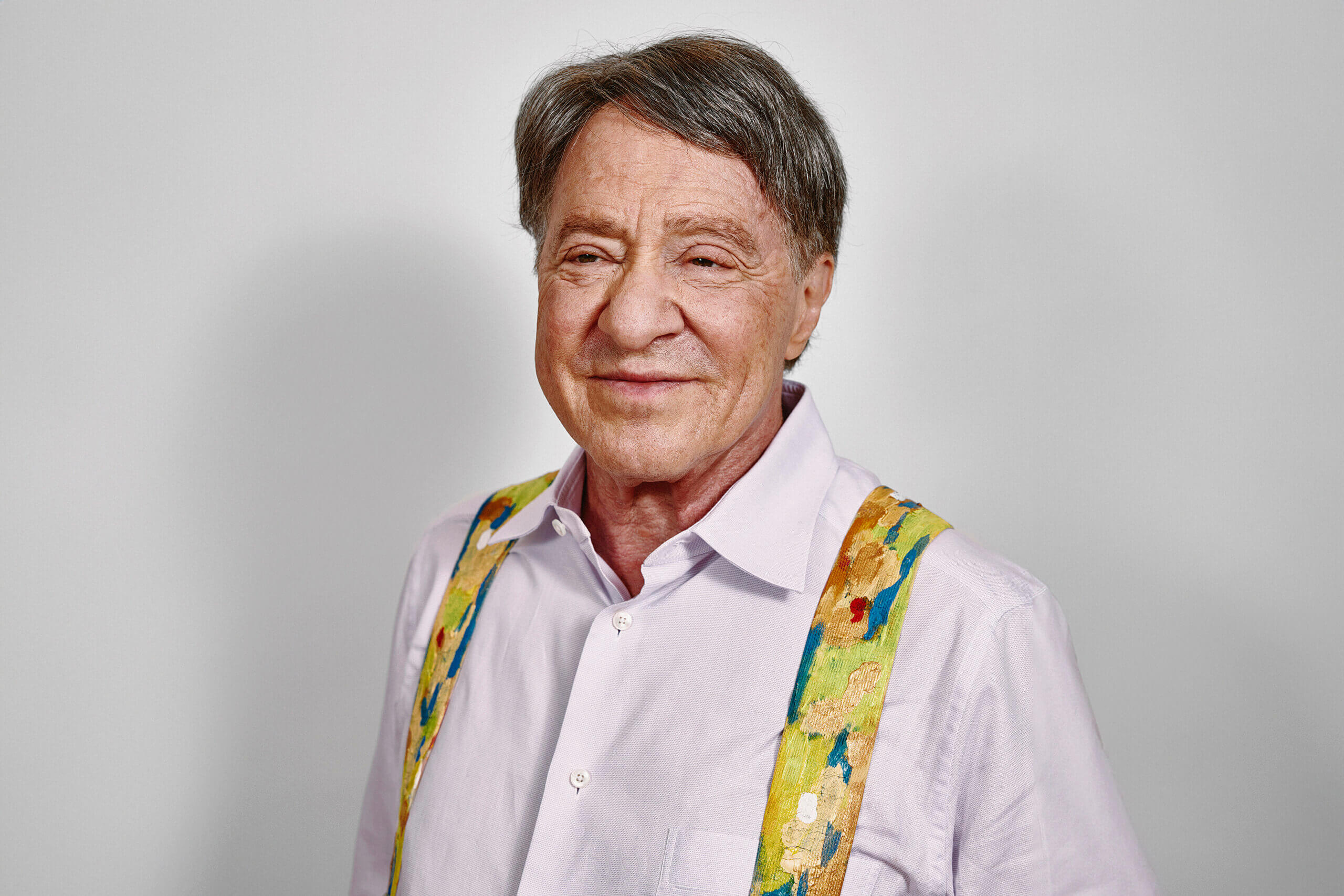
Ray Kurzweil Predicts AGI Emergence by 2029, Human-AI Integration by 2045
Futurist Ray Kurzweil reiterates his prediction for Artificial General Intelligence (AGI) by 2029, leading to human-machine integration by 2045. He foresees embodied AI robots by 2026 and a future of extreme abundance, though others voice concerns about AI's rapid advancement.
OpenAI Researcher Highlights How Open-Source Contributions Lead to Top AI Lab Roles
OpenAI researcher Noam Brown highlights how open-source contributions can secure roles at leading AI labs, citing Keller Jordan's success. Jordan joined OpenAI based on an open-source blog post detailing his NanoGPT speed run, demonstrating the value of initiative over traditional academic credentials.