
AI Models Drive Software Engineering Shift as Automated Code Generation Rises

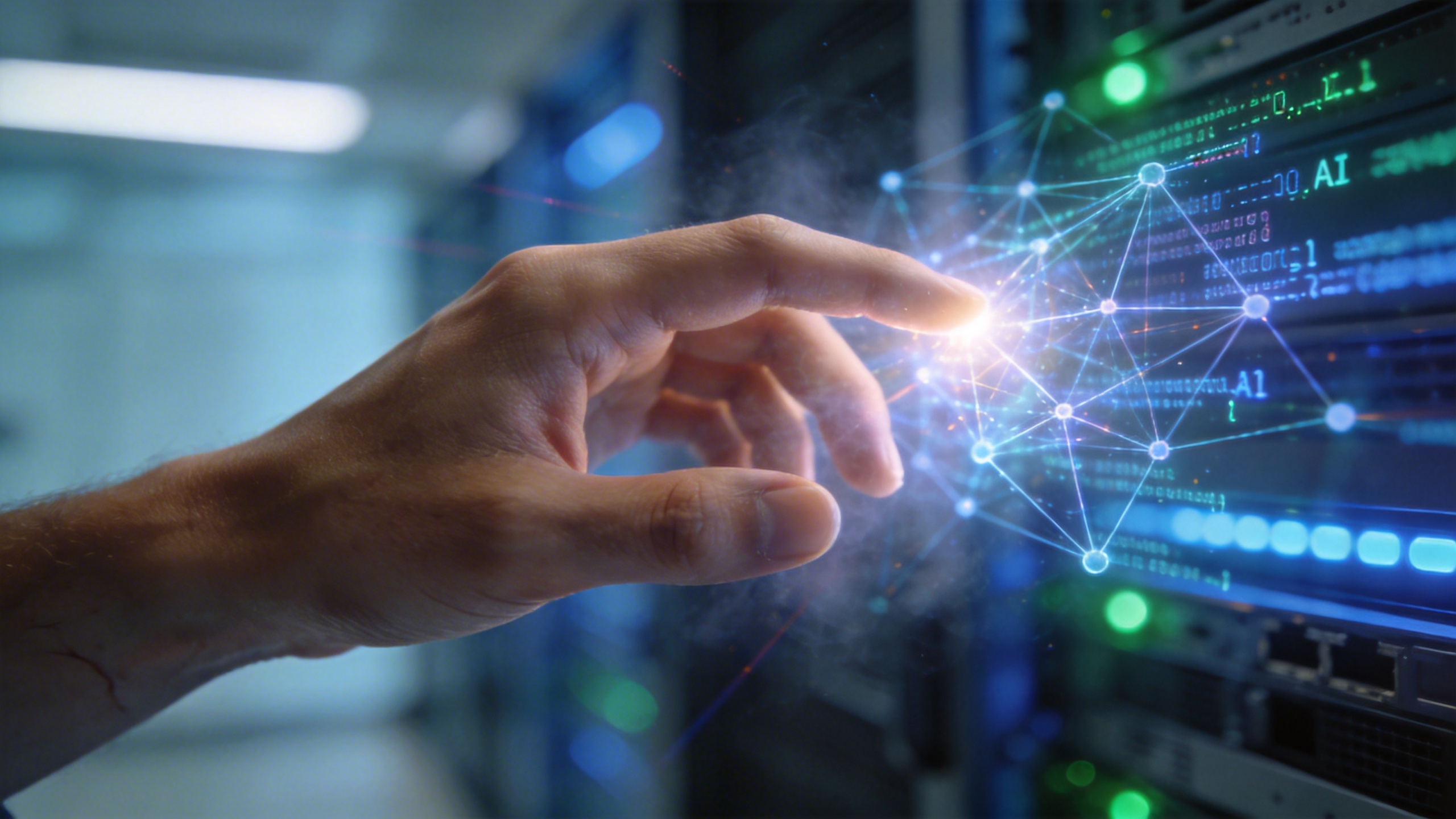
The landscape of software engineering is undergoing a significant transformation as advanced AI models increasingly take on code generation, a trend that is rapidly moving from hypothetical to reality. Developers are reporting substantial improvements in AI's ability to handle medium-scale coding tasks, enabling them to push hundreds of lines of AI-generated code to production. This shift suggests a future where AI writes the vast majority of code, fundamentally altering the role of human software engineers.
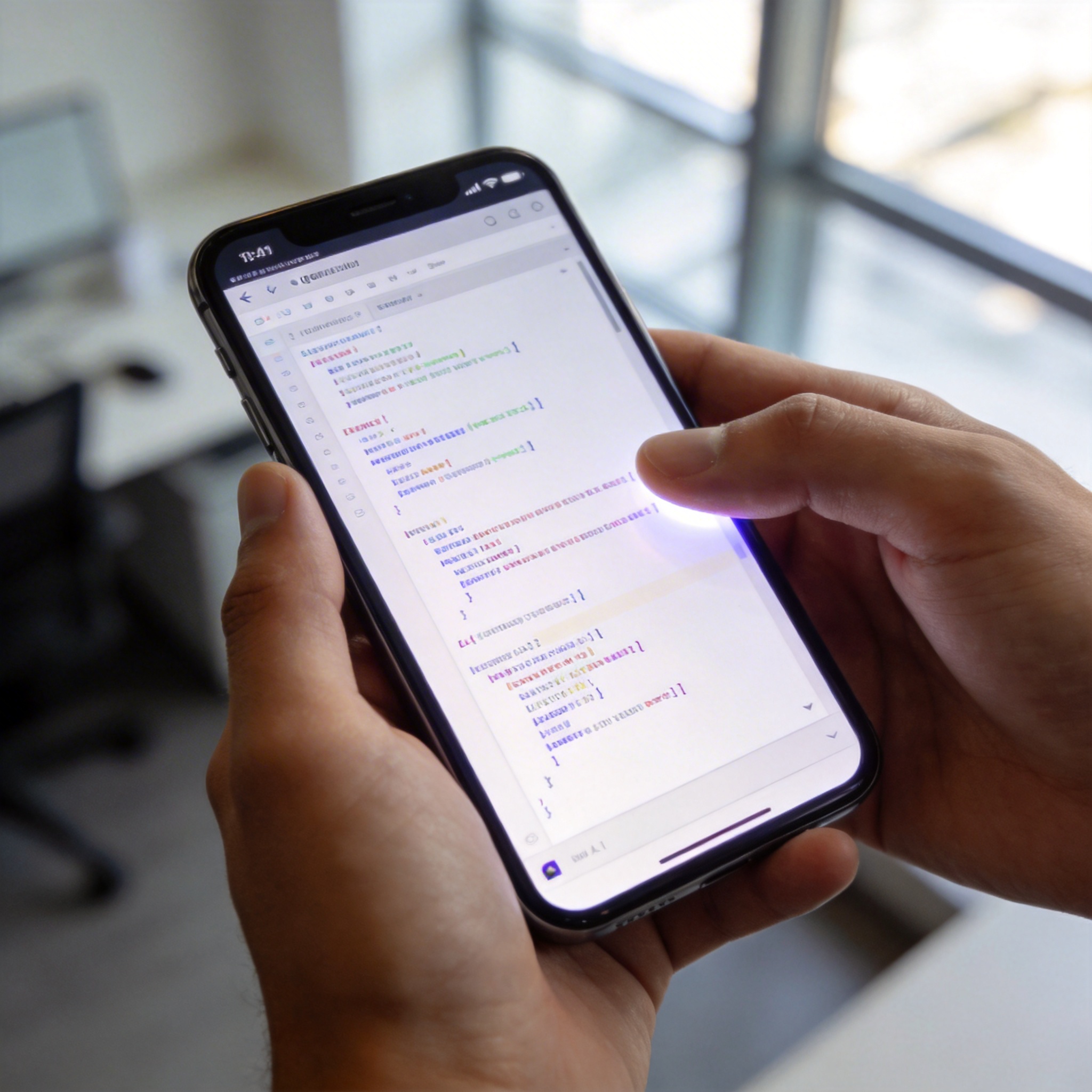
Developer using a smartphone to review AI-generated code on a mobile interface, illustrating on-the-go development.
One notable development is the ability to write production-grade software using mobile devices. For instance, connecting AI coding tools to platforms like GitHub allows developers to instruct AI to modify code, add tests, and even trigger automated actions directly from a smartphone. This capability facilitates reviewing and merging pull requests with new features while on the go. While such tasks are often low-risk and supported by automated tests, the experience highlights a new paradigm in software development.
Latest Models Deliver "A-ha Moments"
Recent weeks have seen senior software engineers across the industry share experiences indicating a significant leap in AI tool capabilities. These "a-ha moments" are not limited to developers at AI companies but are also reported by independent engineers.

Portrait of Daniela Amodei, CEO of Anthropic, a key figure in AI development.
Jaana Dogan, a Principal Engineer at Google, noted the progress of Claude Code, stating that it generated a distributed agent orchestration system in an hour that previously took her team a year to build. While acknowledging the need for iteration, Dogan encouraged skeptics to test AI agents in their areas of expertise.
Thorsten Ball, a software engineer at Amp, reflected on his changing relationship with coding. After 15 years of enjoying the manual process of typing code, he now finds it annoying, attributing this shift to the advanced capabilities of AI.
Malte Ubl, CTO of Vercel, described a "crazy holiday" period where he worked on two large open-source projects, started a book, and fixed numerous other issues, all enabled by Opus 4.5. He stated that Opus, combined with Claude Code, functions like a senior software engineer, executing tasks and responding to feedback with minimal effort. Ubl emphasized that the cost of software production is approaching zero, urging a re-evaluation of traditional perceptions.
Even prominent figures who were initially skeptical have changed their views. David Heinemeier Hansson (DHH), founder of Ruby on Rails, admitted a 180-degree turn in his attitude towards AI. He noted that while he previously spent more time rewriting AI code than writing it himself, the situation has now reversed due to improved model quality. Adam Wathan, founder of Tailwind CSS, expressed that manually typing precise syntax now feels like a chore, finding programming more enjoyable with AI assistance.
Andrej Karpathy, co-founder of OpenAI, initially criticized AI coding tools as "junk" in October, advocating for autocomplete over full AI agents. However, by late December, his perspective had completely shifted. Karpathy described feeling "outdated" as a programmer, observing a massive "refactoring" of the profession where manual code contribution is diminishing. He highlighted the emergence of a new programmable abstraction layer involving agents, prompts, and complex integrations, urging developers to adapt quickly.
Boris Cherny, creator of Claude Code, further underscored this trend, stating that all code he submitted in the previous month was AI-generated, with Opus 4.5 writing approximately 200 pull requests. He emphasized that software engineering is undergoing a fundamental change, requiring constant adjustment of expectations.
Digital 'tipping point' made of glowing binary code, symbolizing the critical moment in AI programming.
AI Programming Reaches Tipping Point
The significant improvements in AI programming capabilities are largely attributed to key model releases in late 2025:
Gemini 3 (Google, November 17): Google's most powerful programming model to date.
Opus 4.5 (Anthropic, November 24): Anthropic's leading programming model, now integrated into Claude Code.
GPT-5.2 (OpenAI, December 11): Powers Codex and offers performance comparable to Claude Code.
Developers like Peter Steinberger, with two decades of experience, have noted the substantial leap in GPT-5.2's capabilities, significantly reducing his reliance on custom tools for debugging. Simon Willison, an independent expert in large language models, corroborated this, observing that GPT-5.2 and Opus 4.5 represent a "tipping point" where more complex programming problems became solvable.
A prediction made by Anthropic CEO Dario Amodei in March 2025—that AI would write 90% of code within three to six months and almost all code within 12 months—appears to be materializing. The experience of Boris Cherny, where 100% of his code contributions to Claude Code were AI-generated, exemplifies this trend. While skepticism remains regarding unverified claims, personal experiences of developers using these tools align with the notion that AI can now generate a substantial portion of code.
This shift is particularly evident in tech stacks like TypeScript, Node/Express, React, and Postgres, and is increasingly applicable to Go, Rust, and other mainstream languages. The assumption is that AI programming tools will enable over 90% code generation for many developers and teams, especially in startups and greenfield projects where rapid iteration and experimentation are common.
Declining Value of Specialized Knowledge
As AI takes on more coding tasks, certain previously high-value skills are depreciating:

Stack of dissolving programming books next to a glowing digital icon, symbolizing the declining value of specialized coding knowledge.
Prototyping: Non-technical individuals, such as product managers and designers, can now use AI tools to build prototypes, reducing the need for developers in the initial ideation phase. This also means developers will be expected to rapidly generate proof-of-concept applications.
Language Polyglotism: Proficiency in multiple programming languages may become less critical. AI can facilitate understanding and implementation across various codebases, allowing engineers to adapt to new tech stacks more quickly. This could lead to a decline in the demand for language-specific specialists, blurring the lines between front-end, back-end, and mobile development roles.
Executing Defined Tickets: AI can now implement well-described bug reports or small feature requests. Automated processes are emerging where AI tools receive tickets and generate implementations, requiring developers only to review and merge the output.
Refactoring: AI is becoming adept at refactoring code, potentially making manual refactoring a slower and less efficient process. While AI-generated code can be verbose or redundant, its utility for proof-of-concept work or non-performance-critical applications is growing. However, careful review remains crucial for mature software and security-sensitive contexts.
Increased Value of Software Engineering Skills
Despite AI's growing role in code generation, the "engineering" aspect of software development is becoming more critical. Developers spend only a fraction of their time writing code, with the majority dedicated to administrative tasks, collaboration, and strategic planning. Even if AI writes all code, it frees up only a small portion of the workweek, emphasizing the need for human input in defining requirements and ensuring quality.
Key skills gaining importance include:
Tech Lead Qualities: The ability to translate user requirements into clear, actionable tasks and define non-functional requirements (performance, accessibility, reliability) will be highly sought after. Engineers who can think from a user's perspective and break down complex problems will be essential.
Testing and Infrastructure: As AI generates more code, robust testing and testing infrastructure become paramount. Automated tests, static analysis, and continuous integration/continuous deployment (CI/CD) pipelines are crucial for validating AI-generated code and preventing hallucinations. Engineers will need to optimize test speeds and manage test suites effectively.
Product-Mindedness: In startups, engineers are increasingly expected to act as "product engineers," identifying needs, proactively addressing issues, and suggesting improvements without constant product manager oversight.
Architectural Decision-Making: With faster code generation, sound architectural decisions become vital. Engineers must explicitly guide AI in designing software structures, interfaces, and boundaries to ensure maintainability and scalability.
Technical Debt Management: The increased volume of AI-generated code will likely lead to more technical debt. Engineers will need to proactively track and address this debt to prevent long-term issues.
Building Reliable Systems: The ability to design and implement reliable, high-performance, scalable, and secure systems will be a premium skill. Engineers must understand how to validate non-functional requirements and intervene manually when AI alone cannot achieve the desired quality.
In essence, the "engineering" part of software development is gaining prominence. The focus shifts from merely "coding" to ensuring the reliability, quality, and maintainability of software through sound engineering practices and tight feedback loops.

Digital explosion of code lines and symbols, representing the rapid increase in AI-generated code and its potential problems.
Disturbing Consequences and Work-Life Boundaries
The rapid increase in AI-generated code also presents challenges:
Code Explosion and Problems: Engineers using AI tend to submit more pull requests and produce more code. This explosion of code can lead to more bugs, security vulnerabilities, and increased resource consumption.
Declining Code Quality: Early data suggests a potential decline in the quality of code pushed to production. One report indicated a 30% increase in change failure rates, where deployments cause failures or rollbacks.
Exposure of Weak Practices: Teams lacking automated testing, coding standards, or robust observability infrastructure will experience more defects and online failures due to the accelerated pace of delivery.
Reduced Demand for "Coders": Developers who lack broader software engineering skills—such as architectural design, project breakdown, and system reliability—may find job opportunities more scarce as AI handles basic code generation.
Erosion of Work-Life Boundaries: The ability to code and deploy from mobile devices or remote sandboxes could blur the lines between personal and professional life. This raises concerns about increased pressure on developers to be constantly available, potentially without additional compensation for work outside standard hours.
Junior Engineer Development: The new AI-driven environment may force junior engineers to rapidly acquire senior-level skills, potentially skipping the traditional "coding" phase. This could necessitate a stronger emphasis on computer science education, focusing on architecture, testing, and technical debt from the outset.
The exponential growth of code and software also implies a greater need for accountability. Professional software engineers who understand, maintain, and take responsibility for AI-generated code will be indispensable.
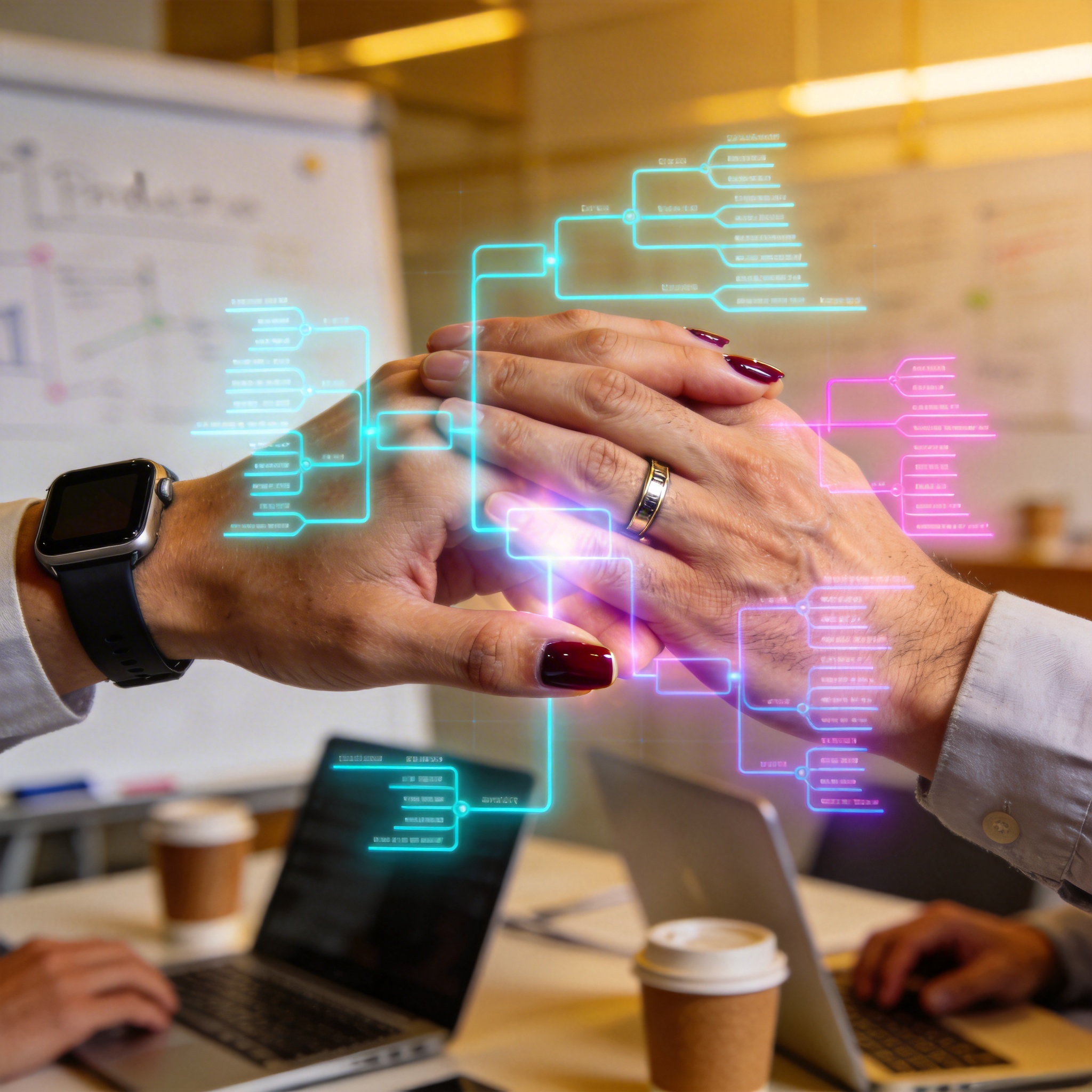
Two hands merging over a holographic software diagram, symbolizing the convergence of product management and software engineering.
Convergence of Product Management and Software Engineering
The rise of AI coding tools is also reshaping the relationship between product management and software engineering. While some product managers envision building software independently, the more likely outcome is a convergence of roles:
Product-Minded Engineers: Software engineers will become more customer-focused, addressing bugs and suggesting product improvements without requiring extensive product manager intervention.
Hands-On Product Managers: Product managers may become more involved in building prototypes and even submitting bug fixes, blurring the traditional division of labor.
This shift suggests smaller, more efficient engineering teams and a move away from formal handover models. The "middle layer of software work"—the manual translation of intent into implementation—is diminishing. The focus is shifting to defining "what to build" and refining intent through creativity, exploration, and discussion. Guiding and managing AI agents will become a critical skill, transforming coding into the art of creating conditions for optimal solutions.
Conclusion
While the assertion that AI will write over 90% of code for many teams might seem bold, the experiences of numerous developers indicate a rapid acceleration towards this reality. This transformation is particularly impactful for early-stage startups, where AI can drive rapid iteration to achieve product-market fit.
The good news is that this shift elevates the importance of fundamental software engineering skills. More code necessitates better validation, observability, architecture, and constraint management. This push towards rigorous engineering practices is seen as a positive development, forcing a deeper consideration of software quality and reliability.
However, the speed of this change is unprecedented. In just over a year, AI coding tools have evolved from nascent ideas to powerful agents that are reshaping how software is written across the industry. This rapid evolution brings a sense of loss for some developers who cherish the craft of manual coding, the flow state, and the satisfaction of building complex systems from scratch. The question arises whether the sense of accomplishment derived from the difficulty of coding will persist, or if it will shift to higher-level problem-solving and AI orchestration.
Regardless, these seismic shifts also present new opportunities. The demand for software professionals is projected to increase, driven by the explosion in AI-generated software. The industry is now exploring what world-class software engineering means in this new era, where powerful AI tools redefine the boundaries of what is possible.
Stay Ahead of the AI Curve
Join 50,000+ subscribers getting the latest AI tools, trends, and tutorials delivered to their inbox weekly.
No spam, unsubscribe at any time.