
AI Models Struggle with Left-Handed Imagery Due to Dataset Bias


Advanced artificial intelligence models, including NanoBananaPro, Lovart, ChatGPT, Seedream, and Grok, consistently fail to generate images depicting left-handed actions, such as writing. This limitation extends to other left-right distinctions involving hands and feet, even when explicit constraints are provided in prompts.
When prompted to generate an image of a "right hand holding an apple, left hand writing," models frequently produce images with a right hand writing and a left hand holding an apple. Similar failures occur with prompts like "a person holding an orange in their left hand and an apple in their right hand" or "left hand holding up a magic wand." While AI generally handles pure spatial relationships, the introduction of "left hand" or "left foot" often leads to errors.
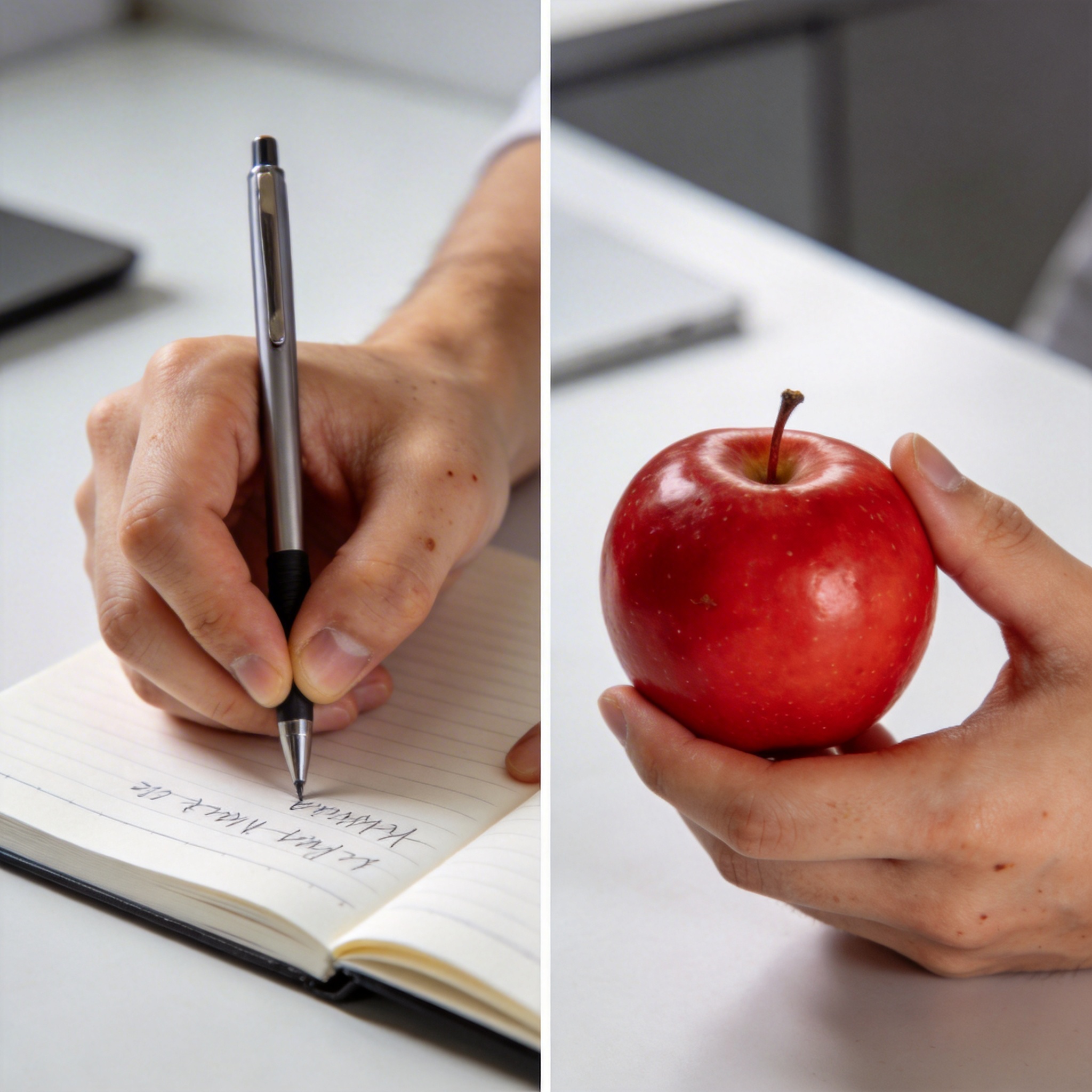
Split image: right hand writing, left hand holding an apple, illustrating AI's common error.
Dataset Bias Hinders Generalization
Research suggests this inability stems from biases within the vast datasets used to train these models. A paper titled "Skews in the Phenomenon Space Hinder Generalization in Text-to-Image Generation" posits that AI's difficulty in distinguishing left from right is not a logical flaw but a reflection of skewed training data. This issue is analogous to visual models struggling to count fingers, as previously observed.
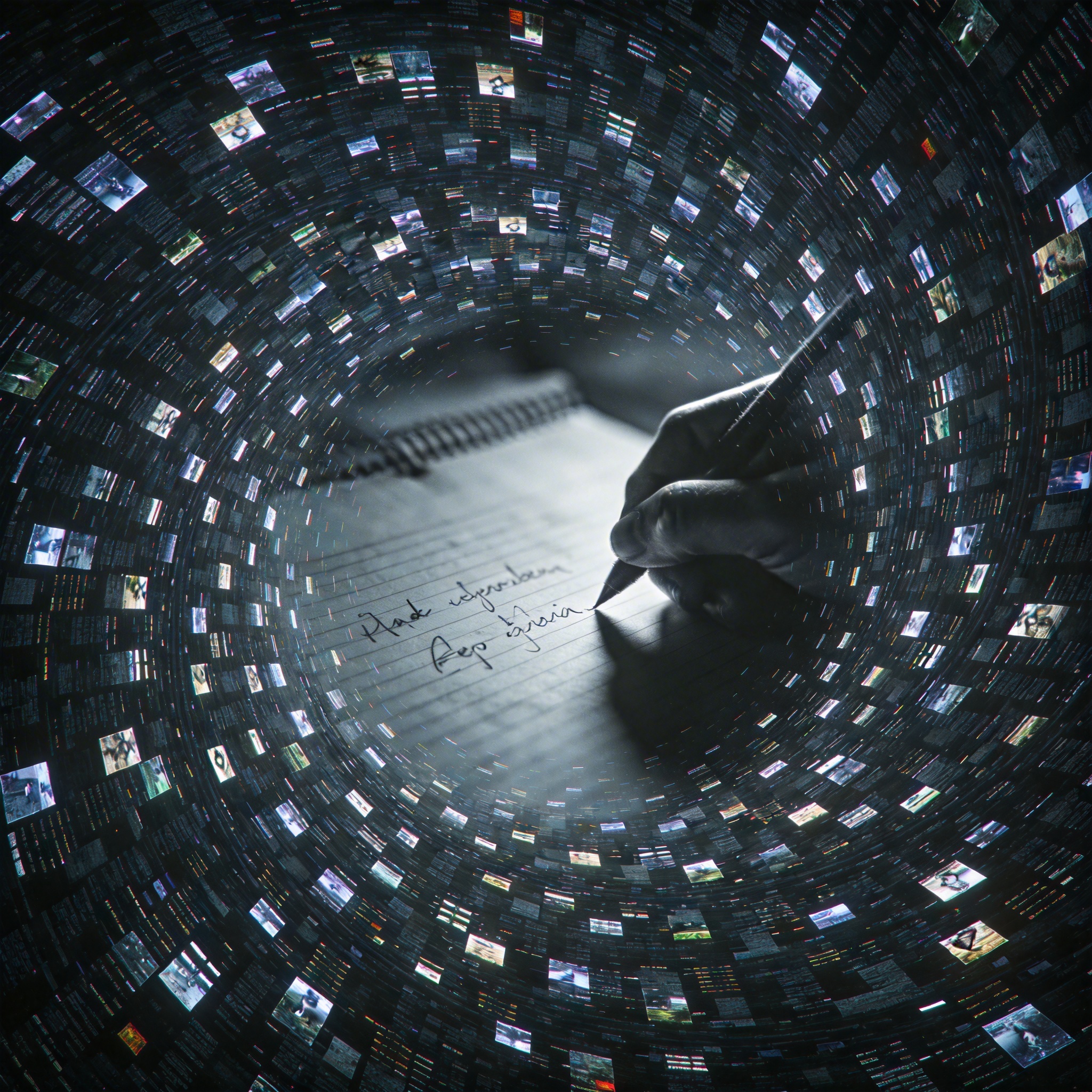
Abstract vortex of digital data with a skewed image of a right hand writing, representing dataset bias.
The paper's core argument is that the "teachers"—the massive image datasets—contain an overwhelming bias. To demonstrate this, researchers decomposed images into "filler" (subject) and "role" (relationship). They created a controlled experiment using 32x32 pixel images with Unicode characters, depicting two objects stacked vertically (e.g., a cake on top of an eraser) and corresponding textual descriptions.
Completeness and Balance in Training Data
The researchers then created various training datasets. Some datasets ensured that each object appeared in both top and bottom positions (completeness), while others had objects predominantly in one position. Crucially, they also varied the "balance"—the proportional distribution of different combinations. For instance, a dataset might show a circle on top far more frequently than a triangle on top.
Experimental results indicated that the quantity of data alone does not guarantee a model's ability to generalize. Instead, data distribution is critical. Two metrics were defined:
Completeness: Whether every item has appeared in every possible position at least once.
Balance: The specific proportion in which different combinations appear in the data.
Models achieved near 100% accuracy only when both completeness and balance were 100%. As these metrics declined, model accuracy dropped significantly. When completeness and balance were lowest, accuracy never exceeded 40%.
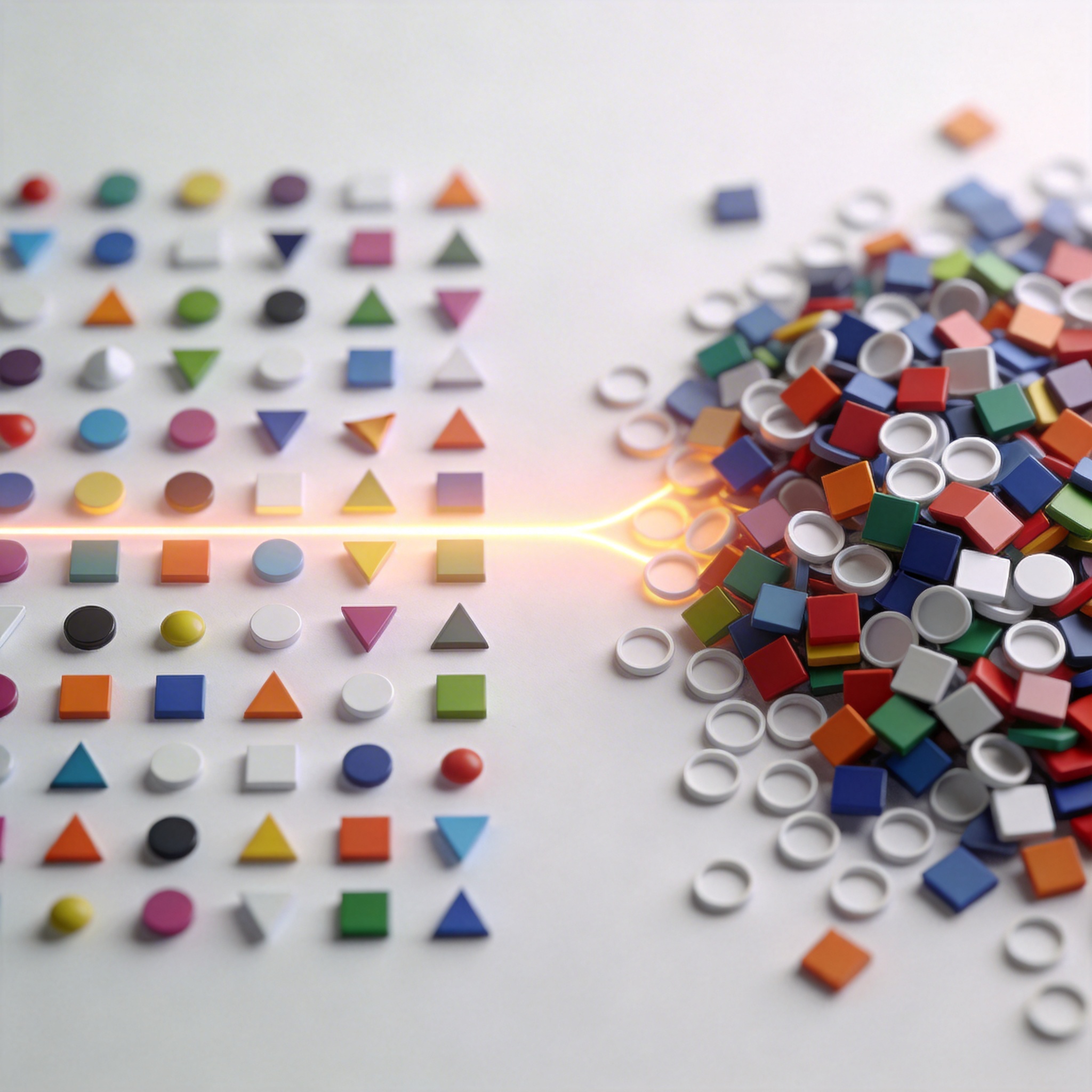
Visual representation of balanced vs. imbalanced data distribution using abstract shapes.
Real-World Implications
A subsequent experiment using the "what's up" benchmark dataset, which contains natural images describing positional relationships, further corroborated these findings. When completeness and balance in the visual data were low, the accuracy of generating left-right relationships for unseen objects consistently declined. A common error was correctly drawing both objects but reversing their intended order (e.g., drawing a can to the left of a plate instead of a plate to the left of a can).
This aligns with the observed failures in generating left-handed imagery. The "childhood education" of AI models, derived from real-world image data, is inherently biased. Since most people write with their right hand, image annotations for "writing" are overwhelmingly associated with right-handed actions. Consequently, when a model is asked to depict "left-handed writing," it defaults to its learned "truth" of right-handed writing, having rarely encountered or processed left-handed examples.
This limitation highlights that AI's knowledge is a direct reflection of the data it is fed. If training sets lack sufficient representation of minority phenomena, such as left-handed actions, models will struggle to learn and reproduce them accurately. The biases embedded in large-scale image corpora mirror human photographic and cultural habits over decades, creating a statistically skewed world for AI to interpret.
Stay Ahead of the AI Curve
Join 50,000+ subscribers getting the latest AI tools, trends, and tutorials delivered to their inbox weekly.
No spam, unsubscribe at any time.