
Unlocking Creativity in the AI Era: Strategies for Rekindling Innate Innovation
The proliferation of AI tools such as OpenClaw, Claude Code, Codex, Seedance 2.0, and Xiaoyunque has introduced unprecedented creative capabilities. However, many users find themselves staring at a blank cursor, unsure how to leverage these powerful instruments. This phenomenon suggests that while the tools are readily available, the underlying human creativity required to utilize them effectively may be dormant.
A common sentiment, "If you installed OpenClaw and don't know what to do with it, then you don't need it," often misinterprets the issue. The challenge is not a lack of need for AI tools, but rather a forgotten connection to one's innate creativity, buried under years of conditioning.
Reconnecting with Innate Creativity
Childhood experiences, such as playing with building blocks or drawing freely, demonstrate an inherent, uninhibited creativity. This natural inclination often diminishes through structured education and work environments that prioritize conformity over innovation. Educational systems frequently emphasize single correct answers and adherence to templates, while professional settings often demand process compliance and KPI achievement over novel ideas. This prolonged suppression can lead individuals to forget their creative potential, leaving them unprepared to engage with open-ended AI tools.
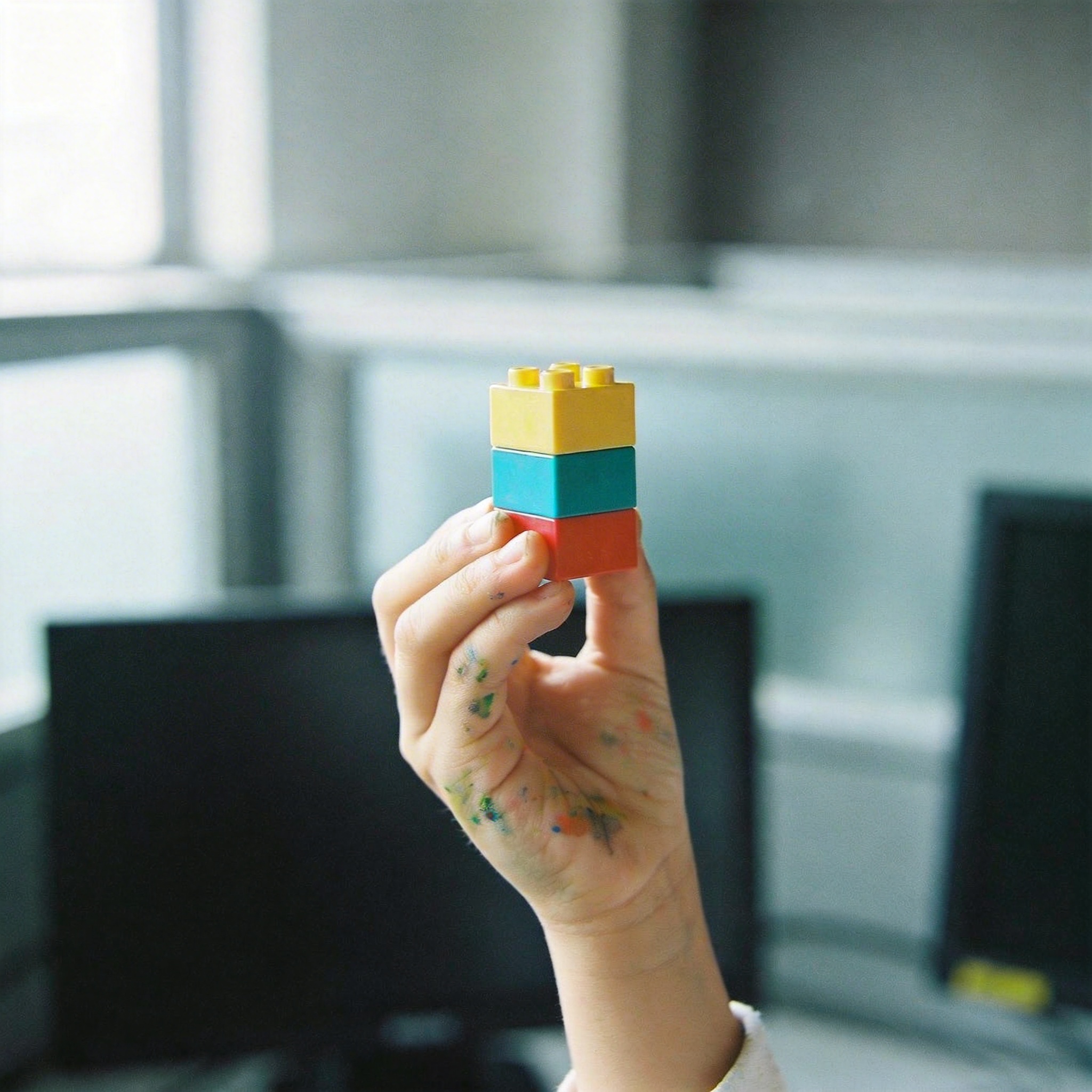
Child's hand with building block against blurred office background, representing lost creativity.
Drawing on nearly a decade of experience as a designer and an avid gamer, one perspective suggests that creativity is a fundamental human trait. The following strategies aim to help individuals rediscover and harness this buried capacity.
Identify Sources of Discomfort
Creativity is often misunderstood as a skill, but it is fundamentally a desire. A designer's ability to create an effective interface, for instance, often stems from a strong aversion to poorly designed ones. This feeling of discomfort, or "cognitive dissonance"—the gap between expectation and reality—serves as a powerful engine for creative drive. When faced with something suboptimal, the urge to rectify it can spark innovation.
To reactivate this desire, individuals should actively note moments of dissatisfaction. These are not grand aspirations but specific, everyday annoyances, such as "The XX feature of XX product is too user-unfriendly" or "Why isn't there a tool that can XXX?" Documenting these observations, even in a simple phone note, can reveal recurring themes that highlight areas of genuine concern and potential creative focus. This process helps pinpoint where one's creative energy naturally lies.
Abstract image of a brain with a glowing fissure, representing discomfort as a creative spark.
Impose Deliberate Constraints
Large, undefined goals, such as "I want to make an awesome AI product," can lead to "choice overload" and paralysis. Psychologist Barry Schwartz's "Paradox of Choice" illustrates that an abundance of options can decrease motivation to act. Similarly, in interaction design, more than 7±2 chunks of information can cause cognitive overload. The AI era, with its vast possibilities, can be overwhelming.
The solution lies in actively imposing constraints. Unlimited freedom can be an enemy of creativity; the human brain excels at finding optimal solutions within defined boundaries. Games like "The Legend of Zelda: Breath of the Wild," which provide limited abilities and resources, demonstrate how constraints can foster ingenious solutions.

Bonsai tree in a pot against a vast digital landscape, symbolizing creativity within constraints.
Practical constraints can include:
Tool Constraint: Use only one AI tool (e.g., Claude Code, Midjourney, Seedance 2.0) for a specific task.
Time Constraint: Dedicate a short, defined period, such as an afternoon or evening, to complete a project.
Scope Constraint: Focus on developing only one function or solving a single, small problem.
These limitations, when combined, can shift the brain from panic to excitement, enabling focused creative output. For example, one might aim to "use Claude Code this afternoon to create a simple tool for daily inspiration logging" or "use Midjourney to generate five visual styles for an official account."
Embrace Imperfection and Rapid Prototyping
The most critical step is to begin creating, even if the initial output is imperfect. In the traditional era, the high cost of development often necessitated extensive planning. However, AI tools have drastically reduced the barrier to entry. A small tool can be running in minutes with Claude Code, and visual concepts can be generated in seconds with Midjourney.
This low cost allows for "prototype thinking" or the "Minimum Viable Product (MVP)" approach. Instead of striving for perfection, the goal is to create a rough, functional version, then iterate based on observation and feedback. Game designer Shigeru Miyamoto, for instance, famously starts with extremely rough prototypes, refining them if they prove enjoyable and discarding them if not.
The act of creation itself is a form of thinking. An idea, vague in the mind, becomes tangible and assessable once externalized. Even a crude version can immediately reveal flaws and opportunities for improvement, sparking further creative ideas. The suggestion is to use an AI tool to create a minimum viable version of a chosen idea, focusing on existence rather than perfection.
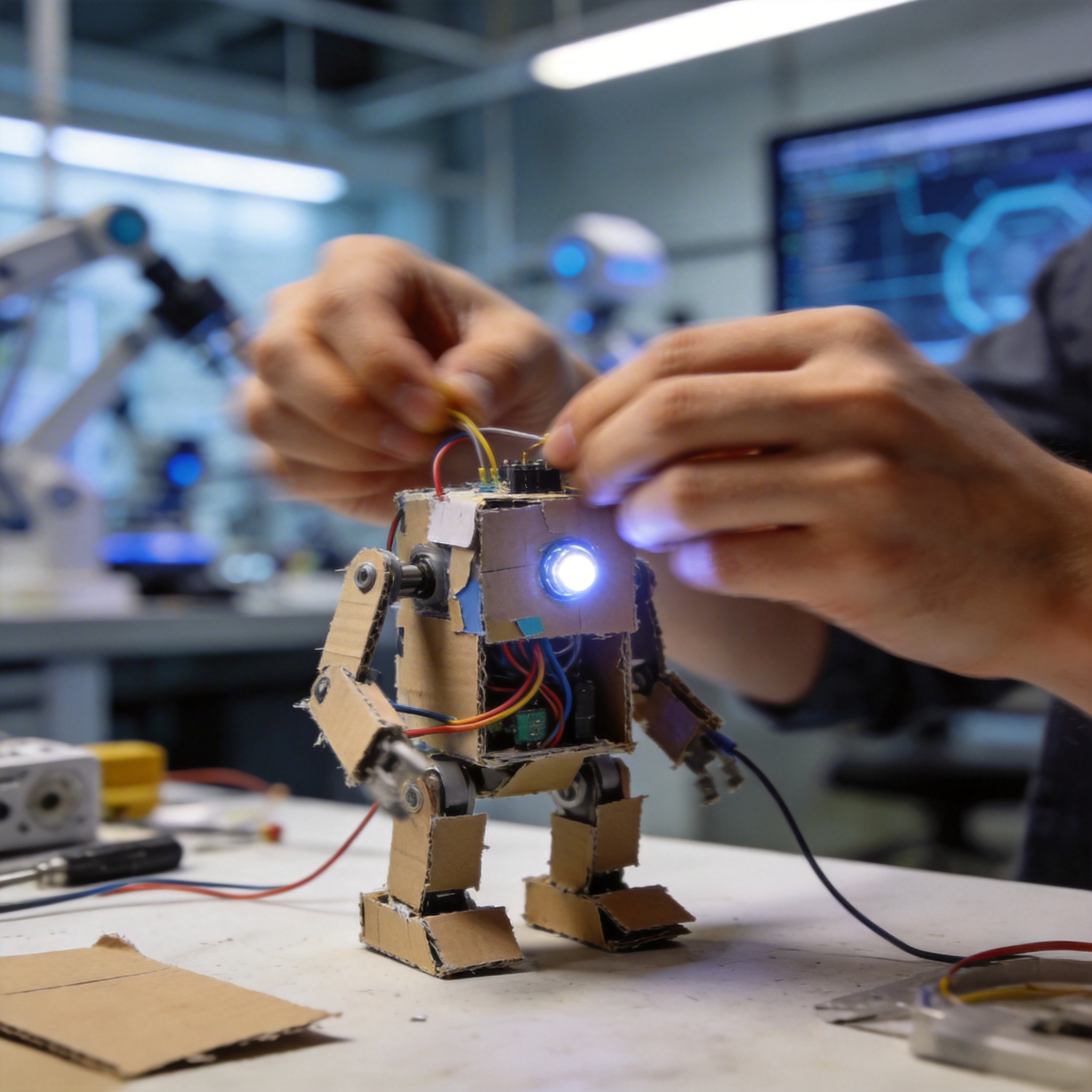
Hands rapidly assembling a crude robot prototype, illustrating rapid prototyping and imperfection.
Cross-Pollinate Ideas from Disparate Fields
As Steve Jobs noted, "Creativity is just connecting things." It stems from the richness of experiences and the ability to synthesize new ideas from seemingly unrelated "dots." To cultivate this, a three-step process can be employed:
Collect Dots from Unrelated Fields: Actively seek experiences and knowledge outside one's primary domain. A UX designer might explore AI content, finding connections between interaction design principles and AI product analysis. A programmer might take up photography, or a finance professional might keep a fish tank. The goal is broad exposure, not certification.
Deconstruct and Analyze Others' Works: Examine creations that resonate, breaking down their structure and identifying what makes them compelling. In gaming, this might involve analyzing why a level encourages repeated attempts or why an economic system is engaging. For films, it means understanding narrative progression and moments of impact. This practice trains the mind to see the world through a creator's lens.
Apply Stolen Structures to One's Own Work: The key is to adapt observed structures to new contexts. Techniques from screenwriting, such as the "hero's journey" or "Chekhov's Gun," can be applied to content creation, structuring articles or case studies to build anticipation and deliver satisfying resolutions. Similarly, comedic techniques like "escalation" can be used to demonstrate AI tools, progressively revealing more advanced or unexpected capabilities.
Each new field explored adds another "dot" to one's mental landscape. Eventually, these dots connect, forming novel insights that constitute creativity.
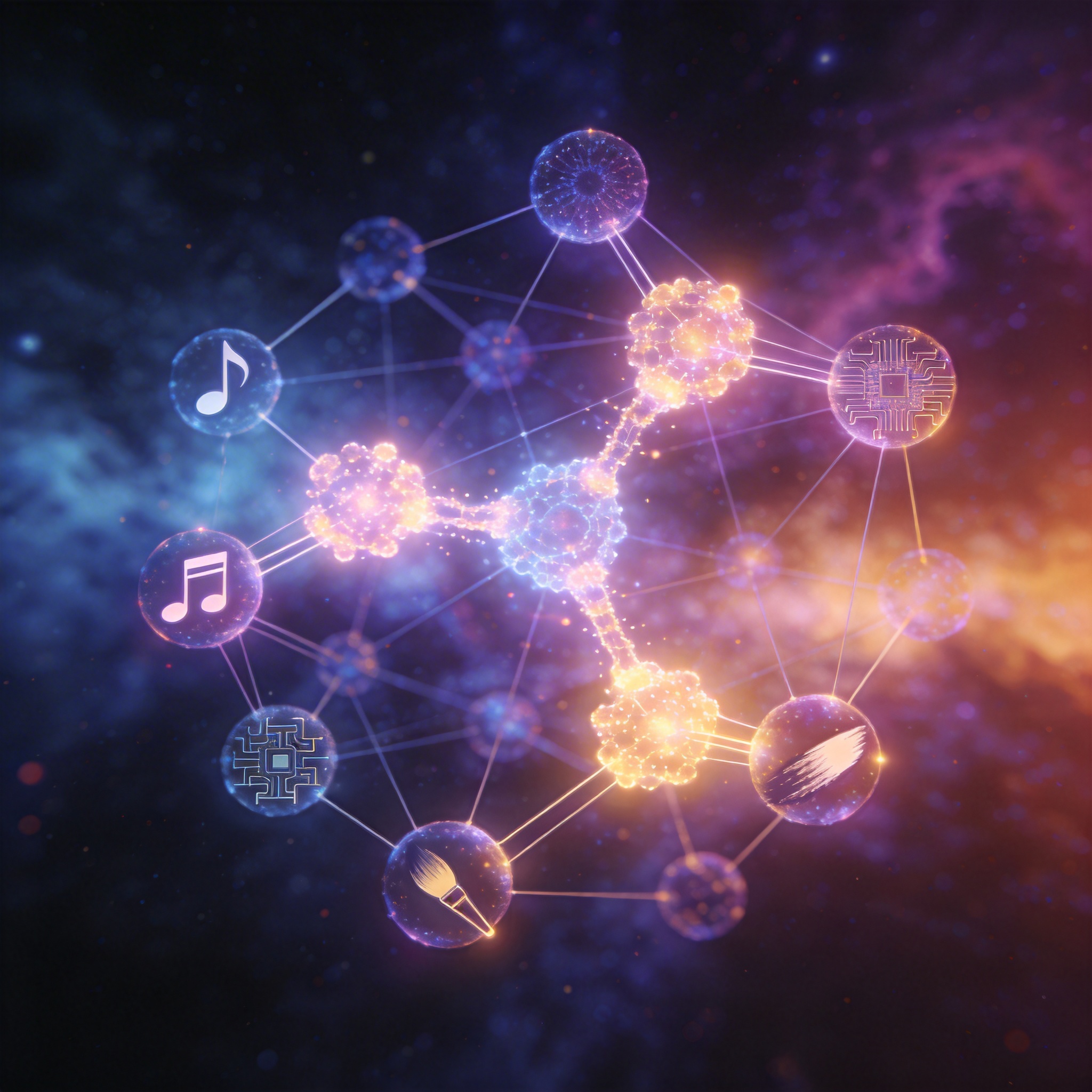
Abstract network of glowing dots connecting, symbolizing cross-pollination of ideas.
Allocate Time for Mental Idleness
While the previous steps emphasize active engagement, this final strategy focuses on deliberate inaction. Modern life, filled with constant digital stimulation, often deprives the brain of "blank time." This is crucial because, in moments of idleness, the brain enters its default mode network, allowing for free association and the spontaneous connection of scattered memories and ideas.
Anxiety, comparison, and the fear of falling behind are abundant fuels for creativity, but they require a spark. That spark is often found in quiet moments. Many individuals report their best ideas emerging during activities like showering, walking, or daydreaming—times when the brain is not actively processing external input.
A practical suggestion is to dedicate 30 minutes daily to "blank time." This does not require formal meditation but simply involves disengaging from devices and external stimuli. A walk without headphones, a longer bath, or simply lying still can provide the necessary space for the brain to process anxieties and ideas, fostering creative breakthroughs.
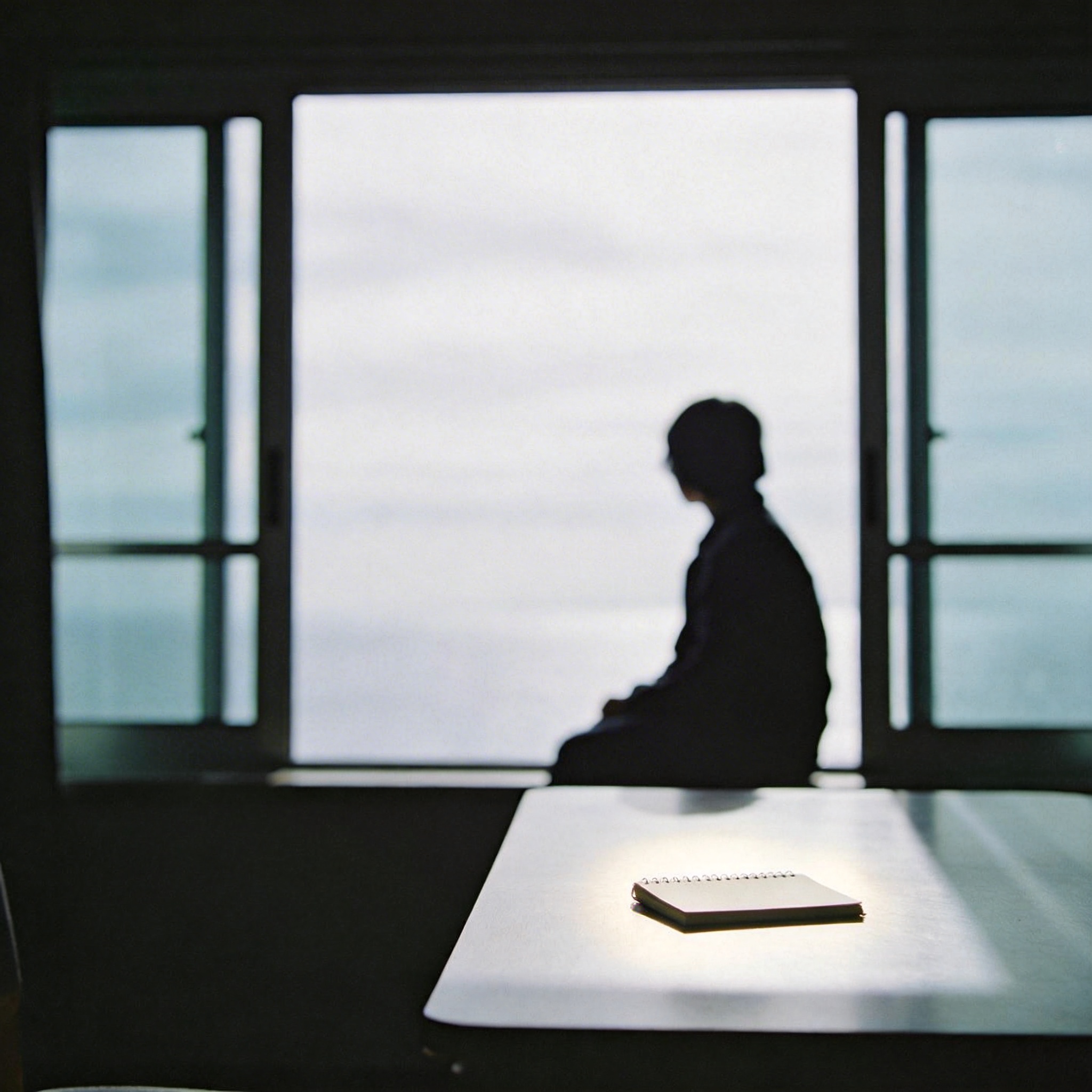
Person silhouetted by a window, contemplating, symbolizing mental idleness for creativity.
Create for Intrinsic Enjoyment
The tendency to compare one's creations with others can lead to "learned helplessness," diminishing creative desire. This psychological phenomenon, where repeated experiences of uncontrollable frustration lead to a cessation of effort, can stifle nascent creativity.
Instead, the primary motivation for creation should be intrinsic enjoyment. When an activity is pursued for its own sake, rather than for external rewards, recognition, or social validation, creativity, persistence, and satisfaction significantly increase. This aligns with Self-Determination Theory, which posits that autonomy, competence, and relatedness are fundamental psychological needs.
Creating for personal happiness means valuing one's unique output, even if it is imperfect. The feeling of bringing something into existence, regardless of its external reception, is a powerful motivator. The AI era offers an unprecedented opportunity to re-embrace this playful, intrinsically motivated approach to creation, where the cost of failure is minimal and the joy of discovery is paramount. As the Dutch historian Johan Huizinga suggested in "Homo Ludens," human civilization itself is born from play, and in play, we are closest to our true selves.
Stay Ahead of the AI Curve
Join 50,000+ subscribers getting the latest AI tools, trends, and tutorials delivered to their inbox weekly.
No spam, unsubscribe at any time.