
Anthropic Ban Prompts OpenClaw to Launch Video Generation and AI "Sleep Memory" System
OpenClaw has introduced native video and music generation capabilities, alongside a novel "Dreaming" memory system designed to simulate human sleep, following Anthropic's decision to restrict free access to its Claude interface. The update, version 2026.4.5, represents a significant expansion of OpenClaw's functionalities and strategic diversification of its underlying large language model dependencies.
Shattered glass shards, one with 'A' for Anthropic, another with 'O' for OpenClaw, separating, with a glowing 'GPT' in background.
The update was announced with a concise statement from OpenClaw: "Anthropic banned us. GPT-5.4 got stronger. We moved on." This message quickly garnered over 1.3 million views within 24 hours.
Expanded Media Generation and AI Memory
The 2026.4.5 release marks the first time OpenClaw natively supports video and music generation. Users can now directly leverage models such as Google Lyria and Runway to produce media content. The platform integrates 11 providers for video generation, including Grok, Wan, Runway, Google, MiniMax, OpenAI, Qwen, fal, Together AI, BytePlus, and ComfyUI's local workflow. Music generation supports Google Lyria, MiniMax, and ComfyUI, while image generation includes ComfyUI, fal, Google, MiniMax, and OpenAI's gpt-image-1, with the latter also supporting reference image uploads for editing.
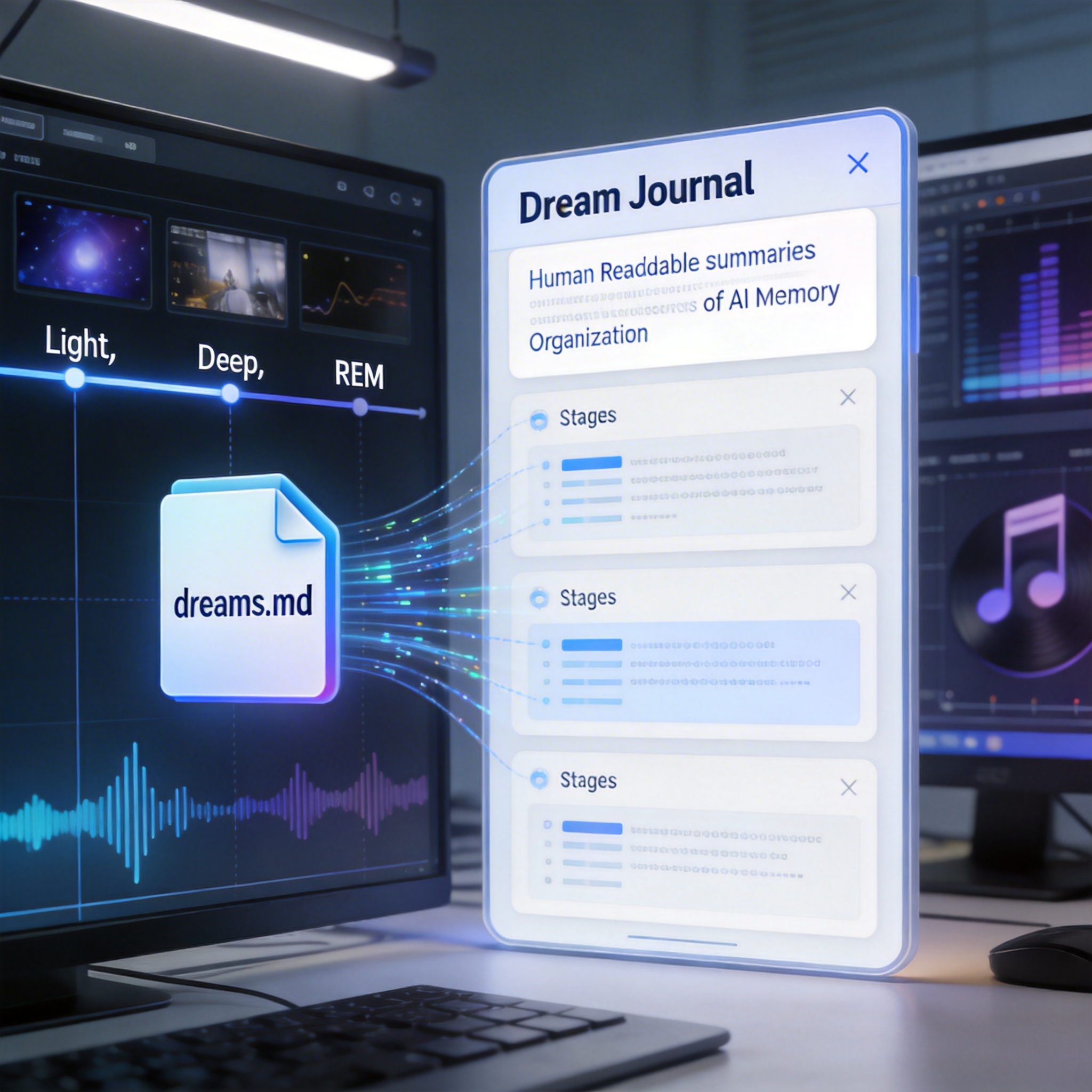
Digital interface showing an AI 'Dream Journal' with memory stages and media generation icons.
A key innovation in this version is the "Dreaming" memory mechanism, which aims to enable AI to "sleep" and consolidate memories akin to humans. This system extracts AI memories through three collaborative stages: Light, Deep, and REM (Rapid Eye Movement). By initiating the /dreaming command, OpenClaw processes short-term memories, identifies "persistent truths," and records them in a dreams.md file. This allows the AI to not only retain conversational context but also to learn and evolve through reflection, facilitating the management of long-term tasks. The system automatically performs a full "sleep" scan daily at 3 AM when activated, with a "Dream Journal" panel providing human-readable summaries of the organization process.
Strategic Diversification Amidst API Changes
Anthropic's ban, enacted on April 4th, ceased coverage for third-party tools like OpenClaw under Claude Pro and Max subscriptions. Previously, OpenClaw users could access Claude's capabilities for a monthly fee, but this change now requires users to purchase API keys or enable metered billing. Anthropic cited excessive computational strain from third-party tools bypassing its prompt cache optimization, noting that heavy OpenClaw usage consumed significantly more computing power than standard Claude sessions.
Broken digital bridge between 'Anthropic' and 'OpenClaw,' with diverse glowing pathways leading to 'GPT-5.4' below.
In response, OpenClaw has intensified its strategy of integrating a wide array of large language models, allowing users to switch freely between providers. Some users have already migrated fully to GPT-5.4. The update also includes optimizations for GPT-5.4, such as forward-compatible openai-codex and gpt-5.4-mini, and an optional GPT personification feature.
Technical Enhancements and Community Impact
Beyond media generation and memory, the update introduces several technical improvements. The OpenClaw workflow engine transitioned from external CLI calls to in-process execution, reducing communication overhead. Structured task processes were implemented, providing users with real-time updates on long-running Agent tasks. Prompt cache reuse was systematically optimized, leading to reduced latency and token consumption in continuous conversations. The control UI now supports 12 new languages, including Simplified and Traditional Chinese, and the ClawHub skill market has grown to over 44,000 skill packs with built-in search and one-click installation. Security fixes were also a significant part of the changelog, addressing issues across various communication channels.
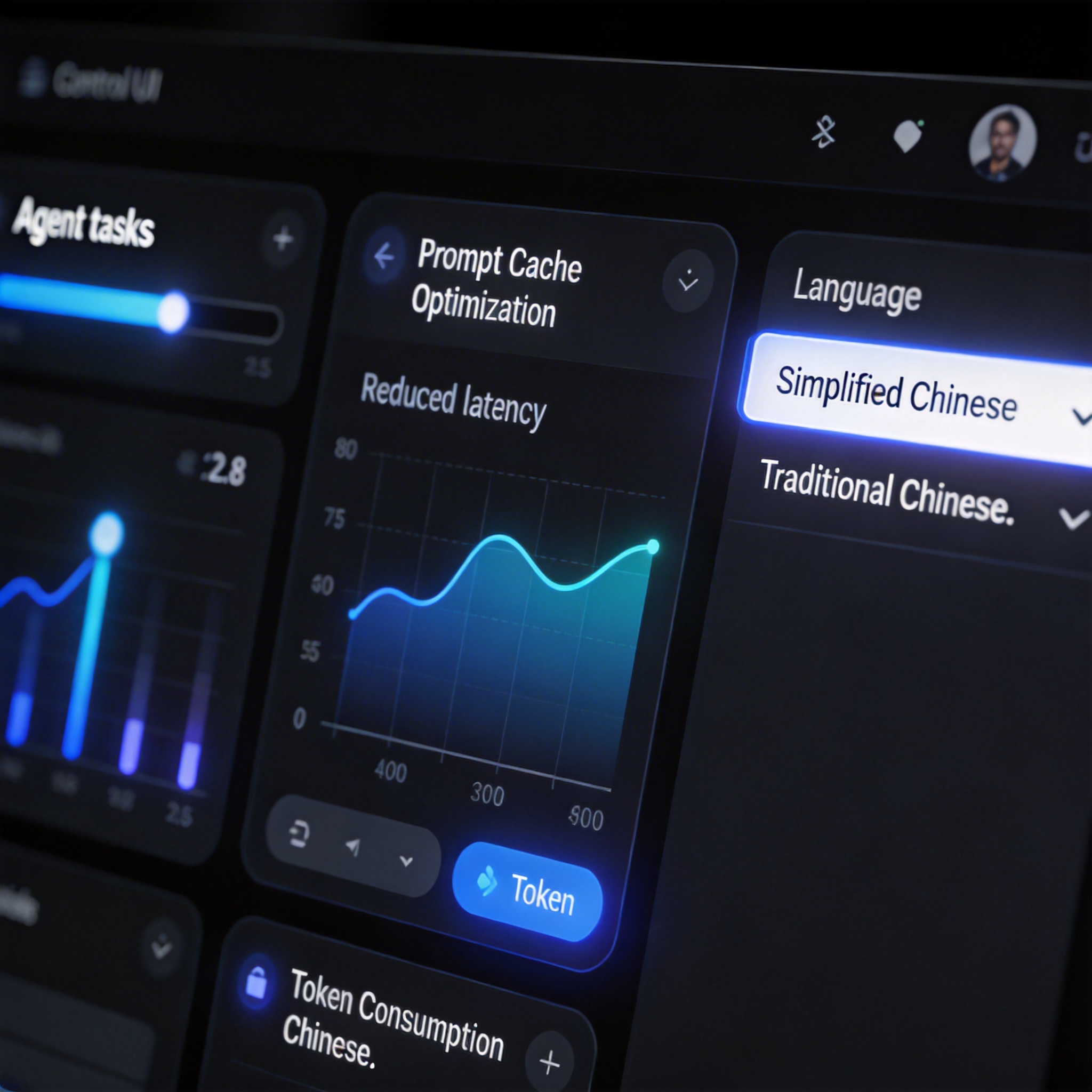
Modern control UI showing task progress, prompt cache optimization, and language selection for OpenClaw.
While OpenClaw initially removed the Claude CLI backend from its new user onboarding process following the ban, the platform's documentation was later updated to indicate that Anthropic staff had re-permitted OpenClaw-style Claude CLI usage. This suggests that while free access via subscriptions remains restricted, technical integration at the CLI level is maintained, requiring users to pay for usage.
The incident highlights a broader challenge for open-source projects that rely on commercial large language models, where their operational fate can be influenced by the policies of foundational model providers. OpenClaw's strategy of broad model integration aims to mitigate this dependency, although the long-term stability of such arrangements remains a consideration.
Stay Ahead of the AI Curve
Join 50,000+ subscribers getting the latest AI tools, trends, and tutorials delivered to their inbox weekly.
No spam, unsubscribe at any time.