
AI Esports Prompt Battle Highlights AIFUT Conference Discussions on Embodied AI and Industry Impact
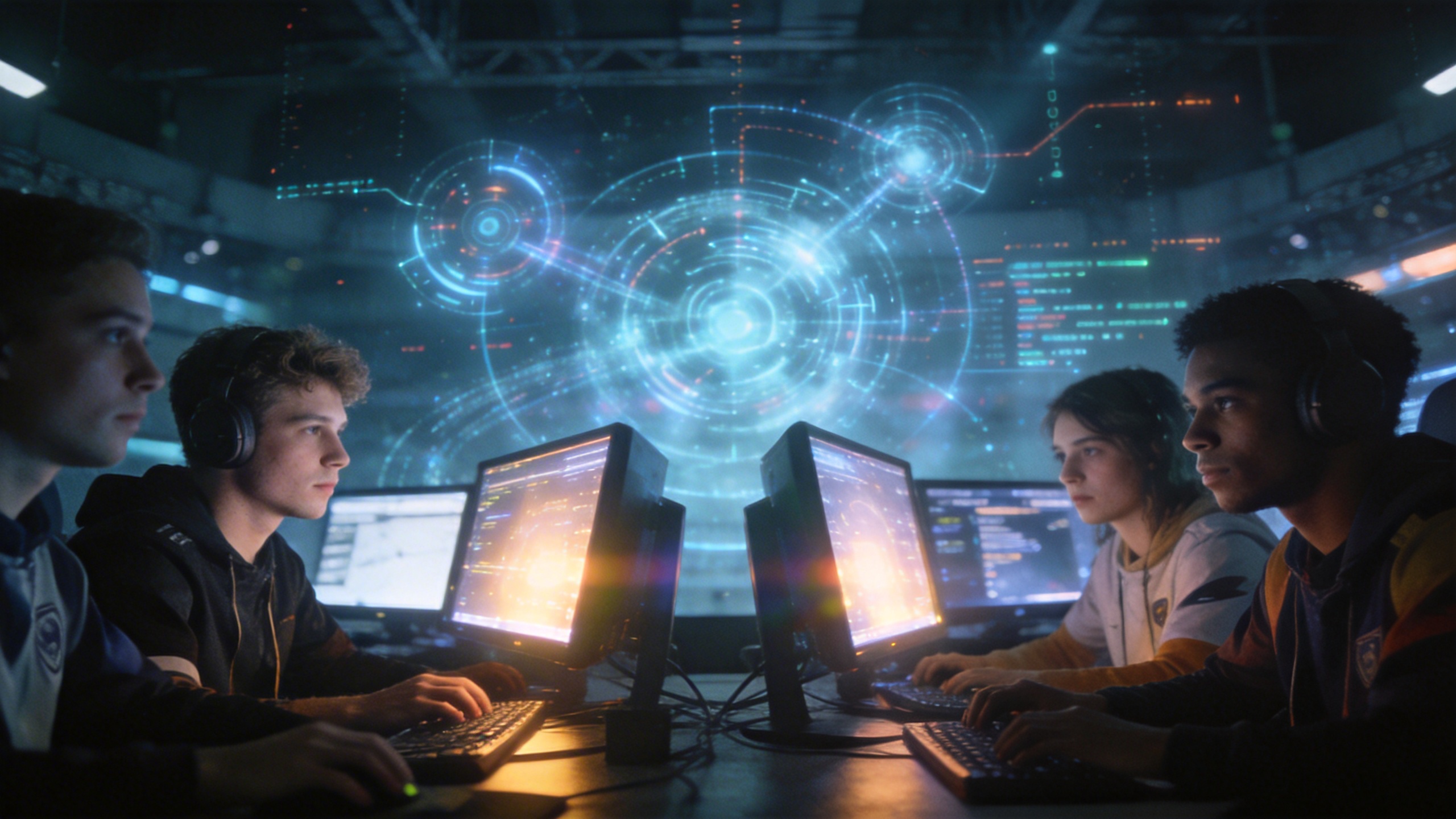
The AIFUT Conference concluded its two-day program, featuring discussions on embodied AI, the future of robotics, and the impact of artificial intelligence on various industries, alongside an AI esports competition. The event included multiple sessions with entrepreneurs, investors, and developers.
Embodied AI and the Future of Robotics
Yu Yinan, founder and CEO of Vbot Vitality, discussed the progression from autonomous driving to embodied AI, bringing his company’s quadruped robot, "Big Head," to the stage. Yu, who spent a decade in autonomous driving, views embodied AI as a natural technological advancement, noting that autonomous driving is essentially a two-degree-of-freedom robot. He suggested that while the embodied AI field appears active, it lacks intense competition because its applications span numerous industries, unlike autonomous driving, which is primarily tied to the automotive sector.
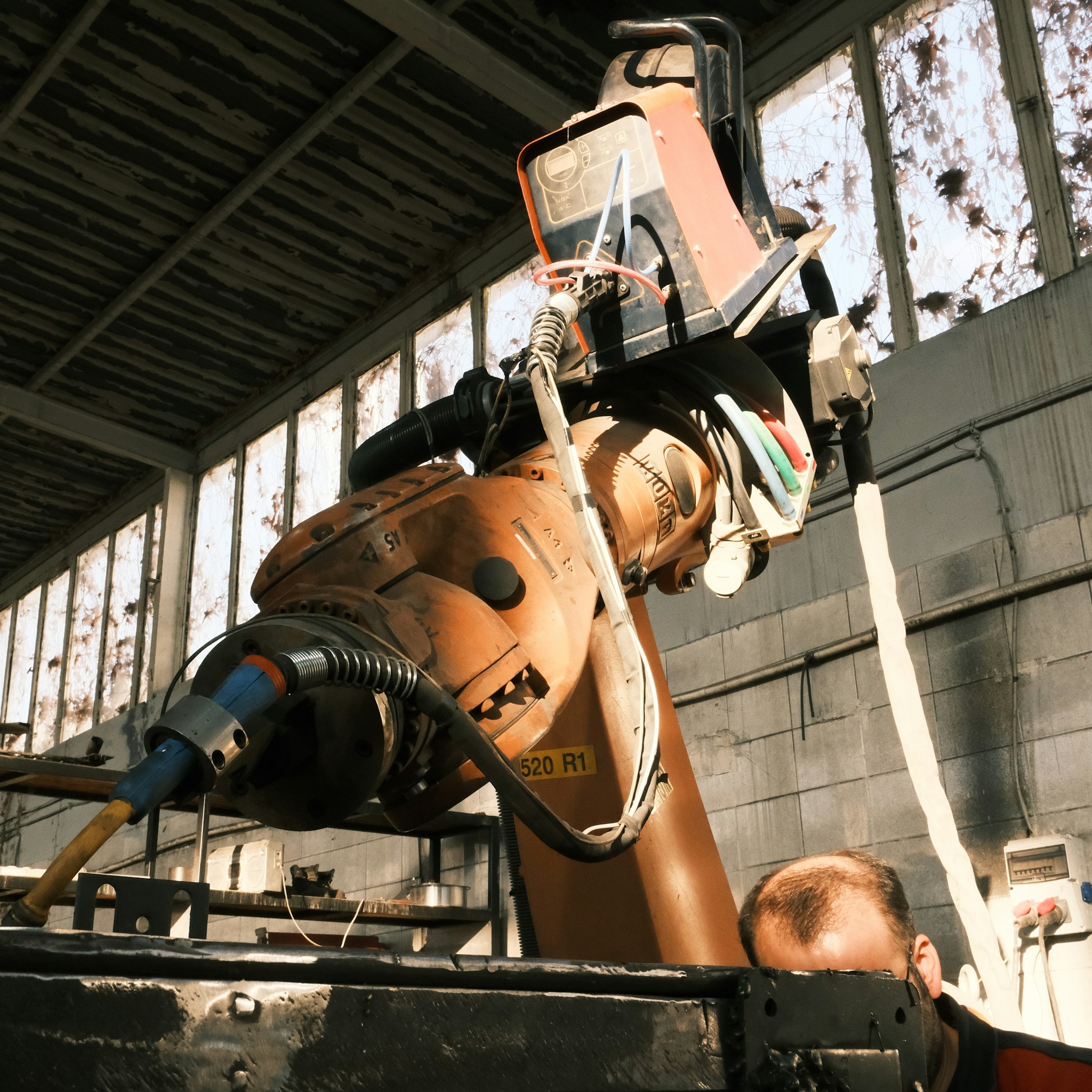
A quadruped robot navigating an industrial environment, demonstrating its utility in complex operational settings.
Yu highlighted the current focus on industrial applications for embodied AI, with few companies venturing into home robotics. He emphasized that a robot's true value lies in providing full-process services rather than performing isolated tasks. For example, a home robot should manage the entire laundry process, a capability no single home appliance currently offers. He identified data and hardware as key bottlenecks for achieving comprehensive end-to-end services but predicted rapid progress. Yu noted that integrating "Big Head" with OpenClaw made the robot "come alive," enabling it to assist with tasks, break down long-term objectives, and even find code online for deployment. He likened this development to Android for robots, establishing an operating system and an entry-level product. While many companies are now developing home robots, Yu anticipates a two-to-three-year timeline for their implementation. He expressed a preference for bipedal humanoids if only one form were to be developed but foresees a diverse range of robot configurations in the future.
AI Esports Competition
A 5v5 Prompt Battle esports competition was a highlight of the conference, held in an esports venue. Two teams, "Ah Dui Dui Dui" (Red Team) and "Better Dance" (Blue Team), competed in a best-of-three format, creating AI videos on the spot using LibTV. Each round lasted ten minutes, with live audience voting determining the winner.
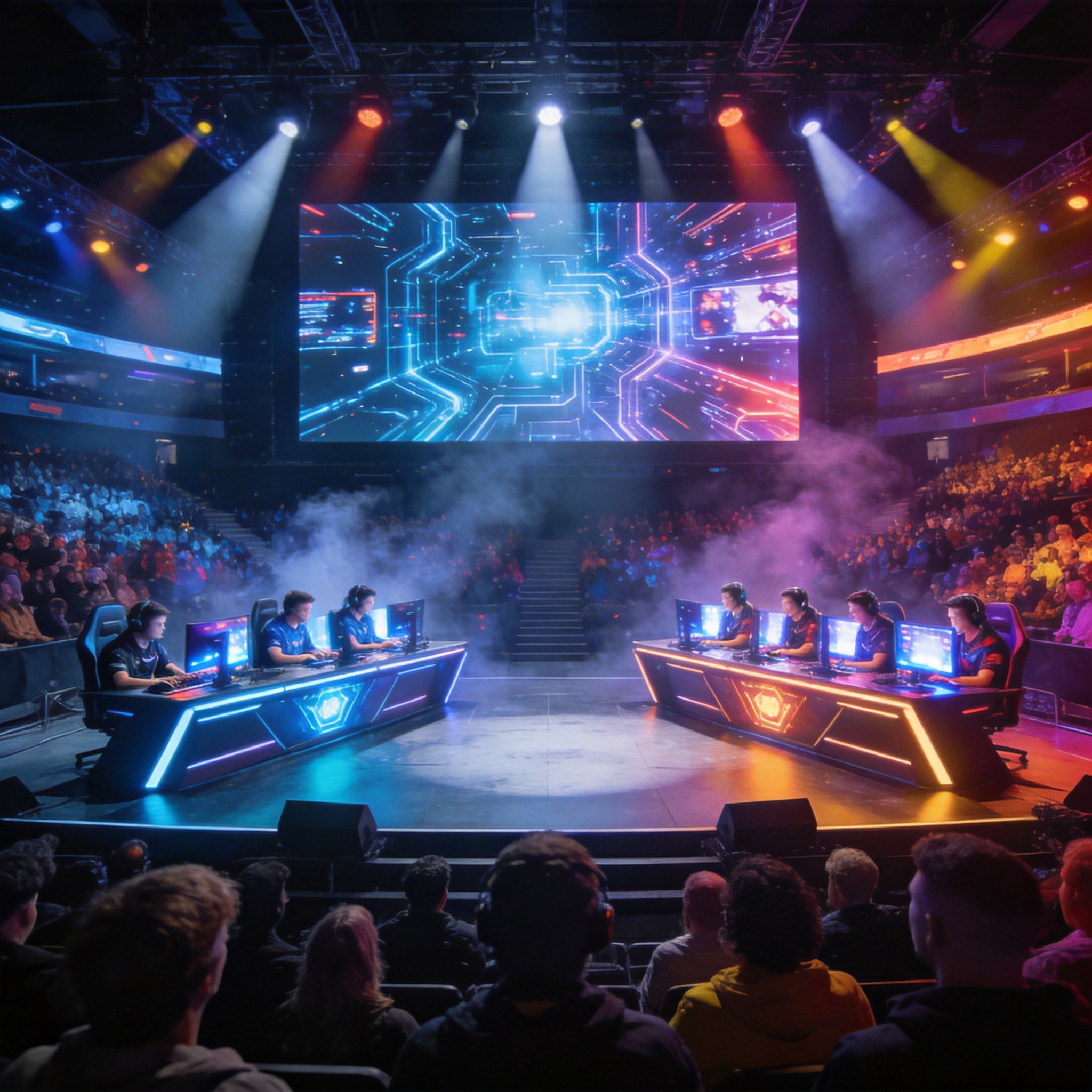
Two teams competing in a vibrant esports arena, with a large screen displaying AI-generated content and an audience watching.
The Red Team comprised documentary director Ding Yi, AEM team head Monk, independent entrepreneur Senhai, AI video visual designer Huang Xiang, and AI short film creator Jinghao Suiyue. The Blue Team included AI film festival award winner KK Buxian, Waka Award 2025 Gold winner STEAMCHI, prompt master Shangfenba PT, super creator Yue Tianshi, and AIGC tutor Tai Q.
The competition featured three rounds with increasingly challenging topics. The first round, an emoji challenge ("Hajime + keyboard + explosion"), was won by the Blue Team with a cat-themed short film. The second round, a text prompt ("Yizhuang + robot + blind date"), saw the Red Team win with an imaginative "robot blind date corner" video, tying the score. The decisive third round, based on "cow + beer" with a blank option, resulted in both teams producing commercial-style videos. The Red Team ultimately secured the championship 2-1. During the award ceremony, Senhai encouraged attendees to explore AI video creation, emphasizing the timely positive feedback it offers and the importance of taking the first step.
AI's Impact on the Film and Television Industry
A panel discussion featuring AI director Shen Siyuan, producer Hua Kaitian, and actress Lu Zhaohua explored the implications of AI for the film and television sector. Lu Zhaohua expressed an open attitude toward AI, viewing it as a source of new possibilities for actors. Shen Siyuan, who initially believed AI could replace everything, now finds real people increasingly irreplaceable after working extensively with AI dramas. He noted the difficulty for AI to capture subtle human expressions or the comedic timing of a talk show, often producing standardized outputs that lack desired effects. Shen now prefers using on-set actors for performance transfer to generate content, finding it more effective than relying solely on AI prompts.
Hua Kaitian added that AI's pursuit of realism in simulating humans underscores the current irreplaceable "realness" of human actors. However, he acknowledged that crew downsizing is likely, particularly for extras and some on-site staff. He identified a critical need for talent capable of bridging the AI and film/television industries, understanding both domains, and establishing new workflows. Regarding competitive advantages, Hua mentioned "judgment" and "IP," citing the human ability to form shared recognition around fictional stories as a foundation for community. He suggested that the ability to identify and effectively present strong IPs could become a producer's key differentiator. Lu Zhaohua emphasized "human touch" as the fundamental difference between real and AI actors.

A human hand interacting with a glowing digital interface, symbolizing the integration of AI into the film and television industry.
AI Entrepreneurship and Investment Outlook
A roundtable with AI entrepreneurs Kuaidao Qingyi, Tao Fangbo, and Yang Haibo provided insights into starting businesses in the AI era. Kuaidao Qingyi, who founded Get Notes and GetSeed recording cards, described his approach as problem-solving rather than strategic planning. Tao Fangbo, a former Facebook recommendation systems engineer, is developing AI avatars with the long-term goal of an avatar internet, a strategy he believes avoids immediate competition and provides resilience against rapid large model iterations. Yang Haibo's Guanglun Intelligence focuses on providing simulated synthetic data for embodied AI, estimating that embodied AI's data demands are at least a thousand times greater than those of large language models. He noted that embodied AI lacks existing pre-training data and requires complex information dimensions, such as grasping objects and feeling gravity.
The entrepreneurs discussed the challenges of AI entrepreneurship. Kuaidao Qingyi stated that the low cost of technical implementation means the difficulty lies in deciding what to build, not how to build it. Tao Fangbo described the AI entrepreneurial landscape as more brutal than the internet, with product viability changing rapidly. Yang Haibo stressed the importance of daily "zero-to-one" thinking and breaking sunk costs, warning that emotional attachment to investments can be detrimental. All three emphasized finding genuine needs, overcoming inertia, and adapting to change.

Abstract glowing neural pathways and data streams symbolizing the complex and evolving landscape of AI entrepreneurship and investment.
In a final roundtable, Zhang Hong from Harvest Fund, Liao Zhiguo from GF Securities, and Xie Siyuan from Yijing Capital discussed AI investment trends for 2026. Liao Zhiguo likened current AI development to the early stages of electricity, where infrastructure is still being built but applications already extend beyond basic functions. He cited the exponential increase in token consumption due to agents making dozens of model calls per request. Xie Siyuan elaborated on the evolution of large models: from the ChatGPT era (one user request, one AI response) to the Agent era (one user request, AI makes multiple calls) and the self-learning era (AI calling AI for self-training), each stage leading to a leap in token usage.
Regarding the future of SaaS, Xie Siyuan suggested that with AI integration, software becomes "intelligent," akin to a living employee. He argued that SaaS companies must deliver results and form closed loops to complete their transformation. Liao Zhiguo observed that while some valuations are being challenged, others are expanding, indicating that investors are evaluating companies based on their specific industry and stage. He proposed a framework centered on AI's ability to achieve a hundredfold efficiency increase and imitate humans. For investment advice, Liao Zhiguo emphasized the importance of uniqueness in the AI era, as AI excels at standardization. Xie Siyuan cautioned against limiting beliefs with analogies, suggesting that AI represents a "creator-level endeavor" that is deciphering the "creator's code."
A Young Developer's Perspective
The conference concluded with a presentation by Lu Sitong, a 13-year-old independent developer. She received her first computer at age 10 and, after growing tired of English-language games, began creating her own. At 11, she developed "Frog Tutor," an English learning tool, using Coze. This project was featured at ByteDance's Doubao large model launch. Over three years, she created more than a hundred works, earning awards from ByteDance, Baidu, Tencent, and Amazon, and was interviewed by People's Daily.
Lu Sitong highlighted that her achievements are the result of extensive refinement and iteration, noting that the avatar for "Frog Tutor" alone underwent over 50 iterations, and the entire work was iterated more than 300 times. She shared her "Heart Energy Elves" project, developed after a classmate experienced emotional distress. This product allows users to record daily emotions and acts of kindness as a form of release, winning the Best AI Public Welfare Award. Her development methodology involves an eight-step process: identifying needs, drawing blueprints, analyzing functions, selecting platforms, project-based learning, seeking expert help, iterative refinement, and competitive practice. She advocated for integrating good works into the market and daily life, asserting that AI tools empower children to become independent earlier, potentially allowing parents to retire sooner.
Stay Ahead of the AI Curve
Join 50,000+ subscribers getting the latest AI tools, trends, and tutorials delivered to their inbox weekly.
No spam, unsubscribe at any time.