
Uber Engineers Leverage AI for Development, Reporting Significant Efficiency Gains

Uber's engineering team has increasingly integrated artificial intelligence into its development processes, with 84% of developers now using agentic programming. Data from integrated development environment (IDE) tools indicates that 65% to 72% of code is AI-generated. The adoption of AI command-line tools like Claude Code has seen substantial growth, nearly doubling from 32% in December to 63% in February.

Uber engineers collaborating in a modern, open-plan office environment.
The company, which transitioned from a startup to a publicly traded entity with a technology team of nearly 3,000, has highlighted its internal AI practices. Chief Engineer Ty Smith and Director of Engineering Anshu Chada presented insights into Uber's "AI tech stack" at the Pragmatic Summit in San Francisco, discussing the investments and challenges associated with this technology.
While Uber has historically utilized machine learning and AI in systems such as its Marketplace platform for driver-passenger matching and demand forecasting, the current initiative involves company-wide AI integration across its engineering and business units. Uber's official strategy is to become a "GenAI-driven" company, a commitment it openly shares.
Abstract glowing neural network over a city blueprint, representing Uber's GenAI strategy.
AI Integration Strategy and Tools
Uber's approach to AI in engineering focuses on two primary objectives: eliminating repetitive "toil" tasks like upgrades, migrations, and simple bug fixes, and enabling engineers to concentrate on more creative work.
According to Anshu Chada, Director of Engineering for Uber's Developer Platform, delegating routine tasks to AI has significantly increased engineer satisfaction and accelerated product development.
Uber's software engineering "agentic system" is structured across four layers:
Internal AI platform: Built on Michelangelo, Uber's machine learning and AI platform, it provides foundational capabilities such as model gateways for accessing frontier or internal models.
Uber internal context: This layer allows agents to access company-specific data, including source code, engineering documentation, Slack messages, and JIRA tickets, which serve as the agents' "memory."
Industry agents: Uber supports various third-party AI tools like Claude Code, GitHub Copilot, and Codex to provide engineers with advanced capabilities.
Specialized agents: This includes Uber's background agent platform, test generation platform, and code review agents.
Engineering enablement: This involves measuring agent efficiency, managing costs, and educating engineers on tool selection.
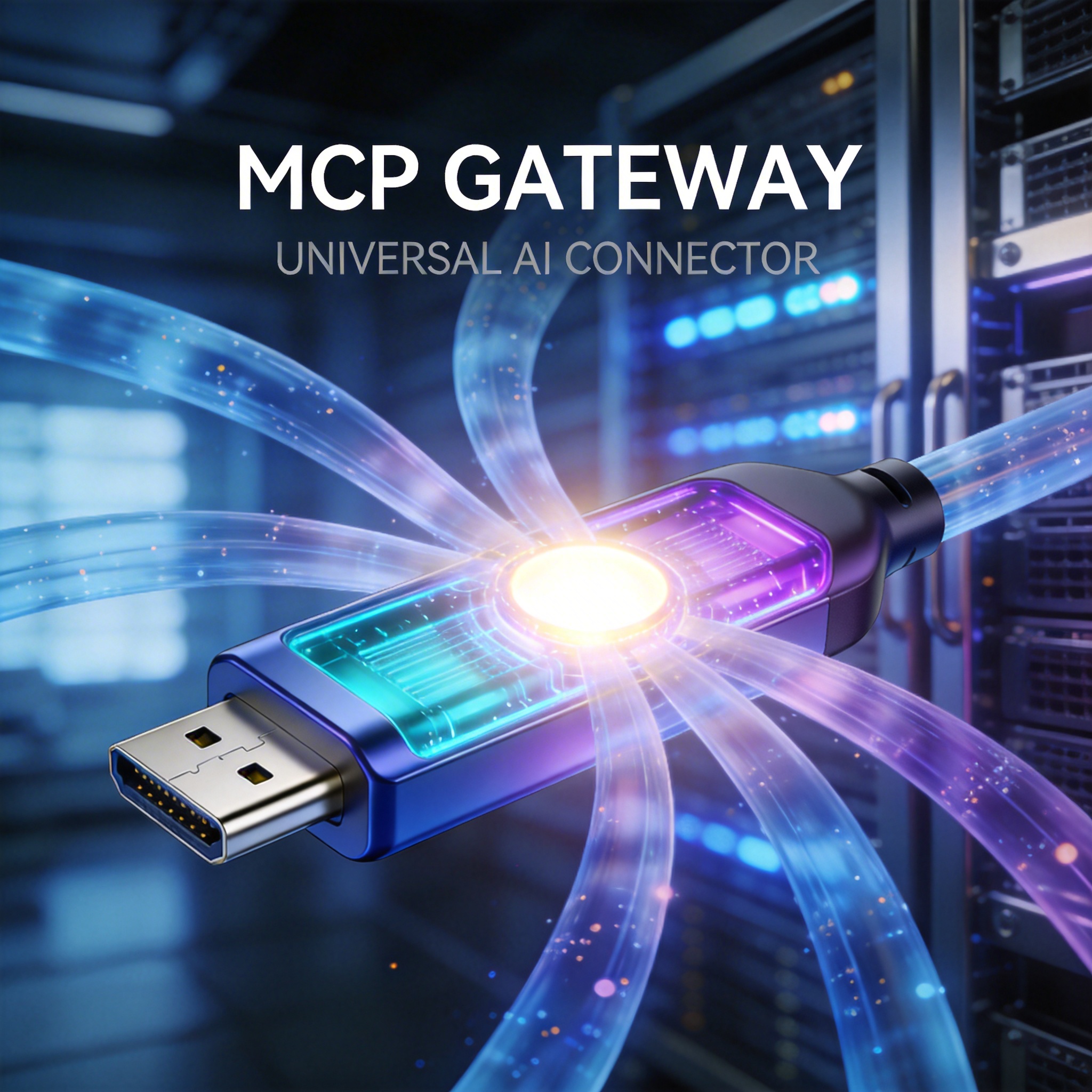
Glowing, stylized USB-C port connecting multiple data streams, symbolizing the MCP Gateway.
Key internal tools include the Model Context Protocol (MCP) Gateway, Agent Builder, and AIFX CLI. The MCP Gateway standardizes connections between agents and data sources, functioning as a "USB-C port for AI agents." It proxies internal interfaces, handles authentication and authorization, and provides a unified interface for accessing MCPs. The gateway also features a registry for discovering and registering MCP servers and a sandbox environment for testing.
Uber's Agent Builder is a no-code tool that allows users to create agents capable of accessing internal data sources and delegating tasks to other agents. It integrates with Agent Studio for visualizing, debugging, tracing, version management, and evaluating multi-agent workflows.
The Developer Experience Platform team built the AIFX CLI, a command-line AI tool, to address challenges in deploying AI agent tools at scale. It supports configuring AI agents, discovering MCP servers, running background agent tasks, and updating AI agents and clients.

Multiple glowing digital agents moving in parallel across a digital landscape, symbolizing evolving workflows.
Evolving Developer Workflows
The introduction of AI agents has transformed traditional software development. Initially, developers collaborated with a single agent in a single-threaded workflow. However, many Uber engineers now launch multiple parallel agents simultaneously for different tasks.
Ty Smith noted that running multiple agents concurrently is becoming a natural progression for developers. Uber is developing its own background agent service platform, Minion, to run agents on its infrastructure, enabling them to access full internal context and tools.
Minion functions as a Remote Command Interface (RCI) platform, providing access to Uber's monorepos and internal systems via the AIFX CLI. It can be accessed through a web interface, Slack, and GitHub PRs, and features optimized default configurations for higher success rates.
A demonstration of Minion involved resolving a Mac error. Minion analyzed the problem, suggested prompt rewrites for better execution, ran agents to completion, and submitted a pull request with a fix. This process, while simple in its fix, significantly reduces developer effort by automating tasks that typically require switching between multiple systems.
Anshu Chada stated that 70% of tasks submitted to the system are "toil," which has a higher accuracy rate compared to more ambiguous work. This success has made improving the agent platform a top priority for the developer platform team.

Developer typing on a keyboard with a holographic display showing code and a 'Minion' icon.
New Internal Development Tools
As AI agent usage grows, developers are spending more time on planning and experiencing an increased code review workload and context switching. To manage this, Uber's Developer Experience team developed Code Inbox, a tool that filters pull requests (PRs) requiring immediate attention.
Code Inbox features smart assignment, which automatically identifies suitable reviewers based on factors like code ownership, compliance requirements, change history, time zone, and calendar availability. It also assesses the risk level of code changes, flagging high-impact changes for more thorough review and planning.
Uber also developed its internal AI code review tool, uReview, after finding that external tools could not capture sufficient internal context. uReview uses multiple specialized AI agents to generate comments, which are then scored, merged, and categorized to provide high-quality feedback. Developers can rate the usefulness of AI-generated comments to refine the tool. Since its launch, uReview has seen a slight increase in comments per PR, with bot comments accounting for a small but decreasing fraction of human comments.
For testing, Uber built Autocover, a tool for generating unit tests. Built on Uber's internal LangFX SDK, Autocover generates over 5,000 unit tests per month, which are reportedly three times higher in quality than those from external tools. Autocover includes a "review engine" to check generated unit tests, which has evolved into an independent test validation service.
For large-scale code migrations, Uber developed AutoMigrate, an AI-powered system that includes a problem identifier, code transformer, validation layer, and a migration manager called Shepherd. Shepherd generates PRs, routes them to reviewers, and tracks progress.

Digital 'Code Inbox' interface with highlighted pull requests, symbolizing efficient code review.
Challenges and Adoption
Uber's Developer Platform team faces several non-technical challenges, including the rapid evolution of AI models and vendors, which necessitates continuous re-evaluation of build-versus-buy decisions. Building internal AI infrastructure is a long-term investment, requiring careful choices and the ability to abstract new vendors easily. The company also acknowledges the need to retire internal systems if superior third-party solutions emerge.
Integrating AI into "legacy" systems has proven challenging, with the workload often underestimated. Despite Uber's forward-thinking approach, AI adoption has been slower than anticipated. Anshu Chada noted that developers are being asked to adopt new ways of working. While top-down directives had some effect, sharing success stories among engineers proved more effective in driving adoption.

Intertwined rusty gears and glowing digital circuits, symbolizing AI integration challenges with legacy systems.
Data and Cost Implications
Uber tracks AI usage data, revealing that 92% of developers use agents at least once a month, and 84% use agentic programming. AI-generated code accounts for 65% to 72% of the total, and 11% of PRs are generated by AI bots. The Net Promoter Score (NPS) for the development environment reached a historical high of 10.9, indicating increased developer satisfaction. Engineers self-report saving an average of four hours per week due to AI tools.
The proportion of "heavy users"—developers using AI tools at least 20 days a month—surged around November, coinciding with the release of more powerful models and the launch of Minion. Currently, 32% of developers are heavy users, submitting 30% more PRs than non-heavy users and 52% more than those who do not use AI.
AI-related costs have increased sixfold since 2024, with token costs becoming a concern. Uber is now focusing on balancing token costs by using cheaper models for tasks that do not require expensive ones. The infrastructure is designed to automatically select appropriate models to optimize costs and reduce friction for developers.

Digital scale balancing large and small AI models, symbolizing cost optimization.
Uber's internal AI agent system involves significant "invisible" platform work, including systems like MCP Gateway, Agent Builder, AIFX CLI, Minion, uReview, and AutoMigrate. These systems standardize AI vendor use, enable non-developers to use AI agents, and help engineers build agent environments.
The rapid evolution of AI models and vendors presents a continuous challenge, requiring companies to constantly re-evaluate and potentially retire self-developed platforms in favor of external tools. Both Ty Smith and Anshu Chada expressed a pragmatic willingness to retire internal platforms if external vendors offer stronger solutions.
The role of software engineers is evolving, with engineers increasingly managing multiple AI agents, taking on responsibilities previously held by Tech Leads. Cost concerns are also growing, with AI spending rising sharply. The running cost of some AI code review tools, for example, can be substantial, prompting engineering managers to justify these expenses by demonstrating business impact.
Stay Ahead of the AI Curve
Join 50,000+ subscribers getting the latest AI tools, trends, and tutorials delivered to their inbox weekly.
No spam, unsubscribe at any time.