
Terence Tao Defines AI as 'General Ingenuity' as Model Solves Open Math Problem

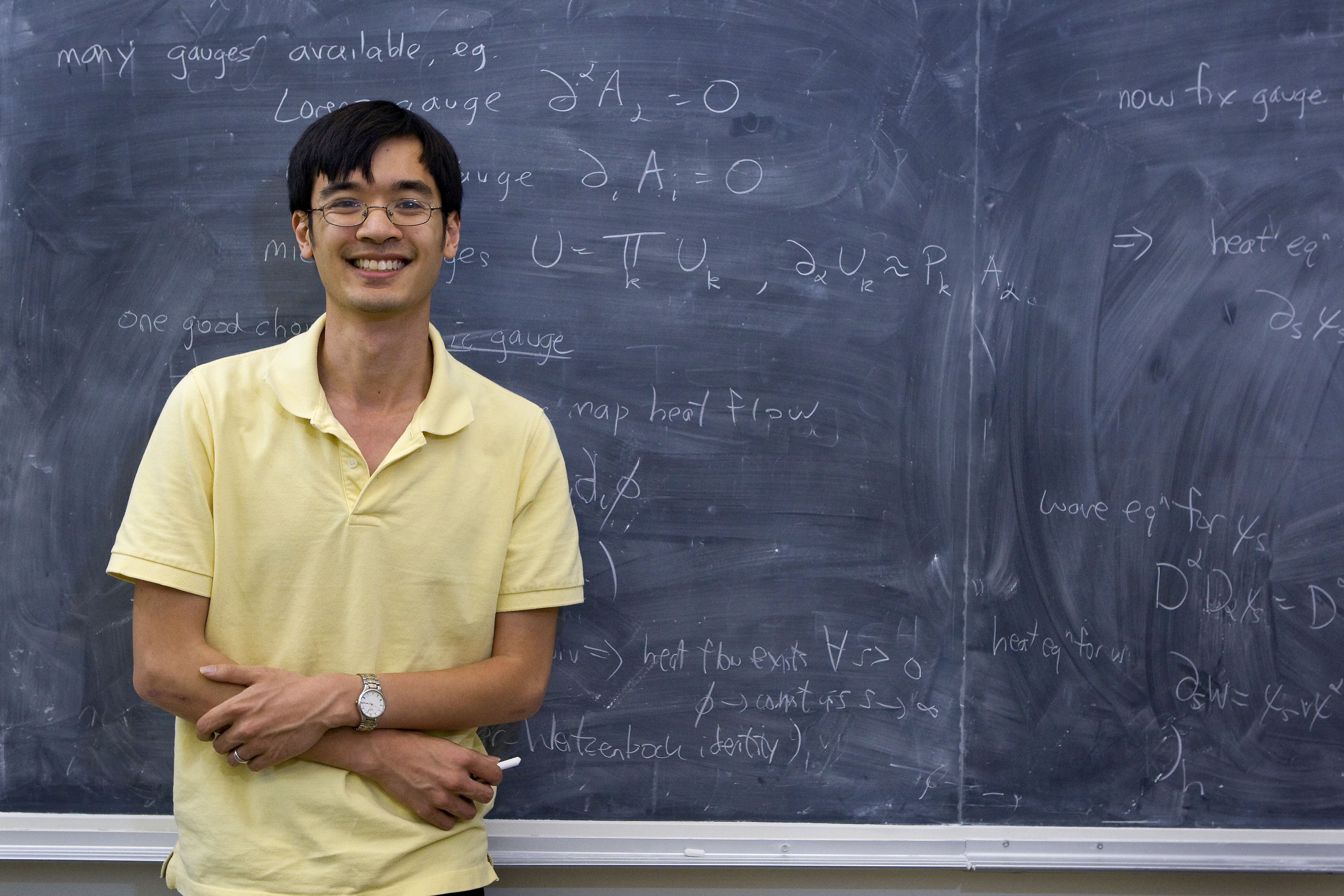
Renowned mathematician Terence Tao has characterized current artificial intelligence capabilities not as true intellect, but as "Artificial General Ingenuity," describing the technology as a tool for "general cunning" rather than reasoning. This theoretical assessment coincides with a significant practical milestone, as researchers report that OpenAI’s GPT-5.2 Pro has successfully resolved a complex open problem regarding the runtime complexity of PageRank algorithms.
Defining Artificial General Ingenuity
In a recent statement reviewed by toolmesh.ai, Tao argued that achieving Artificial General Intelligence (AGI) remains beyond the reach of current tools. Instead, he proposed the concept of "General Ingenuity" to describe systems that solve a wide range of tasks through temporary, often probabilistic means. Tao suggests that while these systems lack foundational understanding, they can achieve high success rates by leveraging large-scale trial and error.
Tao compared modern AI to a stage magician who produces impressive results through hidden mechanisms rather than magic. He noted that while the output—such as code or mathematical proofs—may appear intelligent, it is often the result of pattern matching against training data. However, Tao emphasized that when decoupled from the expectation of true intelligence, this "general cunning" becomes a highly productive resource for generating random but useful ideas, particularly when subjected to rigorous human verification.

Conceptual photography showing a glass cube containing chaotic wiring, symbolizing the complex pattern matching behind AI outputs.
Resolution of the COLT 2022 Open Problem
Illustrating the utility described by Tao, Kimon Fountoulakis, an assistant professor at the University of Waterloo, announced that GPT-5.2 Pro has solved a mathematical challenge that had stalled researchers for years. The issue, officially listed as an open problem at the Conference on Learning Theory (COLT) in 2022, involved proving the runtime complexity of accelerated L1 regularized PageRank algorithms using standard accelerated gradient methods.
According to Fountoulakis, the problem had been under investigation since 2016. Previous attempts by PhD students and senior scholars to theoretically bound the computation volume of the Fast Iterative Shrinkage-Thresholding Algorithm (FISTA) had failed. The core difficulty lay in the algorithm activating a large number of nodes during iteration, creating apparent inefficiencies despite eventual convergence.
Algorithmic Implications and Verification
The proof generated by the AI demonstrated that under "complementarity bound" assumptions, the total computation volume of FISTA remains elegantly bounded. The solution clarifies that the "excess activations" observed during the iterative process are temporary and controllable, providing the missing theoretical foundation for the algorithm's efficiency on specific graph structures.

Macro visualization of a dense network graph with illuminated nodes and connections, representing the PageRank algorithm complexity.
To validate the machine-generated findings, the research team implemented a triple-verification protocol. Following the initial proof generation by GPT-5.2 Pro, the team utilized the Aristotle system and Google’s Gemini 3 Pro to convert key inequalities into formalized code. Fountoulakis subsequently performed two manual reviews to confirm the logic.
Divergent Views on AI Progression
The breakthrough highlights the ongoing debate regarding the trajectory of AI development. While Meta’s Yann LeCun has expressed skepticism regarding the viability of current architectures to achieve human-level intelligence, Google DeepMind’s Shane Legg has projected a 50 percent probability of achieving AGI by 2028.
Simultaneously, the practical application of these models in advanced mathematics continues to expand. Daniel Litt, a mathematician at the University of Toronto, noted that advanced models have facilitated significant progress in algebraic geometry and number theory, functioning as collaborators that navigate vast search spaces to locate solutions defined by human researchers.
Stay Ahead of the AI Curve
Join 50,000+ subscribers getting the latest AI tools, trends, and tutorials delivered to their inbox weekly.
No spam, unsubscribe at any time.