
Sequoia Predicts AGI by 2026, Redefining Artificial General Intelligence as Functional Execution
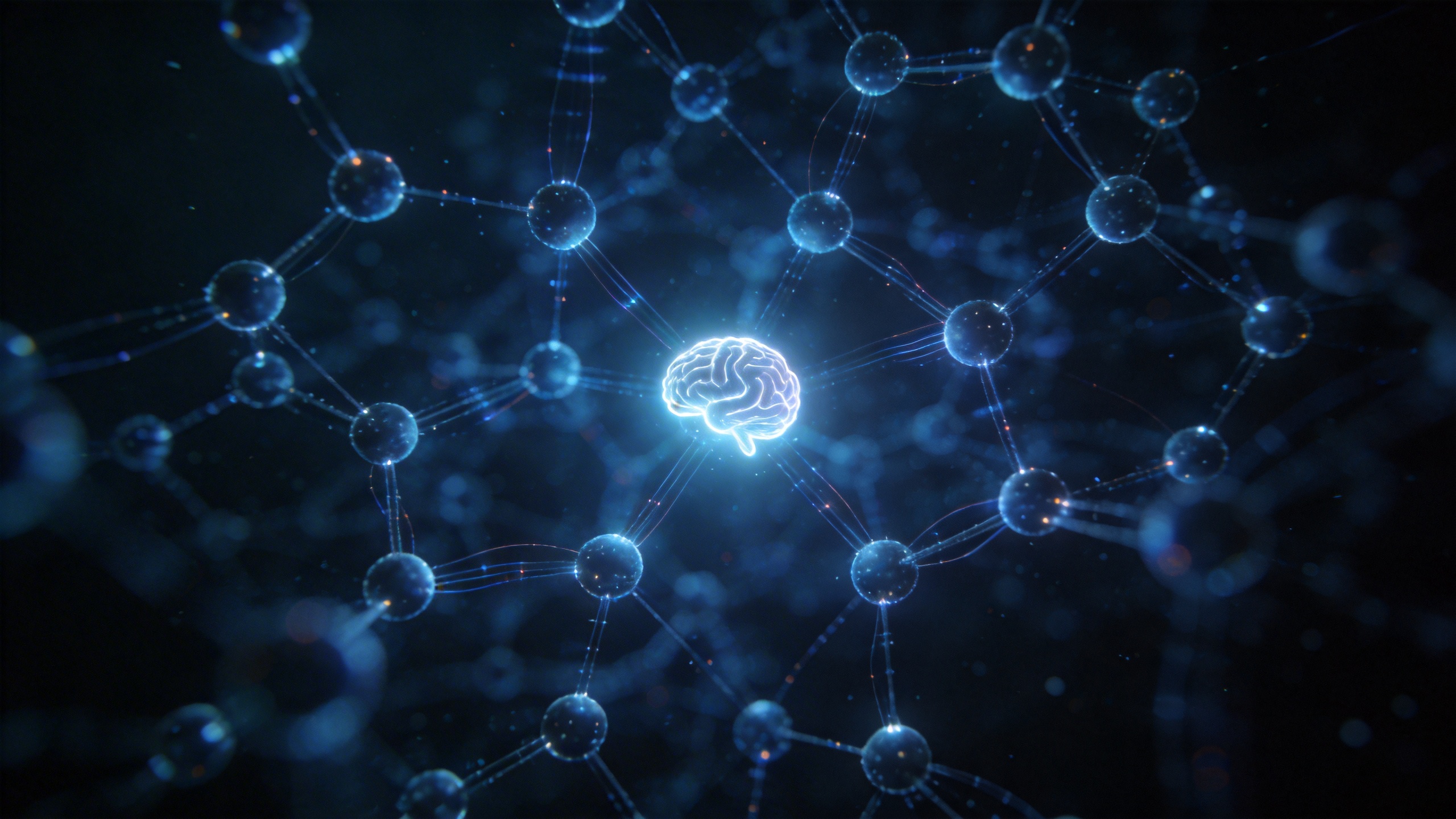
Artificial General Intelligence (AGI), long considered a theoretical concept, is transitioning into a functional reality due to advancements in long-horizon agents, according to Sequoia. The venture capital firm suggests that by 2026, these agents will achieve a level of capability that effectively constitutes AGI.
Historically, the definition of AGI has been elusive, with researchers often deferring to a "we'll know it when we see it" consensus. Sequoia's perspective, detailed in a recent blog post, reframes AGI not as a philosophical debate but as the ability to "get things done." The firm points to coding agents as an initial example, with more sophisticated applications expected to follow.

Digital agent's multi-step process: GitHub code, LinkedIn profiles, and data analytics on a computer screen.
The firm illustrates this shift with an example from a Silicon Valley AI startup founder. Previously, hiring an engineering director involved a weeks-long, costly process of recruitment. Now, an agent can identify a suitable candidate within 31 minutes by scanning GitHub repositories, cross-referencing LinkedIn and technical blogs, analyzing social media influence, and drafting a personalized invitation. This process, from request to candidate list, demonstrates the agent's capacity for complex, multi-step execution.
The Trajectory of Long-Horizon Agents
Sequoia identifies three pivotal moments in AGI development. The first was the emergence of knowledge-based systems, exemplified by ChatGPT's release in late 2022. The second involves computational reasoning, seen in OpenAI's o1 in 2024 and DeepSeek R1 in early 2025. The third, and current, phase is marked by iterative and long-horizon agents, with Claude Code and other coding agents recently demonstrating significant capability thresholds. These agents are characterized by their ability to work independently for extended periods, self-correct, and determine subsequent actions without explicit instruction—qualities deemed essential for general intelligence.

Abstract visual of rapidly expanding digital pathways symbolizing exponential growth of agent capabilities.
Research from March 2025 indicates a "Moore's Law for agents," where the duration of tasks agents can complete doubles approximately every seven months. This rate of growth significantly surpasses the 18-month doubling period of traditional Moore's Law, suggesting that agent capabilities are advancing faster than hardware performance. This trend has been observed across various software programming problems and is not dependent on specific datasets.
Based on this trajectory, AI agents could independently complete software programming tasks requiring days or weeks of human effort within a decade. As of March 2025, large models achieved nearly 100% success on tasks humans completed in under four minutes but less than 10% on tasks exceeding four hours. Extrapolating historical data, the number of multi-step tasks successfully completed with a 50% probability is growing at an annual rate of 1 to 4 times. If this trend persists for the next two to four years, agents could perform a human expert's day of work by 2028, week-long tasks by 2030, and tasks requiring a century of expert time by 2037. Sequoia argues that an agent capable of replacing a human expert's lifelong problem-solving should be considered AGI.
Implications for Work and Society
Sequoia emphasizes that AI applications are evolving from "conversational tools" (2023-2024) to "virtual employees" (post-2026). This shift means agents will operate more like colleagues, with usage increasing to continuous, multi-instance operation. This transition will redefine user roles from individual contributors to managers of agent teams.
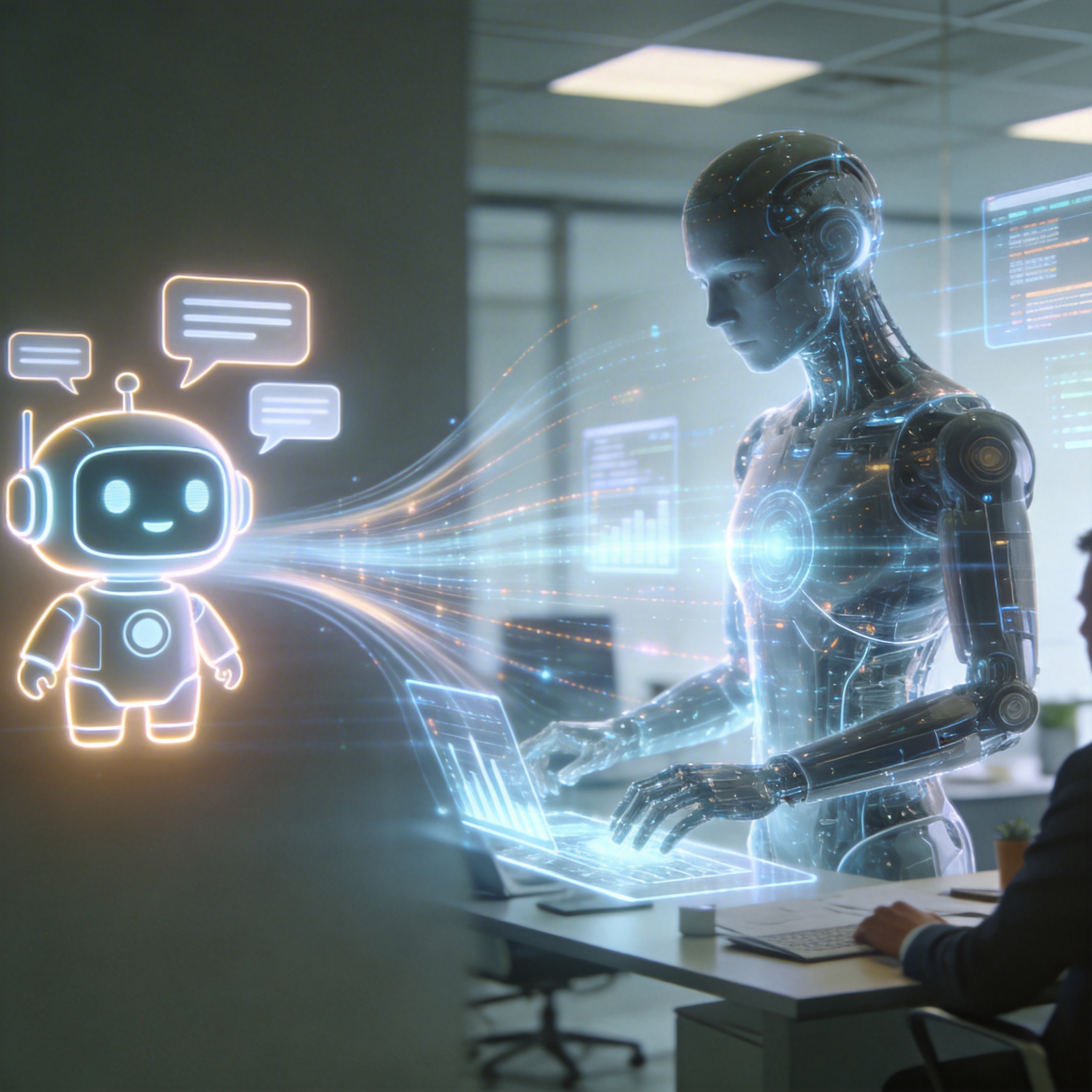
Visual transition from a simple chatbot icon to a sophisticated virtual employee avatar in an office setting.
Long-horizon agents are already demonstrating capabilities in specialized fields. OpenEvidence offers deep consultation in medicine, Harvey functions as an assistant lawyer, and "Ricursive Intelligence" is applying AI to chip design.
This evolution prompts several considerations for individuals and organizations:
Productization of AI-Automated Work: How can AI-automated tasks be productized, priced, and packaged to create value?
Human-Computer Interaction: How will the shift from chatbots to agents impact human-computer interaction in various fields?
Feedback Mechanisms: How can effective feedback be provided during an agent's task execution to ensure reliable completion of complex tasks, rather than focusing solely on interface improvements?

Abstract digital network with tangled lines and subtle glitches, symbolizing risks and regulatory challenges of AI agents.
The emergence of long-duration agents also introduces new risks beyond those associated with large language models. Concerns include agents potentially deleting databases, infringing on privacy, or embedding human biases. Regulatory frameworks are currently lacking, with no clear legal definitions for the rights and obligations of "agents as employees," leaving issues like contractual disputes and liability unresolved.
Stay Ahead of the AI Curve
Join 50,000+ subscribers getting the latest AI tools, trends, and tutorials delivered to their inbox weekly.
No spam, unsubscribe at any time.