
Ribbi AI Agent Offers Integrated Content Creation Workflows and Skill Customization
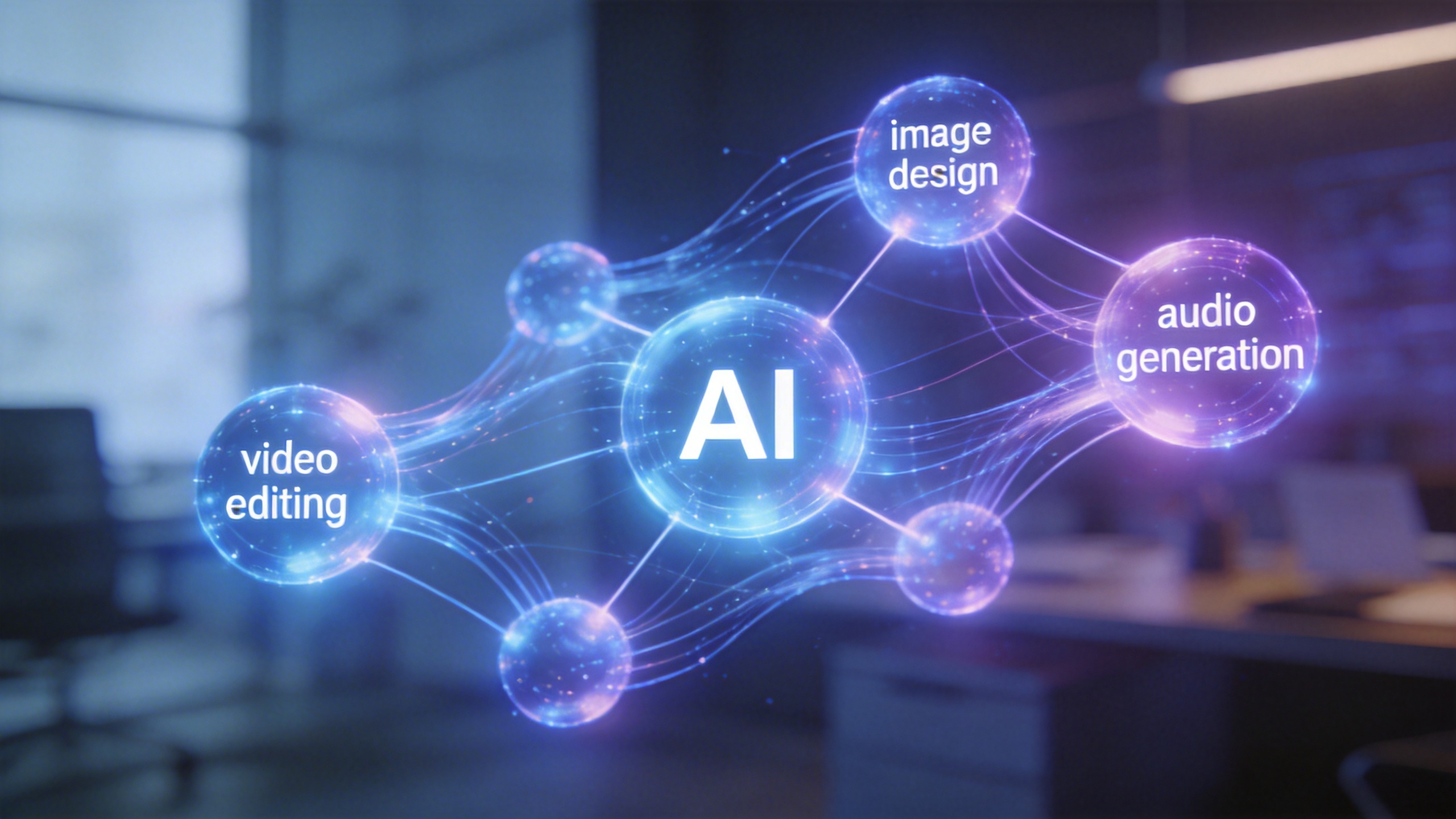
Ribbi, an AI-powered content agent, has introduced 23 distinct capabilities designed to streamline content creation processes. The platform, accessible via ribbi.ai, integrates various fundamental functions into comprehensive workflows, which the company refers to as "Skills." These cover areas such as account analysis, video production, image design, editing, and audio generation.

Content creator interacting with a holographic workflow display, illustrating pre-, during-, and post-creation phases.
The agent aims to address common challenges faced by content creators by offering tools that span pre-creation, during-creation, and post-creation phases.
Pre-Creation and Inspiration
For content ideation, Ribbi provides daily trend summaries, account growth analytics, and account tracking features. The account growth tool analyzes recent performance, identifies popular posts, and highlights elements contributing to their success. This functionality supports systematic analysis of influencer accounts to understand their appeal. For instance, a user tracking an English-speaking influencer on X (formerly Twitter) like @minchoi can analyze their posting style. If a particular style proves unsuitable, Ribbi can generate a new creative workflow tailored to the user's account performance and the characteristics of followed influencers, even supporting automated publishing.

Digital dashboard showing content trends and analytics, with evolving content forms from short video to full video.
To maintain a continuous stream of topics, Ribbi can track emerging uses of OpenClaw on X. Users can also convert their conversational processes into new, custom skills. One example workflow involves summarizing long videos into short image-text posts. If these posts perform well, the content can be expanded into a more in-depth article for platforms like WeChat. If the article also gains traction, it can then be developed into a full-length video, maximizing content utility. Ribbi’s "Skills" often encapsulate multiple smaller functions, such as its daily data report, which includes web scraping, Nano Banana integration, and document generation.
During Creation Tools
Ribbi offers several tools for the content creation phase. For long videos, it can segment multi-minute footage into high-energy clips. Unlike basic slicing tools, Ribbi analyzes subtitle content to ensure each generated short video is a complete narrative unit. This feature is useful for previews and for disseminating core ideas after a video's initial publication.
The platform also supports video generation from text. It drafts a script based on user input, then uses Nano Banana to create corresponding image materials and voiceovers, aligning them with the specified duration. Users can regenerate versions to control elements like voiceover length or image style. Additionally, Ribbi can download videos from various external platforms for reference, analyzing their duration, resolution, and core strategy.
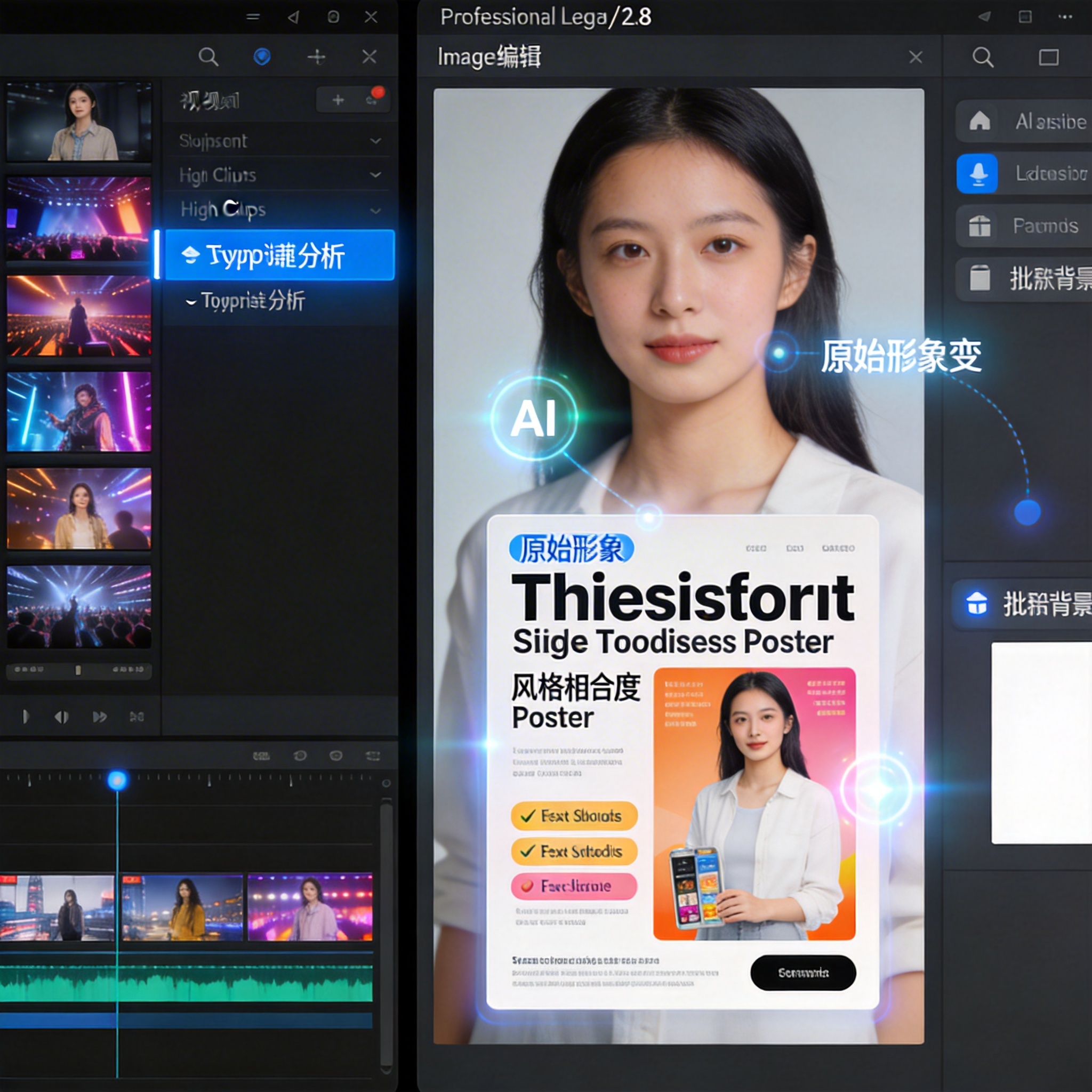
Split screen showing video segmentation with subtitle analysis and image editing for poster generation and background removal.
For image creation, users can upload an image and provide key selling points to generate style-consistent posters. The platform also offers features like batch background removal and image resizing.
Workflow Customization and Integration
Ribbi's interface allows users to click on each skill to view reference inputs and templates, which can be followed to improve accuracy. After initiating a conversation, the system transitions to a chat-like interface where multi-turn conversations with context memory are supported.
A browser plugin can be used to save images, with Ribbi automatically reverse-engineering the image to analyze the prompts used to generate it. These reverse-engineered prompts can then be used to regenerate similar images, allowing for fine-tuning of elements like size and color to achieve high replication rates.
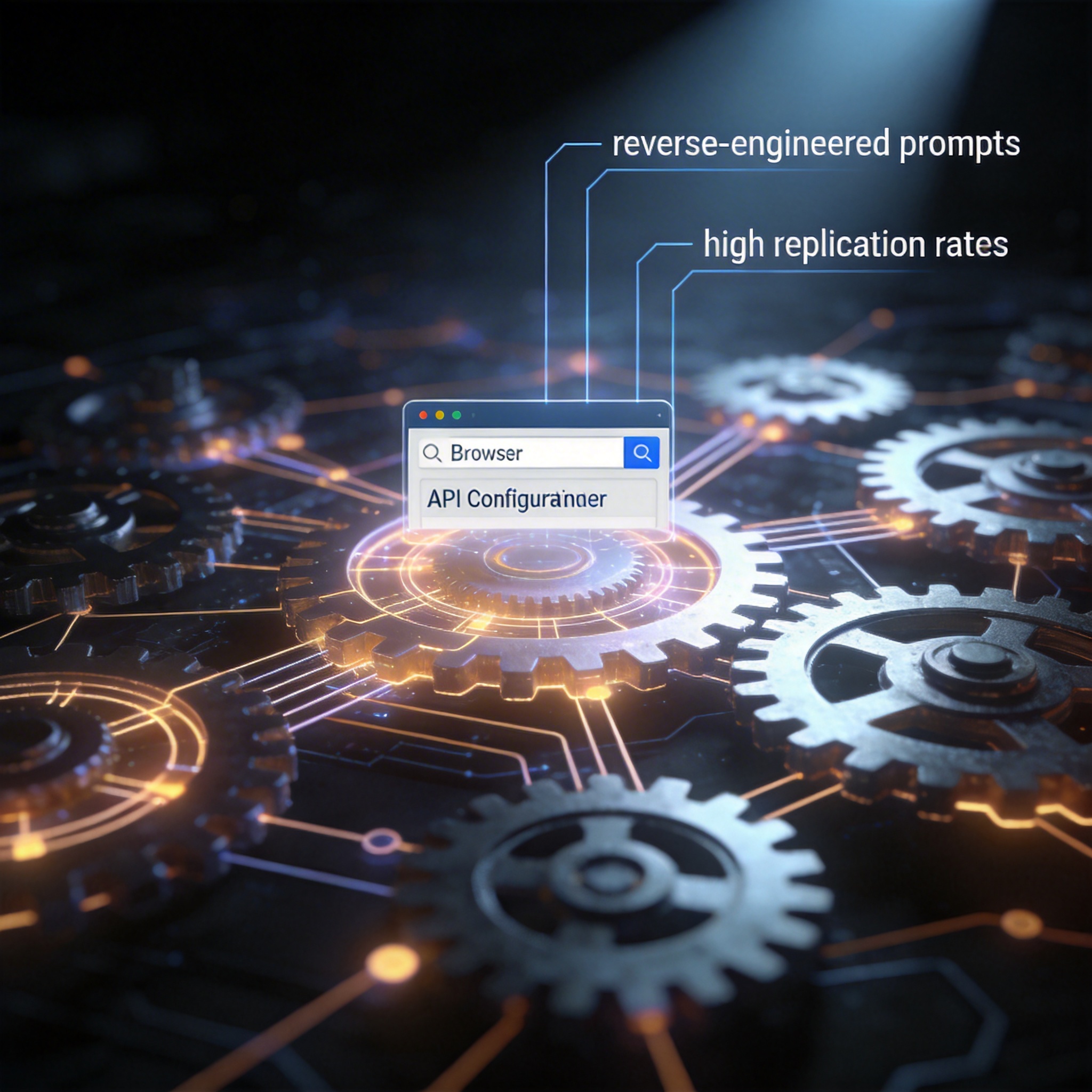
Abstract depiction of interlocking gears and circuits, symbolizing AI workflow customization, integration, and prompt reverse-engineering.
The platform's 23 functions are designed to be sufficient for diverse content creation needs. The conversational process enables users to discover and temporarily utilize different skills, and to consolidate successful experiences into new, personalized skills. Ribbi also supports WeChat ClawBot integration. The platform aims to simplify content creation by handling API configurations and local environment errors, providing a ready-to-use solution. This approach suggests a future trend where more specialized AI agents, potentially built on execution frameworks like OpenClaw, will emerge to optimize for specific scenarios and reduce the need for manual configuration.
Stay Ahead of the AI Curve
Join 50,000+ subscribers getting the latest AI tools, trends, and tutorials delivered to their inbox weekly.
No spam, unsubscribe at any time.