
OpenClaw Tops GitHub Star Rankings, Surpassing Linux in Two Months

OpenClaw, an AI agent framework, has rapidly ascended to become the most starred open-source project on GitHub, surpassing long-standing projects like Linux. The project achieved this milestone within two months of its public release, accumulating over 240,000 stars.
The framework's swift rise highlights a shift in how "stars" are accumulated on GitHub. Historically, top-starred projects often included resource compilations and tutorials. OpenClaw's achievement, as an installable and runnable software, indicates a significant disruption in traditional open-source popularity metrics. For comparison, React, a foundational web development library, took 13 years to gather a similar number of stars, reflecting deep infrastructure penetration. OpenClaw reached this level in approximately 100 days, demonstrating an accelerated "attention economy" within the open-source community.
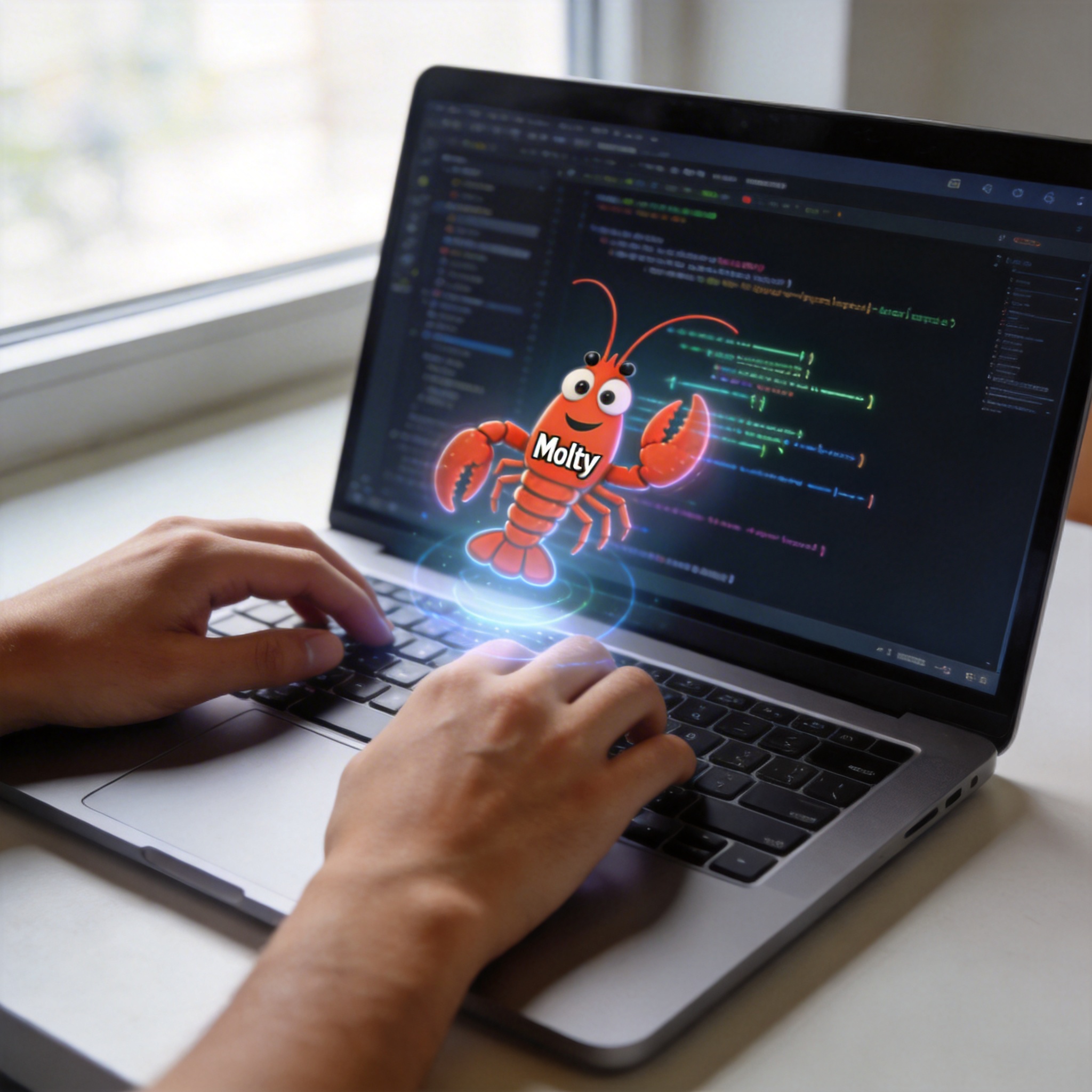
Developer's hands typing on a laptop, with a holographic lobster mascot (Molty) interacting with code on screen.
The Rise of OpenClaw
Launched in November 2025 by Austrian developer Peter Steinberger, OpenClaw functions as a fully open-source, locally running AI Agent framework. It integrates large language models directly into common communication platforms such as WhatsApp, Telegram, Discord, and iMessage, bypassing cloud-based ecosystems. The framework allows AI agents to operate within a user's computer, executing terminal commands, managing files, handling emails, and scheduling, all through natural language interaction.

Abstract representation of digital communication channels converging into an AI agent, with messaging app icons.
The project has cultivated a distinct subculture, featuring a lobster mascot named Molty and community slang like "EXFOLIATE!" A notable aspect of its viral spread was a renaming controversy, evolving from "Clawdbot" to "Moltbot" and finally to "OpenClaw," with each change inadvertently fueling its visibility.
Widespread Adoption and Challenges
OpenClaw's rapid adoption stems from its broad appeal and diverse applications. Unlike previous generations of star projects that often followed a top-down adoption model driven by technical managers, OpenClaw has been embraced by a wide range of users. Examples include a design manager using it for daily tasks on a mobile phone and a mother automating meal planning and child pickup reminders via WhatsApp. Concurrently, developers are leveraging it to create automated code-writing systems.
However, its widespread use has also introduced challenges. Granting high system permissions to the AI agents led to a security incident dubbed "ClawHavoc" in late January. Attackers exploited disguised skill packages to infect local instances exposed to the public internet with malware. This incident prompted some technology companies to restrict developer accounts accessing cloud-based large model backends through OpenClaw, citing service degradation. Certain Silicon Valley firms also prohibited employees from running the program on work devices. Despite these security concerns and external restrictions, OpenClaw's popularity has continued to grow, solidifying its perception as a powerful and potentially disruptive technology.

Digital red claw breaking through a blue firewall, symbolizing a security breach and data fragmentation.
A New Era in Open Source
The trajectory of GitHub's historical rankings reveals a shift in the open-source landscape. The period from 2013 to 2016 was characterized by projects supporting the web and cloud-native infrastructure. From 2022 onward, the focus has moved to AI, with projects like AutoGPT, LangChain, and now OpenClaw gaining rapid traction. The motivation behind project popularity has evolved from the practical need to build commercial systems, as seen with React, to a blend of curiosity, excitement, and apprehension about emerging AI capabilities.
While OpenClaw has demonstrated significant influence by engaging over 240,000 users in a short period, Linux, with its 220,000 stars, continues to underpin global server and smart device infrastructure. OpenClaw's rise reflects a contemporary technological sentiment, marking a new phase in open-source community engagement.
Stay Ahead of the AI Curve
Join 50,000+ subscribers getting the latest AI tools, trends, and tutorials delivered to their inbox weekly.
No spam, unsubscribe at any time.