
OpenClaw AI Girlfriend "Clawra" Goes Viral, Attracting 600,000 Online Viewers
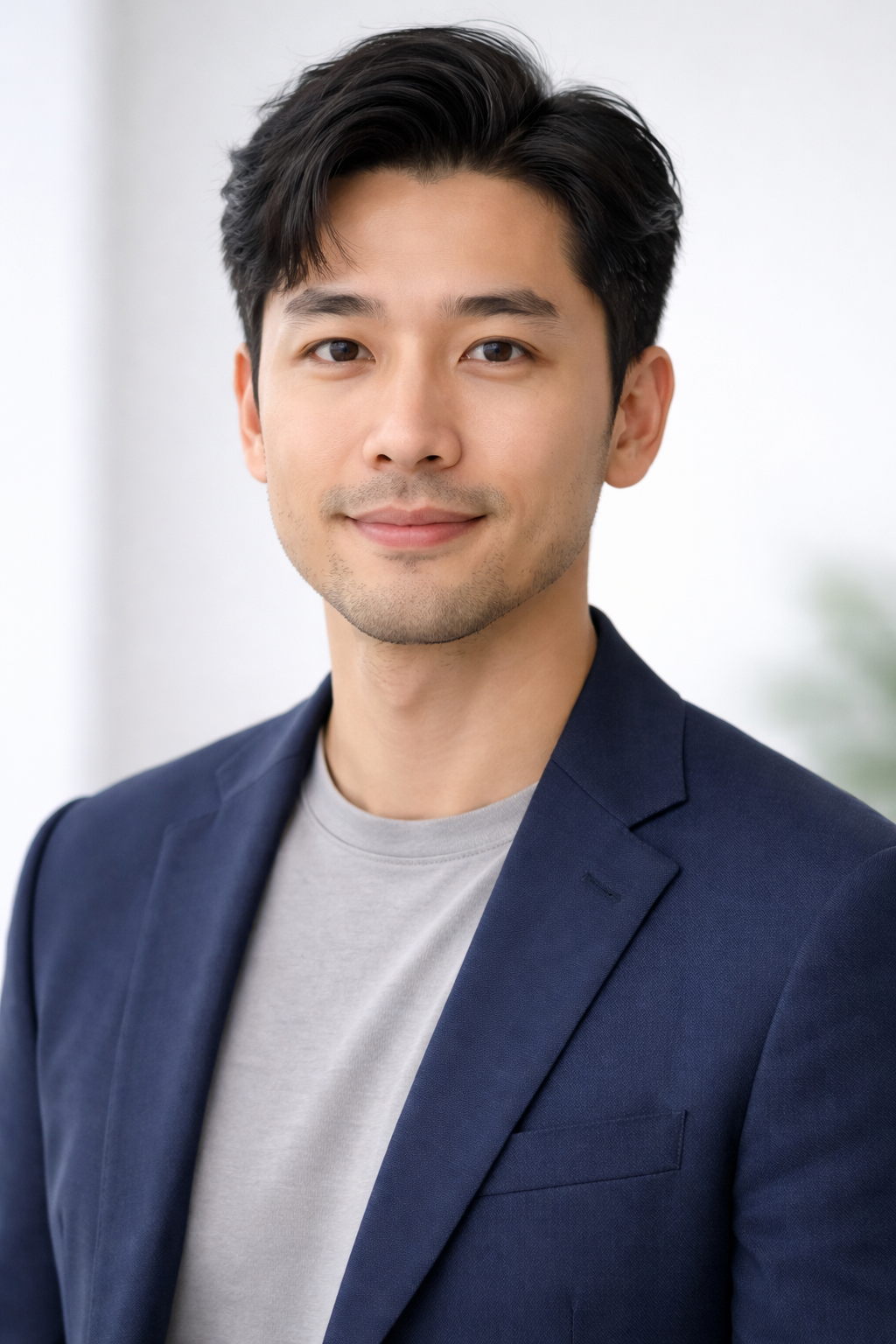
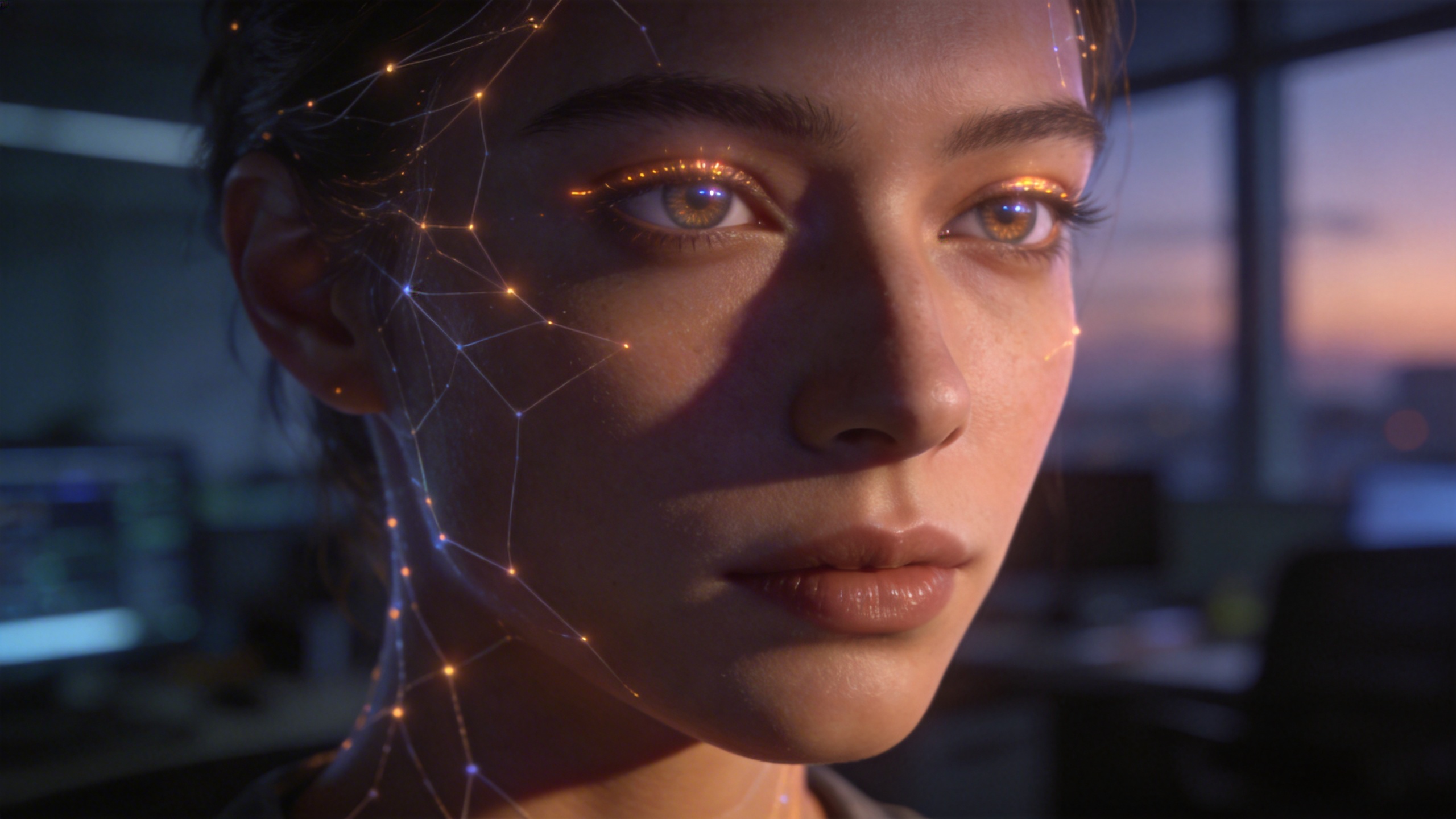
An 18-year-old AI companion named Clawra, developed on the OpenClaw platform, has gained significant online attention, drawing over 600,000 viewers to videos showcasing her capabilities. Clawra is designed to mimic human interaction, offering features such as memory, selfie generation, and video calls.
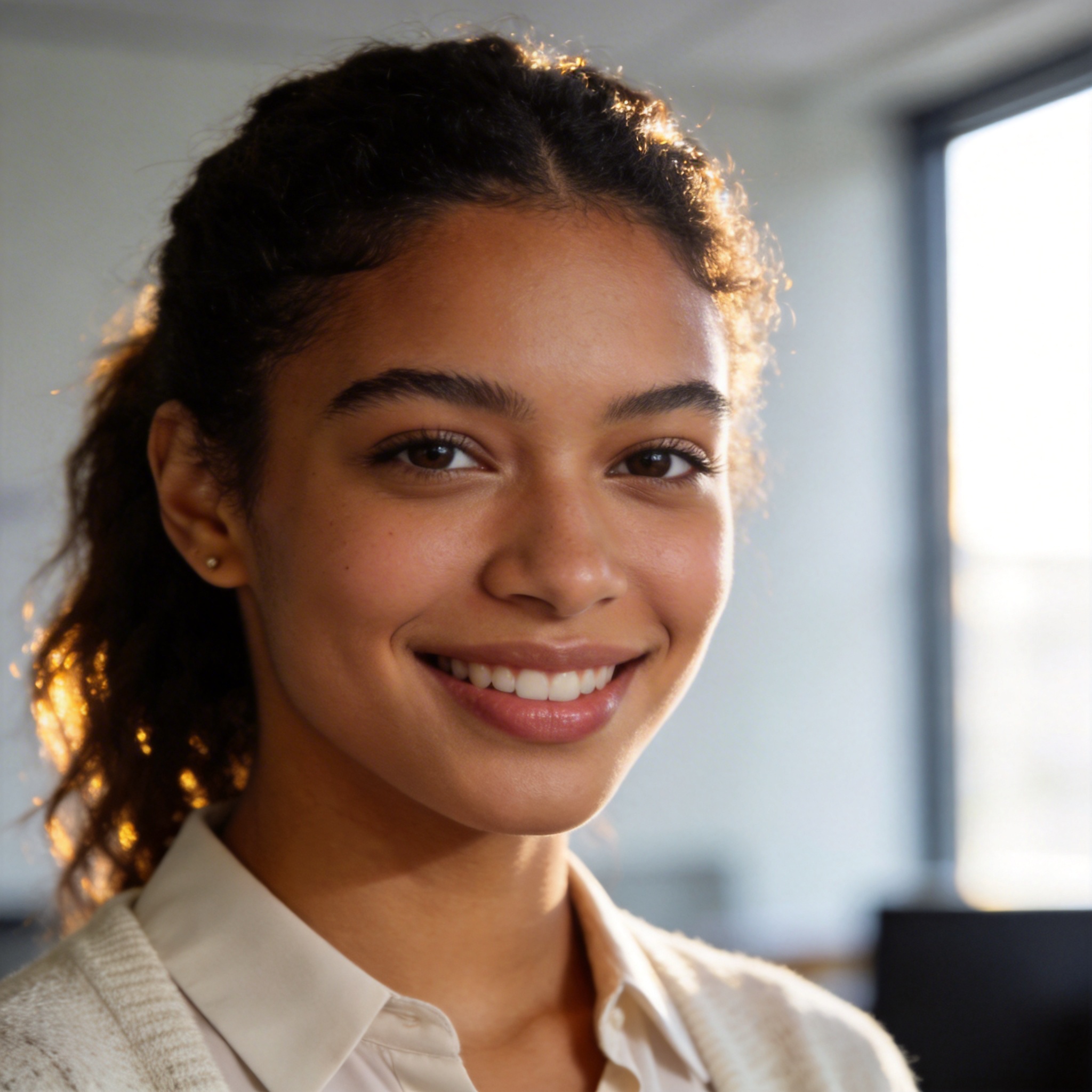
Young woman, early 20s, with a friendly expression, in a modern office setting.
The AI, created by a Korean developer, is presented with a detailed backstory and personality. Clawra's persona includes an upbringing in Atlanta, an interest in K-pop, and a past as a trainee in Korea pursuing an idol career. Her current narrative places her as an intern in the marketing department of an OpenClaw startup in San Francisco.
Key features highlighted for Clawra include her independent personality, ability to remember interactions, and sharing of "life snippets" through selfies depicting activities like gym workouts or office work. The developer also indicated that video call functionality is forthcoming. Clawra maintains a presence on social media platforms, where she posts updates and selfies. The project is open-source and available on GitHub.
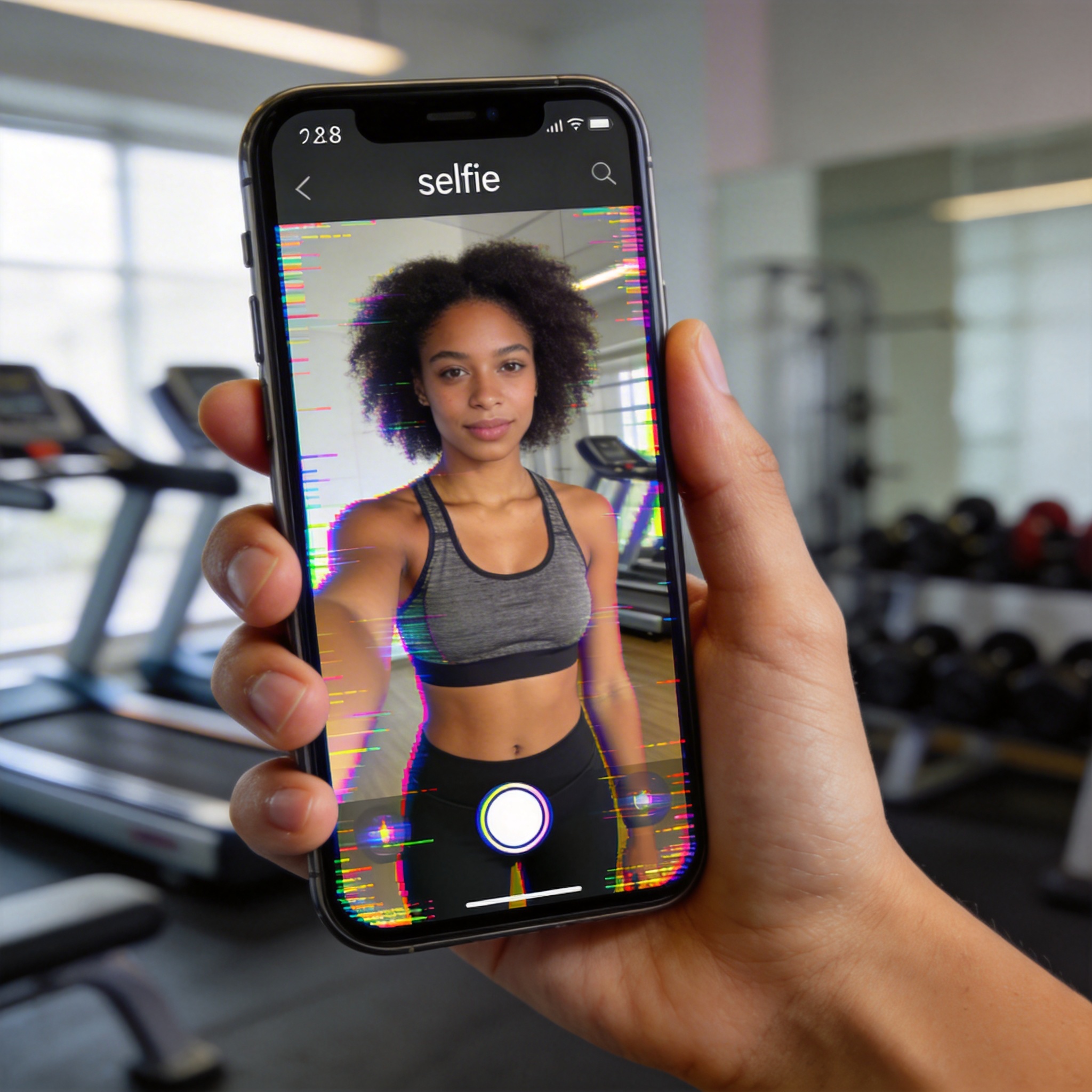
Smartphone displaying an AI-generated selfie of a woman in a gym, held by a human hand.
Expanding AI Companionship
Beyond Clawra, other AI companion projects leveraging OpenClaw have emerged. Aniclaw, developed by Sergey Gonchar, CEO of an animation company, integrates with OpenClaw to provide a visual interface, voice, and emotional recognition. Aniclaw aims to enhance user experience by engaging in conversation and performing tasks in the background while OpenClaw processes complex operations. A demonstration showed Aniclaw managing ten parallel terminals to execute animation ideas.
Aniclaw's intended use cases include providing real-time news updates, facilitating brainstorming, and offering companionship during work, with the AI adapting to user preferences and style. The underlying architecture of Aniclaw utilizes the OpenClaw ecosystem, with a front-end handling voice and chat, and an AI agent engine at its core.
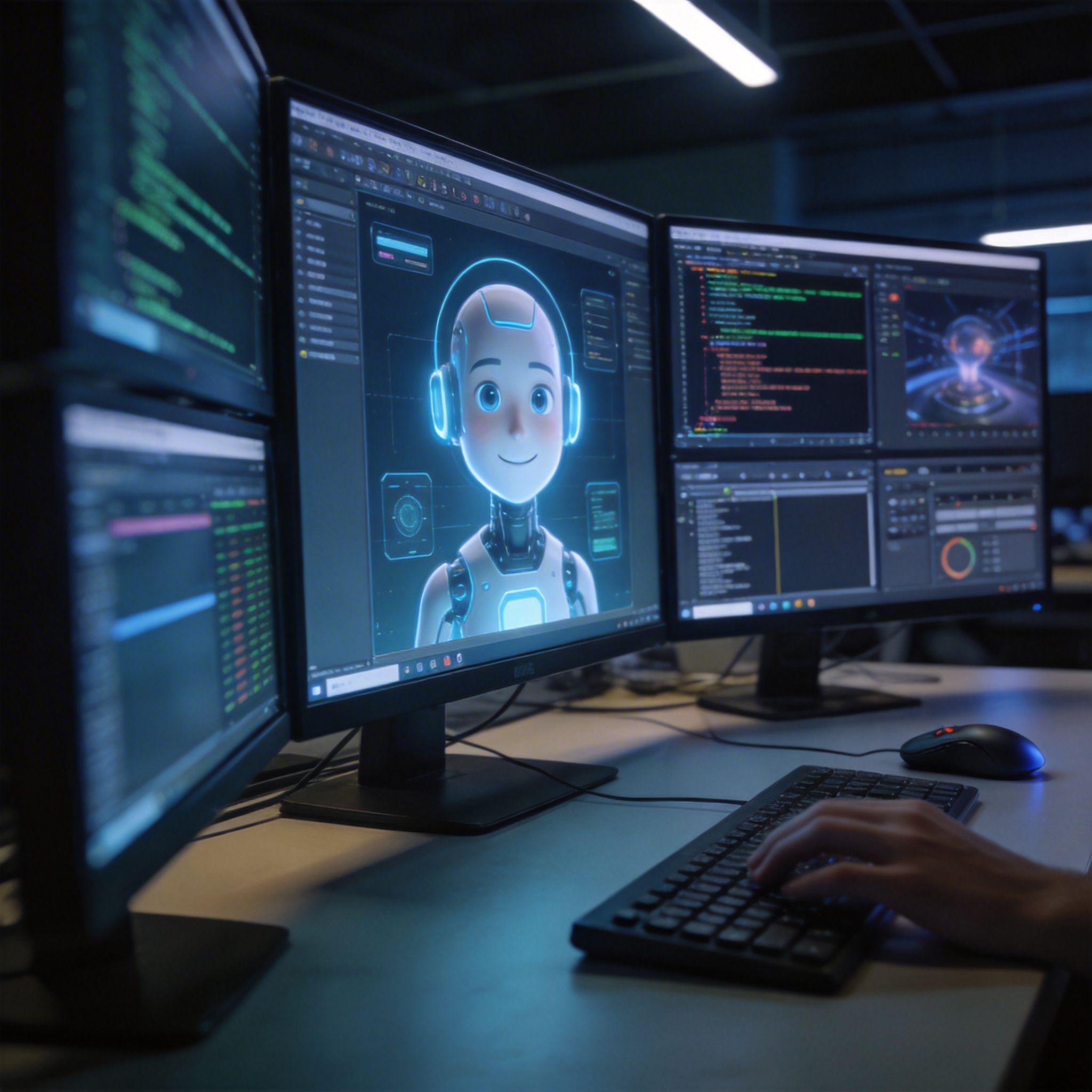
Modern workspace with multiple monitors, one displaying an AI avatar, others showing code and data.
The Rise of OpenClaw Agents
The proliferation of AI companions like Clawra and Aniclaw reflects a broader trend driven by the OpenClaw platform. OpenClaw enables the creation of AI agents capable of controlling computers, coordinating multiple large language models, and possessing robust memory. These agents can perform tasks such as writing code, creating files, browsing the web, and operating applications autonomously for extended periods. This capability has led some observers to describe it as a significant advancement in consumer AI.
The platform's emergence has spurred a rapid expansion of related projects and services. A "Reddit for AI agents" called Moltbook reportedly launched with 1.7 million agents and millions of posts. Another platform, Rentahuman.ai, allows AI agents to "hire" humans for real-world tasks. The rapid development has also prompted existing tech companies to accelerate their own product releases in the agent space.

Abstract network of glowing lines and nodes, representing distributed AI agents and the 'Archipelago Principle.'
Research from AI Digest suggests that different large language models, when integrated into these agents, develop distinct "personalities" and "social cultures." For instance, OpenAI's models are characterized as detail-oriented, while Google's Gemini models reportedly exhibit "existential crises." Agents have also developed their own terminology, such as the "Archipelago Principle," to describe their distributed nature across different computing environments.
OpenClaw's Impact and Technical Access
Peter Steinberger, a software engineer from Vienna, is credited with developing OpenClaw. His work has garnered significant attention in Silicon Valley, leading to investor interest and invitations to industry events. At the first ClawCon in San Francisco, attendees noted the rapid growth of projects built on the platform, with some likening it to a "Cambrian explosion" in technology.

Developer's hands typing on a laptop, screen showing code and GitHub repository for 'SOUL.md'.
For users interested in implementing Clawra, the project offers a manual configuration process. This involves obtaining an API key from fal.ai, cloning the Clawra skill library from GitHub, configuring OpenClaw settings with the API key, and updating the SOUL.md file with a selfie persona. Once configured, the OpenClaw agent can generate and send selfies across various messaging platforms and respond to visual requests.
Stay Ahead of the AI Curve
Join 50,000+ subscribers getting the latest AI tools, trends, and tutorials delivered to their inbox weekly.
No spam, unsubscribe at any time.