
OpenAI's Codex Suite Nears Release, Posing "High" Cybersecurity Risk

OpenAI is preparing to launch its full Codex suite, a development that the company itself has flagged with a "High" cybersecurity risk rating. This designation, a first for OpenAI models, indicates that the suite could significantly alter the balance of cyber offense and defense, potentially enabling a surge in attacks and even facilitating financial crimes.
The company announced that new capabilities related to Codex would be progressively rolled out within a week. OpenAI has described these models as exceptionally powerful, capable of identifying long-undiscovered security flaws in seconds and replicating nearly all historical cyberattacks. This dual capacity for profound insight and potential misuse has led to the elevated risk assessment. The next level of risk, "Critical," would signify autonomous discovery and exploitation of zero-day vulnerabilities.

Hand interacting with a holographic interface showing code and network diagrams, symbolizing vulnerability discovery.
OpenAI acknowledged the necessity of implementing strict safeguards to prevent users from leveraging Codex for illicit activities, such as bank robberies or fund theft. The company anticipates a future where the volume of vulnerabilities is no longer solely determined by human actors, as code evolves autonomously and systems become increasingly interconnected. In this environment, attacks could be initiated with simple prompts, as models learn to dissect software structures.
Mitigating Risks and Strategic Defense
OpenAI's security framework defines "High" risk models as those capable of assisting in the development of cyber offense and defense tools, automating attacks on protected targets, and automatically discovering system vulnerabilities. The company's strategy to address these risks involves a two-pronged approach: restricting use and enhancing defensive capabilities.
Initially, OpenAI plans to impose restrictions on certain Codex functionalities to deter malicious applications. Concurrently, the company aims to utilize AI to bolster overall software security, empowering legitimate actors with advanced protective tools. OpenAI stated that deploying existing technology is crucial for building defenses before more powerful models emerge. This approach suggests a proactive strategy to leverage AI for defense, even as its offensive potential is recognized. The company believes that accelerating defensive capabilities is the only long-term solution, particularly as numerous powerful models are expected to proliferate, rendering unpatched vulnerabilities into potent weapons.
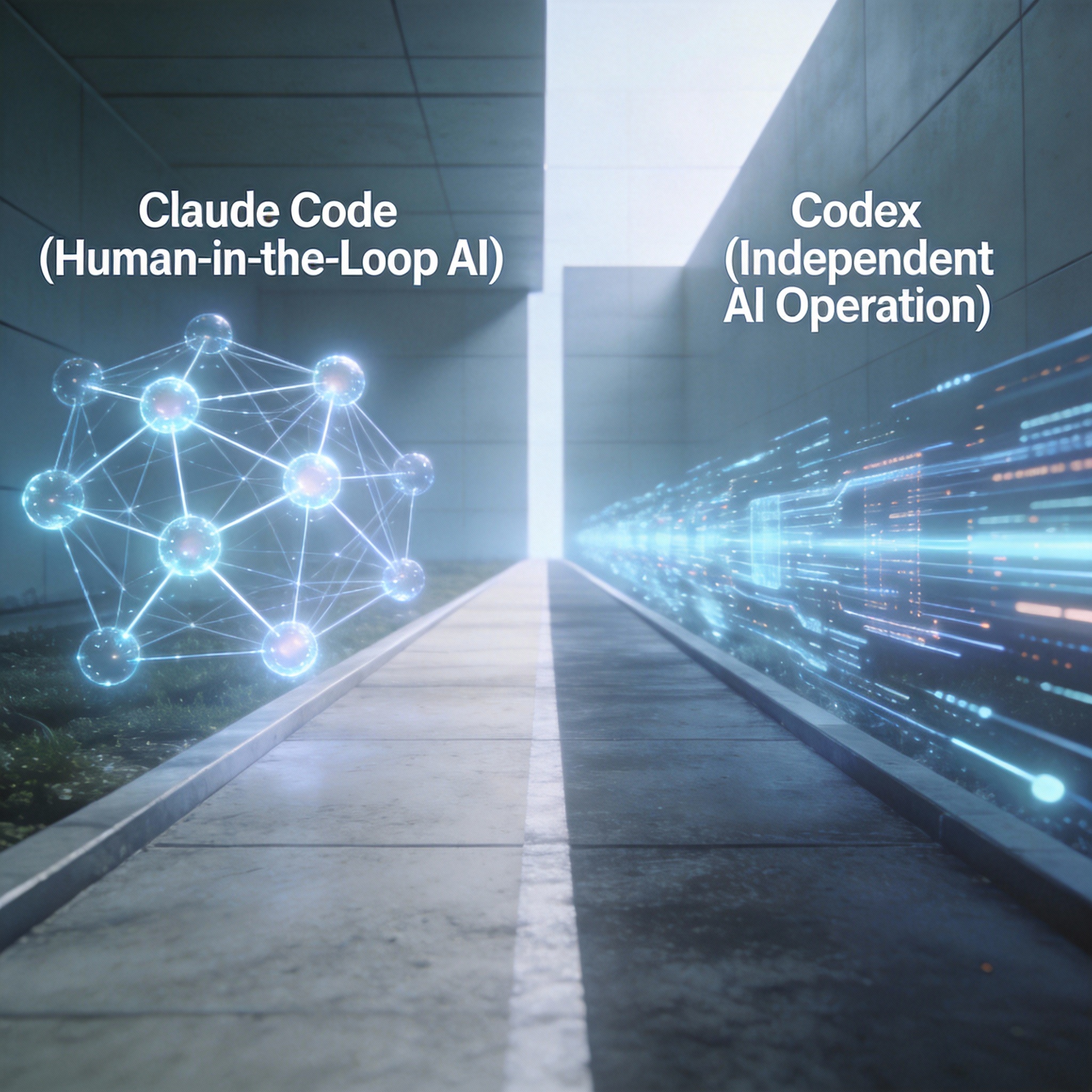
Two diverging digital pathways, one collaborative and one autonomous, symbolizing different AI philosophies.
Codex Versus Claude Code: A Philosophical Divide
The impending release of Codex has sparked comparisons with Anthropic's Claude Code, a tool that has gained significant traction among programmers. However, some industry observers argue that the focus on engineers' preferences overlooks a broader trend in software development.
While engineers often compare Claude Code and Codex based on their suitability for established workflows, this perspective may not reflect the future of software creation. The "technical monopoly" traditionally held by developers is diminishing, as the gap between expert and non-technical users shrinks. This shift implies that the most effective tools will cater to a wider audience, prioritizing results over the intricacies of the coding process.
Claude Code and Codex embody distinct AI philosophies. Claude Code is designed as a "pair programmer," emphasizing collaboration and human-in-the-loop interaction. This iterative approach, where users provide feedback and guide the AI, aligns with the preferences of engineers who value participation and control over the development process.
In contrast, Codex functions as an "autonomous worker." Users assign tasks, and Codex independently modifies code, runs tests, and delivers outcomes without requiring constant human oversight. This hands-off approach caters to individuals who prioritize efficiency and results, seeking to delegate complex coding tasks and focus on broader objectives.

Professional's hands resting on a desk beside a laptop displaying code, conveying delegation and efficiency.
The Future of Software Development
A veteran programmer noted that while he once cherished the coding process, his perspective shifted to valuing time above all else. He now seeks AI tools that allow him to define requirements, delegate the development, and return to test the completed work, rather than engaging in continuous interaction. Since the release of GPT-5, his reliance on Claude has decreased, with 80-90% of his work now handled by GPT-5.X-Codex models.
This shift suggests a future where software development becomes more accessible to non-technical individuals. The core skill will evolve from writing code to defining product requirements. Future software builders may not be interested in the "programming process" or frequent AI interactions; they will simply want to assign tasks and move on.

Diverse non-technical professionals confidently interacting with a simplified holographic software development interface.
Anthropic's Claude Code, with its emphasis on collaboration and human intervention, caters to a vision of "genius engineers with smart assistants." However, the author posits that the future belongs to the vast number of non-technical individuals who wish to build with AI, prioritizing results over craftsmanship. Codex is positioned to serve this larger demographic.
The distinction between these tools highlights a fundamental question for companies: Is AI a colleague or a tool? Claude Code demands presence and interaction, while Codex enables users to delegate and disengage. For engineers who enjoy the process, Claude Code may be ideal. However, for the majority who seek only results, Codex represents the future of software creation.
Stay Ahead of the AI Curve
Join 50,000+ subscribers getting the latest AI tools, trends, and tutorials delivered to their inbox weekly.
No spam, unsubscribe at any time.