
OpenAI President Discusses AI Self-Improvement, Super App Strategy, and AGI Progress


OpenAI President Greg Brockman recently addressed a range of strategic decisions and technological advancements at the company, including the discontinuation of its Sora video generation project, the development of a "Super App," and the path toward Artificial General Intelligence (AGI). His remarks followed a period of significant activity for OpenAI, which included securing $110 billion in funding and completing the pre-training of its next-generation model, Spud.
Brockman, who has overseen OpenAI's "Scale" division for the past 18 months, managing GPU infrastructure and data centers, offered insights into these developments during a podcast interview.
Strategic Shifts and Product Focus
Brockman explained the decision to discontinue Sora by stating that it represented a different technological path from the GPT series. He cited the high cost of pursuing multiple distinct technological branches with limited compute resources, emphasizing the need for focused investment. While Brockman highlighted technical rationale, reports from The Wall Street Journal and TechCrunch indicated that Sora faced commercial challenges, including declining user numbers and significant daily compute costs. The WSJ also reported the cancellation of a planned $1 billion investment and licensing deal with Disney shortly before Sora's public announcement.
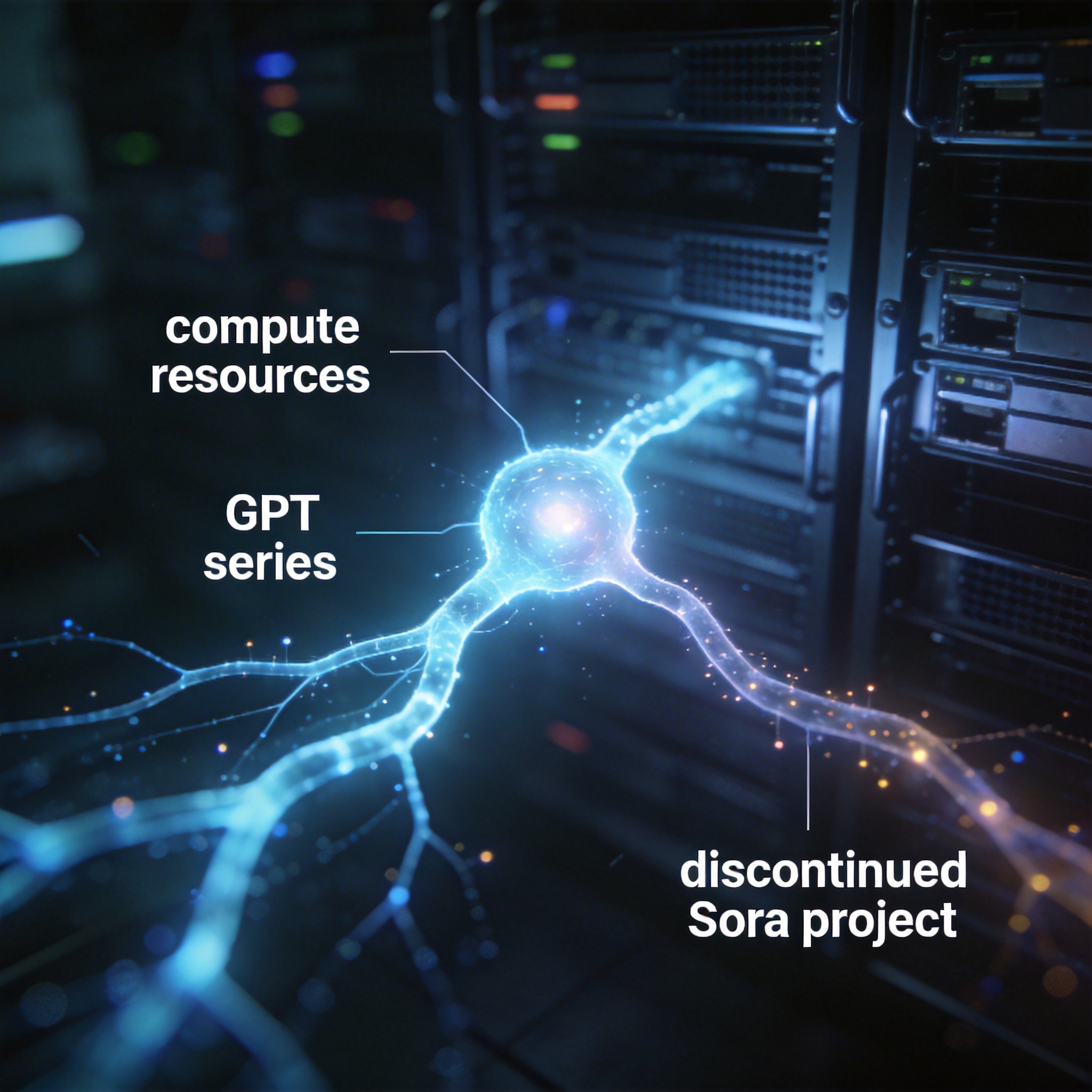
Abstract visual showing two diverging technological paths from a central compute core.
Despite the shift, Brockman clarified that the image generation function within ChatGPT, which uses the GPT architecture, remains unaffected. The Sora research team has reportedly transitioned to world simulation research in robotics.
The Super App Vision
OpenAI is now focusing on a "Super App" that aims to integrate ChatGPT (chat), Codex (a programming agent), and a browser into a unified application. Brockman envisions this app as a versatile tool for both personal and professional use, acting as a personal assistant and a work tool with enhanced memory and context capabilities. He described the user interface as "the tip of the iceberg," with a deeper unification of underlying technologies forming a general "AI layer."

Conceptual image of a unified 'Super App' interface on a translucent screen.
This vision, however, appears to overlap with Microsoft 365 Copilot, which already embeds AI into workflows and unifies various tools. The interview did not address the potential competitive tension arising from OpenAI's role as both a model supplier to and a direct competitor of Microsoft. The timeline for the Super App's delivery, stated as "in a few months," also raised questions given OpenAI's past consumer product track record.
Codex and Broadening AI Access
A key component of the Super App is Codex, initially designed for software engineers. Brockman noted its increasing use by non-engineers within OpenAI for tasks like video editing and integrating feedback across communication platforms. He described AI as a "universal glue" connecting different tools. While acknowledging that Codex's current usability for non-programmers is low due to error handling complexities, Brockman believes the more challenging aspect of creating intelligent AI has been achieved, with the "easier" task of lowering the barrier to entry remaining. The recruitment of Peter Steinberger, founder of OpenClaw, to lead "next-generation personal Agents" at OpenAI signals the company's intent to expand Codex beyond the programmer community.
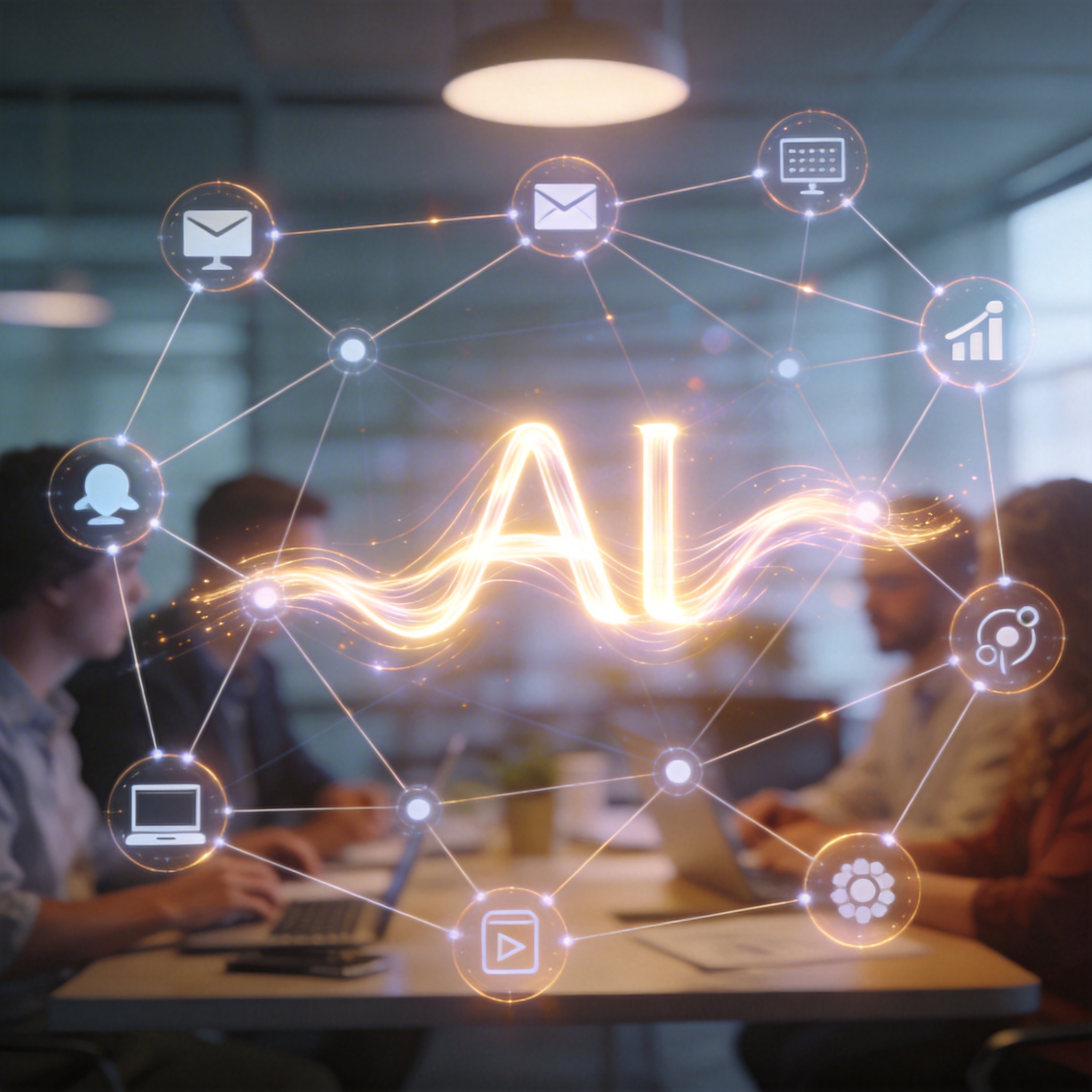
Abstract representation of AI as a 'universal glue' connecting various digital tools.
Competing in the Enterprise Market
Brockman acknowledged that OpenAI had lagged behind Anthropic in the "last-mile usability" of programming tools, particularly for real-world messy codebases. He stated that OpenAI has since formed a dedicated team to address this and has "caught up," claiming internal comparisons show user preference for OpenAI's tools. However, he admitted that the front-end experience still lags. Third-party data from Synergy Research and other organizations indicates that Anthropic's enterprise market share grew significantly by late 2025, while OpenAI's declined.
Brockman also noted a shift in OpenAI's internal structure, moving from treating research and deployment as separate functions to integrating them, with product use cases considered during the research phase.
Spud and AGI Progress
Regarding the next-generation model, Spud, Brockman confirmed it is a new pre-trained foundational model resulting from "approximately two years of research." He emphasized that the focus is on an "engine of progress" rather than individual models. Brockman described Spud's capabilities using the concept of "big model smell," suggesting that its power is intuitively evident, without providing specific metrics or benchmark data. He claimed Spud would simultaneously raise the ceiling for solving complex problems and improve practicality for daily tasks.

Abstract visual of a powerful, swirling data vortex symbolizing a next-generation AI model.
On the topic of AGI, Brockman offered a self-assessment of 70-80% progress toward it, yet also described the definition of AGI as "more like a vibe." This contradiction highlights an industry-wide challenge in precisely quantifying a concept that lacks a clear, scientific definition. He anticipates AGI will be achieved within the next few years, capable of performing most intellectual work on computers, though with uneven capabilities.
Automated AI Research and Responsibility
OpenAI plans to launch an automated AI researcher in the fall, which Brockman described as a "takeoff" moment for AI, implying rapid recursive self-improvement. He clarified that this involves AI handling the execution of research tasks under the direction and review of human researchers, likening it to mentoring junior researchers.
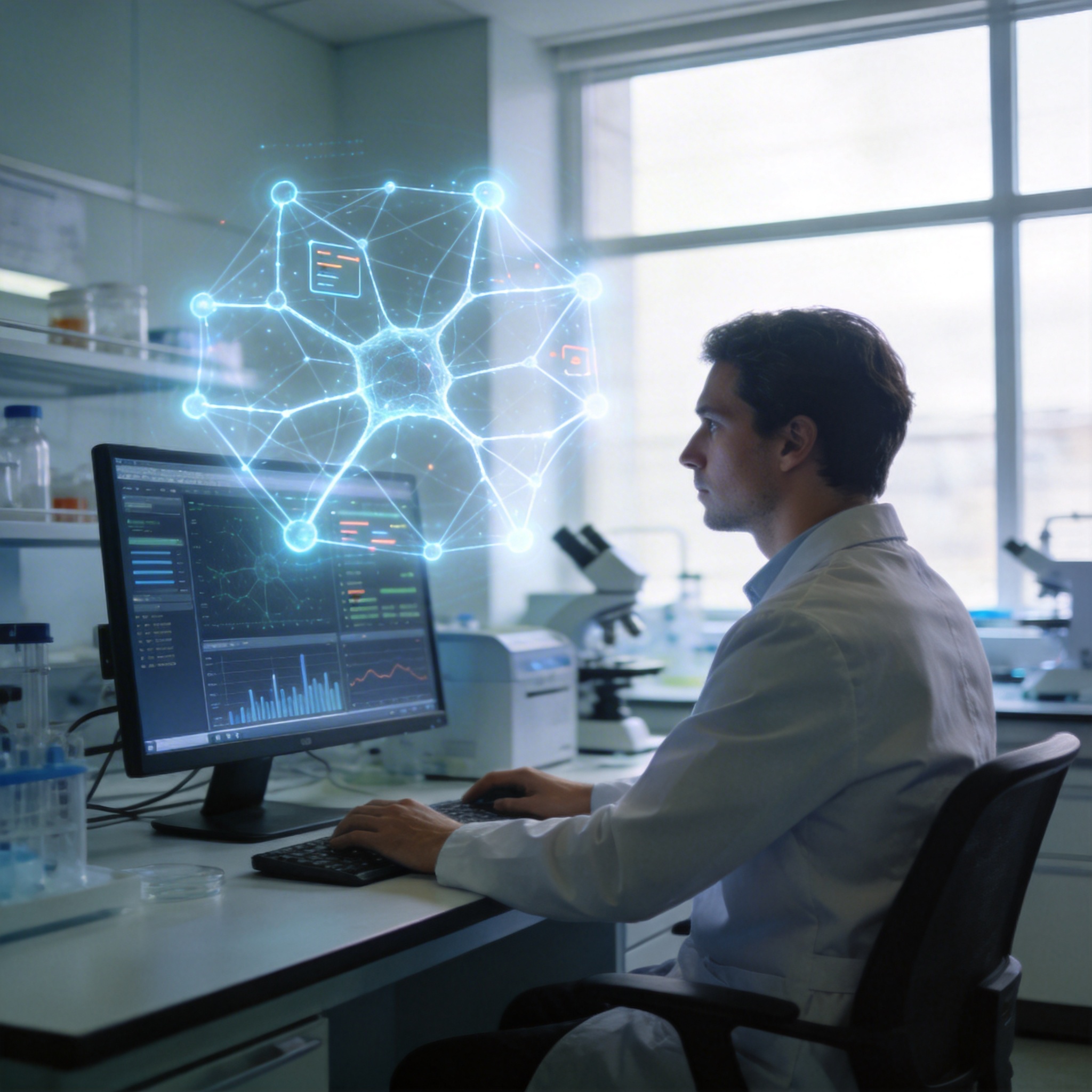
Human researcher overseeing an AI system, symbolizing automated AI research under human direction.
Brockman also addressed the concept of human responsibility in an agent-driven world. He stated that while AI agents provide leverage, the ultimate responsibility for their actions lies with the human user. He used the analogy of a home renovation, where one trusts professionals but remains accountable for the overall outcome.
The $110 Billion Compute Investment
Brockman characterized compute as a "revenue center" rather than a cost center, arguing that increased compute directly correlates with higher revenue, similar to hiring more salespeople for a scalable product. He recalled an internal discussion at ChatGPT's launch, where the consensus was to acquire "all of it" regarding compute, anticipating insatiable demand. He cited ChatGPT's over 400 million weekly active users and growing consumer subscription revenue as validation.
However, compute procurement requires 18 to 24 months of advance planning, necessitating precise future forecasting. Brockman dismissed criticism from Anthropic CEO Dario Amodei regarding "overly aggressive" infrastructure investment, stating that OpenAI has been thoughtful and proactive. He did not directly address Amodei's argument that a one-year deviation in revenue forecasts could lead to bankruptcy.

Abstract visualization of massive server racks and data streams, representing compute investment.
Of the $110 billion in funding, approximately $25 billion is immediate cash, with the remainder comprising compute resources (such as Nvidia GPUs) or milestone-based funding. Media estimates suggest OpenAI's annual cash burn could reach $57 billion by 2027, potentially limiting its actual runway to 18-24 months. Brockman affirmed the need for large-scale pre-training but noted a recent shift toward optimizing for "intelligence × cost" rather than solely pursuing raw capability.
Public Trust and Safety
Brockman proposed a "resilience" framework for AI risks, advocating for collaborative technological development alongside social infrastructure to guide its direction. He drew an analogy to the electricity industry, which has safety standards and regulations despite its inherent dangers.
Addressing public skepticism about AI, Brockman emphasized demonstrating AI's practical benefits. He cited a medical anecdote where ChatGPT helped a family secure an MRI for their child, leading to the discovery and treatment of a brain tumor.

Abstract shield protecting an AI core, symbolizing resilience and social infrastructure for AI risks.
Regarding data center controversies, Brockman claimed OpenAI's Abilene facility, housing over 100,000 GPUs, uses "the same amount of water as a single household" annually. This claim has not been independently verified, and industry figures for data center water consumption suggest significantly higher usage. He also stated that OpenAI would "pay for itself" regarding electricity, promising no price increases for local residents and citing an unverified example from North Dakota where data centers reportedly lowered electricity bills.
Political Donations
Brockman addressed the controversy surrounding his $25 million donation to MAGA Inc., stating that he and his wife also donated to super PACs for both parties. He described himself as a "single-issue donor" focused on supporting "politicians who truly embrace AI technology." However, MAGA Inc. broadly supports Trump's agenda, creating a tension with his stated single-issue focus. Brockman also donated $25 million to Leading the Future, a bipartisan PAC promoting AI development. The MAGA Inc. donation, the largest single contribution received by the PAC in the latter half of 2025, sparked the #QuitGPT boycott movement in early 2026.
Analysis of OpenAI's Position
Based on Brockman's statements, OpenAI appears to be navigating product, communication, and scale pressures. The company's next major product, the Super App, faces a competitive landscape with established players like Microsoft 365 Copilot and Anthropic. Brockman's reliance on subjective language, such as "smell" for Spud's capabilities and "vibe" for AGI progress, in the absence of specific metrics, reflects a communication challenge for a company that needs to demonstrate technological leadership to investors without revealing proprietary details before launch.
The $110 billion funding, while substantial, is not entirely immediate cash, and analyst estimates of OpenAI's annual cash burn suggest a potentially shorter runway than the headline figure implies. Brockman's dismissal of concerns about revenue forecast accuracy without numerical justification leaves questions about the financial risks associated with the company's aggressive compute investment strategy. The success of Spud and the Super App's market reception over the coming months will be crucial in validating OpenAI's strategic narrative.
Stay Ahead of the AI Curve
Join 50,000+ subscribers getting the latest AI tools, trends, and tutorials delivered to their inbox weekly.
No spam, unsubscribe at any time.