
Nvidia Reportedly Nears $3 Billion Acquisition of AI21 Labs


Nvidia is reportedly in discussions to acquire AI21 Labs for an estimated $2 billion to $3 billion, a move that would represent Nvidia’s largest AI acquisition to date. The potential deal, though not officially confirmed, is widely anticipated within the industry.

Holographic bar chart showing high valuation in a modern conference room, symbolizing a significant business acquisition.
AI21 Labs, founded in 2017, employs approximately 200 full-time staff. If the acquisition proceeds at the $3 billion valuation, it would imply a per-employee value ranging from $10 million to $15 million, significantly higher than many typical unicorn acquisitions. This valuation has led some industry observers to characterize the potential deal as a strategic talent acquisition.
AI21 Labs' Evolution and Market Position
AI21 Labs was co-founded by Professor Amnon Shashua, Professor Yoav Shoham, and Ori Goshen. Before the generative AI surge in 2022, the company was a prominent player in Israel’s AI sector, known for its academic approach to controllable text generation and enterprise-grade APIs. Its Jurassic series of large language models was once considered a strong alternative in the GPT-3 era.
The market landscape shifted significantly with the release of ChatGPT in November 2022. This event rapidly propelled generative AI into the mainstream, intensifying competition in computing power, data, and distribution channels. While OpenAI gained substantial backing from Microsoft, and Anthropic aligned with Amazon and Google, AI21 Labs found itself increasingly marginalized despite receiving funding from Nvidia and Google in 2023.

Glowing data pathways, with one central path diverging, symbolizing the shifting market landscape in generative AI.
In April, AI21 Labs discontinued Wordtune, its consumer-facing AI-assisted reading and writing product. The company now primarily focuses on specialized language models for enterprise clients, a sector demanding high accuracy and reliability. Its flagship enterprise product, Maestro, aims to enhance language model accuracy by up to 50%. AI21 also recently introduced a new inference model, which is reported to be faster, more energy-efficient, and to consume less memory than competing systems.
AI21 Labs currently generates approximately $50 million in annual revenue. While not a failure in the large model sector, this figure presents challenges when balanced against the company’s high research and development costs and team size.
Nvidia's Strategic Rationale
From Nvidia’s perspective, the potential acquisition is not about filling a product gap, as Nvidia already possesses foundational models like Nemotron, the world model Cosmos, and an agent platform. Instead, the deal appears to be a strategic investment in talent and an effort to secure leadership in the AI inference market.
Recent market developments, such as Meta’s reported discussions with Google for a multi-billion dollar TPU deal, have highlighted the increasing competition in the inference space. Nvidia’s CEO, Jensen Huang, has reportedly responded with a series of strategic moves, including investments or acquisitions involving Groq (inference chip technology), Enfabrica (networking talent), and now potentially AI21 Labs (large language model architecture talent).
Ben Pouladian, an electrical engineer and investor, views these actions as Nvidia’s systematic integration of the inference market. While Nvidia holds a dominant position in the training market, the inference market is becoming more fragmented with the rise of custom ASICs, TPUs, and self-developed chips.
AI21 Labs’ Jamba hybrid architecture, which combines SSM and Transformer elements, offers advantages such as 2.5 times faster long-context processing and 2-5 times greater energy efficiency compared to models like DeepSeek, Llama, and Google. This architecture also features efficient inference technology, requiring only 4GB of KV cache for 256K context with 12 billion active parameters, making it suitable for memory-constrained inference chips.
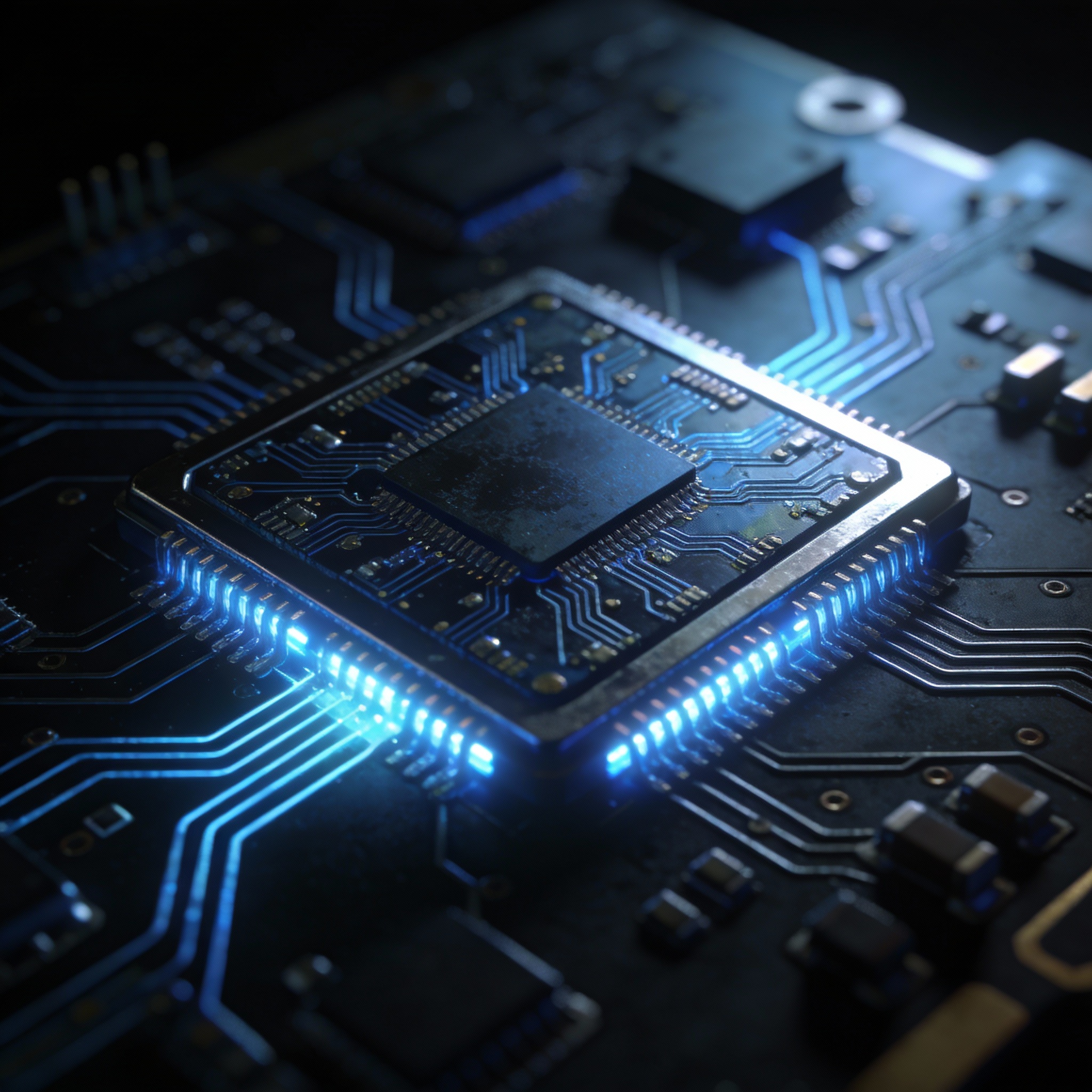
Close-up of an advanced inference chip with glowing pathways, representing efficient AI architecture.
Nvidia has a history of expanding its R&D presence in Israel, having acquired companies like Mellanox, Deci, and Run:ai. The integration of AI21 Labs would further strengthen Nvidia’s capabilities in both model and system layers within the region.
Founder's New Ventures and Industry Shift
Amnon Shashua, a co-founder of AI21 Labs, previously oversaw the $15 billion sale of Mobileye to Intel in 2016. He has reportedly shifted his focus to AAI, a new AI startup concentrating on next-generation AI inference models and system architectures. AAI, co-founded with Shai Shalev-Shwartz, Mobileye’s CTO, has already achieved unicorn status within two years and focuses on inference and thinking models.
The current competitive landscape for large model startups suggests a narrowing path to success. Companies either scale to the size of industry leaders like OpenAI or Anthropic, or they become acquisition targets for larger entities. The middle ground for independent growth is diminishing, as capital and computing resources increasingly favor established players.
For many large model entrepreneurs, an acquisition is becoming a realistic outcome in an environment where competition has evolved from academic papers and parameters to computing power, capital, and ultimately, ecosystem integration.
Stay Ahead of the AI Curve
Join 50,000+ subscribers getting the latest AI tools, trends, and tutorials delivered to their inbox weekly.
No spam, unsubscribe at any time.