
Nvidia Lobbying Effort Halts US AI Chip Export Restriction Bill

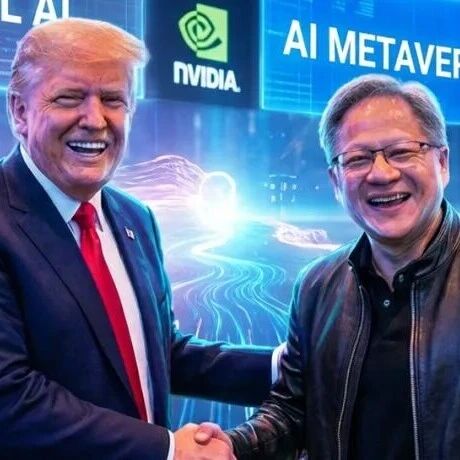
Nvidia has successfully lobbied against the inclusion of a provision in an upcoming defense bill that would have restricted the sale of advanced AI chips to certain countries. The proposed measure, known as the "Guaranteeing Access and Innovation for National Artificial Intelligence Act of 2025" (GAIN AI Act), aimed to prioritize American customers for high-performance AI chips before they could be sold internationally.
The decision to exclude the GAIN AI Act from the defense legislation marks the culmination of an intense lobbying campaign.
Jensen Huang's Intervention
The debate over the GAIN AI Act involved "China hawks" advocating for restrictions and industry leaders like Nvidia seeking broader market access. Nvidia argued that the bill would stifle global competition for advanced chips and was unnecessary, as American customers already had sufficient access.
Nvidia CEO Jensen Huang traveled to Washington to meet with elected officials, including President-elect Trump and several key lawmakers. Huang stated his trip was to "answer some questions about AI." The White House ultimately sided with Nvidia, despite opposition from some cabinet members and previous hints from Trump about openness to exporting "downgraded" Blackwell chips. Huang described the lawmakers' decision not to include the GAIN AI Act in the defense bill as "wise," suggesting it would have been more detrimental to the United States than previous legislation. This outcome also impacted tech companies such as Microsoft and Amazon, which had reportedly hoped to gain hardware advantages through such legislation.
Despite this development, the US chip industry faces ongoing scrutiny. Reports indicate a new proposal, the "Secure and Feasible Exports Act" (SAFE Act), is being drafted to codify existing chip export restrictions to China.
Details of the GAIN AI Act
The GAIN AI Act was based on the premise that U.S. demand for high-end AI chips significantly outstrips supply, leading to long waiting times for American companies due to large-scale exports. The bill, introduced in the Senate in early November with a companion bill in the House, sought to impose a "certification requirement." Companies intending to sell cutting-edge AI chips to entities in "regions of concern" would first need to obtain a license.
The Senate version of the bill stipulated that export license applicants must demonstrate that "United States persons" have a Right of First Refusal (ROFR). This would require chips initially designated for "countries of concern" to be offered to American buyers first. Additionally, applicants would need to confirm no outstanding orders from American buyers and that exports would not foreseeably create a backlog within 12 months. While the House version had slightly different wording, its core requirements were similar.
The Brookings Institution, a U.S. think tank, expressed concerns that the GAIN AI Act "may undermine US AI leadership." The institution highlighted the bill's ambiguous wording, which could lead to arbitrary compliance decisions, and its unclear definition of "backlog." Brookings also suggested that an excessive focus on computing chips overlooks other critical factors in AI development.
For instance, the bottleneck for AI deployment in the United States is increasingly shifting to electricity supply rather than chip availability. Amazon CEO Andrew Jassy noted in an October 30 earnings call that "for Amazon, perhaps the bottleneck is electricity." Microsoft CFO Amy Hood also stated on October 29 that the company had not lacked GPUs or CPUs in recent years, but rather "space or electricity." Goldman Sachs has warned that the U.S. power grid is already strained by the data centers powering AI development, which currently account for about 6% of total U.S. electricity demand. Goldman Sachs analysts project this figure could nearly double to 11% by 2030, potentially pushing grid capacity in some regions beyond critical limits.
Stay Ahead of the AI Curve
Join 50,000+ subscribers getting the latest AI tools, trends, and tutorials delivered to their inbox weekly.
No spam, unsubscribe at any time.