Jensen Huang Named FT Person of the Year 2025 as Nvidia Market Cap Exceeds $5 Trillion
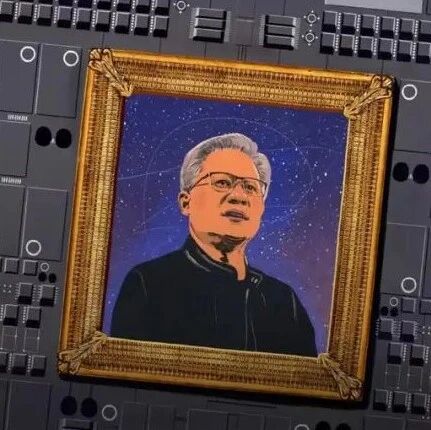
In 2025, Nvidia's market capitalization surpassed $5 trillion, establishing it as the world's most valuable company. Jensen Huang, the company's CEO, was recognized as the Financial Times Person of the Year for his role in shaping the global AI economy. Huang has cultivated a corporate culture characterized by what he terms "masochistic" principles, which he credits with building a computing power empire.
Origins of a "Masochistic" Culture
Huang's leadership style is rooted in a deep-seated anxiety about survival, rather than innate confidence. This anxiety, he suggests, stems from early experiences of marginalization. During a speech at Stanford University, Huang emphasized the importance of enduring hardship. His teenage years included a period at the Oneida Baptist Institute in Kentucky, a reform school. There, he was responsible for teaching his illiterate roommate to read and cleaning all the school's toilets. This experience, he noted, eliminated his fear of failure.
His pragmatic approach extended to his academic and professional life. While at Oregon State University, he met his future wife, Lori, by seeking assistance with her homework. Later, while working full-time at LSI Logic, he pursued a master's degree at Stanford over eight years, dedicating his weekends to studies. This tolerance for demanding work later influenced Nvidia's internal culture, including its "30-day bankruptcy" crisis awareness.
Huang maintains a practice of self-negation, even at the peak of his company's success. He reportedly tells himself "You suck" daily to maintain a sense of crisis and prevent complacency. He believes that true resilience comes from enduring suffering, not from inherent intelligence.
High-Stakes Gambles and Strategic Shifts
Nvidia's history is marked by several critical moments where the company's survival was at stake. Founded in 1993, the company faced its first major crisis just three years later.
In 1996, Nvidia's initial chip, the NV1, failed commercially due to a technical misjudgment. Huang had backed "quadratic surface mapping" technology, while Microsoft's DirectX standard adopted triangular polygon rendering. With mounting inventory and dwindling funds, Nvidia was developing the NV2 chip for Sega. Huang informed Sega CEO Shoichiro Irimajiri that the NV2's technical direction was flawed and requested full payment for the contract to avoid immediate bankruptcy. Sega provided $5 million, which allowed Nvidia to develop the RIVA 128 in a six-month period, shifting to triangular rendering and securing the company's survival.
Another significant gamble was the 2006 launch of CUDA (Compute Unified Device Architecture). Huang decided to integrate CUDA logic into every graphics card, enabling developers to use GPUs for general-purpose computing. This decision increased costs and led to initial skepticism from Wall Street, as GPUs were primarily seen as gaming devices. The utility of CUDA became evident with the rise of deep learning in 2012. In 2016, Huang personally delivered the first DGX-1 supercomputer to OpenAI, then led by Elon Musk, inscribing it with a message about the future of computing and humanity.
Unconventional Management and Strategic Vision
Huang's management philosophy deviates from traditional corporate structures. Despite having tens of thousands of employees, Nvidia operates with a flat, network-like organization.
Internal communication at Nvidia is concise. Huang's emails are often described by employees as "haikus" or "ransom notes," typically limited to six double-spaced lines, with one sentence per line. This approach aims to ensure clarity and efficiency.
Huang has approximately 36 direct reports, a number typically considered high in management theory. However, he prohibits one-on-one reporting meetings to prevent information asymmetry. All reports occur in open forums, ensuring all relevant parties receive the same information simultaneously. He also implemented a "Top 5" system, requiring employees to regularly submit their five most important items. Huang personally reviews hundreds of these emails daily to monitor the company's internal dynamics.
By 2025, Huang has redefined Nvidia's core mission. He stated, "We are not building data centers; we are building factories that manufacture intelligence." This reframing positions tech company capital expenditures as industrial infrastructure investments, providing a rationale for large-scale investments by companies like Microsoft and Meta.
In 2025, Nvidia reportedly considered investing up to $100 billion in OpenAI. This move would transition Nvidia from a component supplier to a strategic ally, securing future demand for its Blackwell and Rubin chips through vertical integration.
Global Influence and Diplomacy
Beyond technology, Huang has demonstrated diplomatic skills in maintaining supply chain stability. In October 2025, during a period of HBM (High Bandwidth Memory) capacity constraints, Huang met with Samsung Electronics Chairman Lee Jae-yong and Hyundai Motor Group Chairman Euisun Chung at a fried chicken restaurant in Seoul. This meeting signaled Nvidia's intent to deepen memory collaboration with Samsung and partner with Hyundai Motor in physical AI, including robotics and autonomous driving, to mitigate supply chain risks.
Huang's influence also extended to U.S. domestic politics. In October 2025, he and Salesforce CEO Marc Benioff reportedly contacted President Trump to dissuade him from a planned federal law enforcement operation in San Francisco. Trump subsequently canceled the operation and publicly praised Huang.
Huang's career has been characterized by "constructive paranoia." Despite Nvidia's market dominance in 2025, he continues to instill in employees the belief that the company is "only 30 days from going out of business." This mindset, which influenced past decisions like the Sega appeal and the CUDA gamble, now drives Nvidia's transformation into an "intelligent manufacturing machine."