Nvidia CEO Jensen Huang Manages 36 Direct Reports in Flat Structure

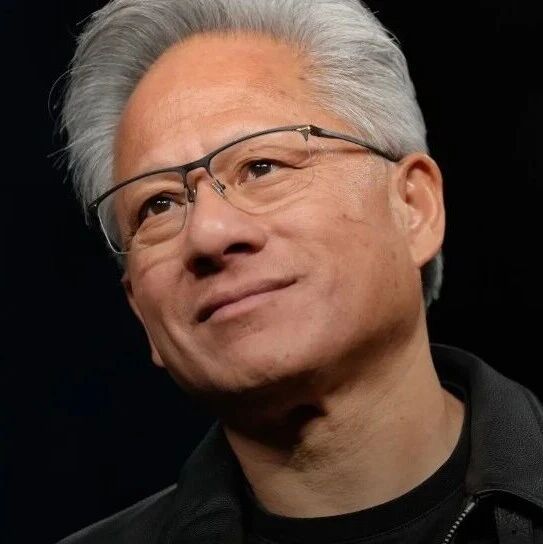
Nvidia CEO Jensen Huang directly manages 36 executives, a structure that prioritizes direct information flow and efficiency within the $5 trillion company. This approach, which once saw Huang managing 55 direct reports, deviates from typical Silicon Valley management norms.
Among these 36 individuals is Howard Wright, a former NBA player who now heads Nvidia's Inception program, supporting 19,000 global startups. Wright’s career trajectory, from professional basketball to leadership roles at Qualcomm, Intel, AWS, and now Nvidia, reflects the diverse backgrounds within Huang’s executive team.
Huang's Management Philosophy
Jensen Huang champions a flat management structure, believing that "information is power." He asserts that direct access to first-hand information accelerates decision-making and fosters innovation. Huang maintains a policy of "no proactive one-on-one meetings" to prevent information silos, though he commits to immediate communication if a subordinate requests it.
This model contrasts with other tech leaders; Meta's Mark Zuckerberg manages a core group of around 30 individuals, not all directly reporting to him, while Elon Musk has 19 direct reports at Tesla and five at xAI. Huang explained at the New York Times DealBook Summit that more direct reports lead to fewer organizational layers, ensuring information flow and empowering employees.
Huang believes that layered reporting dilutes and delays critical information, advocating for a short decision chain to maintain Nvidia's agility. This philosophy is embedded in Nvidia's culture, characterized by high intensity and a "hardcore" work ethic, which has allowed the company to maintain startup-like momentum despite rapid growth in the AI sector.
Huang's work schedule is demanding, and he often favors group discussions over individual meetings to facilitate information sharing among executives. He has stated that his direct reports "all earn about the same," suggesting an egalitarian approach to access to information and resources. This flat organization aims to function as an open neural network, rapidly transmitting market intelligence and internal decisions.
While Huang's direct reports once peaked at 55, the number has been reduced to 36, indicating a potential fine-tuning of this management strategy. These 36 executives form Huang's "inner circle," operating as "mini-CEOs" in their respective domains, collectively supporting Nvidia's global operations.
Founding Veterans and Technical Leaders
Nvidia’s leadership includes several long-serving individuals who have shaped the company from its early days.
Chris Malachowsky, a co-founder, conceived Nvidia's blueprint in 1993. With over 40 years of experience and dozens of integrated circuit patents, Malachowsky, now an "Nvidia Fellow," focuses on core technology strategy. He has also contributed significantly to educational philanthropy, establishing computer science centers at his alma mater.
Dwight Diercks, who joined Nvidia in 1994 as the 22nd employee, is now Senior Vice President of Software Engineering. He has been instrumental in developing software stacks for GPUs, AI accelerators, and autonomous driving platforms. Diercks has also made substantial philanthropic contributions to medical and educational institutions.
Jeff Fisher, Nvidia's first official salesperson, joined in 1994. He is now Senior Vice President of the GeForce business unit, leading Nvidia's gaming and consumer graphics efforts. Fisher is credited with establishing Nvidia's dominant position in the gaming industry.
Jonah Alben, who joined in 1997, is Senior Vice President of GPU Engineering. He has led the development of multiple GPU architectures, from "Fermi" and "Kepler" to "Volta" and "Ampere," holding 34 patents in GPU design.
Beyond these veterans, Nvidia's technical leadership includes top experts in chip architecture, computer science, and network communications.
Bill Dally, Chief Scientist since 2009, is a renowned computer scientist and former head of Stanford University's computer science department. He has made foundational contributions to parallel computing and computer architecture, establishing Nvidia's research institute and leading advancements in GPU architecture and deep learning acceleration.
Michael Kagan, Nvidia's CTO, co-founded Mellanox, which Nvidia acquired in 2019. Kagan integrates his networking expertise with Nvidia's GPU technology, driving concepts like the Data Processing Unit (DPU) and accelerating the "data center is the computer" architecture.
Ian Buck, a pioneer in general-purpose GPU computing, joined Nvidia in 2004 and developed the CUDA platform in 2006. As Vice President and General Manager of the Accelerated Computing division, he now oversees Nvidia's data center business.
Other key technical leaders include Rev Lebaredian, responsible for the Omniverse platform and simulation technology; Arjun Prabhu and Sameer Halepete, who oversee GPU hardware and VLSI engineering; Dror Goldenberg and Amit Krig, leading network and data center software; Gilad Shainer and Eyal Babish, key figures in network hardware; John Spitzer, Vice President of Developer and Performance Technology; and Kari Briski, Vice President of Enterprise Generative AI Software.
Business and Operations Leadership
Nvidia's executive team also includes leaders in finance, sales, operations, legal, and human resources.
Colette Kress, Executive Vice President and Chief Financial Officer since 2013, has managed Nvidia's finances during a period of significant growth, from less than $4 billion to nearly $100 billion in annual revenue. Her financial strategy is credited with helping Nvidia achieve a multi-trillion-dollar market capitalization.
Jay Puri, Executive Vice President, oversees global business development and sales. Since joining in 2005, he has expanded Nvidia's sales footprint across various industries, securing major clients and building channel partner networks.
Debora Shoquist, Executive Vice President of Operations since 2009, has reshaped Nvidia's supply chain and production processes, ensuring chip delivery during high demand and implementing lean management.
Tim Teter, Executive Vice President, General Counsel, and Corporate Secretary, joined in 2017. He manages all legal matters, including intellectual property and regulatory compliance, and played a crucial role in the Mellanox acquisition.
Sonu Nayyar, Senior Vice President and Chief Information Officer (CIO), joined in 2020. He leads global IT, internal systems, security, and business process digitalization, promoting the adoption of AI tools within Nvidia.
Kristin Major, former Senior Vice President of HR, drove talent development and diversity initiatives. She recently returned to HPE as Executive Vice President and Chief People Officer.
Other executives in this domain include Laura Fay, responsible for corporate marketing and communications; Mylene Mangalindan, Vice President of Corporate Communications; Patrick Whitgrove, Vice President of Creative and Communications; and Edie Fischer, CEA, who manages Jensen Huang's schedule and cross-departmental coordination.
Pioneers of New Fronts
Several new talents have joined Nvidia to expand into emerging business areas.
Howard Wright, Vice President of the Inception program, was recruited by Jensen Huang in early 2024. He leverages his extensive network from sports and venture capital to integrate promising AI startups into Nvidia's ecosystem.
Xinzhou Wu, Vice President for the automotive business, joined in 2023. With experience from Xpeng Motors and Qualcomm, Wu is tasked with expanding Nvidia's presence in autonomous driving, particularly in emerging markets like China.
Alexis Bjorlin, Vice President and General Manager of DGX Cloud, joined around 2022. She leads the development of DGX Cloud, a new AI cloud service platform, making Nvidia's AI computing clusters available through the cloud.
Ronnie Vasishta, Senior Vice President for telecommunications business development, joined in late 2020 after the Mellanox acquisition. He promotes the application of Nvidia's GPUs and DPUs in 5G networks and edge computing.
Justin Boitano, Vice President of Enterprise AI, focuses on enterprise AI products, packaging Nvidia's AI hardware and software for business adoption.
Deepu Talla, Vice President and General Manager of the Autonomous Machines division, joined in 2013. He leads the Jetson edge AI platform and Isaac robotics platform, extending Nvidia's AI into robotics and IoT.
Joseph Greco, Senior Vice President of the Advanced Technology Group (ATG), leads Nvidia's internal cutting-edge research and preliminary development, exploring disruptive technologies beyond current product roadmaps.
This diverse team, combining veterans, technical experts, and new talent, forms Jensen Huang's "core brain trust." Huang's management style, characterized by direct communication and empowerment, aims to enable rapid decision-making and innovation, maintaining Nvidia's vitality in the AI era.