Musk Predicts xAI AGI by 2026, Citing Trillion-Dollar Wealth and Ecosystem Synergies

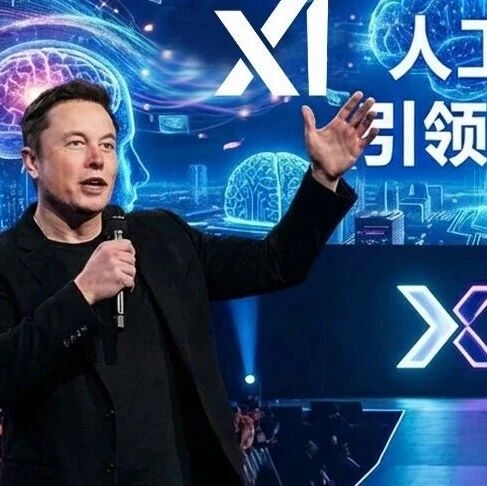
Elon Musk has reportedly become the first individual in history with a net worth exceeding $600 billion, driven by the anticipated initial public offering of SpaceX, a new compensation plan for Tesla, and the valuation of his AI venture, xAI. Despite this financial milestone, Musk has expressed concerns regarding xAI's ability to navigate the competitive landscape of the AI industry over the next two to three years.
Musk recently confirmed plans for SpaceX to go public as early as 2026, with market expectations placing its valuation at $1.5 trillion. Musk holds approximately 42% of SpaceX shares, an asset that could contribute significantly to his personal wealth. Additionally, Tesla shareholders approved a compensation plan tied to an $8.5 trillion market capitalization target for the company. xAI is currently raising $15 billion, with a valuation of $230 billion, and Musk retains a 53% stake.
xAI's Strategic Outlook and AGI Ambition
During an all-hands meeting last week, Musk informed xAI employees that the company is at a critical juncture. He stated that if xAI can survive and scale within the next two to three years, it has the potential to surpass competitors such as OpenAI and Google. Musk anticipates that Artificial General Intelligence (AGI) could be achieved as early as 2026, suggesting that Grok 5, scheduled for release early next year, might possess the capabilities to reach AGI.
This assessment highlights the intense competition in the large language model sector, where success may depend on sustained investment in computing power, electricity, and funding, rather than immediate benchmark scores. Industry observers note that Musk's AGI timeline reflects the accelerated pace of AI development. Competitors like OpenAI and Google are also advancing their models, with Google recently releasing its Gemini 3 Pro and Gemini 3 Flash models.
Despite xAI's relatively recent founding in 2023, Musk has expressed confidence in its trajectory. He cited several advantages, including potential annual funding of $20 billion to $30 billion and synergistic benefits from his other companies. For example, Tesla has integrated Grok, and SpaceX is exploring space-based computing solutions.
Capital, Ecosystem, and Product Development
Musk emphasized that xAI's ability to leverage his broader business ecosystem is a key differentiator. The company reportedly has access to substantial annual funding, and Musk's influence facilitates continuous capital injection. The integration of xAI's Grok model into Tesla vehicles provides real-world data and application scenarios, aiding model iteration and commercialization.
SpaceX, as a highly valued entity in aerospace and satellite internet, could also support xAI's long-term computing ambitions. Musk has proposed establishing data centers in space, with Tesla's Optimus humanoid robots maintaining these nodes. This concept aims to overcome Earth-bound resource limitations and achieve "interstellar" computing power.
xAI has also made progress in product development. The team demonstrated updated features for the Grok series, including "Grok Voice," a voice assistant for Tesla owners, and prototypes of multimodal functions such as video editing. These advancements indicate xAI's focus on both foundational research and commercial application.
"Interstellar" Computing and Supercluster Expansion
Musk's long-term vision for computing power extends beyond Earth. He envisions deploying large data centers in Earth orbit, or potentially on the Moon and Mars, to leverage abundant solar power and cooling conditions. He has previously stated that space-based AI systems could be more cost-effective than ground deployments within five years.
While Google CEO Sundar Pichai and OpenAI CEO Sam Altman have also discussed the concept of space-based data centers, they have characterized it as a "moonshot" project. Challenges include cooling megawatt-scale GPU clusters, launch costs, chip radiation resistance, high-bandwidth communication with Earth, autonomous operation, and space debris mitigation.
On Earth, xAI is expanding its Colossus supercomputing cluster. The company currently utilizes approximately 200,000 GPUs for model training. Musk has set a goal to expand this to 1 million GPUs, which would make it one of the world's most powerful AI training platforms. This significant investment in computing power reflects Musk's belief that scale is a decisive factor in the race for AGI.
The rapid growth of xAI, supported by Musk's resources and strategic vision, positions it as a significant contender in the evolving AI landscape. The company is reportedly negotiating a new funding round of $15 billion, which would bring its post-money valuation to $230 billion. Musk's prediction of AGI by 2026 underscores the intense competition and the comprehensive nature of the AI race, encompassing capital, energy, supply chain, regulation, and productization capabilities.