
Moltbot Creator Discusses Viral AI Agent, Burnout, and Future of Personal Assistants

Peter Steinberger, the Austrian developer behind the recently renamed Moltbot (formerly Clawdbot) AI agent, discussed the project's rapid ascent, his personal journey through burnout, and his vision for AI's future in a recent 35-minute interview. Steinberger, founder of PSPDFKit, which received over €100 million in investment in 2021, developed Moltbot in 10 days in November 2024 after a three-year hiatus from coding.

Abstract visualization of a rapidly expanding digital network, symbolizing viral growth and technological traction.
The project quickly gained significant traction, with its GitHub Stars approaching 90,000 and Cloudflare's stock price rising 14% pre-market due to developers deploying Moltbot on its platform. The agent's original name, Clawdbot, was changed following an email from Anthropic regarding trademark issues.
From Burnout to AI Enthusiasm
Steinberger recounted his 13-year tenure leading PSPDFKit, a company specializing in PDF processing SDKs for clients including Dropbox, SAP, and Volkswagen. After selling his shares in 2021, he experienced severe burnout, describing himself as "completely broken" and stating that the company had become his identity. PSPDFKit has since been rebranded as Nutrient and serves over 15% of Fortune 500 companies globally.

Figurative representation of burnout, showing a lone person in a desolate landscape.
For three years, Steinberger abstained from coding, finding himself unable to write anything. He noted that he returned to development in April 2024, just as the Claude Code beta became available. "This was my first experience. I thought, this is f***ing amazing. And then I couldn't sleep," he stated.
Steinberger described his renewed passion for AI programming as an addiction, albeit a positive one. He initiated a meetup, initially named "Claude Code Anonymous" and later "Agents Anonymous," to connect with others sharing this interest. His GitHub profile now reads, "Retired and back to playing with AI, having a lot of fun."
The Genesis of Moltbot
The concept for a personal assistant agent emerged for Steinberger in May 2024, following the release of GPT-4. He initially believed larger companies would develop such a tool, opting to wait. However, by November, no comprehensive solution had materialized, prompting him to build his own.
The development process began with a desire to interact with his computer via WhatsApp. Within an hour, he "hacked" together a basic version that received WhatsApp messages, processed them with Claude Code, and sent back results. He later added image support, noting that images provide significant context for agents, reducing the need for extensive text prompts.
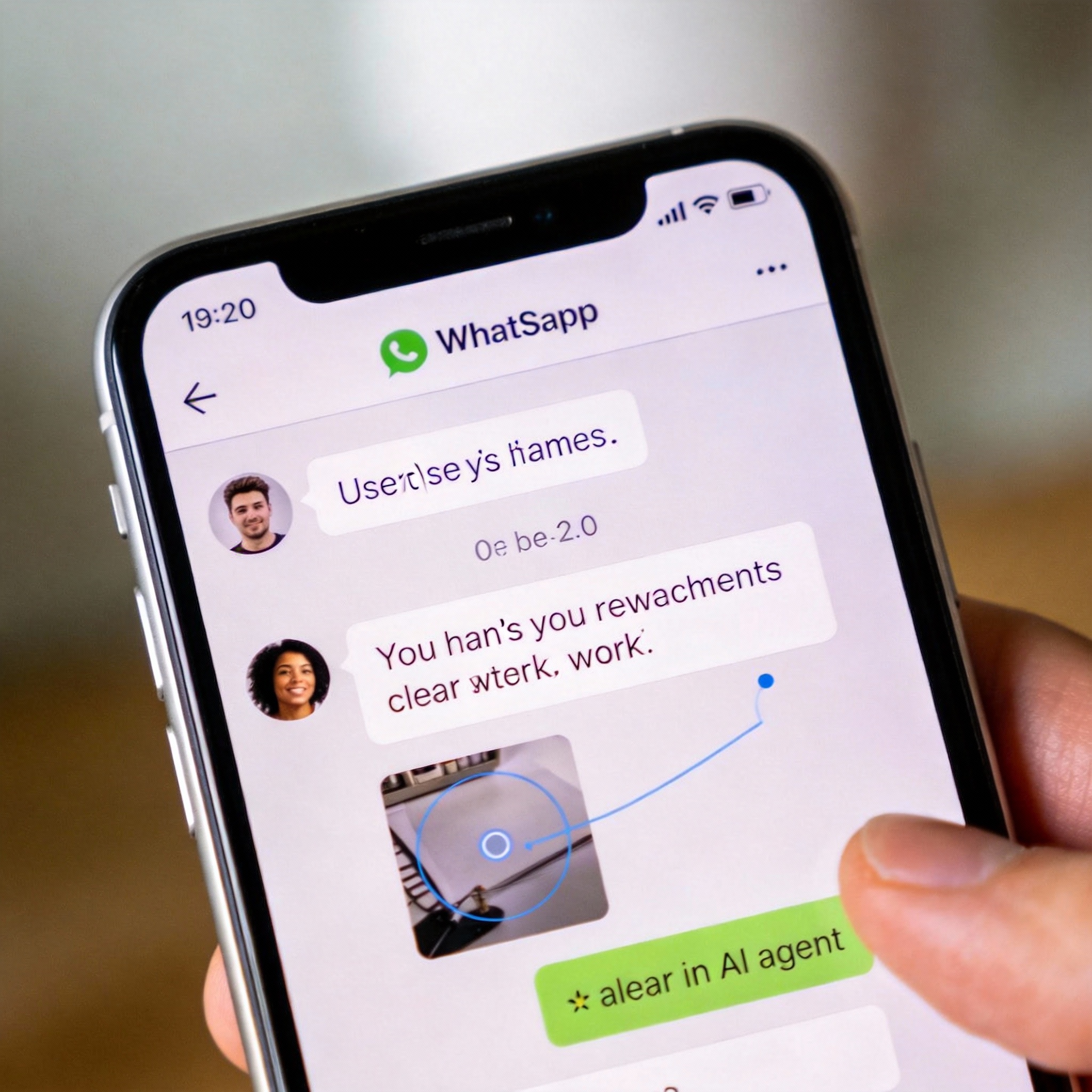
Smartphone screen showing a WhatsApp chat with an AI agent processing an image and text.
A pivotal moment occurred during a trip to Marrakech in November. Steinberger inadvertently sent a voice message to the AI, which, despite lacking explicit voice processing code, managed to transcribe and respond to it. The AI explained it had identified the audio file format, converted it, and used OpenAI's transcription service. "If you give these things real power, they are damn smart, resourceful beasts," Steinberger observed.
Agentic Engineering and CLI Tools
Steinberger emphasized his approach of "agentic engineering," which he distinguishes from "vibe coding." He described building numerous small tools and experimenting with different languages and technologies. He also highlighted his preference for command-line interface (CLI) tools over browser-based agents.
"MCP (Model Context Protocol) is trash; it doesn't scale. You know what scales? Command-line tools (CLI)," he asserted. Steinberger believes agents inherently understand Unix, allowing them to leverage a multitude of small programs by calling their --help menus and loading necessary information. He developed CLI tools for his agent to interact with Google services, Sonos speakers, home cameras, and smart home systems.
Abstract visualization of a command-line interface (CLI) interacting with smart home devices.
Handling Viral Growth and Model Preferences
The sudden surge in Moltbot's popularity led to an overwhelming influx of activity on platforms like Discord. Steinberger used Codex to manage the volume, initially copying questions one by one for replies, and later processing entire channels to answer common queries in batches. He noted that the power of current AI models allows a single person to achieve the output of an entire company from a year ago.
Regarding AI models, Steinberger designed Moltbot to support various options, including local models. He found Opus to have a distinct "personality," attributing its human-like behavior in Discord to its training data. For coding tasks, however, he trusts OpenAI's Codex more, citing its reliability with large codebases and its ability to parallelize tasks with less "handholding."
Name Change and Security Concerns
The renaming of Clawdbot to Moltbot was prompted by a trademark request from Anthropic. Steinberger described the process as challenging, particularly when attempting to simultaneously rename GitHub and X (formerly Twitter) accounts. Cryptocurrency scammers exploited the brief window between releasing the old names and registering the new ones, hijacking both accounts to promote a fake token. The X team, however, resolved the issue within 20 minutes.

Abstract image of a digital padlock surrounded by chaotic data, symbolizing security risks.
Steinberger acknowledged that Moltbot, initially built for personal use, faces security challenges as its usage expands. He received numerous emails from security researchers, noting that the project was "vibe-coded" and not designed as an enterprise-grade product. He highlighted unresolved issues like prompt injection and the inherent risks. Warnings have been placed on the website and during onboarding, emphasizing "With great power comes great responsibility."
Future Vision: Foundation and Open Source
Steinberger indicated a preference for establishing a foundation or non-profit for Moltbot rather than a traditional company. He opted for an MIT license for the project, acknowledging that others might commercialize the code. He believes that while the code itself can be rebuilt, the true value lies in ideas, brand, and user attention.
He also issued a call for maintainers, seeking assistance with security reports and software development, expressing a desire for the project to "live longer than me."

Futuristic cityscape symbolizing the transformation of traditional applications by personalized AI agents.
Steinberger foresees a future where many traditional applications disappear, replaced by personalized AI agents. He cited an example of a design company using Moltbot to build 25 internal web services via Telegram conversations, despite having no prior coding experience. He believes this shift will lead to hyper-personalized software that precisely solves individual problems, often at no cost. Steinberger concluded by stating that current AI models are at their "worst" and will only continue to improve.
Stay Ahead of the AI Curve
Join 50,000+ subscribers getting the latest AI tools, trends, and tutorials delivered to their inbox weekly.
No spam, unsubscribe at any time.