
Mastering AI Image Prompts: A Practical Guide to Iteration and Template Creation

Generating compelling images with AI tools like Nano Banana Pro often begins with a clear idea, according to one user who has amassed millions of views on X for their AI-generated images. The user, who describes their prompt-writing skills as "average," emphasizes that prompts are a means to an end, serving to realize a creative vision rather than being an end in themselves. The process, they note, does not require complex technical parameters, often relying on AI assistance for optimization.
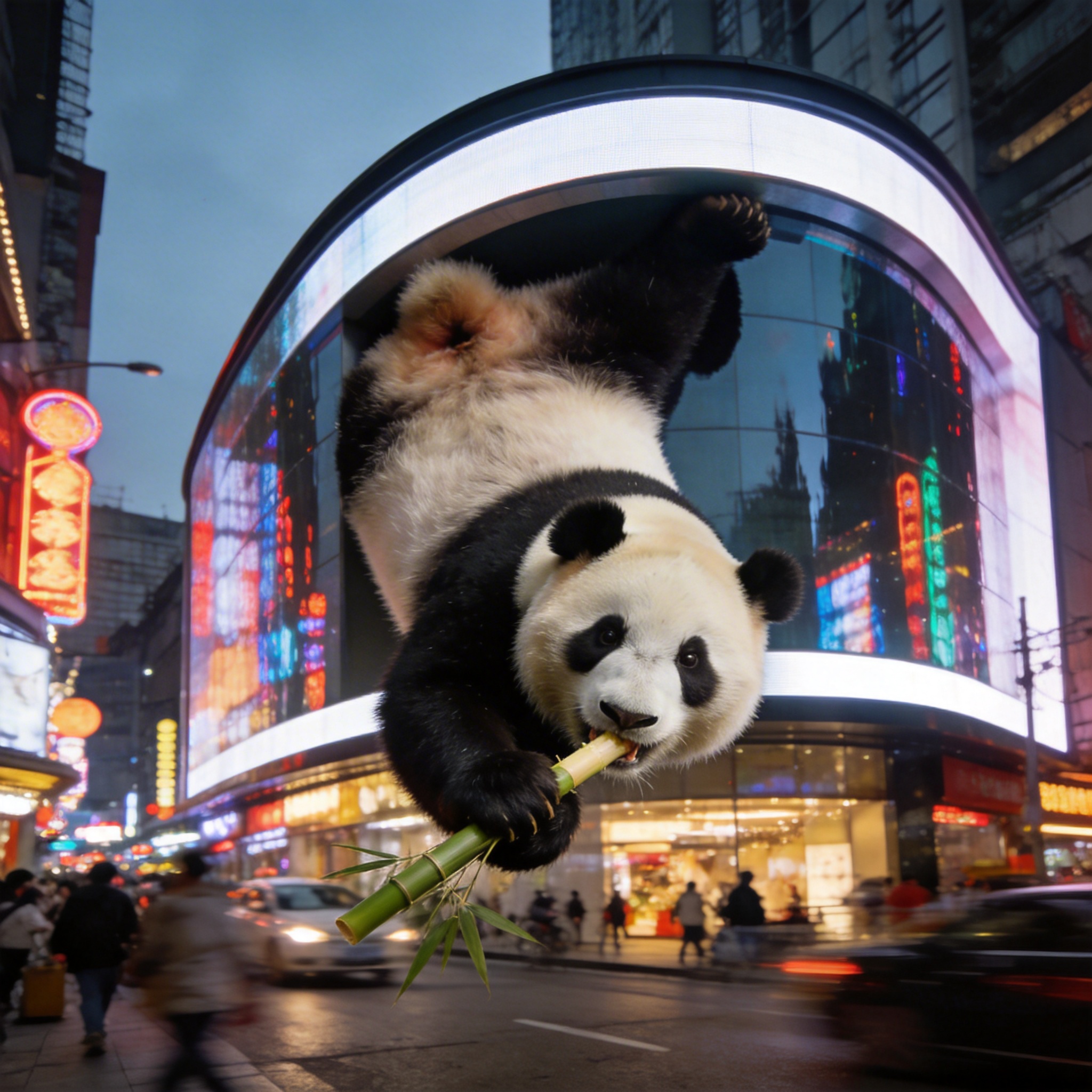
Giant panda emerging from a 3D screen on a Chengdu street, biting bamboo, illustrating initial AI concept.
From Concept to Image: Iterative Prompt Refinement
The initial step in AI image generation involves articulating the desired outcome in plain language. For instance, to create an image of a giant naked-eye 3D screen featuring a panda, a simple prompt was used: "A hyperrealistic giant panda, half its body outside a giant curved naked-eye 3D screen on a bustling commercial street in Chengdu, belly up, head hanging, biting a bamboo shoot, looking adorably clumsy."
When the initial AI-generated image from Gemini did not meet expectations, the user identified a need for refinement. Lacking professional expertise to pinpoint specific issues, they leveraged AI models like Gemini, ChatGPT (GPT-4.5, GPT-5.1) to optimize the prompt. The strategy involved providing the AI with a clear direction for improvement, sometimes including the initial unsatisfactory image. This iterative process of testing and adjustment is crucial.

Digital mood board on a tablet, with a hand pointing to an image, symbolizing external reference for AI prompts.
One effective technique involved finding a real-world image that closely matched the desired aesthetic and then asking Gemini to generate a prompt based on that image. This approach quickly yielded impressive results, demonstrating the value of external references in guiding AI. The user highlights that prompt writing is a continuous cycle of conceptual adjustments and repeated attempts, or "drawing cards," until a satisfactory outcome is achieved. If a prompt proves unstable, the advice is to simply "draw more cards" or move on if no effective improvement is observed.
Developing Flexible Prompt Templates
Once a prompt consistently produces a desired effect for a specific scene, the next phase involves transforming it into a versatile template. This allows for the generation of diverse results and encourages broader participation. The key to creating a template is defining "variables"—elements that can be altered while maintaining the core structure of the prompt.
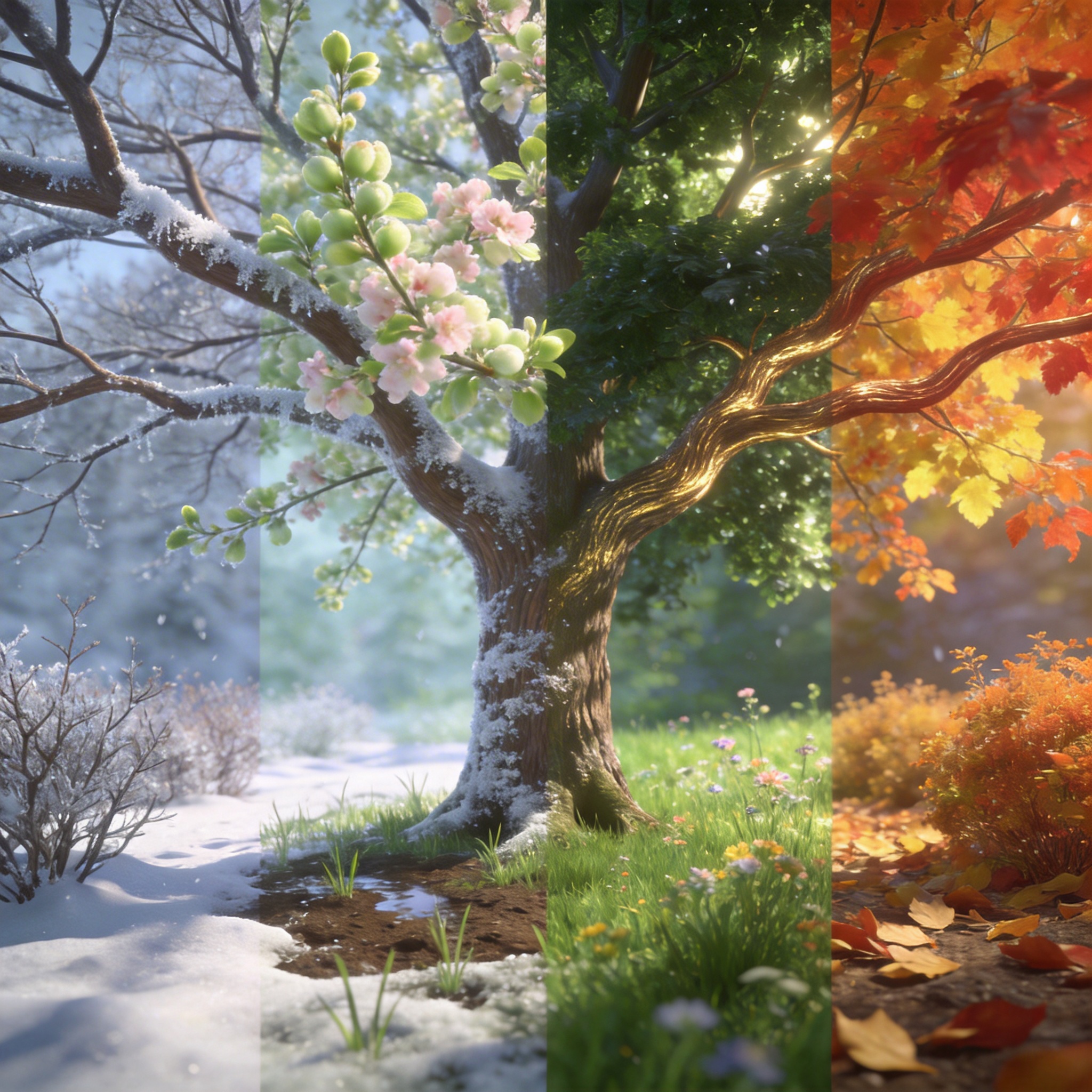
Hyperrealistic illustration of a tree showing four seasons in one image, demonstrating prompt templating.
For example, to create images depicting changing seasons, an initial prompt focused solely on a tree. To expand its utility, the user sought to make the scene variable, allowing for different backdrops like cities or gardens. The prompt provided to the AI for this transformation was: "Help me turn the following prompt into a prompt template. The variable is the scene. Based on the scene, display the changes of four seasons in one image. The same scene, but each season displays a part of the scene while also blending into one. Hyperrealistic digital illustration style, with a tree as the core of the image, evenly divided from left to right into four seasonal areas: winter, spring, summer, and autumn. The trees and background gradually change with the seasons. The leaf colors, branch states, and background elements in each seasonal area should accurately present the characteristics of the corresponding season. The tree canopy, trunk, branches, leaves, and natural landscapes such as vegetation and weather in the background should be meticulously adjusted and transitioned according to the typical manifestations of the seasons, ensuring a natural and smooth connection between the four areas, rich colors, and symbolic meaning. The aspect ratio is 4:3."
Prompt templates can incorporate multiple variables, such as {reality} and {inner reflection} in a prompt designed to explore contrasting themes. This templating process also requires repeated testing to ensure stability and adaptability across different inputs.
The user concludes that prompt writing is accessible, encouraging individuals to start with plain language and leverage AI for adjustments when initial results are unsatisfactory. Patience and persistent iteration, coupled with trying different AI models like Gemini 3 Pro, GPT-5.1, and GPT-4.5, are key to achieving desired outcomes and developing adaptable prompt templates for varied creative works.
Stay Ahead of the AI Curve
Join 50,000+ subscribers getting the latest AI tools, trends, and tutorials delivered to their inbox weekly.
No spam, unsubscribe at any time.