
Andrej Karpathy Proposes LLM Wiki for Personal Knowledge Management, Drawing 12 Million Views

Andrej Karpathy, a prominent figure in the AI community, has introduced a new approach to personal knowledge management, leveraging large language models (LLMs) to create what he terms an "LLM Wiki." This method, which he shared publicly, has garnered significant attention, with a post on X (formerly Twitter) receiving over 12 million views within days.
Abstract representation of an LLM continuously organizing and validating a personal knowledge base.
Karpathy's core assertion is that the next frontier for LLMs lies not in generating more code, but in managing knowledge. His proposed "LLM Wiki" paradigm envisions LLMs acting as continuous knowledge stewards, organizing, updating, and validating a personal knowledge base around the clock. An accompanying "idea file" on GitHub accumulated over 2,100 stars in under 12 hours. Developer Farza subsequently implemented this concept, using an LLM to "compile" 2,500 personal entries, notes, and messages into a 400-article personal encyclopedia, dubbed "Farzapedia."
The LLM Wiki Concept
Traditional knowledge management often leads to scattered information, making retrieval difficult. Karpathy highlights the limitations of current mainstream approaches like Retrieval Augmented Generation (RAG), used by tools such as NotebookLM and ChatGPT's file upload features. He argues that RAG "re-discovers" knowledge repeatedly without accumulation.

A laptop screen showing a dynamic knowledge graph, symbolizing an LLM compiling personal data into a structured encyclopedia.
Instead of merely searching files, Karpathy's "LLM Wiki" proposes that LLMs "compile" personal data into a dynamic encyclopedia. This process transforms raw information into a structured, navigable, and cross-referenced knowledge system.
Architectural Overview
Karpathy outlined the complete architecture of LLM Wiki on GitHub Gist, emphasizing the sharing of ideas rather than specific code to encourage customized implementations by AI agents.
The system comprises three layers:
Raw Sources
This layer acts as an immutable repository for all personal materials—papers, articles, code, images, and datasets—stored in a "raw/" folder. Users simply add content without needing to organize or categorize it. Karpathy suggests using tools like the Obsidian Web Clipper to convert articles to Markdown and download images locally, ensuring data persistence.
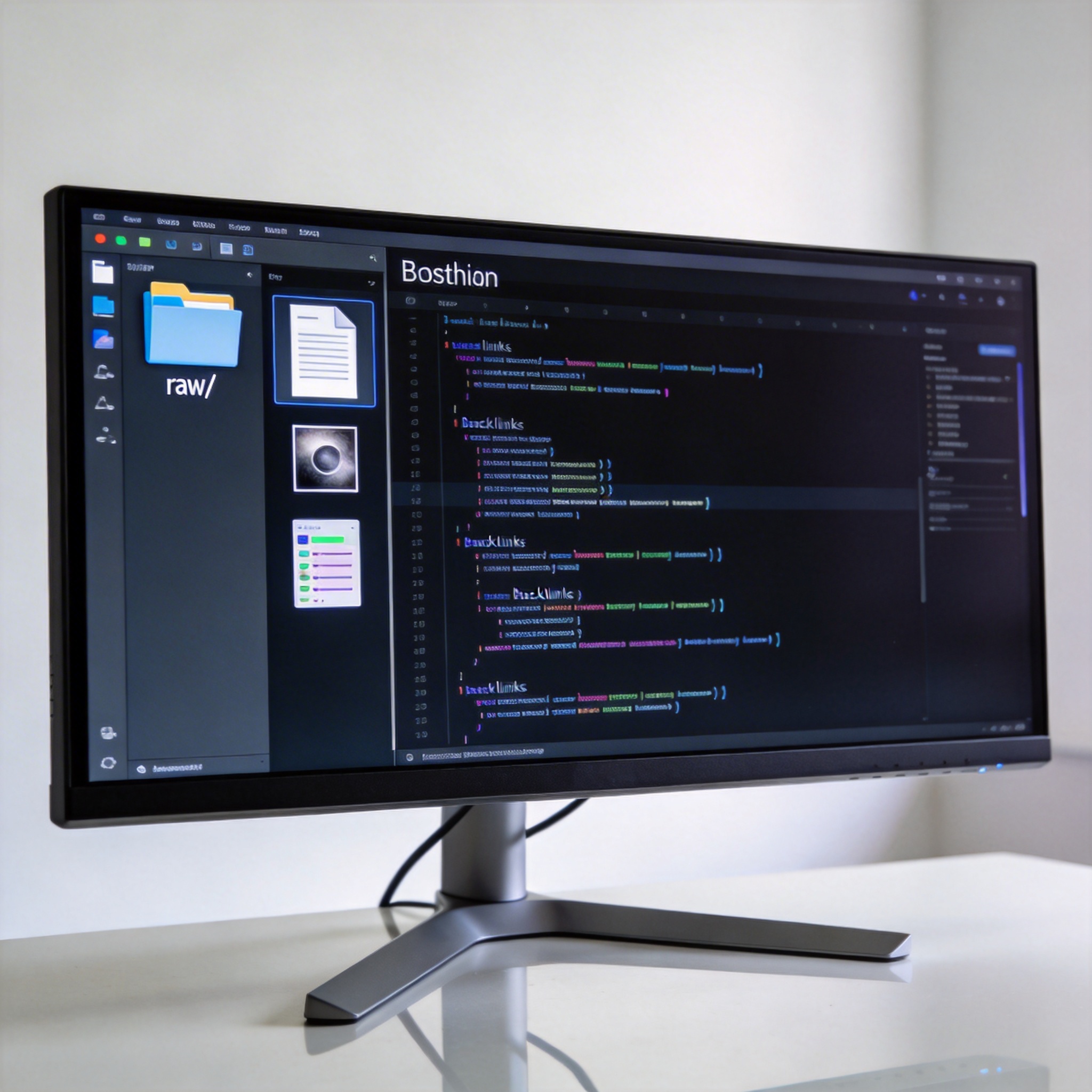
Digital workspace showing a 'raw/' folder and an Obsidian-like interface, illustrating the raw sources and wiki layers.
The Wiki
This central layer is where the LLM actively "compiles" the raw materials into a structured Wiki. The LLM generates summaries for each item, extracts key concepts, writes dedicated articles for important topics, establishes backlinks between pages, maintains a master index file (index.md), and logs operations (log.md). The LLM handles content creation, tagging, and linking, with Karpathy likening Obsidian to the Integrated Development Environment (IDE), the LLM to the programmer, and the Wiki to the codebase.
The Schema
This layer consists of a "manual" (e.g., CLAUDE.md for Claude Code, AGENTS.md for OpenAI Codex) that instructs the LLM on Wiki organization, rules, and operational procedures. This schema is designed to evolve with user interaction and LLM performance.
Core Operations
Karpathy detailed four primary operations for daily use of the LLM Wiki:
Ingest
Users add new material to the "raw/" folder and instruct the LLM to process it. The LLM then summarizes key findings, updates the master index, and revises all relevant linked pages within the Wiki. A single new piece of material can trigger multiple linked updates. Karpathy prefers ingesting one item at a time for review, though batch processing is also possible.
Query
Once the Wiki has grown, users can pose complex questions. Karpathy's research Wiki, containing about 100 articles and 400,000 words, demonstrates the system's ability to handle substantial content. The LLM uses the index file and summaries to efficiently locate and synthesize information. Query outputs can be formatted as Markdown articles, slides, charts, or other visualizations.
File Back
This operation involves archiving query results back into the Wiki. If the LLM generates a valuable comparative analysis, that output is integrated into the Wiki, enriching the knowledge base for future queries. This process ensures that every interaction contributes to the system's growth.
Lint
Periodically, the LLM performs a "health check" on the Wiki. This includes identifying inconsistencies, updating information based on new material, creating pages for referenced but undefined concepts, linking isolated pages, and suggesting information gaps that can be filled via web searches. This continuous maintenance ensures the Wiki remains healthy and expands organically.
Abstract visual of a digital system undergoing a 'health check' or 'linting' process, with glowing lines indicating corrections.
Farzapedia: A Practical Application
Developer Farza implemented Karpathy's concept by feeding 2,500 personal diary entries, Apple Notes, and iMessage conversations into an LLM to create "Farzapedia." This personal encyclopedia contains 400 articles covering his friends, companies, research, and interests, with extensive backlinks forming a comprehensive knowledge network.
Farzapedia is designed for use by Farza's AI agent rather than for direct human consumption. Its structure and linking facilitate agent crawling, allowing an agent to navigate the Wiki starting from the index.md file to find specific information. For instance, when asked to find aesthetic inspiration for a new project, Farza's agent used Farzapedia to retrieve notes from a Ghibli documentary, screenshots of competitor landing pages, and images of 1970s Beatles merchandise, generating a tailored creative proposal. Farza noted that a file-system-based knowledge base significantly improved upon a similar RAG system he had previously built. Farzapedia is also "alive," automatically categorizing new content into existing articles or creating new ones.
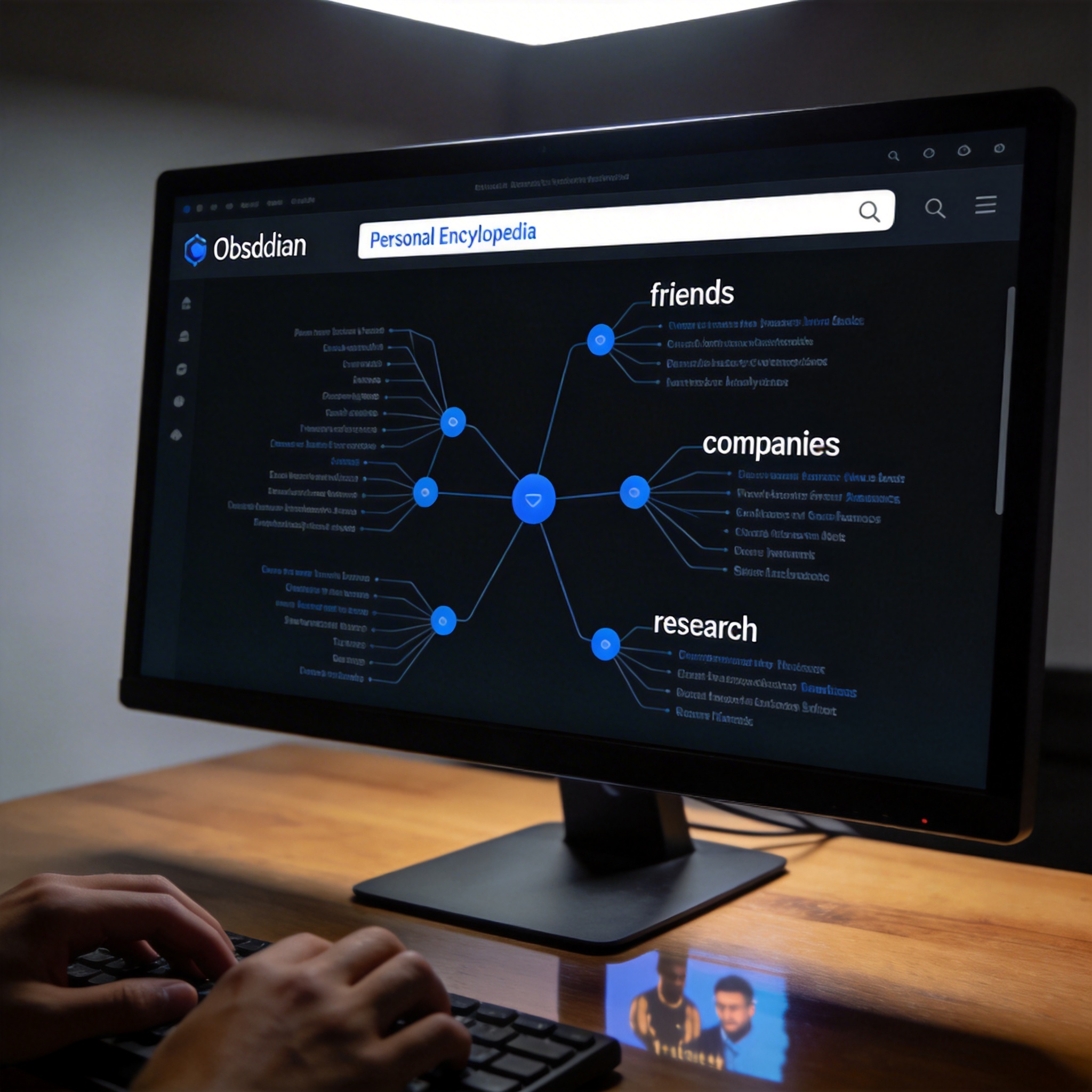
Screenshot of 'Farzapedia,' a personal encyclopedia with interconnected articles and backlinks, demonstrating a practical LLM Wiki application.
Advantages of the LLM Wiki Approach
Karpathy highlighted four key advantages of this knowledge management method:
Explicit Knowledge
The Wiki provides an explicit and navigable record of knowledge, allowing users to see what the AI knows and manage this "memory artifact."
Data Ownership
Data resides on the user's local computer, ensuring control over personal information and portability across different AI service providers.
Universal Format
The knowledge base consists of Markdown files and images, universal formats that can be accessed by various tools and agents, promoting interoperability.
AI Choice
Users can select their preferred LLM (e.g., Claude, Codex, open-source models) and even fine-tune a dedicated AI using the Wiki as training data, fostering competition among AI vendors.
Karpathy summarized that this personalized solution grants users complete control over their data, format, and AI choices.
The "Compilation Era" of Knowledge
The LLM Wiki concept echoes Vannevar Bush's 1945 proposal for "Memex," a personalized, curated knowledge system with "associative trails." Bush's vision of interconnected documents, where connections are as valuable as the documents themselves, predated the internet. While the internet achieved document connectivity, it leaned towards public and fragmented information rather than personalized and structured knowledge. The challenge of maintenance, which Bush could not solve, is now addressed by LLMs.
Karpathy's solution is a modern "compilation" of Memex, where AI manages the tedious tasks of updating cross-references, maintaining summaries, resolving contradictions, and ensuring consistency across numerous pages. This eliminates the maintenance burden that often deters individuals from building and sustaining personal knowledge bases.
This paradigm shift moves from "AI searching for information" to "AI compiling knowledge." LLMs evolve from mere search engines to continuous "knowledge compilers." Personal experiences, work materials, reading records, and inspirations become the "source code" for a constantly growing, never-forgetting "second brain." This approach, characterized by its simplicity—using Markdown files and a diligent AI—represents a profound application for large language models. While Bush could only conceptualize Memex in 1945, Karpathy's vision suggests its practical realization on personal devices in the near future.
Stay Ahead of the AI Curve
Join 50,000+ subscribers getting the latest AI tools, trends, and tutorials delivered to their inbox weekly.
No spam, unsubscribe at any time.