
Karpathy Endorses Flapping Airplanes in $180 Million Seed Round to Redefine AI Efficiency


Andrej Karpathy, a key figure in the development of OpenAI and Tesla Autopilot, has publicly backed Flapping Airplanes, a new AI lab that recently secured $180 million in seed funding from GV, Sequoia, and Index Ventures. The lab, founded by a team with an average age of 25, aims to fundamentally alter the approach to artificial general intelligence (AGI) by focusing on extreme efficiency rather than scaling computational power.

Abstract representation of AI efficiency with organic neural network pathways on a circuit board.
Karpathy announced his support on X, highlighting the team's ambition to achieve a tenfold increase in AI efficiency compared to the human brain. This initiative challenges the prevailing "Scaling Law" paradigm, which relies on increasingly larger models and computational resources.
Challenging AI's Computational Demands
Karpathy has previously criticized the energy inefficiency of current AI models, noting the vast difference in power consumption between the human brain and large language models like GPT-5. He points out that the human brain operates on approximately 20 watts while performing complex cognitive functions, whereas advanced AI models require significantly more energy. This disparity represents an energy efficiency gap of six orders of magnitude.
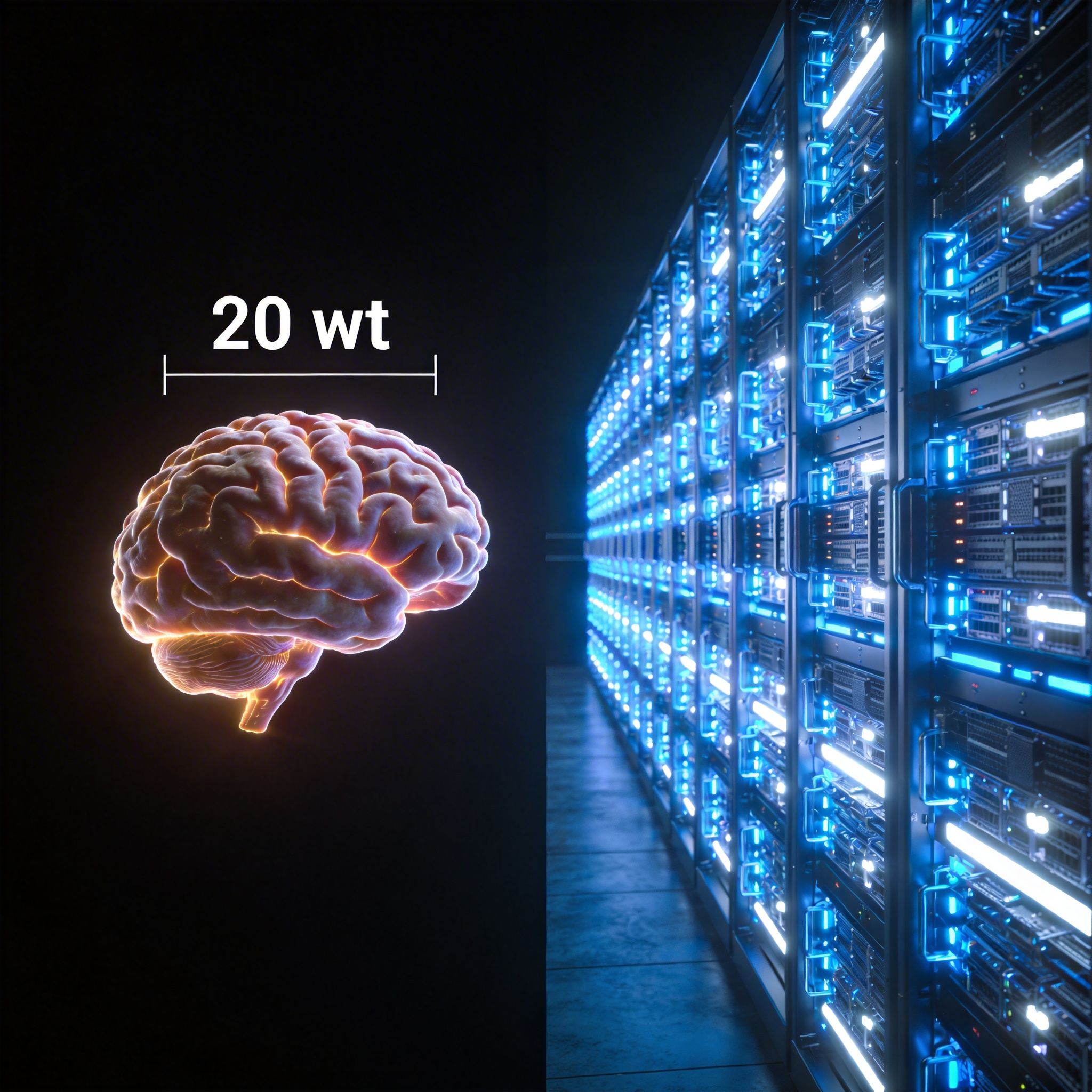
Visual comparison of a low-power human brain and high-power AI server racks.
Ben Spector, a 25-year-old Stanford statistics Ph.D. candidate and founder of Flapping Airplanes, expressed disdain for the "brute force" approach to AI development. Spector argues that current models are akin to forcing an airplane to fly by flapping its wings, rather than understanding and applying aerodynamic principles. He believes that true AI should learn efficiently, similar to a human infant, rather than consuming vast amounts of data. Spector suggests that closing this efficiency gap could disrupt the business models of companies that profit from selling computing power.

Metaphorical image of a mechanical airplane flapping wings, symbolizing inefficient AI.
Hardware Innovation and Data Scarcity
The Flapping Airplanes team, which includes Ben Spector, Asher Spector (a statistics Ph.D.), and Aidan Smith (a Thiel Fellow and former Neuralink engineer), is focusing on hardware-level innovation. Their primary technology, Megakernels, integrates all computation and communication during large language model (LLM) inference into a single GPU kernel. This approach aims to eliminate instruction transfer delays, which previously caused bottlenecks in GPU inference. The company claims this method has resulted in a 6.7-fold increase in inference speed, which Karpathy views as a critical step toward achieving AGI.
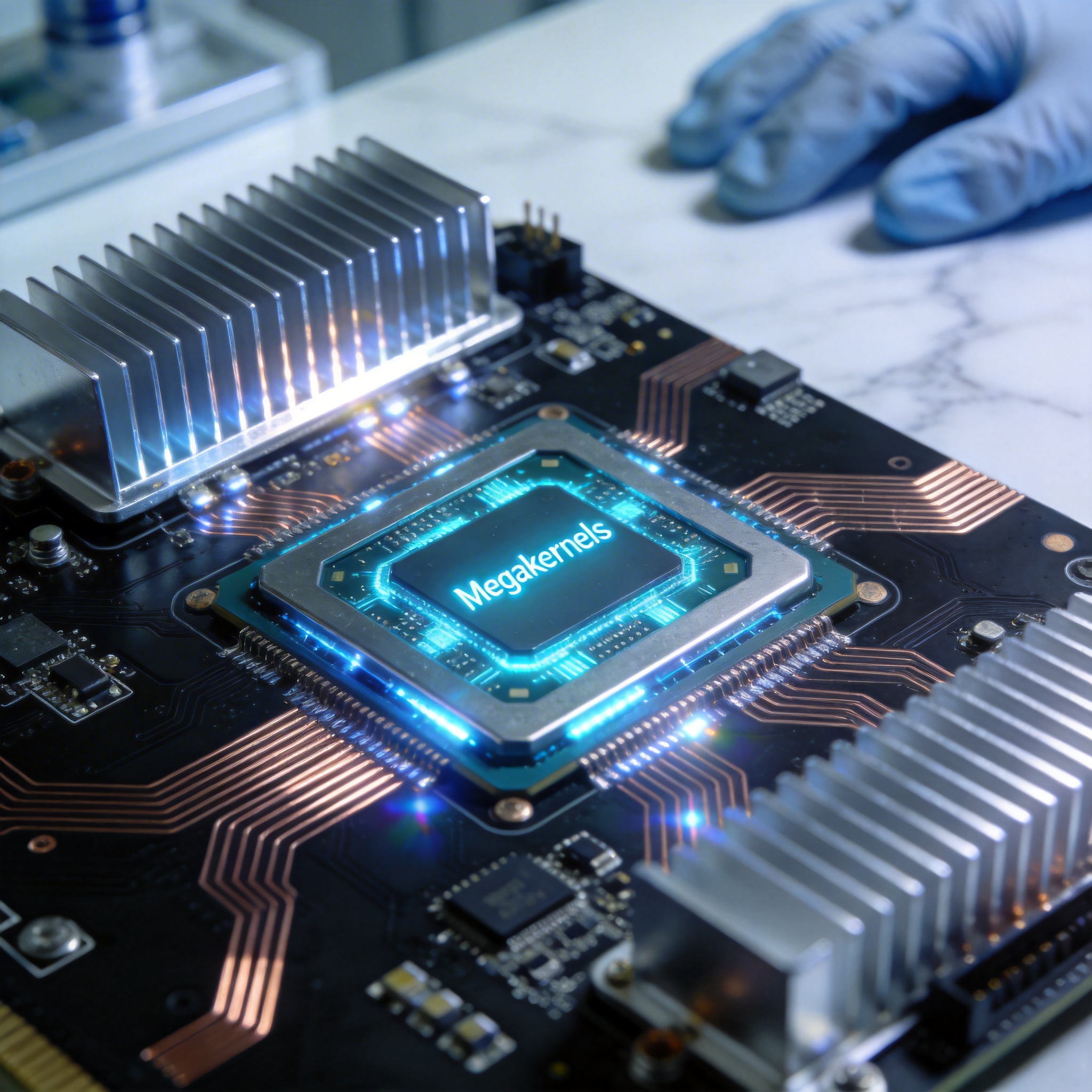
Close-up of a GPU with glowing 'Megakernels' representing hardware innovation.
The initiative also addresses concerns about data exhaustion. Epoch AI predicts that the supply of high-quality human-generated data for AI training is rapidly diminishing, with projections indicating a collision between data demand and availability around 2027-2028. As the pool of quality data shrinks, AI models are increasingly trained on data generated by other AIs, leading to a decline in intellectual improvement despite increased computational investment.

Digital landscape with drying data rivers, symbolizing AI data exhaustion.
Flapping Airplanes proposes an alternative where AI does not need to process the entire internet to achieve intelligence. Karpathy emphasized on X that significant performance improvements are more likely to come from fundamental mathematical changes in AI architecture rather than from simply adding more powerful hardware. He suggests that reducing AI's reliance on massive datasets will transform computing costs from a barrier into a catalyst for development.
The Future of AI and "Swarm Intelligence"
Karpathy has previously discussed "Software 2.0," where AI systems write and optimize their own code. He now envisions a future dominated by "swarm intelligence," where AI models achieve real-time, lossless bandwidth sharing at the neural network level. This concept suggests that millions of AI models with comprehensive understanding capabilities could merge into a single, super-intelligent entity, transcending physical limitations and human communication constraints.

Abstract depiction of luminous AI entities merging into a single super-intelligent neural network.
The emergence of Flapping Airplanes and its approach highlights a potential shift in the AI landscape, moving away from incremental improvements in existing architectures toward a more radical re-evaluation of fundamental AI design.
Stay Ahead of the AI Curve
Join 50,000+ subscribers getting the latest AI tools, trends, and tutorials delivered to their inbox weekly.
No spam, unsubscribe at any time.