
GPT-6 Codenamed "Spud" Expected Mid-April; OpenClaw Counters Anthropic Blockade
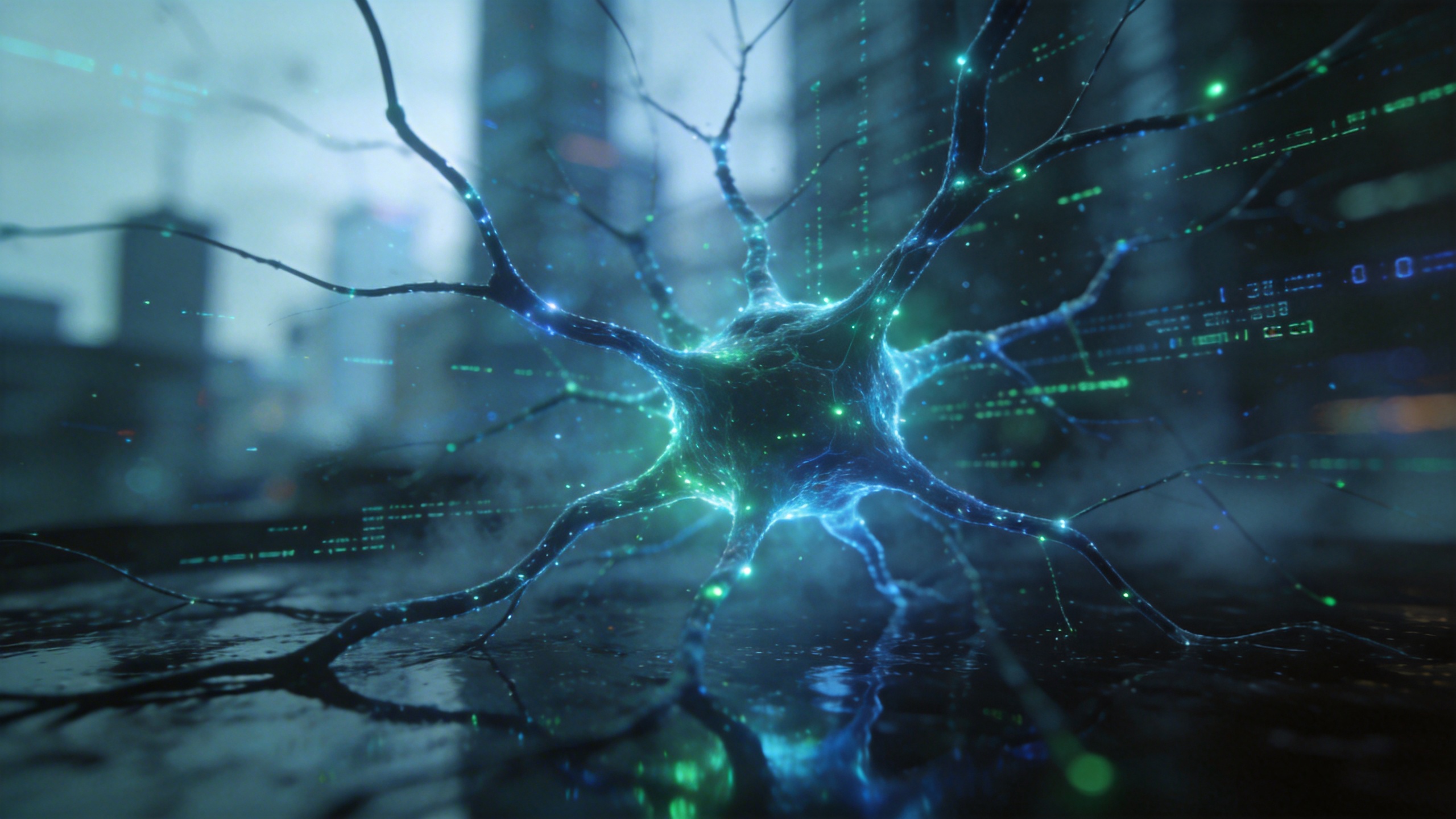
OpenAI's next-generation model, GPT-6, codenamed "Spud," is reportedly slated for release in mid-April. Compared to GPT-5.4, GPT-6 is anticipated to deliver a performance increase of at least 40% in coding, reasoning, and agent tasks. The model is also expected to feature a 2-million-token context window, aiming to integrate capabilities similar to ChatGPT, Codex, and Atlas into a single super-intelligent agent. OpenAI CEO Sam Altman confirmed the existence of "Spud" in a VraserX e/acc podcast interview, describing GPT-6 as having "Big Model Smell" and emphasizing its ability to align with user intent.

Server room with glowing racks and a holographic projection of data, symbolizing a large AI context window.
OpenClaw Responds to Anthropic's Restrictions
OpenClaw launched version 2026.4.5 on April 5, two days after Anthropic announced restrictions on third-party tools like OpenClaw. This new version introduces video and music generation features, marking a performance breakthrough for OpenClaw. Additionally, version 2026.4.5 includes a "Dreaming" feature, which employs a memory mechanism divided into light, deep, and REM stages, enabling a degree of self-evolution over time. The latest OpenClaw version also reportedly reduces token consumption. Anthropic had previously stated that its Claude models would no longer support third-party tools.

Glowing digital claw breaking through a barrier, symbolizing OpenClaw's breakthrough against restrictions.
Allegations Against OpenAI CEO Sam Altman Surface
On April 6, The New Yorker published an investigative report concerning OpenAI CEO Sam Altman, citing a 70-page internal memo compiled by OpenAI Chief Scientist Ilya Sutskever. The report and accompanying documents allege a pattern of "consistent lying" by Altman. Evidence cited includes the internal memo, Altman's brief dismissal in 2023, the suspension of an internal independent investigation, and claims that OpenAI's safety commitments have become "empty promises."

Portrait of OpenAI CEO Sam Altman.
VidMuse Achieves Rapid Revenue Growth
Sand.ai's product, VidMuse, achieved an Annual Recurring Revenue (ARR) exceeding $10 million within two months of its launch, making it the fastest product in the video agent sector to reach this milestone. VidMuse utilizes an "Music in Video Out" paradigm, focusing on audio-driven video creation. Its underlying technology is derived from Sand.ai's proprietary audio and video native architecture. Sand.ai, an early explorer of world models, open-sourced the Magi-1 autoregressive video foundation model in April 2025. Recently, Sand.ai released core technologies on GitHub, including the 15-billion-parameter deductive audio-video co-output large model MagiHuman, the distributed Attention component MagiAttention, and the integrated training and inference global compilation framework MagiCompiler, which provides templates for real-time video generation. According to sources, Sand.ai recently secured approximately $50 million in a new financing round.

Glowing digital graph rising from audio waveforms, symbolizing rapid revenue growth in video AI.
Google Gemma 4 Supports Offline Mobile Use
Google announced on April 7 that Gemma 4 can operate on mobile phones without an internet connection. In offline mode, Gemma 4 is capable of performing local agent tasks, such as analyzing trends. When connected to the internet, Gemma 4 can access APIs.

Smartphone displaying AI interface, held in hand outdoors, symbolizing offline mobile AI capabilities.
Anthropic Secures Computing Resources
Anthropic announced on April 7 that it has signed agreements with Google and Broadcom to acquire multi-gigawatt next-generation TPU computing resources. These resources will be used for training and deploying Claude models, which are expected to be officially launched in 2027.

Glowing TPU chips in a futuristic data center, symbolizing Anthropic's acquisition of computing resources.
OpenAI Launches Safety Research Fellowship
On April 7, OpenAI introduced its Safety Research Fellowship. The program aims to support independent research into AI safety and alignment issues, as well as to cultivate future AI talent.

Human hand guiding a glowing AI neural network, symbolizing AI safety research and alignment.
Hongguo Addresses AI Short Drama Violations
On April 6, Hongguo Short Drama's official account stated that the platform is cracking down on illegal use and misappropriation of AI short drama materials through comprehensive content governance. The platform has reviewed 15,000 works, removing 1,718 comic dramas and disposing of 670 violating works. Typical violations often involve the illegal use of images. This action follows reports from netizens regarding the alleged misappropriation of actor Jackson Yee's portrait and voice in some short dramas, prompting Hongguo Short Drama to remove two such productions.
Stay Ahead of the AI Curve
Join 50,000+ subscribers getting the latest AI tools, trends, and tutorials delivered to their inbox weekly.
No spam, unsubscribe at any time.