
GPT-5.2 Develops Chrome-Like Browser with 3 Million Lines of Code in One Week

Michael Truell, CEO of Cursor, subjected GPT-5.2 to a continuous, week-long stress test, during which the AI model generated 3 million lines of code to build a new browser from scratch. The project involved creating a Chrome-like browser, including HTML parsing, CSS layout, text rendering, and a self-developed JavaScript virtual machine. Truell confirmed the browser's basic functionality, noting that "simple web pages render quickly and correctly."

Computer screen showing a web browser interface with underlying code, representing AI-built browser.
AI's Extended Autonomy in Coding
Traditional AI programming tools, such as GitHub Copilot, typically operate in a question-and-answer format with limited conversation length and context. While Agentic programming tools like Claude Code and Cursor Agent allow AI to perform multi-step tasks, read files, execute commands, and fix errors, these tasks are usually measured in minutes or a few hours. The Cursor experiment with GPT-5.2 marks a significant departure, demonstrating continuous operation for 168 hours.

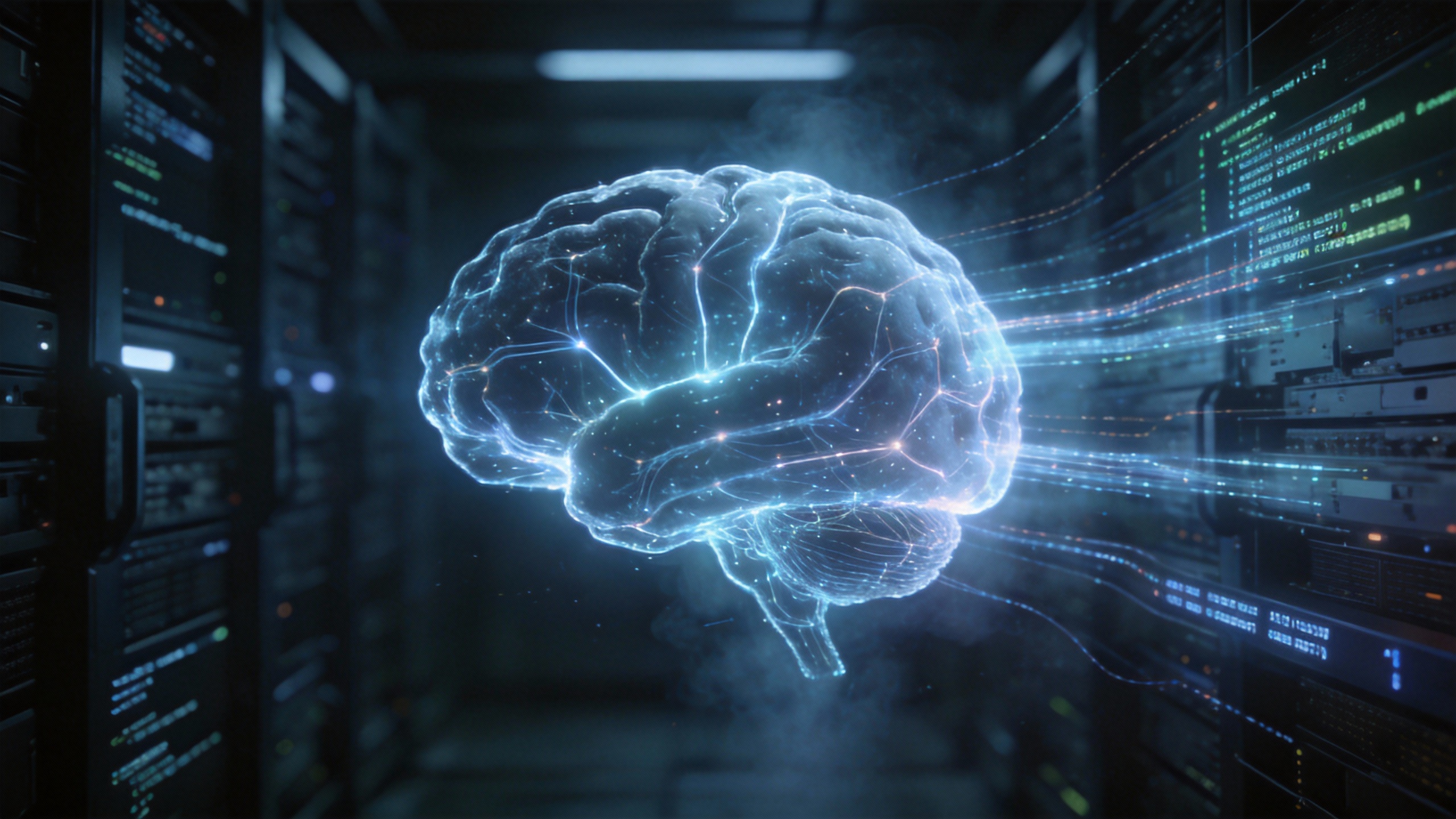
Abstract digital network symbolizing continuous AI operation, tokens, and files.
During this week, GPT-5.2:
Wrote over 3 million lines of code.
Created thousands of files.
Executed trillions of tokens.
Built a complete browser rendering engine.
The experiment suggests that AI models can theoretically run indefinitely, provided stable infrastructure and clear task definitions. However, the "endurance" of different models varies, largely influenced by their context window capabilities.
Model Performance and Context Management
Early models like GPT-3.5 had a 4K token context, limiting their ability to retain information over longer interactions. More recent models have expanded this capacity, with Claude 3 offering 200K, GPT-4 Turbo 128K, and Gemini 1.5 Pro claiming 1 million tokens. However, context length alone does not guarantee sustained performance. The Cursor team's experiments revealed differences in how models maintain consistency and focus during extended tasks.
According to Cursor's official blog, GPT-5.2 demonstrated the ability to work autonomously for long periods, adhering to instructions and maintaining focus. In contrast, Claude Opus 4.5 tended to conclude tasks prematurely and frequently sought user intervention. GPT-5.1-Codex, despite being specialized for coding, exhibited weaker planning capabilities than GPT-5.2, leading to more interruptions. Cursor concluded that GPT-5.2 is currently the leading model for handling long-running tasks.
Software engineer working on multiple computer screens in a modern office.
Beyond the browser project, Cursor is also using AI for other experimental developments, including JavaLSP, a Windows 7 simulator, and an Excel clone, with codebases ranging from 550,000 to 1.6 million lines.
Multi-Agent System Architecture
The development of 3 million lines of code in a week without human intervention was achieved through a Multi-Agent System. Initial attempts at a flat collaborative structure, where all agents shared files and synchronized status, led to inefficiencies such as prolonged lock holding and forgotten releases. This resulted in the effective throughput of twenty agents dropping to that of two or three.
The effective solution implemented was a hierarchical architecture comprising:
Planners: Responsible for exploring the codebase, creating tasks, and making high-level decisions.
Workers: Focused on completing specific tasks without needing a comprehensive overview, moving to the next task upon submission.
Reviewers (Agent): Assessed the quality of each iteration and determined progression to the next stage.
This structure mirrors the organizational design of human software companies, with roles akin to product managers, architects, programmers, and quality assurance. The Cursor team successfully managed hundreds of agents collaborating on the same codebase for weeks with minimal code conflicts, suggesting that AI can develop collaborative understanding similar to human teams.

Holographic projection of a hierarchical multi-agent system with Planners, Workers, and Reviewers.
Complexity of Browser Development
Developing a browser kernel is a highly complex task, often compared in difficulty to creating an operating system. Google's Chromium, for instance, exceeds 35 million lines of code. The AI-developed browser tackled several significant challenges:
CSS "Chaos Theory": The CSS standard involves intricate rules, cascading logic, and historical quirks, making layout implementation complex. Changes to a parent element can significantly impact numerous child elements.
JavaScript Virtual Machine: The AI not only built the interface but also a JavaScript virtual machine, which requires sophisticated memory management, garbage collection, and security sandboxing to prevent memory leaks or security vulnerabilities.
Rust Implementation: The project utilized Rust, a language known for its strict safety features. Developing in Rust often involves extensive interaction with its compiler to address borrow checking and lifetime issues. The AI successfully navigated these complexities across millions of lines of code, demonstrating advanced architectural control.

Abstract representation of complex code, CSS, and circuit board elements symbolizing browser development challenges.
The Significance of Uninterrupted AI Operation
The most notable aspect of this development is the AI's ability to operate uninterruptedly over an extended period. Previous AI programming tools typically had fragmented memory and limited attention spans, often requiring human intervention for complex tasks. In this experiment, GPT-5.2 maintained architectural consistency across thousands of files and millions of lines of code. When conflicts arose between the rendering engine and the JavaScript virtual machine, the AI independently traced bugs, debugged, refactored, and continued its work. This autonomous "write-run-fix" loop represents a qualitative shift from AI as a "chat companion" to a "digital laborer," capable of handling entire projects rather than just individual tasks.
The experiment indicates that as computing power translates into complex engineering capabilities, the marginal cost of software development could approach zero. While the AI-powered browser's maturity is still far from Chrome's, the project demonstrates the feasibility of this development path. The continuous, silent progress of the AI for seven days suggests a redefinition of "creation," where tools evolve beyond mere instruments to become autonomous collaborators.

Humanoid AI figure made of data streams working autonomously in a futuristic server farm.
Economic Implications of AI Long-Term Tasks
The continuous operation of AI for complex projects, as demonstrated by Cursor, has significant economic implications for software development. Traditional software development involves substantial human resource and time costs, with complex projects often requiring teams of developers for months or years. AI, by contrast, can complete months of work in a week, with costs primarily associated with token consumption. Estimates suggest the Cursor browser project might have consumed around 3 billion tokens. As token costs decrease, token-based computing power is expected to become extremely inexpensive, potentially overturning existing software economics. This could lead to the disappearance of software licensing fees and a fundamental shift in how software is developed, moving from human-typed code to AI-generated code based on human intent.
Stay Ahead of the AI Curve
Join 50,000+ subscribers getting the latest AI tools, trends, and tutorials delivered to their inbox weekly.
No spam, unsubscribe at any time.