Google's TPU Strategy Challenges NVIDIA's Dominance in AI Hardware

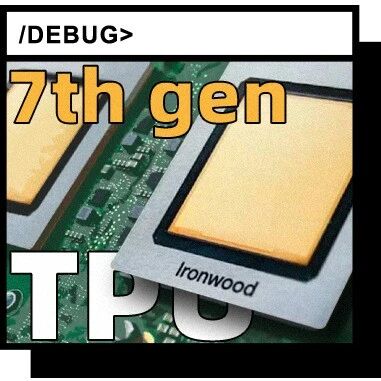
As AI systems move beyond text and into more complex domains, the underlying hardware infrastructure has become a critical battleground. Google has introduced its Tensor Processing Units (TPUs) as a significant contender, particularly following the performance of its Gemini 3 Pro model. This development has prompted discussions regarding the future landscape of AI hardware, specifically its potential impact on NVIDIA's established position.
Highlights
Google's stock experienced a notable increase after the announcement that Gemini 3 Pro was trained on its proprietary TPUs, with no explicit mention of NVIDIA hardware. This led to speculation that Google's TPUs could disrupt NVIDIA's CUDA ecosystem.
TPUs, specialized chips designed for AI workloads, have been under development since 2015. Their core design principle focuses on optimizing matrix multiplication, a fundamental operation in AI, through a "systolic array" architecture. This design minimizes data movement, which is a significant energy consumer in traditional GPU architectures.
The first-generation TPU v1 demonstrated a 30-fold energy efficiency improvement over NVIDIA's Tesla K80, offering a cost-effective solution for AI inference. Subsequent generations, starting with TPU v2, expanded capabilities to include model training by enhancing memory and data transfer speeds.
For years, Google maintained tight control over TPUs, offering them only for rent via Google Cloud. However, the company is now reportedly willing to sell its seventh-generation TPU, codenamed Ironwood. This shift has garnered significant interest, with reports indicating that Meta is in discussions with Google for a multi-billion dollar contract to deploy TPUs in its data centers.
Context
Google's initial foray into custom AI hardware stemmed from the challenges of scaling deep learning applications using general-purpose GPUs. The company observed that GPUs, while versatile, were inefficient for AI's specific matrix operations due to their complex architecture and high data movement costs. This inefficiency translated into substantial power consumption and operational expenses.
From a structural standpoint, GPUs are designed for a broad range of tasks, including graphics rendering, which requires flexible data access. In contrast, AI's matrix operations are highly predictable, allowing for specialized hardware that can process data sequentially without frequent read/write operations to external memory. This fundamental difference drove the development of TPUs.
Under the Hood
TPUs are Application-Specific Integrated Circuits (ASICs), meaning they are highly optimized for a narrow set of tasks—primarily matrix calculations for AI. This specialization allows them to achieve high computational density and energy efficiency for these specific workloads. The "systolic array" design enables data to flow directly between computing units, reducing the need to store and retrieve intermediate results, which is a major bottleneck for GPUs.
For developers, this specialization presents both advantages and challenges. While TPUs offer superior performance for specific AI tasks, their highly specialized nature means they are less adaptable to other computational problems. The ecosystem around TPUs, including the use of languages like JAX, also requires a different development approach compared to the widely adopted CUDA framework.
Market Impact
The potential sale of TPUs marks a significant strategic shift for Google, moving from a cloud-only rental model to direct hardware sales. This move could introduce a new competitive dynamic in the AI hardware market. The news of Meta's interest in TPUs reportedly led to a 2.1% increase in Google's stock price and a 1.8% decrease for NVIDIA. Some industry observers suggest that this could divert a substantial portion of revenue from NVIDIA.
However, it is important to note that TPUs are ASICs, meaning their strength lies in their specialization. If future AI paradigms shift away from current matrix-intensive approaches, the value proposition of TPUs could diminish. By comparison, GPUs, with their broader applicability, retain value across various computing domains, including gaming and professional graphics, even if AI demand fluctuates.
What Comes Next
Looking ahead, the AI computing market is likely to evolve into a more diversified landscape. TPUs may cater to the specialized needs of large enterprises focused on specific AI model training and inference, while GPUs continue to serve a broader market that requires general-purpose computing capabilities and a mature software ecosystem.
The enduring strength of NVIDIA's CUDA ecosystem remains a significant factor. Many AI developers have built their workflows and codebases around CUDA, making a transition to alternative platforms like TPUs a considerable undertaking. Even with efforts to ensure PyTorch compatibility, adapting to TPUs often requires significant code refactoring and debugging.
Meanwhile, Google itself continues to procure NVIDIA GPUs, indicating that even within its own operations and cloud services, there is a continued demand for general-purpose GPU computing. The increased competition in the AI hardware space, driven by Google's TPU strategy, could ultimately lead to more competitive pricing for computing resources, benefiting the broader industry.