
Cursor Confronts AI Agent Shift Amidst Rapid Growth and Market Anxiety


On January 5, Cursor CEO Michael Truell convened an all-hands meeting for employees returning from holiday, presenting a "Wartime State" address. During the break, some employees had evaluated Anthropic's new Opus 4.5 model, concluding that its programming capabilities were so advanced developers might no longer need to review code line by line. Instead of collaborating with an AI assistant within Cursor's code editor, developers could issue high-level instructions to autonomous agents, receiving complete functional modules or even finished products. This development posed a significant challenge to Cursor's foundational premise.
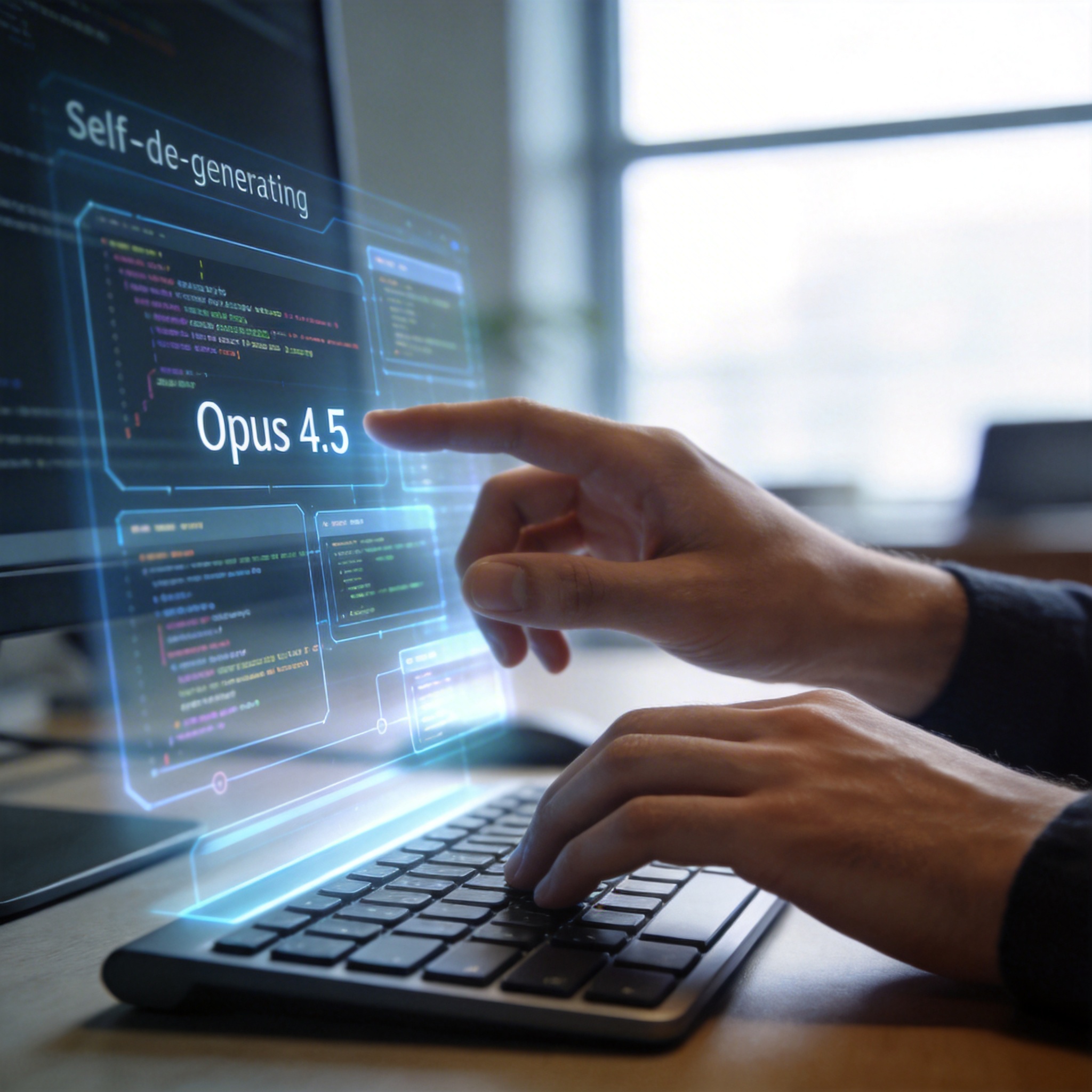
Developer interacting with a holographic interface showing AI-generated code modules, representing advanced programming capabilities.
Cursor was initially conceived as a "Google Docs for programmers," an editor facilitating human-AI collaborative code refinement, as described by Truell in a 2024 interview. However, if AI no longer requires human collaboration for code generation, the core purpose of such an editor, and Cursor's product logic, comes into question.

Fractured digital 'C' logo amidst swirling data, symbolizing Cursor's foundational challenge and strategic shift.
At the meeting, Cursor's management warned of an impending turbulent period, signaling potential project cuts and priority reshuffling. The company's new top mission, "P0 #1," became "Build the best programming model," shifting focus from being the best wrapper product to developing the best underlying model. This internal shift was described as a reckoning.
Growth and Emerging Challenges
This strategic pivot occurs despite Cursor's recent rapid growth. The company's annualized revenue reportedly grew from approximately $100 million at the beginning of 2025 to over $1 billion by November of the same year. A recent funding round valued the company at nearly $30 billion, making its four co-founders billionaires and positioning Cursor among the world's top 20 most valuable private companies. However, the rapidly evolving AI landscape means such momentum can be fleeting.

Glowing financial graph intersected by a volatile AI waveform, symbolizing rapid growth amidst market uncertainty.
By February, following the release of a more powerful Opus version by Anthropic, startup founders began posting on X (formerly Twitter) about abandoning Cursor. Their reasoning suggested that model providers like Anthropic and OpenAI would eventually absorb the programming tool layer. Jerry Murdock, co-founder and former executive director of Insight Partners, stated on the 20VC Podcast that many perceive Cursor as already obsolete.
Despite these concerns, Cursor's annualized revenue has reportedly exceeded $2 billion, doubling in three months, according to informed sources. Data from corporate credit card companies Ramp and Brex also indicated continued revenue growth through February, though Ramp noted a slight decrease in Cursor's penetration in enterprise AI product purchases. The ultimate impact of Claude Code's growth on Cursor remains uncertain.

AI researchers in a modern lab developing programming models, symbolizing Cursor's investment in R&D.
Internally, Cursor management acknowledges that the future of software development may not involve line-by-line coding. In response, the company has been investing in R&D to develop its own programming models, aiming to outpace Anthropic and OpenAI. This effort includes publishing research and leveraging extensive proprietary data. Concurrently, Cursor has prioritized large enterprise contracts, which offer greater stability than individual subscriptions.
Cursor's current growth is accompanied by significant internal anxiety. Revenue tracking became so distracting that the company ceased posting daily revenue data in its Slack #numbers channel.

Glowing digital number '2,000,000,000' partially obscured by anxious fog, symbolizing internal anxiety despite revenue growth.
Corporate Culture and Early Success
Founded in 2022 by four MIT friends, Cursor initially aimed to create models for mechanical engineering design. Lacking experience in that field, the founders pivoted to developing a viral code editor. The company's fast programming model contributed to the "Vibe Coding" phenomenon, allowing users to generate complete web applications from natural language or voice commands, a concept proposed by former Tesla AI director Andrej Karpathy.
Cursor's workforce, largely comprising young individuals in their mid-twenties among its 400 employees, fosters an environment akin to an elite university campus. Employees reportedly work long hours, often past midnight, and utilize company facilities for showering, living close to the office.

Young tech professionals working late in an open-plan office, with a subtle hint of a shower facility, depicting intense startup culture.
A year prior, Cursor was recognized for its rapid growth, achieving $100 million in annualized revenue with only 20 employees and no sales team. This attracted investments from venture capitalists such as Accel, Andreessen Horowitz, and Thrive Capital, and secured priority access to leading AI models. In 2025, Anthropic provided Cursor with early access to its models, using Cursor's feedback to enhance their programming capabilities, illustrating a "co-opetition" dynamic.
As the company expanded, Cursor occupied four buildings in San Francisco's North Beach neighborhood. It even advertised its presence by displaying a poster listing all employees' names at a bus stop between two office buildings.

Street view of San Francisco's North Beach neighborhood, showing urban architecture.
The Shift to AI Agents
Early last year, Anthropic previewed Claude Code for Cursor, then its largest customer. Claude Code is a minimalist command-line tool designed for deploying large batches of programming agents. While initially not seen as a direct competitor to Cursor's editor, Claude Code's annualized revenue has since surpassed $1 billion within six months, reaching $2.5 billion last month, exceeding Cursor's figures.
OpenAI is also advancing in this area. After relaunching its programming agent Codex in April 2025, CEO Sam Altman stated that the application was downloaded over 1 million times in its first week.
Startup founders have observed a profound shift, noting that many developers now "direct" agents rather than writing code line by line. This involves assigning tasks, reviewing output, and coordinating multiple parallel processes. Andrew Hsu, co-founder and CTO of the AI language learning app Speak, described this as "the biggest, most fundamental change since the birth of software development." His company's 50-person engineering team exclusively uses programming agents, primarily Claude Code and Codex for specific scenarios, reducing feature launch times from months to weeks. Hsu suggests Cursor's role in code review is diminishing.

Developer directing multiple holographic AI agents on a transparent screen, illustrating the shift from coding to agent management.
Internal Strategy and Model Development
One of Cursor's internal values, "Delete the product," reflects an acknowledgment that the company's future lies in programming agents similar to Claude Code and Codex. Last week, Cursor announced a significant update to its "Cloud Agents" product, enabling multiple agents to work simultaneously in independent workspaces and record their progress.
Internally, Cursor management believes enterprise customers will value a product not tied to a single model provider, especially as model capabilities rapidly evolve.
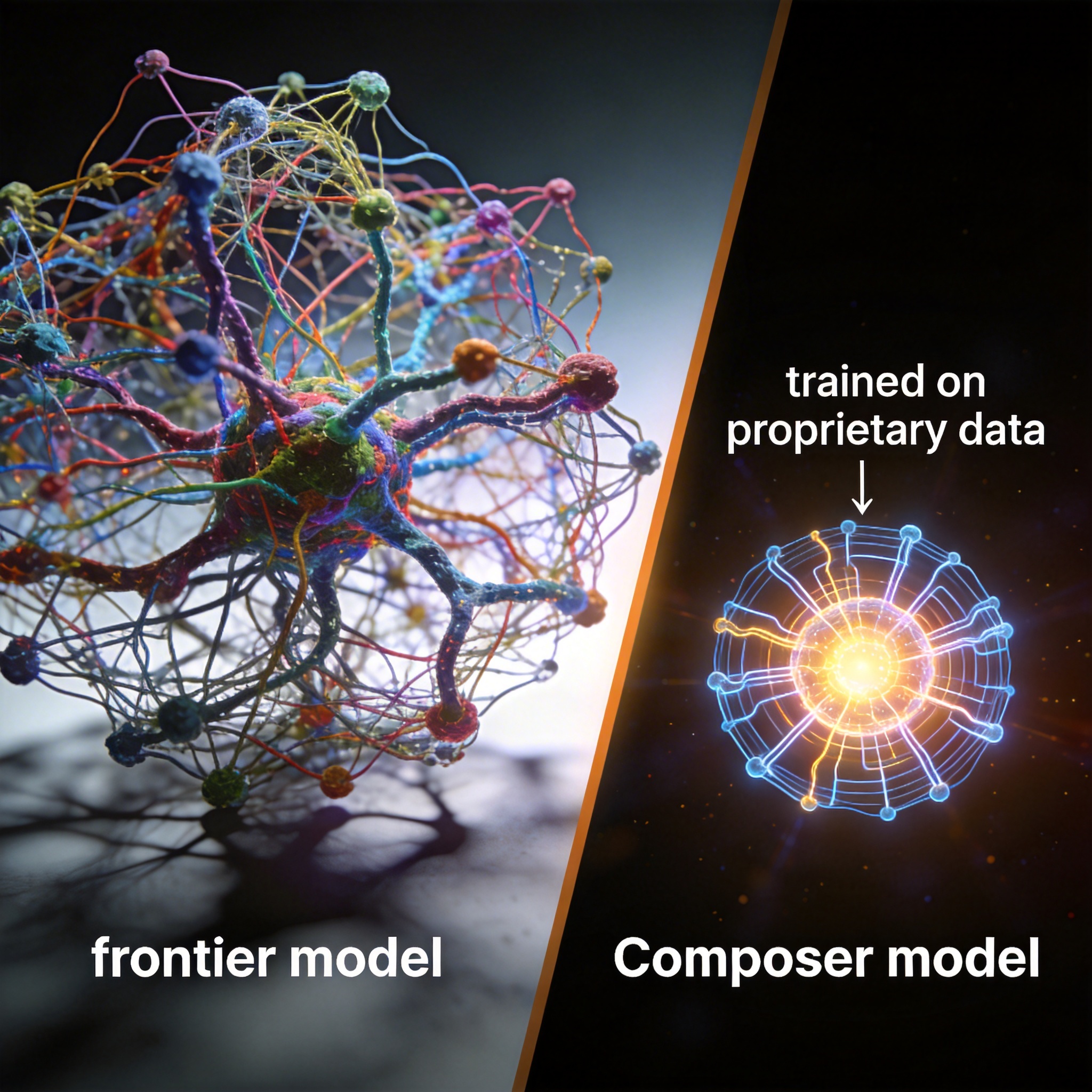
Comparison of a large frontier AI model and a smaller, specialized Composer model, illustrating Cursor's development strategy.
Cursor is also developing its own Composer models to reduce reliance on Anthropic and OpenAI. The company believes that smaller, specialized programming models, trained on proprietary data, can compete with larger frontier models. Approximately 20 AI researchers are developing Cursor's Composer models, which are based on open-source Chinese models like DeepSeek, Kimi, and Qwen, optimized through additional training and reinforcement learning using Cursor's proprietary data. Composer 1.5 is reportedly fast and is the second most popular model on the platform, offering lower operational costs for Cursor compared to procuring Anthropic's large models. However, its input price for developers is $3.5 per million tokens, while OpenAI's GPT-5.3 Codex costs $1.75 within Cursor.
Cost and Enterprise Focus
Cost remains a challenge, as Cursor's larger competitors heavily subsidize their offerings. According to an internal analysis, Cursor estimated last year that a $200 monthly Claude Code subscription could incur up to $2,000 in computing costs, indicating significant subsidization by Anthropic. This subsidy appears to have increased, with the $200 package now potentially consuming approximately $5,000 in computing costs, according to another person familiar with the company's expenditure analysis.
Cursor also subsidizes some users, though reportedly less aggressively than Anthropic. Individual subscriptions are said to have negative profit margins, while enterprise packages are profitable. Businesses can choose the Teams plan or negotiate enterprise contracts.
Expanding its enterprise business is a strategy for stability, as enterprise contracts typically have longer signing cycles and lower churn rates. Cursor has reportedly lost only one or two enterprise customers historically. However, as of November last year, enterprise contracts accounted for only 13.6% of Cursor's annualized revenue, according to documents reviewed by Forbes. An informed source indicates that approximately 60% of Cursor's revenue now comes from enterprise customers, though Forbes could not confirm this specific proportion.

Professional sales team in a modern office, engaging with clients and displaying major client logos, symbolizing enterprise focus.
The company's staffing reflects this enterprise focus, with half of its employees dedicated to market expansion functions. The sales team has secured major client contracts, including Meta and Nvidia.
Customer Churn and Future Outlook
Despite these efforts, signs of customer churn are emerging. In February, over 90 employees at mortgage service startup Valon canceled their Cursor subscriptions, citing a reduced need for the editor. They transitioned to Claude Code's agents, automating tasks like data migration and bug fixes, which CEO Andrew Wang reported were completed "10 times faster."
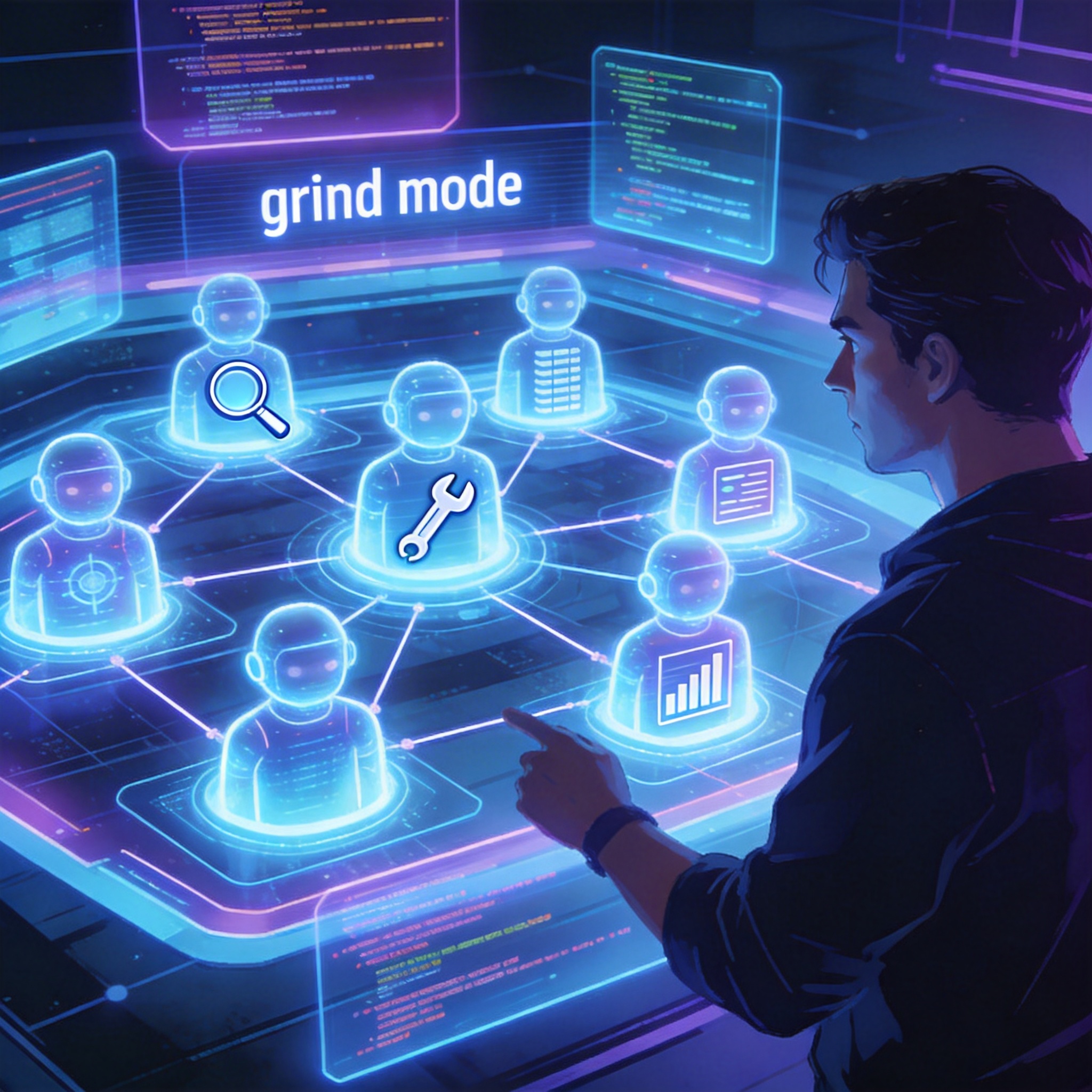
Developer overseeing a team of glowing, interconnected AI agents in a complex digital environment, symbolizing multi-agent systems.
As the software development world adapts to autonomous programming, multi-agent systems are gaining prominence. This paradigm envisions a developer commanding a team of agents, each with specialized roles, collaborating like human teammates. Cursor is exploring tools to manage hundreds of simultaneously collaborating agents, internally termed "grind mode." This involves addressing complex challenges, such as assigning specialized roles and preventing performance degradation when agents perceive too many "colleagues."
Stay Ahead of the AI Curve
Join 50,000+ subscribers getting the latest AI tools, trends, and tutorials delivered to their inbox weekly.
No spam, unsubscribe at any time.