
ClawManager Introduces Enterprise Solution for OpenClaw AI Agent Deployment and Management
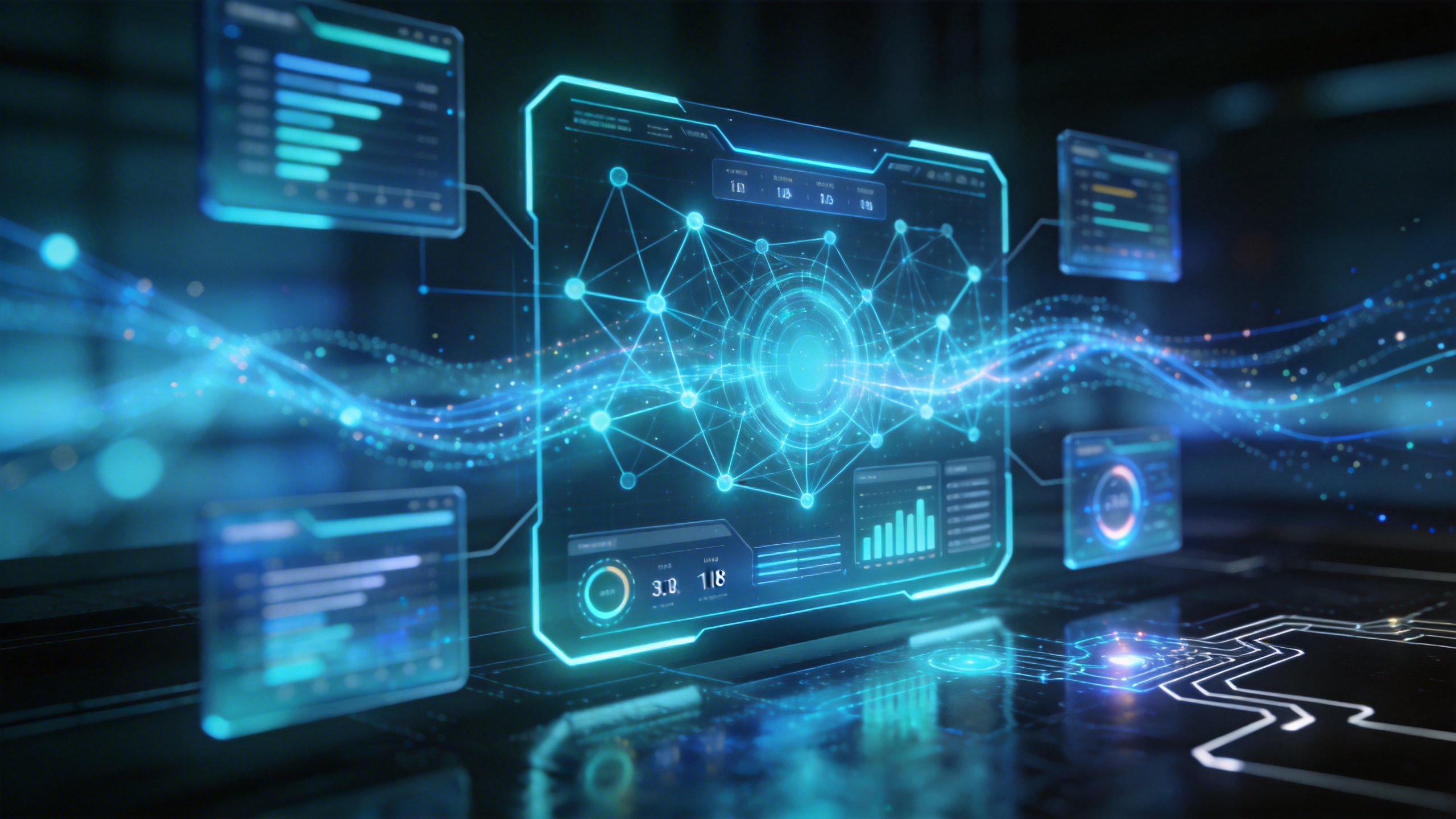
The release of ClawManager aims to address challenges associated with deploying and managing OpenClaw, an AI desktop agent. OpenClaw has gained attention as a tool for enhancing productivity, but its widespread adoption in enterprise settings has been hindered by issues such as deployment costs, operational risks, and security vulnerabilities. ClawManager, an enterprise-grade server deployment and management solution, seeks to enable the secure and efficient use of AI agents.

Fragmented digital landscape showing isolated AI agent instances and management challenges.
OpenClaw's initial popularity stemmed from its open-source nature and perceived ease of use. However, large organizations encountered five primary obstacles when attempting to integrate it at scale.
Addressing Deployment and Management Barriers
The first challenge identified was the lack of a centralized management system. Each OpenClaw instance operated as an isolated unit, requiring manual configuration for network settings, storage, and permissions. This made it difficult for operations engineers to monitor usage, identify performance bottlenecks, or track resource consumption across multiple instances.
Second, batch deployment presented a significant hurdle. Onboarding new employees or expanding AI agent access necessitated individual setup for each user, involving repetitive configuration of images, storage, and network policies. This process was time-consuming, leading to high labor costs and delays in business operations.
Asset loss was another critical concern. User data, including OpenClaw memories, personalized configurations, conversation histories, and fine-tuned data, were distributed across various instances. Deletion, reset, or migration failures could result in permanent loss of these AI assets, impacting research and accumulated knowledge within an organization.
Resource utilization also posed a problem. Without fine-grained quota controls, individual users could consume disproportionate amounts of CPU, memory, and GPU resources, leading to system instability and inefficient use of computing power across the cluster.
Finally, security and compliance blind spots were a major risk. Exposing desktop services directly outside the cluster without unified authentication or access control increased the potential for data breaches and made it difficult to meet corporate audit and compliance requirements.

Abstract digital gateway with glowing blue light, symbolizing secure access and control.
ClawManager's Integrated Solution
ClawManager, available as an open-source project on GitHub, is designed to transform Kubernetes into a control plane for AI desktops and agents. Its primary goal is to facilitate the transition of standalone intelligent desktops like OpenClaw into enterprise-grade clusters capable of supporting hundreds or thousands of users.
The solution offers a single management backend for unifying user, quota, instance, and runtime image management. It supports OpenClaw, including the import and export of memories and preference settings. ClawManager provides secure desktop access through a platform, avoiding direct exposure of services, and includes an AI Gateway for controlled model access, audit trails, cost analysis, and risk control. It is designed for Kubernetes deployment and supports both administrator-led distribution and user self-service creation.
ClawManager manages infrastructure by running all OpenClaw, Webtop, Ubuntu, Debian, CentOS, and custom images within the Kubernetes cluster's internal network, preventing public network exposure. Administrators can distribute quotas, and users can create instances after logging in. Batch importing user accounts is streamlined, reducing manual effort.
Resource quota control is precise, with hard limits on CPU cores, memory, storage, and GPU usage per user, preventing resource monopolization. Access methods are secured through browser-based Portal View or Desktop Access using token-based WebSocket connections, ensuring secure remote operation.
The AI Gateway provides a unified OpenAI-compatible entry point for all OpenClaw instances, ensuring all model calls pass through a controlled gate. This allows for isolation of models, flexible configuration of providers and pricing strategies, and real-time activation or deactivation.
Full-link auditing is implemented, with every request, response, routing decision, and risk hit generating a unique trace_id. SSE streaming responses are also persistently recorded, enabling detailed tracking of model usage.
Fine-grained cost accounting supports multi-currency billing and local model cost allocation. It categorizes and tracks prompt, completion, and token usage, providing real-time dashboards for cost analysis by department or user.
Proactive risk control is achieved through a built-in multi-dimensional rule engine. The AI Gateway automatically intercepts, redirects, or blocks sensitive content and dangerous behaviors based on predefined rules, enhancing security.
These four modules—unified access and routing, full-link auditing, fine-grained cost accounting, and proactive risk control—enable comprehensive control from computing resources to model calls. Risk detection occurs before model entry, token consumption is recorded, and results are archived, ensuring compliance and asset preservation.
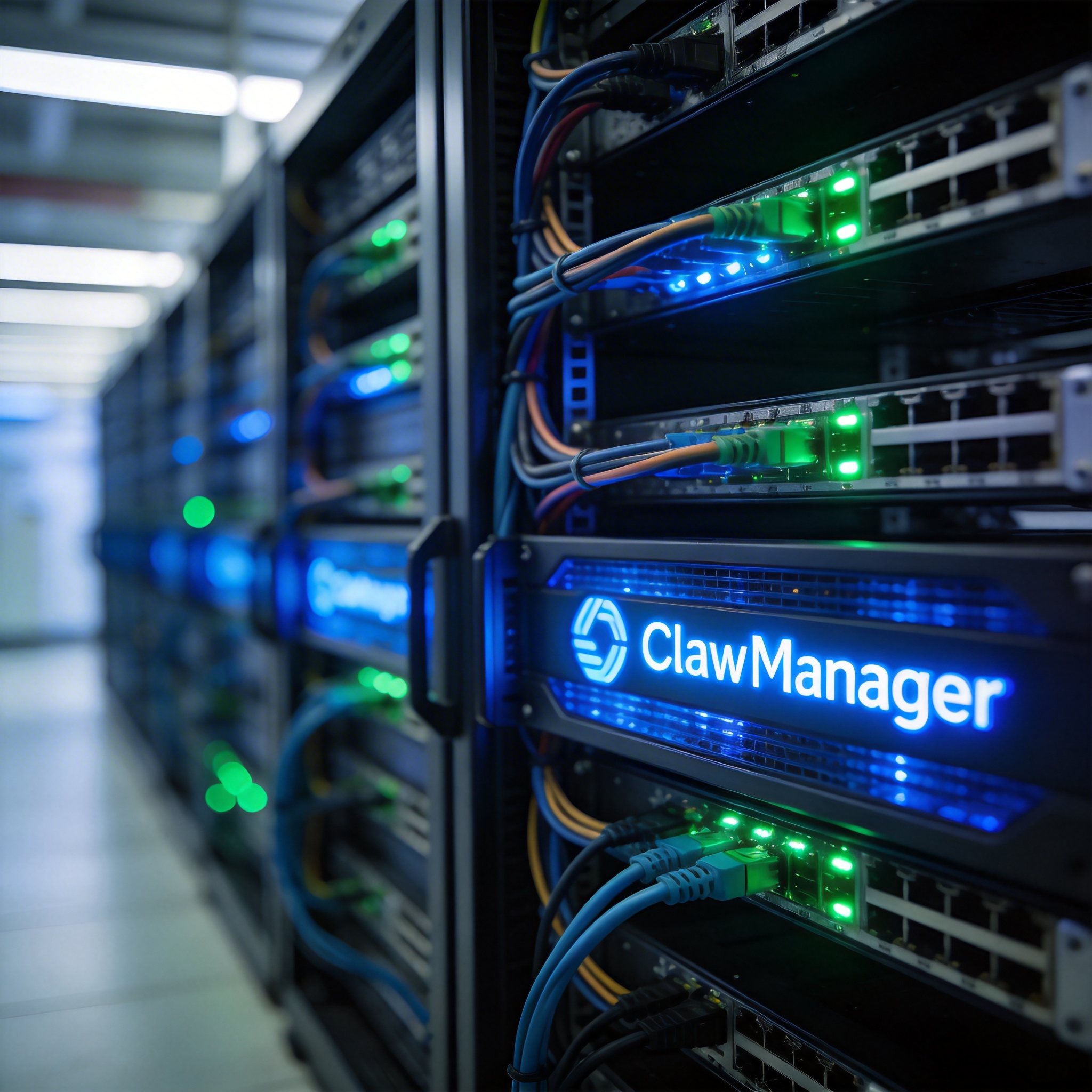
Modern server rack in a data center with glowing lights, representing ClawManager's robust infrastructure.
ClawManager also addresses update failures through cluster-level rolling updates and rapid rollbacks. The open-source nature allows for deployment on private Kubernetes clusters, with a kubectl apply command for deployment. The architecture separates frontend and backend, with the backend operating within the cluster's internal network for security. The technology stack includes Go 1.21+, React 19, TypeScript, Tailwind CSS, MySQL, and supports five languages: Chinese, English, Japanese, Korean, and German. Financial-grade security features include isolated Pods, unified gateway authentication, Egress Proxy, Secret management, and Network Policy.
Real-World Applications
ClawManager offers practical benefits across various sectors. For AI research teams, it simplifies the setup of independent OpenClaw environments with high GPU demands. Administrators can batch import accounts and allocate instances with fine-tuned quotas, ensuring that researchers' memories and configurations are backed up and migratable. This reduces environment setup time from hours to minutes, boosting productivity.
For enterprise internal IT platform teams, ClawManager provides a unified management console for OpenClaw workstations. Administrators can monitor instance status, and the AI Gateway's audit module records all model calls. The Risk Rules module allows for configuring sensitive content detection, while the Costs dashboard tracks expenses by department or user group.
Educational and training institutions can leverage ClawManager for managing student OpenClaw instances. Instructors can quickly create and reclaim resources for entire classes using batch deployment and the Desktop Portal. Students access environments directly through a browser, eliminating local installations and maximizing resource utilization.

Professionals interacting with holographic interfaces, illustrating ClawManager's real-world applications.
The emergence of ClawManager's AI Gateway represents a shift in AI Agent infrastructure, emphasizing governability, auditability, and asset management. This system aims to mitigate compliance risks, asset loss, and uncontrolled costs, providing a framework for the AI-native era.
Stay Ahead of the AI Curve
Join 50,000+ subscribers getting the latest AI tools, trends, and tutorials delivered to their inbox weekly.
No spam, unsubscribe at any time.