
Anthropic and OpenAI Introduce Distinct Approaches to AI Model "Fast Modes"

Anthropic and OpenAI have each launched "fast modes" for their AI coding assistants, but the two companies are employing divergent technical strategies and product philosophies. While both aim to accelerate AI performance, their methods and implications differ significantly.

Software engineer coding on a laptop in a modern office, representing AI coding assistants.
Anthropic's Accelerated Inference
Anthropic introduced its Fast Mode on February 8, targeting users of Claude Code and its API. This mode boosts the output speed of Opus 4.6 from approximately 65 tokens per second to about 170 tokens per second, representing a 2.5-fold increase. This acceleration comes with a six-fold price increase: input costs rise from $5 to $30 per million tokens, and output costs from $25 to $150.
For Claude Code users, Fast Mode charges are processed via an extra usage channel and are not deducted from existing subscription quotas. This means that even subscribers with a $200 monthly plan must pay separately for Fast Mode usage. However, for GitHub Copilot users, Fast Mode token billing, while six times higher than the standard model, is included in the monthly package. Anthropic emphasizes that Fast Mode utilizes the identical Opus 4.6 model, asserting no change in intelligence level or output quality. Users are essentially paying an "expedited fee" for faster service from the same underlying model.
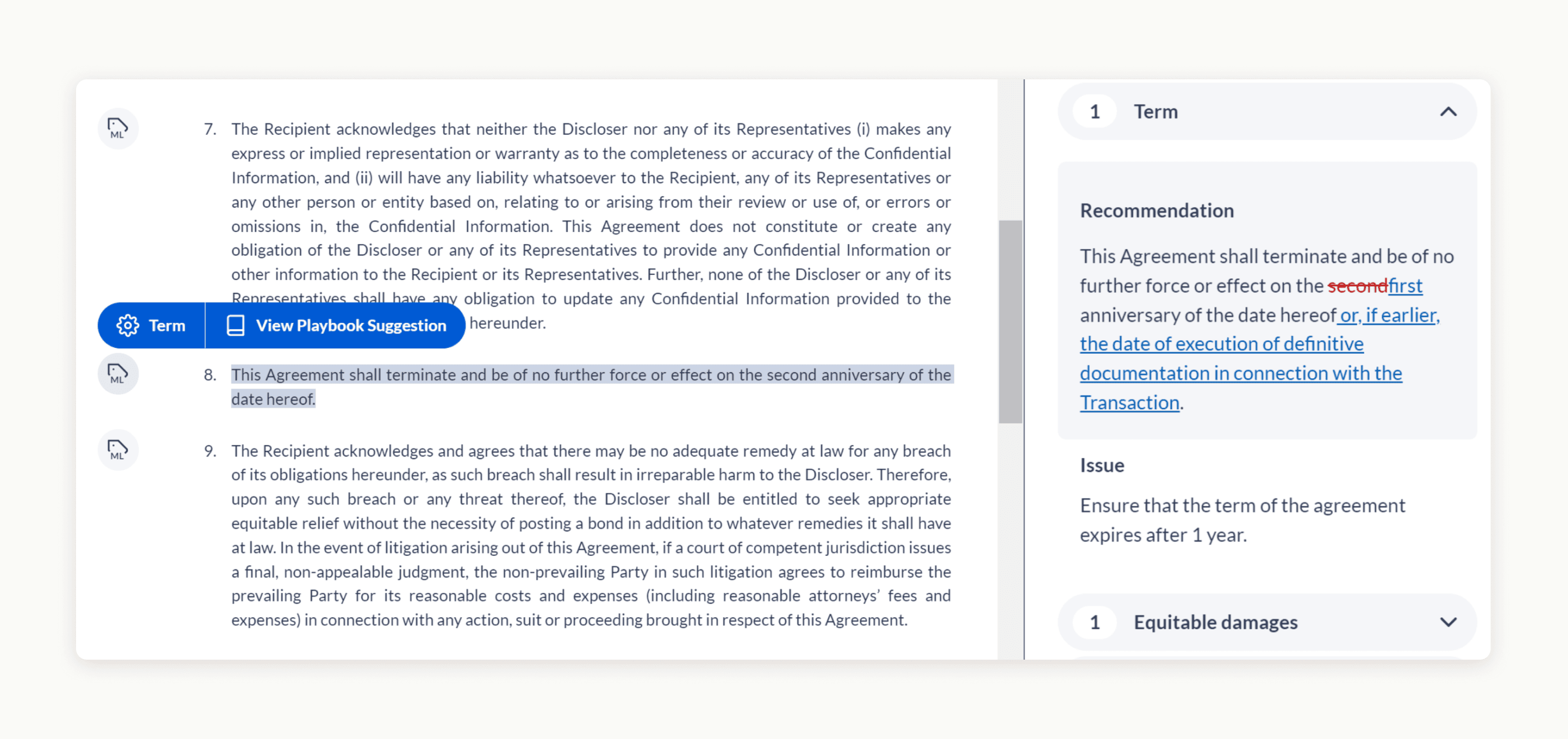
Anthropic's Claude AI interface or branding, symbolizing their fast mode.
OpenAI's Distilled Model on Specialized Hardware
OpenAI released GPT-5.3-Codex-Spark on February 12, a "lightweight" distilled version of GPT-5.3-Codex. Designed for real-time programming, Spark achieves speeds exceeding 1,000 tokens per second, making it 15 times faster than the original Codex. Currently, it is exclusively available to ChatGPT Pro users.
Spark operates on Cerebras's third-generation Wafer Scale Engine 3 (WSE-3). This marks the first public outcome of OpenAI's partnership with Cerebras, announced in January, and represents OpenAI's initial use of non-Nvidia chips in a production environment.
Despite its speed, Spark exhibits a performance gap compared to the full Codex. On Terminal-Bench 2.0, a benchmark for agent terminal operation capabilities, the full Codex scored 77.3%, while Spark achieved 58.4%. In a direct comparison, the full Codex 5.3 developed a Snake game in six minutes, addressing all edge cases. Spark produced a playable version in 50 seconds, though with minor flaws. On SWE-Bench Pro, which simulates real software engineering tasks, the gap narrows: Spark completes tasks in two to three minutes with accuracy comparable to the full Codex, which takes 15 to 17 minutes.
Spark is available to ChatGPT Pro users ($200 per month), features a 128K context window, does not support image input, and its API access is limited to a select group of partners.
OpenAI's GPT-5.3-Codex-Spark branding or interface, representing their distilled model.
Technical Approaches to Speed
Anthropic has not disclosed the technical specifics of its Fast Mode. Speculation from tech blogger Sean Goedecke suggested reducing batch size during inference, but this theory was questioned by industry practitioners on Hacker News, who noted that modern inference systems commonly use continuous batching. More plausible theories from the Hacker News discussion include routing requests to the latest hardware, such as GB200, which offers 2.4 times the memory bandwidth of H100, or parallel distillation and refinement, where multiple inference paths are run simultaneously, and answers are quickly merged. Some users have reported that Fast Mode occasionally outperforms standard mode on complex problems.
OpenAI has been more transparent about Spark's architecture. Spark runs on Cerebras's WSE-3, a wafer-scale chip measuring 46,225 mm², approximately 57 times larger than Nvidia's H100. A key advantage of the WSE-3 is its on-chip integration of 44GB of Static Random Access Memory (SRAM), which is two orders of magnitude faster than the High Bandwidth Memory (HBM) typically found in GPUs. GPUs often spend considerable time transferring model weights from external memory during inference. Cerebras's design places the model directly within the chip, eliminating this transfer overhead. Since 44GB of SRAM cannot accommodate the complete GPT-5.3-Codex, OpenAI trained a smaller, distilled version. The exact size is undisclosed, but Cerebras chips can be chained, suggesting Spark's parameter count could exceed what 44GB alone might hold.
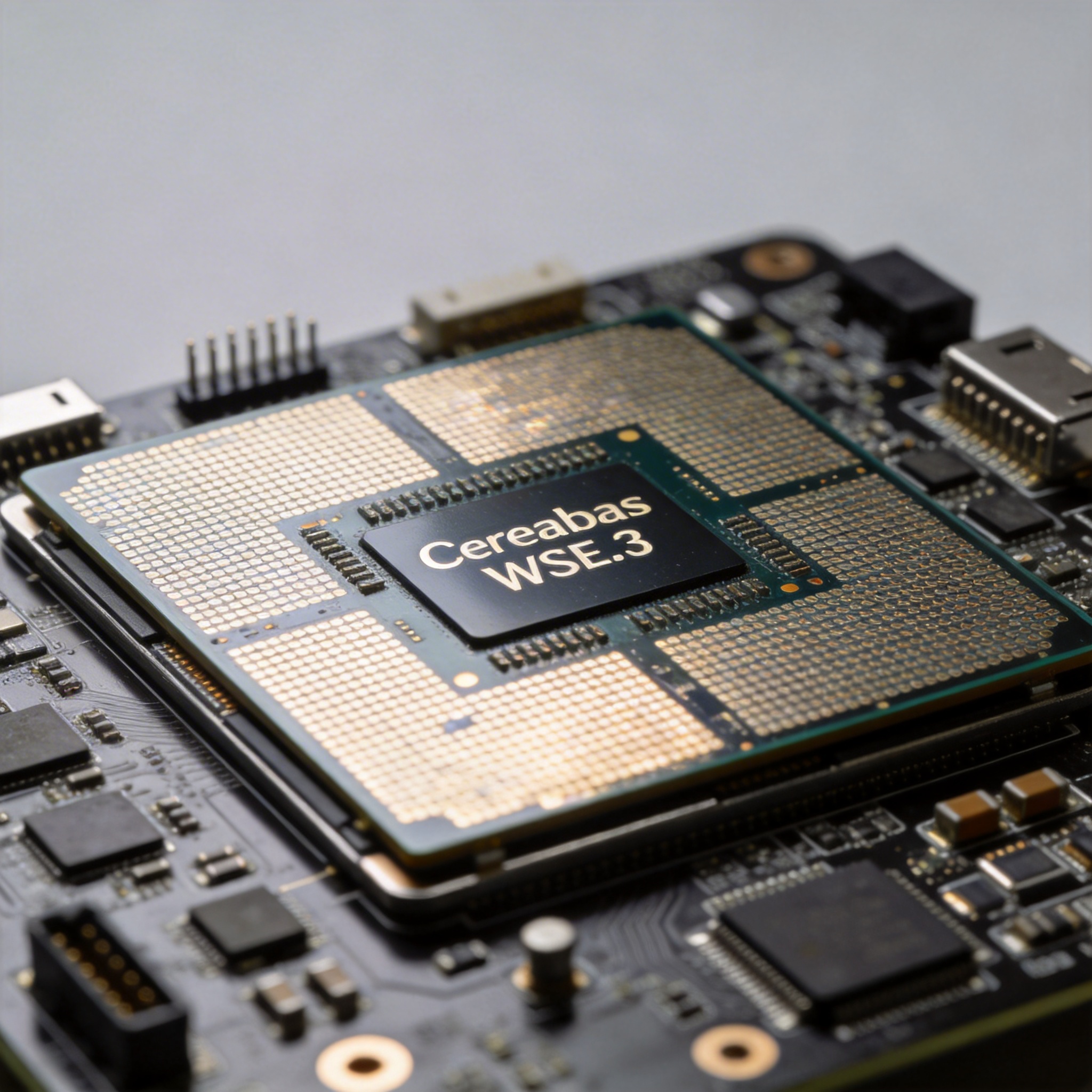
Close-up of a Cerebras Wafer Scale Engine 3 chip, highlighting its large size and intricate design.
Speed Versus Accuracy: A Product Philosophy Divide
The distinct approaches reflect differing product philosophies regarding the balance between speed and accuracy.
Anthropic's strategy prioritizes model accuracy, offering the same intelligent model with increased speed. The additional cost covers "no loss of intelligence."
OpenAI's strategy focuses on delivering a real-time interactive experience. A speed of 1,000 tokens per second aims to transform code generation from a "batch processing tool" into a "real-time collaborator," surpassing typical human reading speeds.
The optimal approach depends on the use case. For interactive development, where a developer engages in a back-and-forth with the AI, speed offers tangible benefits. A complex refactoring that takes 30 seconds in Opus 4.6's standard mode might complete in 12 seconds with Fast Mode, potentially helping maintain a "flow state."
However, for AI agents autonomously performing multi-step tasks, speed may be less critical. An online commenter noted that if an agent has 80% accuracy at each step, a 10-step sequence yields only about a 10% end-to-end success rate. In such tasks, most time is spent on tool calls (API requests, file I/O, external service waits), so a six-fold increase in model inference speed may not proportionally reduce overall task time.
Speed holds greater significance for real-time voice AI. Human conversation feels unnatural with pauses exceeding 800 milliseconds. In a voice agent's pipeline (speech recognition → LLM inference → speech synthesis), the LLM has only 400-500 milliseconds. At standard speeds, this allows for generating only about 35 tokens, barely a sentence. A speed of 1,000+ tokens per second enables the generation of over 400 tokens within this window, fundamentally altering the design possibilities for voice interaction. OpenAI's investment in the Cerebras partnership may be partly driven by its own voice product line.

Abstract image of a human ear with digital sound waves and code, symbolizing real-time voice AI.
Increased speed can also indirectly enhance accuracy. Instead of relying on a single, quick, potentially unreliable inference path, faster models can run multiple candidate paths simultaneously and select the best outcome. If sufficiently fast, running three paths and choosing the best could still be quicker than a standard model running one path, while yielding higher accuracy.
User Guidance and Outlook
For Claude Code users, Fast Mode is suitable for interactive development, real-time debugging, and rapid iteration. It is less advisable for long tasks or when cost is a primary concern.
For OpenAI Codex users, Spark's role is more nuanced. A common usage pattern involves using the full Codex for planning and complex reasoning, while Spark handles minor modifications, test generation, and formatting adjustments—tasks that can be quickly verified. A suggested criterion is to use Spark if a task's result can be verified within 30 seconds; otherwise, use the full version. OpenAI has indicated potential future "hybrid modes" that automatically route tasks based on complexity, but manual switching is currently required.
Regarding pricing, Anthropic's Fast Mode is notably more expensive at six times the standard rate, with clear value proposition. Spark is currently exclusive to ChatGPT Pro users, and its API pricing has not been finalized.
General advice suggests that users should identify their primary bottleneck before enabling "fast" modes. If model response time is the main impediment, a fast mode may be beneficial. If frequent model errors are the issue, a better prompt or a more robust model may be more effective than increased speed.
The simultaneous introduction of these fast modes by both companies indicates a broader industry trend: inference speed is emerging as a new competitive dimension alongside model intelligence. Anthropic's approach focuses on certainty—the same model, same quality, but faster. OpenAI's approach explores new possibilities—new chips and models leading to a qualitative shift in speed. The long-term success of each strategy may depend on factors such as Cerebras's production capacity and OpenAI's ability to scale larger models on these specialized chips. A future scenario where the full Codex-5.3 could also run at 1,000 tokens per second on Cerebras would represent a significant development.
Stay Ahead of the AI Curve
Join 50,000+ subscribers getting the latest AI tools, trends, and tutorials delivered to their inbox weekly.
No spam, unsubscribe at any time.