
AI Giants OpenAI, Google, and Anthropic Intensify Desktop Agent Development

Three major artificial intelligence companies—OpenAI, Google, and Anthropic—have recently accelerated their focus on desktop AI agents, signaling a shift in the AI battleground from chat interfaces to integrated desktop applications. This intensified activity occurred within a 72-hour period, according to information reviewed by toolmesh.ai.
Three glowing digital pathways converging into a complex network, representing AI companies' unified focus.
OpenAI is reportedly consolidating its desktop products into a single "super app," while Google is testing a Mac version of Gemini and enhancing its developer tools. Anthropic has released several desktop-focused features for its Claude AI.
OpenAI Consolidates Desktop Offerings
OpenAI is integrating its ChatGPT conversational AI, Codex coding assistant, and Atlas AI browser into a unified desktop super app. This move follows an internal memo from Fidji Simo, who oversees OpenAI's application business, citing "product fragmentation" as a hindrance to quality. Greg Brockman is reportedly leading the technical restructuring, with Simo heading sales for the new product.
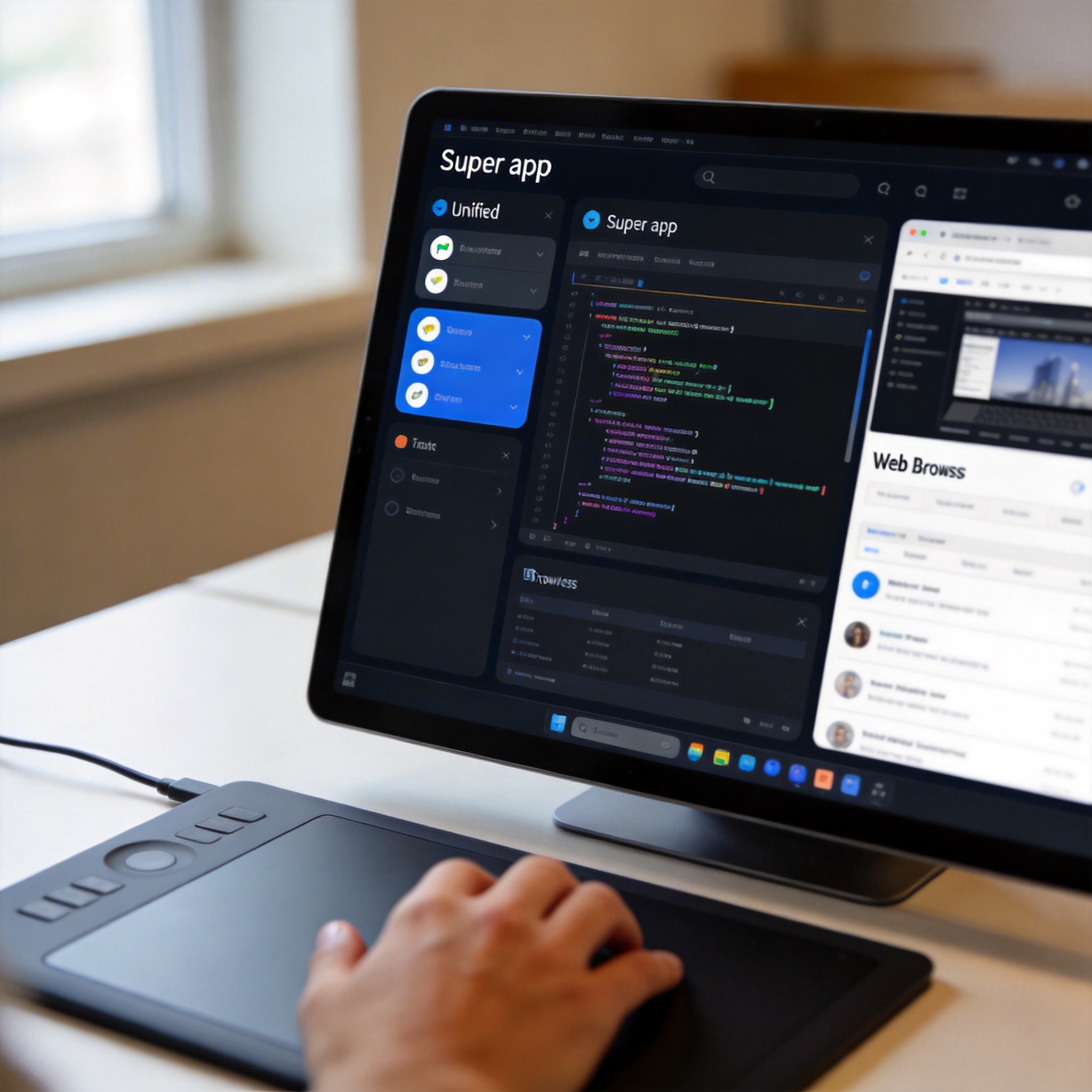
Unified 'super app' interface on a desktop screen, showing integrated chat, code, and browser sections.
Codex, which has seen its weekly active users triple to over 2 million since the beginning of the year, can write code, understand code repositories, and submit pull requests. Atlas, an AI browser launched last October, features an Agent Mode that automates web interactions and form filling. The consolidated super app is designed to monitor user activity across documents, code, and spreadsheets, then autonomously perform tasks such as software development and data analysis.
Concurrently, OpenAI acquired Astral, a 23-person company known for its Python developer tools, including the "uv" tool for Python environment management. This acquisition is aimed at evolving Codex to manage entire development workflows. OpenAI also acquired the AI security platform Promptfoo on March 9 and Jony Ive's hardware company io last year for $6.4 billion. Albert Lee, formerly of Google, was hired as head of mergers and acquisitions at the end of last year. These acquisitions and hires indicate a strategic focus on coding, security, and enterprise solutions.

Engineers collaborating in a modern, well-lit office, working on multiple screens displaying code.
Google Targets Developers and Mac Ecosystem
Google has made two significant moves: one aimed at developers and another at the Apple ecosystem. Its Google AI Studio has been upgraded to allow developers to describe an application in natural language, enabling AI to generate front-end and back-end code, configure databases, manage authentication, and deploy directly from the browser. The core technology supporting this is Antigravity.
Antigravity is based on technology licensed from Windsurf, following Google's recruitment of Windsurf CEO Varun Mohan and his core R&D team. This technology allows for the direct hand-off of the entire software development process to agents. Google stated that this experience has been used internally for hundreds of thousands of applications and will soon integrate with Drive and Sheets, supporting one-click deployment to Antigravity.
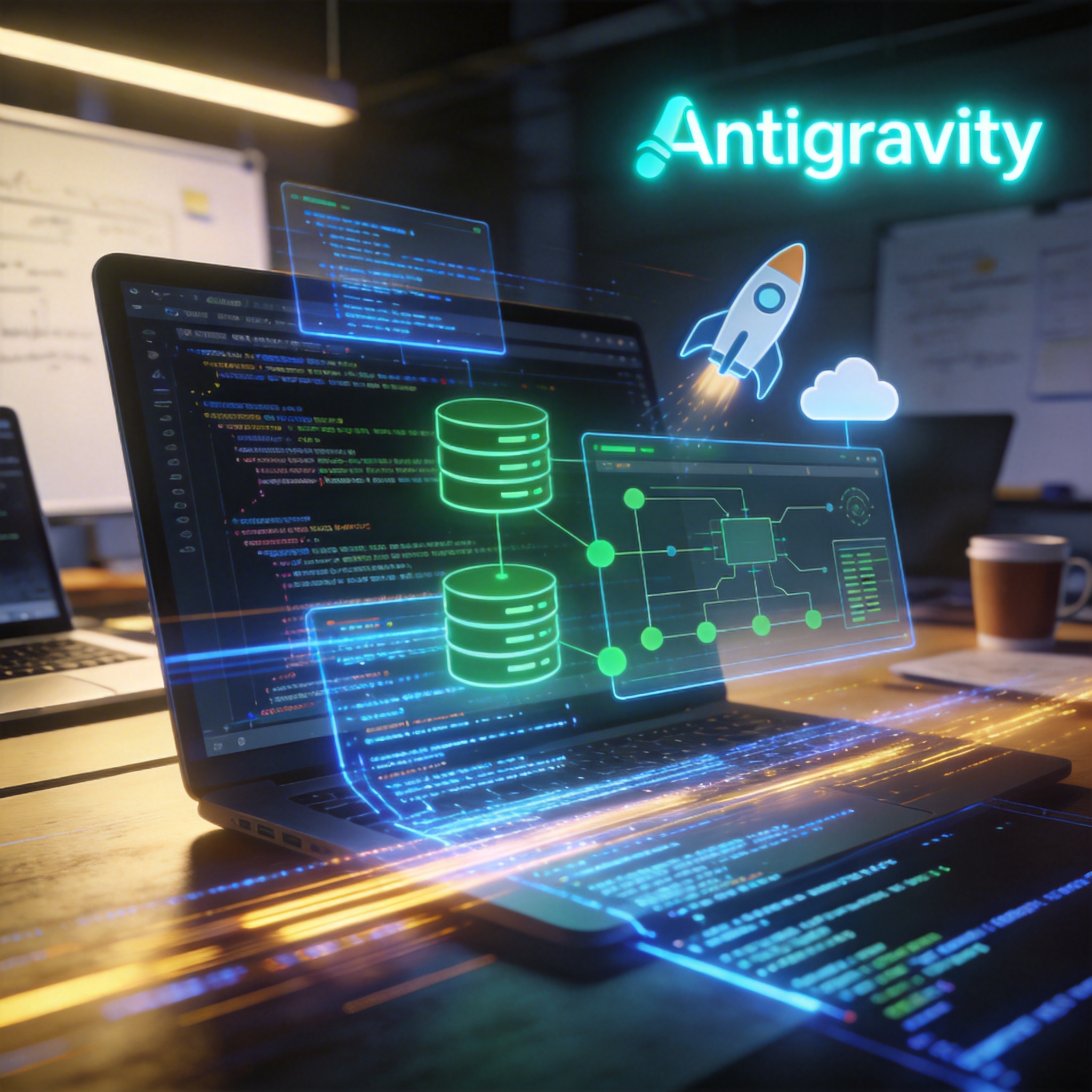
Digital interface showing AI-generated code, database configuration, and deployment, symbolizing automated software development.
Additionally, Bloomberg reported that Google is internally testing a Gemini Mac desktop application, codenamed "Janus." This marks Google's first native AI client for Mac, as previous Gemini access for Mac users was web-based. Early versions, distributed to a small group of external testers, feature an interface similar to iOS and iPad, supporting search, document analysis, and multimodal generation. A key feature is "Desktop Intelligence," which enables Gemini to interact with other Mac applications, monitor screen activity, and extract context to provide scenario-specific answers. The Gemini model is expected to power future Apple Intelligence and Siri.
Anthropic Expands Claude's Desktop Capabilities
Anthropic has rapidly introduced several desktop-focused features for its Claude AI. Claude Code has gained traction in developer circles, with a significant portion of its revenue derived from APIs. Anthropic's market share for initial AI tool purchases among enterprises reportedly exceeds 73%.
Over four weeks, Anthropic released new models, expanded context windows, introduced persistent memory, and launched thousands of Claude Skill plugins. Three specific desktop-oriented releases include:
Claude Cowork: Released in January, this feature extends Claude Code's agent capabilities to general desktop users. It allows Claude to read, edit, and create files within specified folders, acting as a background digital employee with read and write permissions to local directories.
Dispatch: Launched on March 17, Dispatch provides remote control for Cowork. Users can send messages, such as requests to organize tax receipts, and the desktop AI will perform the task autonomously.
Claude Code Channels: This feature enables developers to send messages, assign tasks, and receive completion notifications for Claude Code directly via Discord and Telegram.
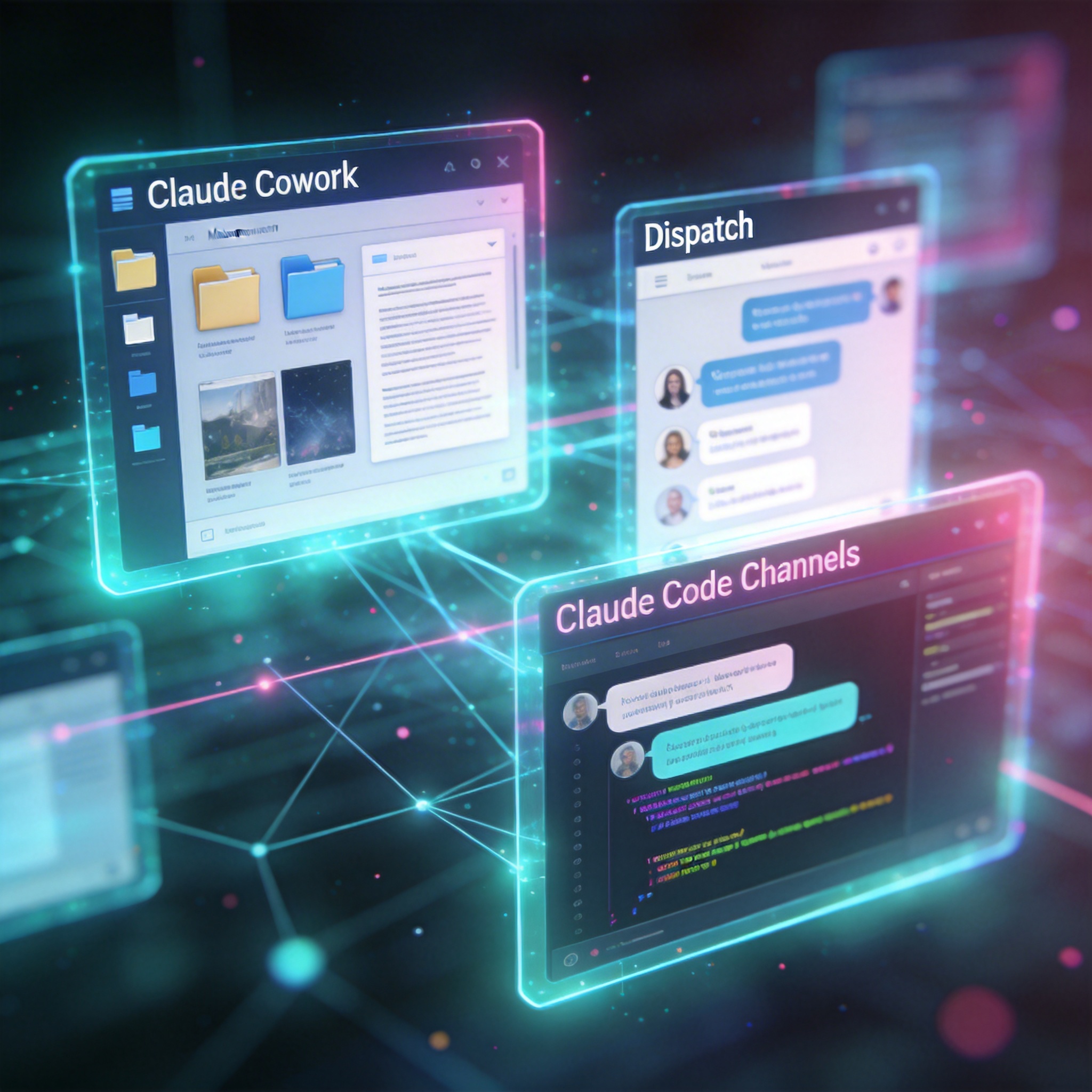
Holographic windows representing Claude Cowork, Dispatch, and Code Channels, interconnected on a digital desktop.
These developments indicate Anthropic's strategy to make Claude ubiquitous across user systems.
Shift from Browser to Desktop Agents
The increased focus on desktop agents by these AI giants coincides with a decline in the browser agent sector. Project Mariner, highlighted at last year's I/O conference, has reportedly been disbanded. Perplexity's Comet browser agent has shown low weekly active users, and OpenAI's ChatGPT Agent's weekly active users have fallen below 1 million. This trend suggests that users are seeking AI capabilities that can perform work directly on their systems rather than solely through web browsing. The AI battlefield is moving from web-based chat interfaces to deeper integration within operating systems.
Stay Ahead of the AI Curve
Join 50,000+ subscribers getting the latest AI tools, trends, and tutorials delivered to their inbox weekly.
No spam, unsubscribe at any time.