
Musk's 2025 Targets Missed Across Robotaxi, AI, and Robotics

Elon Musk's ambitious projections for 2025 across his ventures, including Robotaxi services, humanoid robot production, and AI model releases, have largely gone unfulfilled. Despite these repeated delays, the market valuation of his companies has continued to climb.
Critics and supporters alike acknowledge Musk's pattern of setting aggressive deadlines that are frequently missed. This trend has persisted into 2025, with many key commitments remaining unmet.
The stakes for Musk's companies, including Tesla, SpaceX, and xAI, have risen as investor valuations reach new highs. Tesla's self-driving taxi service and Full Self-Driving (FSD) software are increasingly critical amid weakening demand for electric vehicles.
Tesla is expected to report its fourth-quarter delivery figures this Friday. Analysts anticipate that 2025 will mark the second consecutive year of declining vehicle deliveries for the company. Throughout the year, Musk has adjusted or missed several Robotaxi and autonomous driving targets, causing Tesla to fall behind competitors such as Waymo, a subsidiary of Alphabet.
Autonomous Driving Setbacks
In July, Musk stated that Tesla's Robotaxi service aimed to cover half of the U.S. population by the end of 2025, pending regulatory approval. By October, this goal was scaled back to launching in 8 to 10 U.S. metropolitan areas. However, as of late December, Tesla's Robotaxi operations had not expanded beyond Austin and San Francisco, where human safety drivers were still required for all trips.
In contrast, Waymo has expanded its driverless autonomous services to five cities, with fully driverless fleets in Austin and San Francisco reportedly exceeding Tesla's scale.
Musk also made significant claims regarding autonomous driving software for private vehicles. In April, he predicted a technological leap in Tesla's driving software for 2025, suggesting that by year-end, drivers in many U.S. cities could "get in, sleep, wake up at your destination." The current reality is that Tesla's driving software still requires continuous driver supervision.
Despite these delays in autonomous driving, investors have continued to support Musk's vision. Tesla's stock price increased by 27% this year. Last month, shareholders approved a $1 trillion compensation package for Musk, contingent on achieving financial and product targets related to autonomous driving software and Robotaxi.
Robotics and Space Exploration
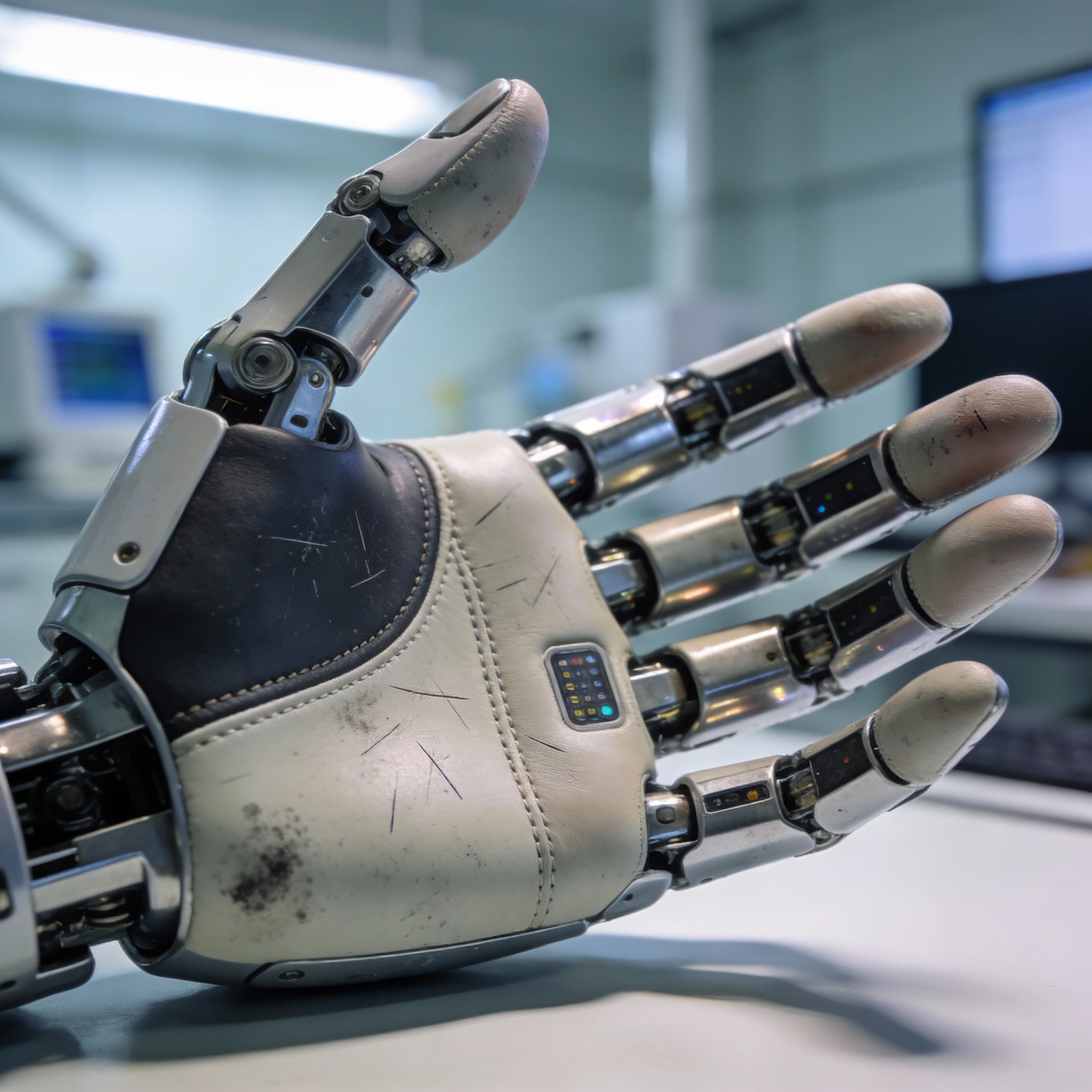
Tesla's humanoid robot, Optimus, which Musk once projected would constitute the majority of the company's value, also missed production targets. In March, Musk stated that Tesla would produce 5,000 Optimus robots by the end of 2025. This target was later reduced to 2,000 units or fewer due to technical challenges, particularly concerning the robot's hand flexibility.
Regarding space exploration, Musk and SpaceX had previously stated that Optimus would travel to Mars aboard Starship in 2026. While SpaceX's official website still indicates this mission is on schedule with renderings of Optimus on Mars, Musk has begun to temper expectations. In August, he suggested there was only a "tiny possibility" of Optimus landing on Mars in November or December 2026, with a more realistic timeline being three and a half years later. More recently, Musk has shifted focus from Mars to space data centers and lunar missions.
xAI and Payment Services
For much of 2025, Musk concentrated on xAI, an AI company aiming to compete with OpenAI and Google. Following the release of its Grok 4 model in July, Musk announced in August that a more powerful model, Grok 5, would be released by year-end. By November, he revised this, stating Grok 5 would be delayed until the first quarter of 2026.
Musk's increased focus on xAI coincided with a reduced involvement in the social media platform X. In January, then-X CEO Linda Yaccarino announced that X would launch a payment service called X Money in late 2025 through a partnership with Visa. However, X was acquired by xAI in March, and Yaccarino resigned in July. Although X maintains that the X Money project is progressing under executive Dhruv Batura, the service has not yet received approval from New York State financial regulators, a critical step for nationwide rollout. Regulators have reportedly raised concerns about the service's design. In December, Musk briefly mentioned that X Money had "launched internally" but did not provide a public release date. The official account description for X Money still states "Launching 2025," a message unchanged since January.
Based on material seen by toolmesh.ai, Musk’s strategy often involves projecting future achievements to influence current valuations.