
Creators Leverage New AI Workflows for Viral Storyboards and Holiday Content


Social media platforms have seen a surge in generative AI activity this week, characterized by novel workflow combinations for narrative consistency and widespread participation in seasonal trends. According to data reviewed by toolmesh.ai, creators are utilizing tools ranging from Nano Banana Pro to ByteDance’s Doubao to produce complex storyboards and viral holiday imagery.
Consistent Character Storyboards via 9-Grid Generation
A significant challenge in AI video production—maintaining character consistency across different camera angles—has been addressed by a new workflow popularized by technical creators on X (formerly Twitter). The method involves using image generation models to create a "9-grid storyboard" in a single pass, ensuring that lighting and character features remain uniform across multiple shots.
According to a workflow shared by creator Halim Alrasihi, the process requires uploading reference materials for characters and scenes, then prompting the AI to generate a 3x3 grid containing specific shot types, such as master shots, over-the-shoulder angles, and close-ups. The prompt explicitly instructs the model to number the shots and adhere to a strict structural sequence.
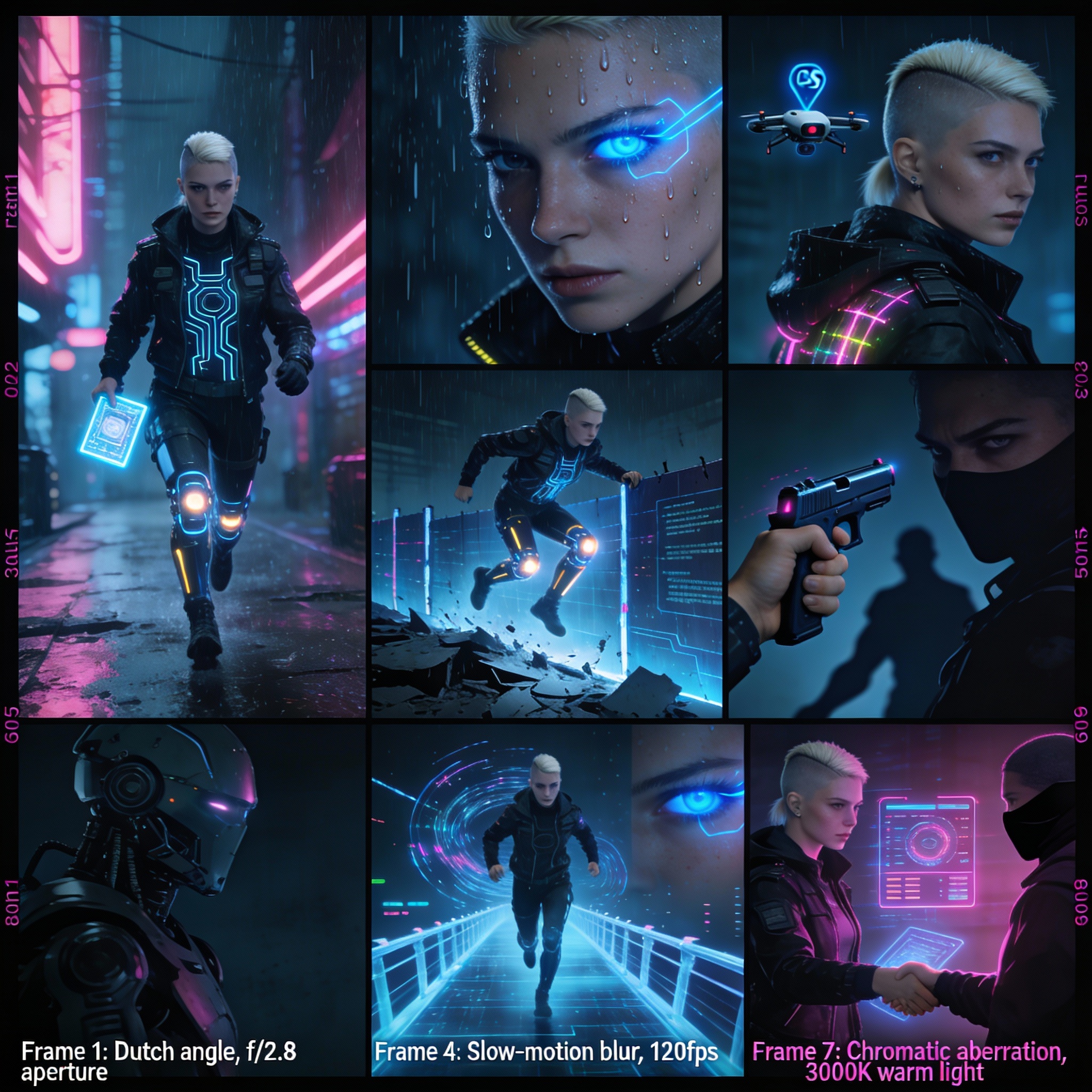
A 3x3 grid storyboard showing a cyberpunk character with consistent lighting across different camera angles.
Once the storyboard is generated, creators isolate specific frames using a coordinate-based prompt—for example, "Isolate image number [X] from the [Y] row and upscale it to a standalone shot." These high-resolution assets are then animated using video generation tools like Kling AI 2.6 or Veo 3.1. To resolve lip-syncing and voice consistency, audio samples are uploaded to Kling AI, which aligns the character’s mouth movements with the provided track.
Douyin Users Drive 'Everything is a Christmas Tree' Trend
In the Chinese market, a consumer-facing trend has dominated the Douyin hot list, with the topic "Everything Can Be a Christmas Tree" generating over 10 million interactions. Users are leveraging ByteDance’s AI assistant, Doubao, to transform everyday photos of pets and food into festive, conical structures.
The viral workflow involves uploading a base image—typically a cat or a food item—and applying a specific prompt template. For pet transformations, the prompt instructs the AI to "push the pet's body silhouette into the layered conical shape of a Christmas tree," while retaining the fur texture to simulate pine needles. The instructions further specify the addition of decorative elements, such as a white five-pointed star on the head and embedded lights, while maintaining a realistic texture ratio of 3:4.

A white cat digitally morphed into a conical Christmas tree shape with glowing lights and a star topper.
A variation of this trend involves surrealist "head-stacking," where multiple portraits are arranged in a central symmetrical cone, graded by size from top to bottom, and wrapped in semi-transparent frosted light strips to create an abstract holiday visual.
Realistic Reimagining of Animation Classics
On X, a video rendering the cast of the Ice Age franchise as realistic, frozen archaeological discoveries has garnered approximately 4.9 million views. Created by user Massimo, the clip departs from the original 3D cartoon style, opting instead for a hyper-realistic "frozen ruin" aesthetic.
The generated video emphasizes heavy textures, including granular frost, matte ice layers, and subsurface cracks. By placing the animated characters—Manny, Sid, and Diego—inside sealed prehistoric ice caves, the content shifts the tone from comedy to a "fantasy archaeological" atmosphere. The technical execution highlights the capability of current video models to interpret cartoon references into photorealistic textures while preserving recognizable character silhouettes.
Style Transfer and Digital Avatars on Bilibili
On the Chinese video platform Bilibili, creators are using style transfer and digital avatar technologies to merge disparate intellectual properties (IPs).
One viral case involves the gaming IP Identity V, known for its "Gothic puppet" aesthetic. Creators used AI tools, including Gemini, to reimagine characters from franchises such as My Little Pony and Spy x Family into the Identity V art style. The workflow requires defining the core personality traits of the target character and blending them with the visual markers of the game, such as button eyes and rope-textured hair.
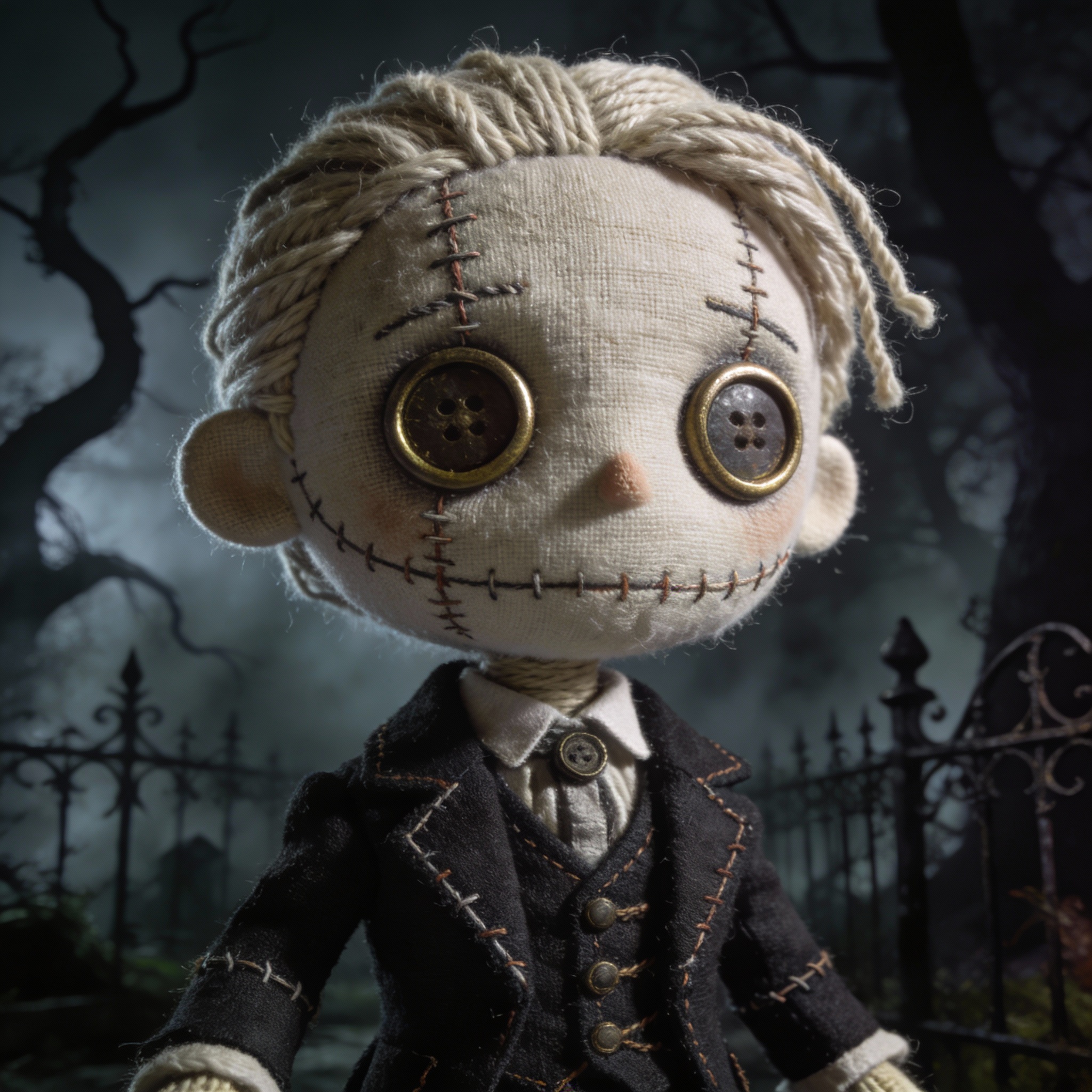
A gothic puppet character illustration with button eyes and stitched skin in a dark whimsical style.
Separately, the "AI Theater" feature in Alibaba’s Qianwen APP has driven a trend of movie remakes. Creators upload personal photos to generate digital avatars, which are then swapped into classic film clips from The Legend of 1900 or Empresses in the Palace. The technology handles face replacement, voice cloning, and lip-syncing simultaneously, allowing users to insert themselves into established scenes. These clips have fueled a category of "reaction" videos where audiences guess the original source material based on the AI-altered footage.
Stay Ahead of the AI Curve
Join 50,000+ subscribers getting the latest AI tools, trends, and tutorials delivered to their inbox weekly.
No spam, unsubscribe at any time.