
ByteDance's Doubao Integrates Seeduplex for Human-Like Voice Interaction
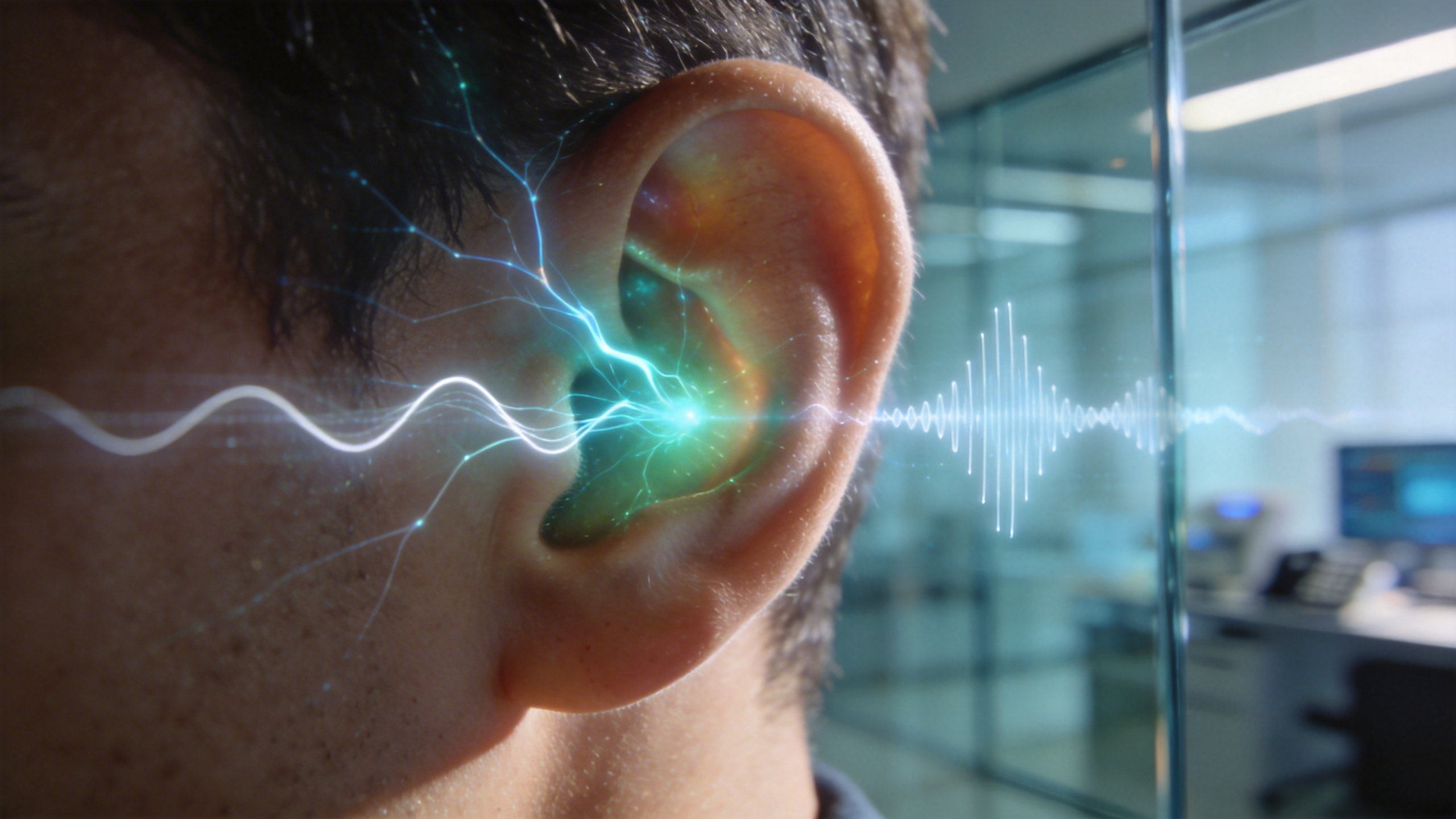
ByteDance has fully launched its native full-duplex voice large model, Seeduplex, across the Doubao app, enabling simultaneous listening and speaking capabilities. This integration aims to eliminate the "mechanical feel" of AI interactions by allowing the system to understand nuances like hesitations and operate effectively in noisy environments.
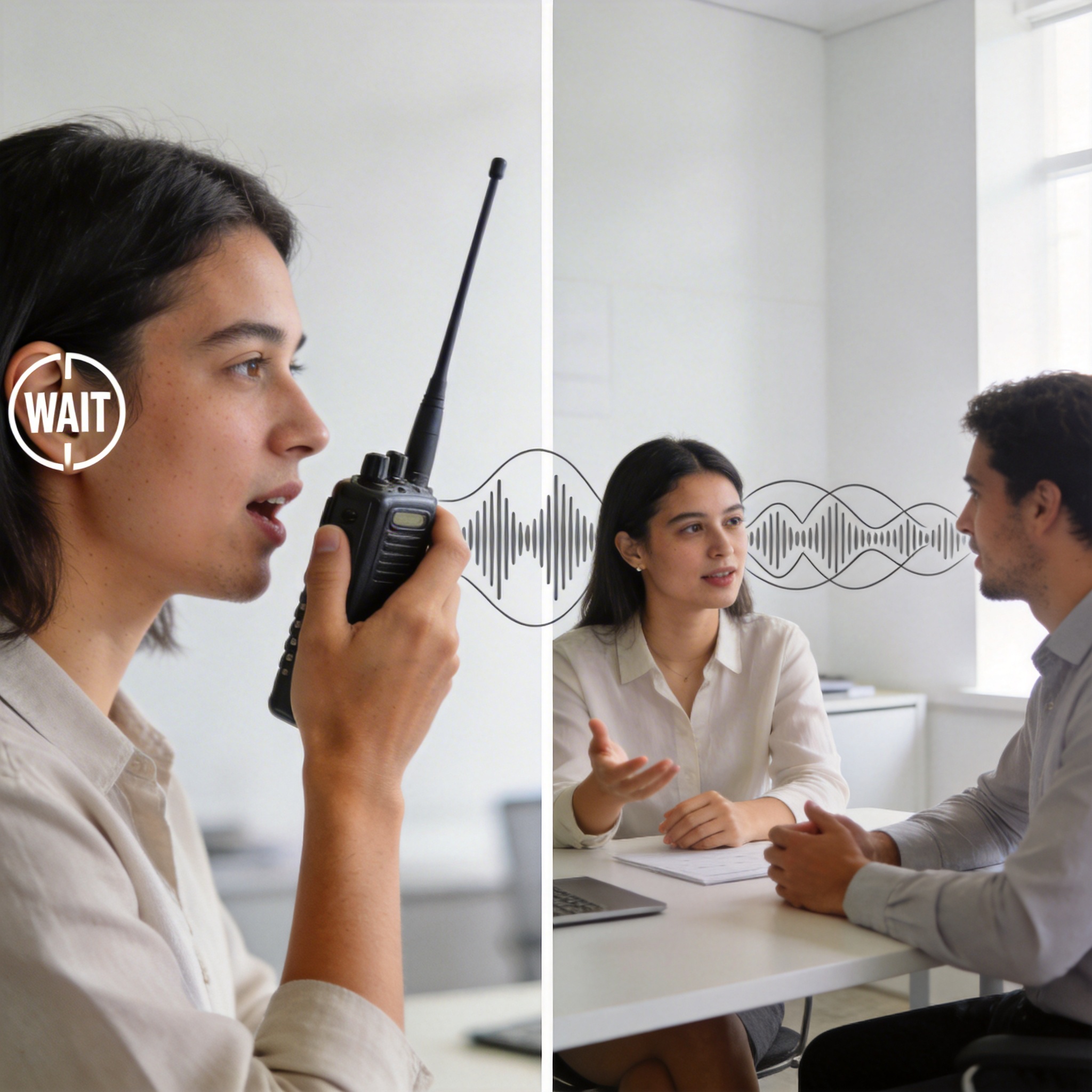
Split image showing sequential walkie-talkie communication versus simultaneous human conversation.
The Seeduplex model is designed to mimic human conversation, moving beyond traditional "half-duplex" systems where interactions are sequential. This advancement allows Doubao to act as a more natural "conversation partner" that can be interrupted, wait for user pauses, and maintain context even amidst background noise.
Enhancing Conversational Nuance
Seeduplex addresses two primary challenges in voice AI: precise anti-interference and dynamic pause detection. In tests conducted by toolmesh.ai, the system demonstrated its ability to filter out background conversations in a bustling coffee shop, pausing appropriately when a user engaged with another person and then seamlessly resuming the original discussion. This capability goes beyond simple noise reduction, approaching "interaction intent recognition" by discerning which sounds are directed at the AI.

Person pausing during speech, with visual cues for 'thinking time,' illustrating AI's pause detection.
Another key feature is its improved handling of user pauses. During a simulated English interview, Seeduplex recognized deliberate hesitations as thinking time rather than the end of a statement. This is achieved by incorporating acoustic and semantic features into its judgment, allowing it to understand the reason for a pause, not just its duration. This results in a more fluid interaction, where the AI does not prematurely interject.
Real-Time Responsiveness and Context
The model also exhibits rapid response times and strong contextual memory. In a poetry game, Doubao provided nearly instant replies, demonstrating its ability to process and generate responses with minimal latency. Official tests indicate that full-duplex reduces latency by approximately 250 milliseconds compared to half-duplex systems. Furthermore, the system can be interrupted mid-sentence, immediately ceasing its speech and offering to repeat information, then seamlessly continuing the conversation from where it left off.
This "listening and speaking simultaneously" capability fundamentally redefines how AI processes voice. Unlike older systems that operated like walkie-talkies, Seeduplex functions more like a phone call, where both parties can speak and listen concurrently. This requires the model to continuously listen, process information, and decide when to speak, a complex task that the ByteDance Seed team addressed by refactoring the model framework and upgrading its training system.

Intricate glowing network of data nodes and lines, symbolizing a refactored AI model framework.
Engineering and Performance Metrics
The implementation of Seeduplex involved significant engineering challenges to ensure its integration into the Doubao app for hundreds of millions of users. The team refactored the model framework from a traditional ASR→LLM→TTS pipeline to an end-to-end architecture. They also upgraded the training system with massive voice data pre-training and multi-task post-training to optimize conversational intelligence, ultra-low latency, rhythm control, anti-interference, and directional understanding. Extreme inference performance optimization, including speculative sampling and quantization, was crucial for a full-scale launch, alongside robust service stability fallbacks.
Performance metrics show a notable improvement:
Pause detection MOS score increased by 8%, and conversation fluency MOS score by 12%.
Pause detection latency reduced by approximately 250ms.
AI interruption rate in complex scenarios relatively decreased by 40%.
Interruption response latency shortened by approximately 300ms.
Misreply and misinterruption rates in complex acoustic interference scenarios were halved.
These advancements position Seeduplex ahead of previous Doubao versions and mainstream industry voice call functions in key metrics. While human performance still surpasses AI in overall conversational fluency, Seeduplex has significantly narrowed the gap in areas like responding to interruptions.
Industry Implications
The introduction of native full-duplex voice technology marks a shift in the voice AI landscape. This third stage of evolution, following cascade and end-to-end real-time voice systems, focuses on solving core problems closer to natural human communication, such as discerning when to interject, wait, or ignore background remarks.
This technology has broad implications beyond chat applications. In-car systems, which require quick state switching and complex acoustic environment handling, stand to benefit significantly. Educational tools, such as oral practice and interview simulations, could evolve from "voice players" to "interactive partners" as AI learns to understand hesitation and maintain conversational rhythm. Customer service and enterprise solutions could also see improvements in handling multi-speaker, noisy, and emotionally varied interactions.

People interacting with smart devices in various settings, demonstrating broad applications of full-duplex voice AI.
The full launch of Seeduplex could represent a "GPT-3.5 moment" for voice interaction, making AI conversations feel natural to ordinary users for the first time. This capability, where AI gains "conversation flow control," is seen as a critical step in its evolution from a mere tool to a more integrated partner.
Stay Ahead of the AI Curve
Join 50,000+ subscribers getting the latest AI tools, trends, and tutorials delivered to their inbox weekly.
No spam, unsubscribe at any time.