
xAI Secures $20 Billion to Scale Massive GPU Cluster and Challenge OpenAI

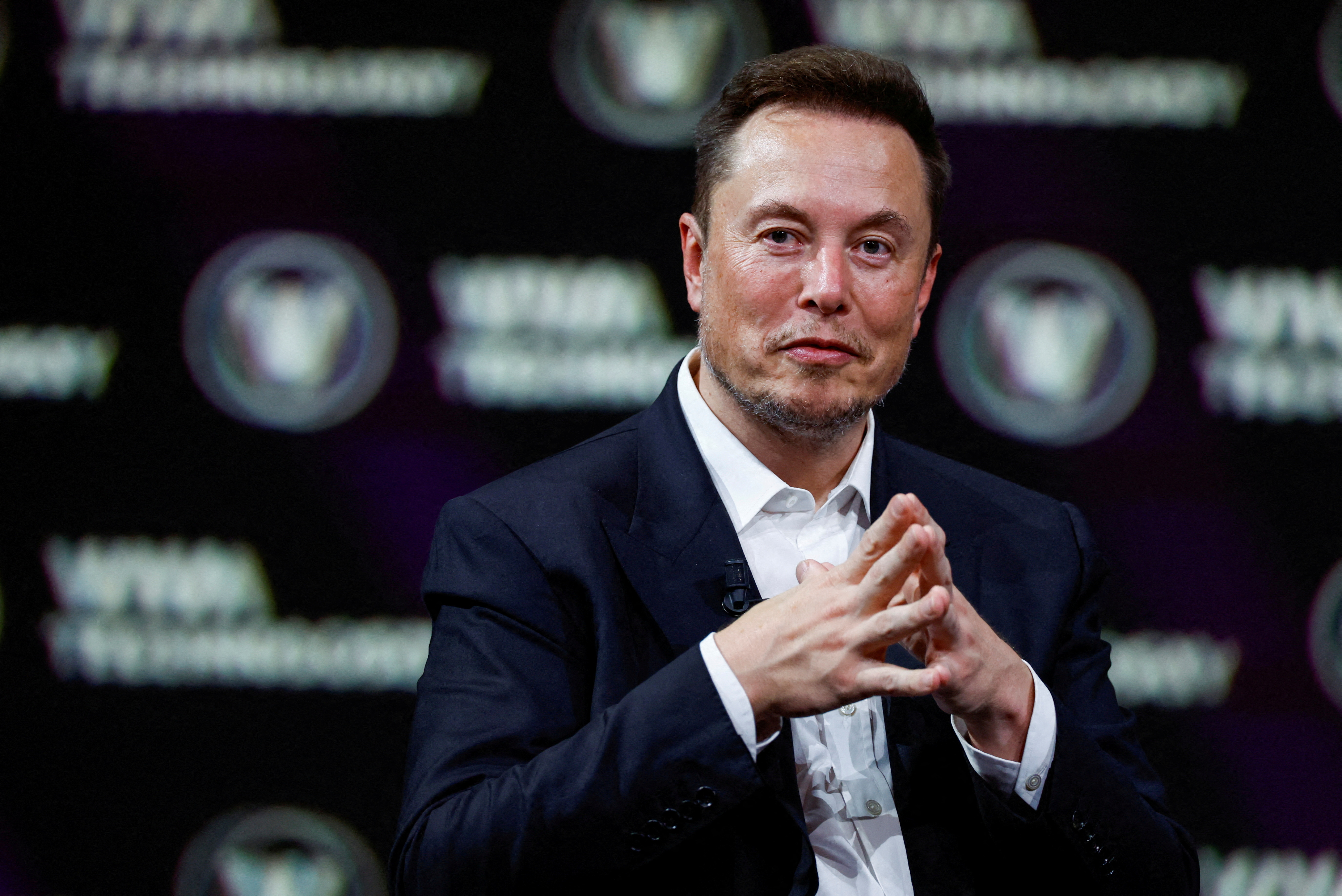
Elon Musk’s artificial intelligence startup, xAI, has closed a $20 billion Series E funding round, valuing the company at approximately $230 billion. The capital injection positions xAI as a primary competitor to OpenAI, providing the resources to expand its compute infrastructure and accelerate the development of its proprietary models.
Strategic Investment and Valuation
According to information reviewed by toolmesh.ai, the financing round far exceeded the company's initial target of $15 billion. Strategic investors include Nvidia and Cisco, with Nvidia CEO Jensen Huang participating in the round. Other major backers include Valor Equity Partners, Stepstone Group, and Fidelity Management & Research Company.
This latest tranche brings xAI’s total funding to over $40 billion, following Series B and Series C rounds in 2024 that raised $6 billion each. The resulting $230 billion valuation places xAI in close proximity to OpenAI and significantly ahead of competitors such as Anthropic. The company indicated that strategic partners would also provide compute support, specifically regarding the supply of Nvidia chips essential for training large language models.
The Colossus Infrastructure Expansion
The capital will primarily fund the expansion of xAI’s "Colossus" supercomputer system. The company claims to have deployed the world's largest AI supercomputer cluster, with operations expanding from a single site to five locations across the South Central United States.
xAI reports that its compute capacity now exceeds the equivalent of one million H100 GPUs. The infrastructure roadmap includes the integration of Nvidia’s GB200 servers into the Colossus II project, with a goal of reaching gigawatt-scale power consumption within 12 months.
Engineering reports reviewed by toolmesh.ai suggest that xAI achieved a rapid deployment timeline, bringing a cluster of over 100,000 units online in 42 days. Musk has identified power availability as a critical bottleneck, noting that future infrastructure may require novel energy solutions to support the massive bandwidth requirements of video training and next-generation models.

A massive aisle of illuminated server racks in a hyperscale data center representing the Colossus cluster.
Grok Development Roadmap
xAI is currently training Grok 5, its next-generation flagship model, which is scheduled for release in the first quarter of 2026. The company recently completed training for the Grok 4 series using the Colossus cluster, focusing on reinforcement learning (RL) to optimize reasoning and autonomous capabilities.
The company’s product suite has expanded to include Grok Voice, a low-latency real-time voice agent, and Grok Imagine, a multimodal image and video generation tool. xAI reports that the combined monthly active user base for the Grok application and the X platform is approximately 600 million, providing a substantial data feedback loop for model refinement.
AGI Predictions and Future Compute
In a recent interview, Musk reiterated his projection that artificial general intelligence (AGI) could emerge by 2026. He predicted that AI capabilities will surpass the sum of all human intelligence by 2030, driven by exponential growth in software efficiency and hardware performance.
Musk outlined a long-term vision where compute infrastructure migrates to orbit to leverage solar energy and radiative cooling, bypassing terrestrial power grid limitations. He also discussed the convergence of AI and robotics, predicting that the humanoid robot "Optimus" could achieve high-level dexterity within three to five years.

Conceptual rendering of a solar-powered orbital data center floating above Earth.
Content Safety Challenges
Despite the technical expansion, xAI faces challenges regarding content safety. The Grok platform recently drew scrutiny after users generated non-consensual explicit images using the model’s image editing tools.
The incident sparked debate regarding the ethical boundaries of generative AI. xAI has acknowledged the existence of loopholes in its safety protocols and stated that engineering teams are implementing repairs to prevent the generation of illicit content. The company maintains that while it pursues rapid development, it aims to align its systems with truthful and safe outputs.
Stay Ahead of the AI Curve
Join 50,000+ subscribers getting the latest AI tools, trends, and tutorials delivered to their inbox weekly.
No spam, unsubscribe at any time.