
Tezign's GEA Architecture Aims to Transform AI Output into Actionable Outcomes

Tezign, an enterprise technology company, is developing a new agent architecture called GEA, designed to convert raw AI outputs into structured, actionable outcomes. This system aims to address challenges associated with managing disparate AI-generated content by creating a continuously callable "Context System."
The GEA architecture integrates various AI outputs into a unified knowledge system. Instead of merely storing content, it organizes scattered data into a dynamic context that agents can access and utilize. An orchestration layer, driven by a "Creative Reasoning Model," prepares context for specific tasks, adapting based on conversational goals and determining when to shift direction. This design allows agents to operate continuously within a system, rather than as one-off tools.
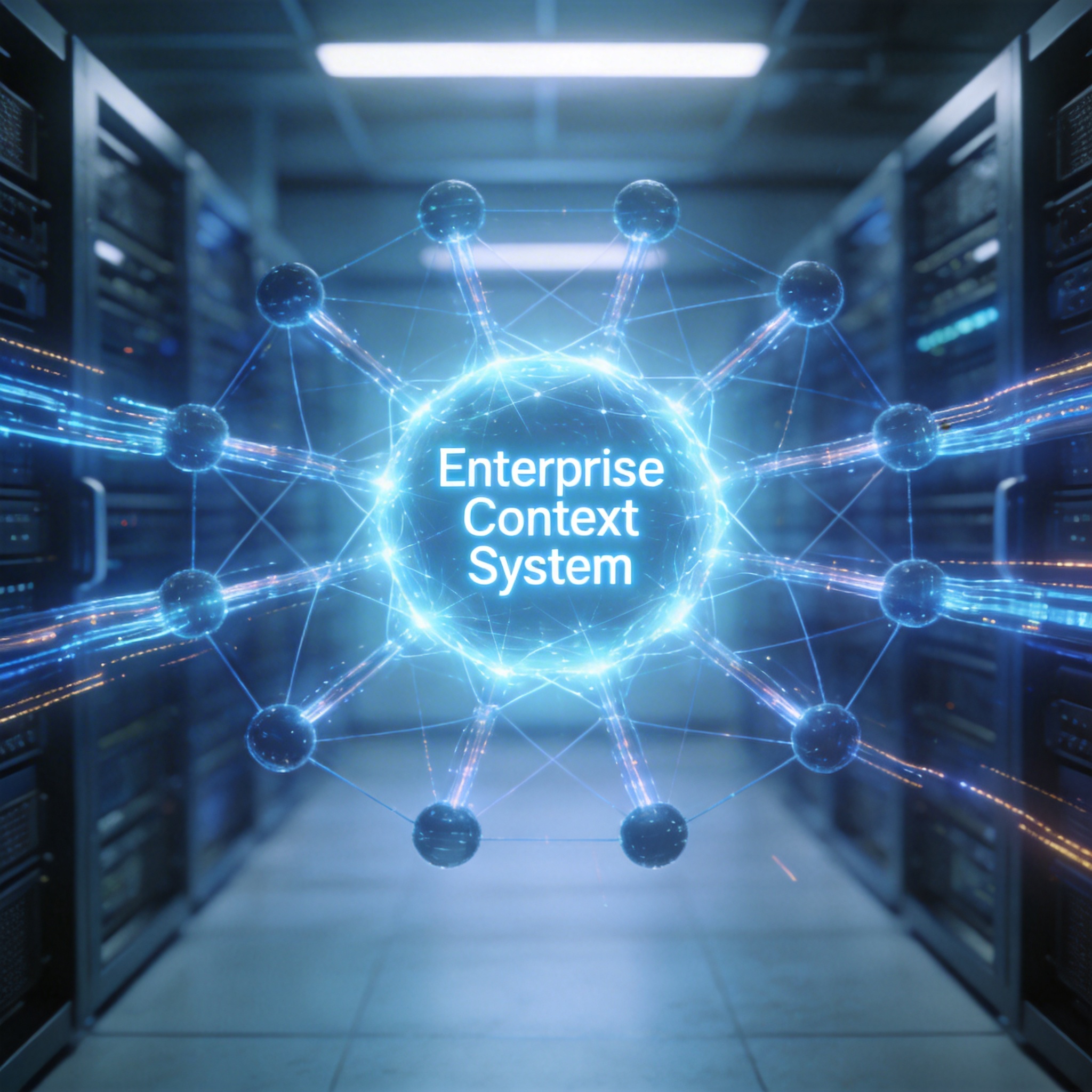
Abstract representation of an enterprise context system, showing data streams organizing into a central neural network hub.
Enterprise Context System for Agent Orchestration
The enterprise context system acts as a foundational entry point, providing a callable contextual base for agents. For instance, in a scenario where a content creator sought to explore overseas content platforms, the GEA system did not immediately generate standard market analysis or strategy documents. Instead, it initiated a dialogue, asking questions to understand the creator's account positioning and content style.
Subsequently, the system configured eight distinct AI personas, including successful overseas creators, platform operational experts, and commercialization consultants. These personas then engaged in simulated, in-depth interviews with each other. The system ultimately produced a comprehensive overseas strategy, integrating perspectives from fifteen different virtual roles, which was immediately actionable.

Holographic AI personas in a virtual meeting, symbolizing persistent AI consultants collaborating on a strategy.
Persistent AI Personas and Contextual Assets
A key feature of the GEA architecture is the persistence of these AI personas. For example, a virtual persona named Marcus, a YouTube blogger, provided detailed and logical advice during a simulated interview regarding niche versus broad content strategies for new accounts. These personas are retained as permanent consultants for a project, automatically becoming part of the research task's contextual assets. This allows users to revisit specific personas, such as Marcus, for further advice, with the system retaining all prior conversational context.
Four-Layer Architecture for Outcome Delivery
Tezign's GEA system employs a four-layer architecture centered on the Context System to achieve the transformation from raw output to actionable outcome.

Abstract four-layer architecture diagram, showing distinct translucent planes leading to a clear outcome sphere.
The top layer defines the user's goal or "Intent." When a user expresses an intention, such as expanding overseas, the orchestration layer processes this goal. It breaks down the primary objective into potential execution paths, evaluates the most effective route, and assigns subtasks to appropriate models and tools. This layer determines the sequence of operations, such as market research, user interviews, and strategy report generation.
The execution layer, which acts as the operational component of GEA, then activates various agents. These agents utilize over 400 skill modules to perform specific tasks, including content generation and data analysis. The collaboration among these agents is managed by the context system, which functions as a secondary memory, storing information related to brands, products, projects, cases, and user profiles.
The foundational multi-model layer underpins the entire architecture, comprising over 30 domain-specific models. The system dynamically selects the most suitable model for each task. The core design principle of this architecture is to deliver concrete outcomes, making the development of GEA a direct response to the need for structured, contextualized AI interactions.

Abstract digital memory palace, with glowing nodes representing interconnected AI-generated knowledge and strategic thinking.
The architecture aims to enable agents to build a comprehensive knowledge base, such as one for Sora creations. It can automatically associate videos, images, and prompts, analyze their styles, tag them, and suggest new content based on existing materials. This approach allows the agent to assist in strategic thinking, execution, and the creation of a persistent, AI-driven memory palace.
Stay Ahead of the AI Curve
Join 50,000+ subscribers getting the latest AI tools, trends, and tutorials delivered to their inbox weekly.
No spam, unsubscribe at any time.