
Tencent Advertising Launches KDD Cup 2026 Challenge with $885,000 Prize Pool

Tencent Advertising has partnered with the KDD Cup to launch a global algorithm challenge with a total prize pool of $885,000. The competition, which began on March 19, seeks to unify sequence modeling and feature interaction in large-scale recommendation systems.
The challenge has attracted significant attention from academic and industry experts, including university PhDs and researchers. The top prize for the academic track champion is $300,000, while the industrial track champion will receive $150,000.
A Global Challenge from Tencent Advertising
The KDD Cup is the official competition segment of the International Conference on Knowledge Discovery and Data Mining (ACM SIGKDD), a top-tier conference in machine learning and data mining. Tencent Advertising’s participation marks its entry as a challenge setter, a role historically held by global technology companies such as Google, Amazon, and Uber. This position allows Tencent to define core problems within the field for top researchers worldwide.

Two distinct data processing pathways merging into one unified system, symbolizing architectural convergence.
The challenge, titled "Towards Unifying Sequence Modeling and Feature Interaction for Large-scale Recommendation," addresses a long-standing architectural issue in recommendation systems. For two decades, recommendation system research has largely progressed along two independent paths: feature interaction modeling, which analyzes static features like user demographics and ad categories, and sequence modeling, which captures user behavior trajectories.
Current recommendation systems in major tech companies typically process these two types of signals using separate sub-networks, leading to a "dual-track parallel, late fusion" architecture. While functional in the CPU era, this approach presents significant challenges in the GPU era due to fragmented computing power, difficulty in efficiently running heterogeneous computational graphs, and increased engineering complexity.
Competition Framework and Data
Participants are tasked with designing a single, homogeneous Recommendation Block capable of simultaneously handling sequential behaviors and multi-domain feature interactions within one architecture. The competition requires models to capture relationships between various features and output the predicted conversion rate (pCVR) of a target advertisement.
The input data for the models includes non-sequential multi-domain features (e.g., user attributes, ad attributes, context features) and user historical behavior sequences with associated heterogeneous side information. These inputs are converted into sequence tokens (S tokens) and non-sequence tokens (NS tokens) via dedicated tokenizers, then fed into a homogeneous backbone network. The final output is connected to a CVR prediction head. Models will be evaluated using a cross-entropy loss function, with final ranking based on the Area Under the Curve (AUC) of the Receiver Operating Characteristic (ROC).

Visual representation of a data processing pipeline with S tokens, NS tokens, a backbone network, and CVR prediction head.
The challenge utilizes real business data from Tencent Advertising, serving billions of users daily. This dataset includes over 100 desensitized feature fields covering user behavior sequences, user attributes, ad attributes, contextual signals, and cross-features. The data is provided in JSON format, with a demo dataset of 1,000 samples (approximately 68MB) available on Hugging Face in Parquet format. Participants must not only achieve high AUC metrics but also adhere to strict inference latency limits, as submissions exceeding these limits will be invalidated.
Innovation Awards and Rules
Beyond the main ranking, the competition features two innovation awards, each offering $45,000: the Unified Architecture Innovation Award and the Scaling Law Innovation Award. These awards aim to encourage participants to explore stackable unified modeling architectures for sequential and non-sequential features and to gain insights into the Scaling Law of recommendation models. These awards are independent of the AUC scores, focusing instead on methodological novelty and depth of insight.
Model ensemble and fusion are prohibited throughout the competition to encourage fundamental architectural innovation rather than score boosting through model stacking.
Academic and Industrial Tracks
For the first time, the competition includes an industrial track for working professionals, alongside the academic track for full-time students. Both tracks address the same problem but are ranked separately. The academic track, with a total prize pool of $540,000, is open to university students and postdoctoral researchers. The industrial track, with a total prize pool of $255,000, is open to individuals, research institutions, and corporate teams.
This dual-track approach aims to leverage the innovative thinking of students and the practical, efficiency-focused insights of industry engineers. Academic track participants have opportunities for paper publication, KDD Workshop presentations, and Tencent internship offers. Industrial track participants can gain exposure to Tencent's business, potentially deploy their solutions in real advertising systems, and access high-performance GPU computing power through the Tencent Angel machine learning platform.
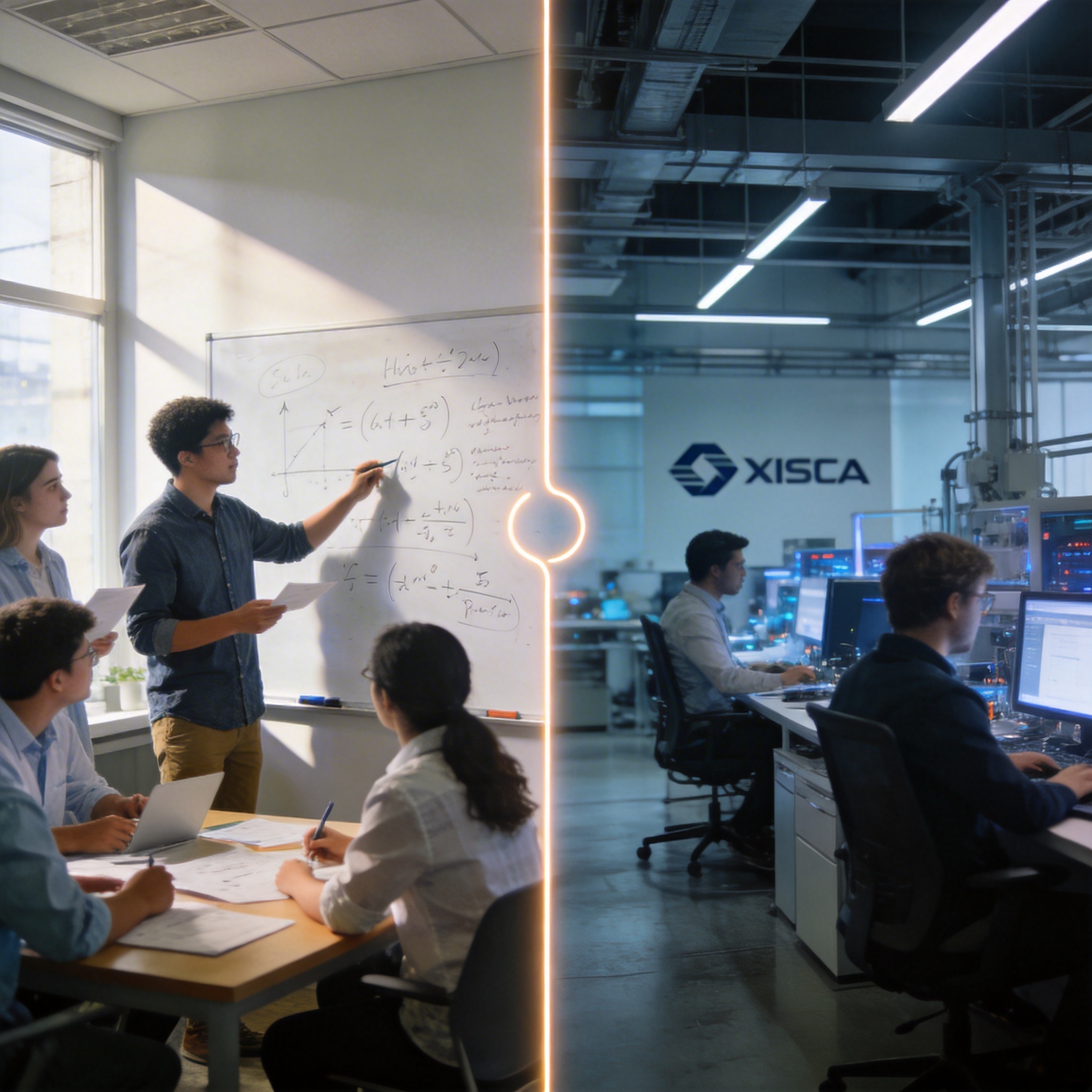
Split image showing an academic research setting and an industrial professional environment, connected by a glowing line.
Competition Timeline
The competition officially commenced on March 19, with key dates as follows:
March 15: Demo dataset released
March 19 - April 23: Global registration period
April 24 - May 23: First round of competition
May 25 - June 24: Second round of competition
August 9: Awards ceremony at the KDD 2026 conference
Teams can consist of 1-3 members, with each individual limited to one team. No team changes are permitted after April 23. The competition employs strict anti-overfitting controls, including submission limits and delayed feedback mechanisms, and will verify reproducibility and rule compliance for all submissions in the second round. Tencent employees are not eligible to participate.
Stay Ahead of the AI Curve
Join 50,000+ subscribers getting the latest AI tools, trends, and tutorials delivered to their inbox weekly.
No spam, unsubscribe at any time.