Microsoft AI CEO Mustafa Suleyman Advocates "Humanist Superintelligence" Amid Industry Race
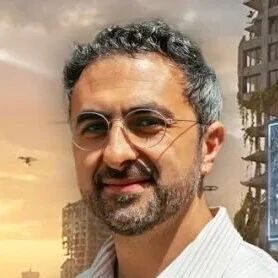
Mustafa Suleyman, CEO of Microsoft AI, has asserted that artificial intelligence has surpassed human capabilities, a view he shared while outlining the concept of "humanist superintelligence." Suleyman, who leads Microsoft's superintelligence team, contends that all participants in the AI industry must acknowledge the substantial risks associated with developing superintelligence and ensure AI remains aligned with human interests.
Suleyman's remarks, made in an interview, highlighted his belief that AI has already exceeded human performance. He also discussed the safety parameters for superintelligence development, suggesting its initial applications might be in medicine.
AI's Current Capabilities and Future Trajectory
Suleyman, appointed CEO of Microsoft AI in March 2024, is responsible for the company's overall AI strategy. Before joining Microsoft, he co-founded Inflection AI and was a co-founder of DeepMind, which Google acquired in 2014. DeepMind later developed AlphaGo and has since become a leading AI research institution, known for innovations like AlphaFold and Gemini.
Earlier this year, OpenAI CEO Sam Altman predicted that Artificial General Intelligence (AGI) could be achieved by 2025, a timeline that sparked considerable debate. More recently, Google DeepMind CEO Demis Hassabis has suggested AGI might arrive within five to ten years. While industry leaders generally anticipate AGI or Artificial Superintelligence (ASI) within this timeframe, the exact timeline remains uncertain due to varying definitions and the need for further research breakthroughs.
From a user perspective, current AI applications still exhibit limitations such as hallucinations, inconsistent understanding of common sense, and high sensitivity to prompts. Suleyman acknowledges these issues but believes human intervention can mitigate risks. He cited scenarios where AI would seek human permission before proceeding, such as with purchasing decisions.
Despite current limitations, Suleyman expressed confidence in AI's rapid progress. He anticipates that within 18 months, autonomous AI agents could perform complex tasks like buying Christmas presents. He also shared personal examples, such as using Copilot to recommend movies based on his preferences. Suleyman noted that AI excels at niche, creative, and challenging knowledge-based tasks, acting as a personal assistant. He mentioned Copilot Actions, an experimental feature enabling AI to perform autonomous tasks like booking tickets or purchasing gifts. He described the experience of AI seamlessly navigating web browsers and personalizing interactions as "magical."
The Call for Humanist Superintelligence
The discussion around ASI has gained prominence in Silicon Valley, with Microsoft establishing its MAI superintelligence team led by Suleyman in October. Meta also reorganized its AI division into the "Meta Superintelligence Lab" earlier this year, and OpenAI is reportedly forming its own superintelligence team. Altman views ASI as the next stage beyond AGI, defining AGI as human-level AI.
Suleyman defines superintelligence as "an AI system that can learn any new task and perform better than all humans combined on all tasks." He views this as an exceptionally high bar, accompanied by significant risks, particularly concerning the ability to constrain and align systems far more powerful than humans. To address this, Suleyman introduced the concept of "Humanist Superintelligence," which he defines as "intelligence that always stands on humanity's side and aligns with human interests."
Microsoft, according to Suleyman, will not develop systems that could become uncontrollable until their consistent safety can be proven. He believes the entire industry should adopt this consensus. This stance contrasts with the "scaling up" approach advocated by some, which involves increasing data, computing power, and model size, potentially leading to an AI arms race. Suleyman's proposal for "humanist superintelligence" aims to shift the narrative away from a competitive race toward a humanistic exploration focused on improving human life.
Suleyman attributed Microsoft's cautious approach to its 50-year history and reputation for trustworthiness, noting that a significant portion of S&P 500 companies rely on Microsoft's enterprise tools. This "cautious" strategy extends to the development of AI.
Historically, disagreements over AI safety have led to significant shifts in the industry, such as the founding of OpenAI by Altman and Elon Musk due to concerns about Google DeepMind's dominance, and the departure of former OpenAI employees to form Anthropic over safety issues. Suleyman's "humanist superintelligence" proposal similarly emphasizes safety, though he clarified that he is not judging other companies' practices. He has not observed widespread harm from AI or truly autonomous, self-improving AI systems yet. However, he anticipates these capabilities could emerge within five to ten years, significantly increasing risk levels.
Therefore, Suleyman advocates for increased caution, transparency, auditing, government engagement, and clear communication about AI's capabilities. He stressed that constraint and alignment are non-negotiable prerequisites for AI development, and tools will not be released until superintelligence can be controlled. Microsoft is actively promoting this discussion, urging all industry participants to consider if they are building humanist superintelligence. The company has already removed AI services from some customers to prevent misuse.
Medical Applications of Superintelligence
Suleyman, whose mother was a nurse, views the medical field as a critical area for AI application, believing technology should enhance human life. He previously founded DeepMind Health to deploy AI in healthcare. At Microsoft AI, healthcare remains a key focus, with medical-related searches being the most frequent use case for Copilot.
Suleyman stated that AI systems currently under development at Microsoft can diagnose rare diseases more effectively than human doctors, with lower costs and higher accuracy. These systems are undergoing independent peer review and are expected to enter clinical trials soon.