
Shengshu Technology Launches Vidu Q3 AI Solution for Consistent Comic Drama Production

Shengshu Technology has officially released its Vidu Q3 model AI comic drama solution, designed to address consistency challenges in AI-generated comic content. The company states the new solution enables the generation of up to 30 consecutive shots without glitches, aiming to prevent character inconsistencies often seen in AI-produced dramas.

Hands holding a tablet displaying a consistent AI-generated comic drama scene, illustrating Vidu Q3's capability.
The announcement comes as AI comic dramas gain popularity, with titles such as "The Bookstore at the End of the Universe" and "Mechanical Apocalypse" attracting significant online attention. Industry reports, including one from DataEye, project the domestic comic drama market to reach approximately 24 billion yuan by 2026.
Despite the growing interest, creators have faced difficulties maintaining character and artistic consistency across multiple shots, a problem the Vidu Q3 solution seeks to resolve.
Vidu Q3 Addresses Production Challenges
The Vidu Q3 model was introduced at the AIGC Content Conference in Shanghai. Wang Chuan, Vice President of Shengshu Technology, stated that the solution was developed from the ground up to support the entire workflow of comic drama production, rather than being a simplified adaptation of existing film and television models.
Wang Chuan, Vice President of Shengshu Technology, presenting at the AIGC Content Conference in Shanghai.
The solution targets four specific challenges: precise control of non-human characters, intelligent optimization of prompt words, consistent multi-shot generation, and integrated voice acting with lip-syncing. Shengshu Technology emphasized that Vidu Q3 focuses on practical production pain points to facilitate industrialized comic drama creation.
Enhanced Character and Scene Consistency
Vidu Q3 includes specialized training for non-human characters, which are common in comic dramas but often problematic for AI models due to limited real-world data. The system aims to ensure stable three-view projections and continuity for complex characters like mythical beasts and mechas across different shots, enabling their serialization and reuse.
The model also features a prompt word optimization bot, designed to translate brief descriptions into detailed storyboards, including expressions, character positioning, camera types, and environmental parameters, without manual adjustments. It incorporates a comprehensive camera language system for comic dramas, supporting various shot types and movements to create narrative tension.
For multi-shot continuity, Vidu Q3 introduces "spatial structure control" to maintain consistent positioning and spatial logic, alongside optimized action timing to ensure physical plausibility. The system can adjust action speeds based on content type and includes visual effects like page-turning transitions and vibrating frames.
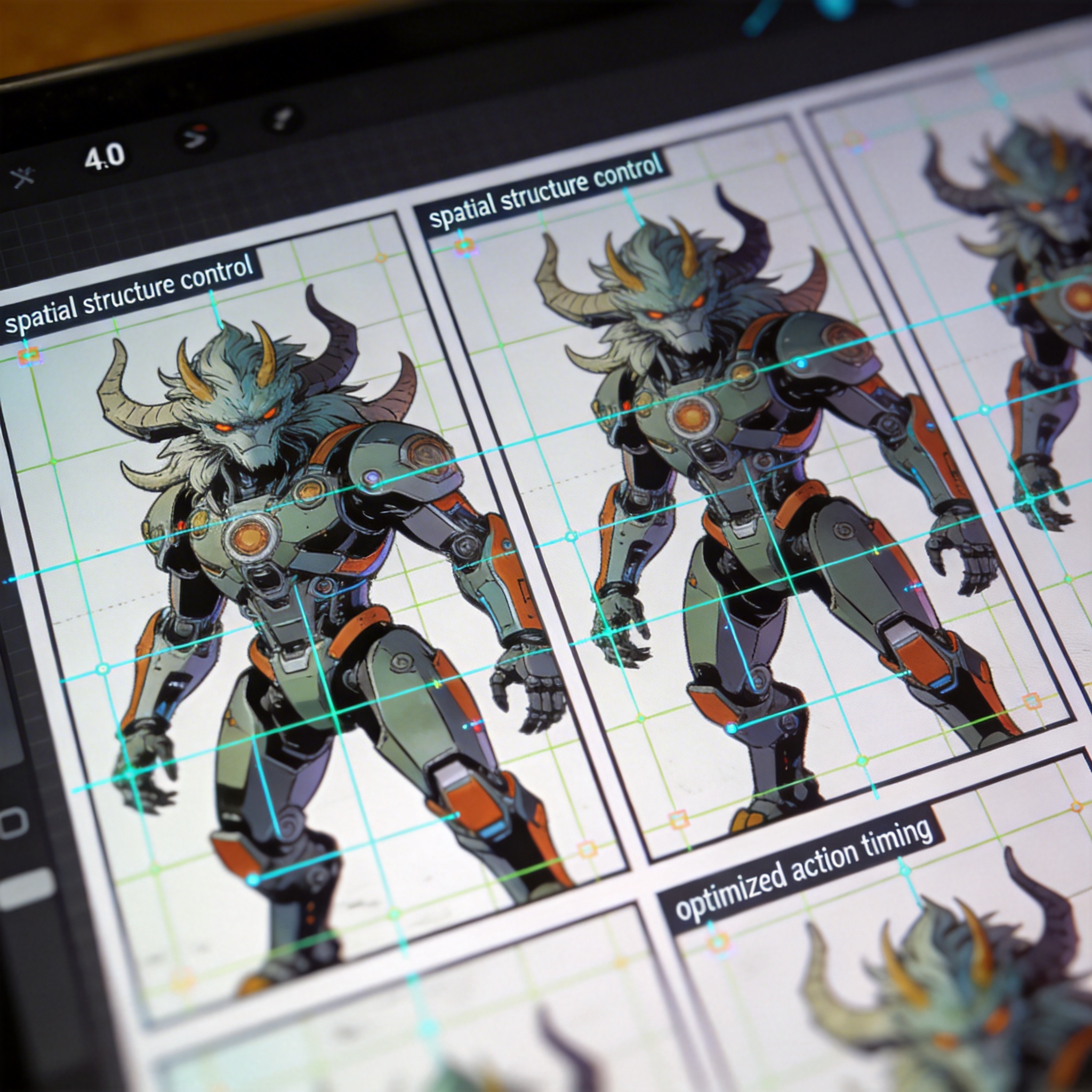
Digital storyboard showing consistent non-human characters across multiple comic panels, demonstrating Vidu Q3's spatial control.
Integrated Audio and IP Serialization
Vidu Q3 supports an audio-first workflow, allowing users to upload audio or scripts and character images to automatically generate video. It also focuses on enhancing sound effect generation and offers layered lip-syncing, adapting precision based on the animation style (3D/realistic vs. 2D anime). This aims to improve the emotional depth and realism of character performances.
To address character consistency in serialized content, Vidu Q3 features "Subject Library 2.0." This function allows creators to establish standardized character asset libraries for human and non-human characters, ensuring consistent appearance, hairstyle, clothing, and voice across episodes. It also maintains environmental and prop consistency.
The model has been optimized for various art styles, including cel-shading, thick painting, and Japanese anime, aiming to preserve aesthetic characteristics while achieving smooth dynamic effects.
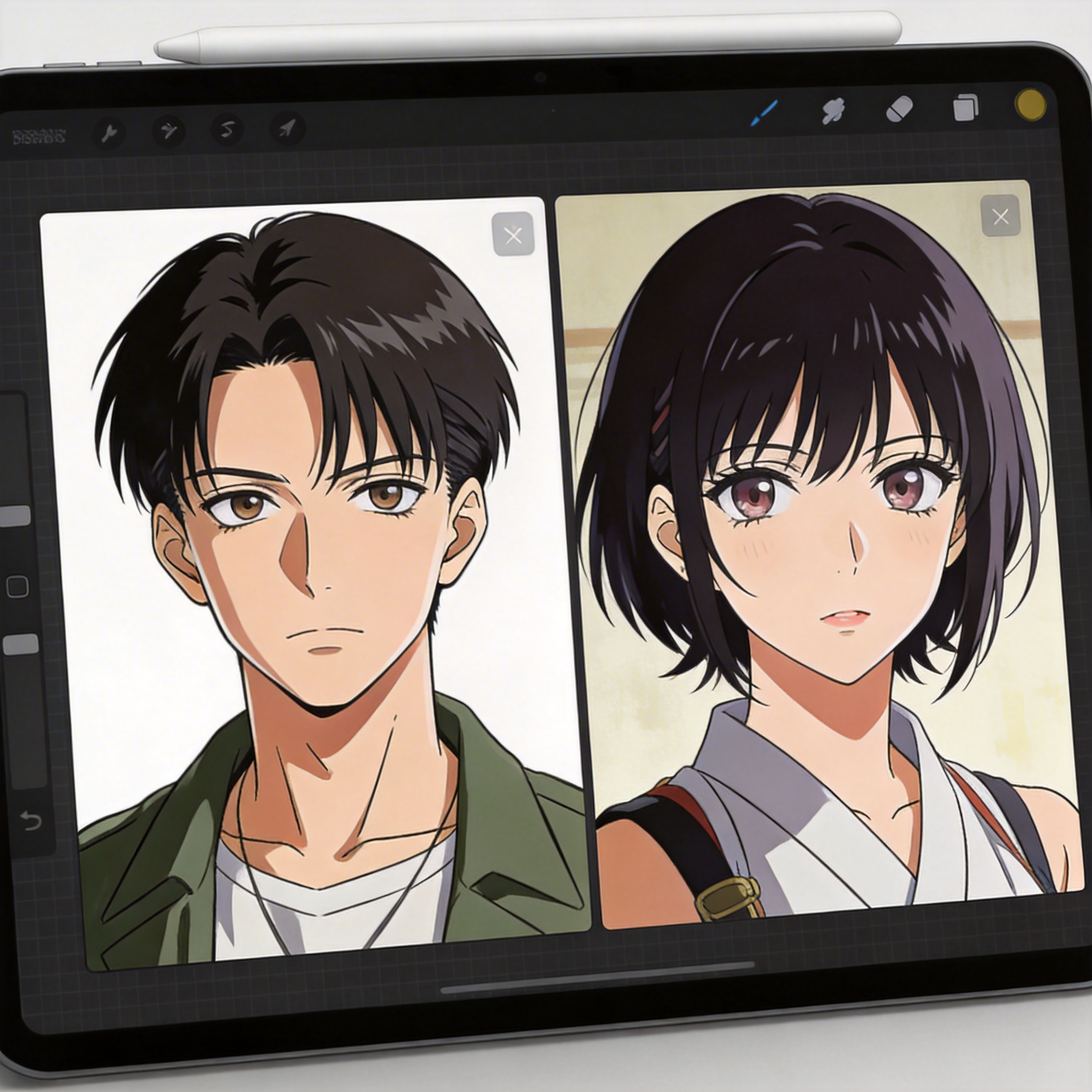
Digital interface showing a comic character rendered in multiple art styles like cel-shading and anime, highlighting Vidu Q3's versatility.
Future Capabilities and Industry Impact
Shengshu Technology plans to introduce a "Reference Generation" function, which will allow the AI to learn actions, expressions, camera movements, and visual styles from uploaded reference videos and images to generate new content. Another upcoming feature, "Scene Replication," will enable the creation of different versions of the same scene (e.g., day/night, sunny/rainy) from a single reference image.
Vidu Q3 also supports multi-angle output for characters and adapts to both horizontal (16:9) and vertical (9:16) aspect ratios for multi-platform distribution.
Wondershare Technology has partnered with Shengshu Technology Vidu to integrate these capabilities into "Wondershare Filmora," aiming to establish new industrial standards for AI comic dramas. The collaboration seeks to make comic drama creation more accessible, supporting production teams, narration-based creators, and IP serialization content providers.
Stay Ahead of the AI Curve
Join 50,000+ subscribers getting the latest AI tools, trends, and tutorials delivered to their inbox weekly.
No spam, unsubscribe at any time.