
Chinese Scholar Open-Sources Multi-Agent AI Project After Claude Cowork Launch

Guohao Li, a Chinese scholar with affiliations to KAUST and Oxford University, has open-sourced his entire distributed multi-agent project, Eigent, under an Apache 2.0 license. The decision followed the release of Anthropic’s Claude Cowork, which Li stated directly impacted his startup aspirations. Li, who previously worked at Intel and Kumo AI, had spent years developing the Camel AI framework, which culminated in the Eigent project.
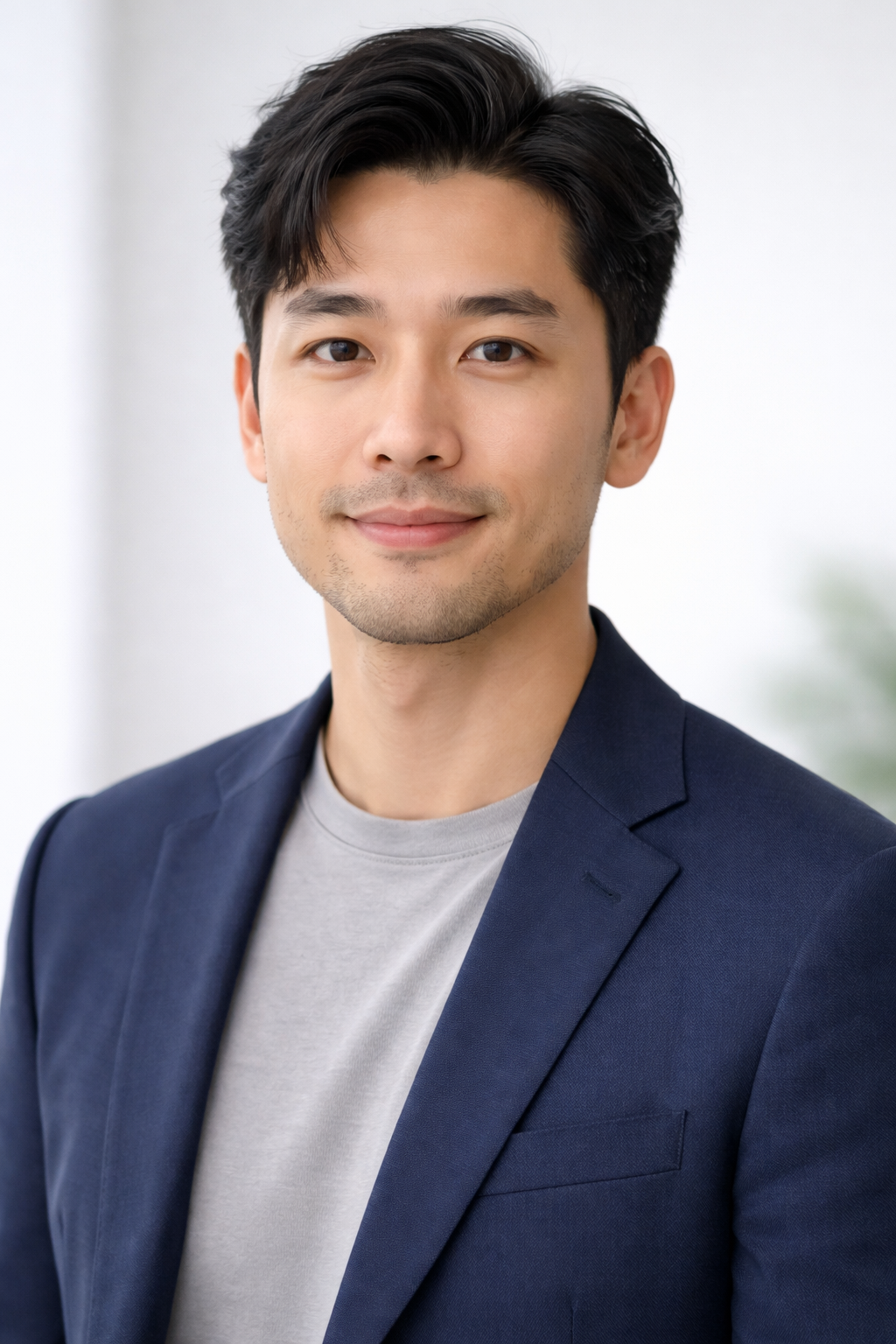
Professional portrait of Guohao Li, a Chinese scholar affiliated with KAUST and Oxford University.
Following the open-sourcing, Hugging Face co-founder Thomas Wolf publicly praised the initiative.
Engineering Multi-Agent Architectures
Li’s project focuses on an engineering refactoring of multi-agent architectures, building upon the CAMEL foundation. This system supports parallel execution, fault tolerance, and recursion, aiming to integrate AI research into desktop productivity tools. The project is available on GitHub.

Digital blueprint schematic showing interconnected 'Agent' nodes and 'Cluster' labels, representing multi-agent architecture.
The CAMEL-AI framework introduces a distributed systems concept where agents function as scalable computing nodes, treating multi-agents as a computing cluster. Li emphasized that the objective is not merely improved chat capabilities but organizing multiple AIs for parallel collaboration, akin to an engineering team, and exploring large-scale agent task parallelism.
A component of this work, called SETA (Scaling Environments for Terminal Agents), has drawn attention for enabling agents to directly operate within a terminal environment. Unlike previous agents that primarily generated text code, SETA allows agents to execute operations, debug environments, and deploy services directly. Google Developers Blog has referred to this as "Next Generation Agents," noting its potential to move AI beyond text generation into environmental interaction. Li views this development as transforming agents into a "silicon-based workforce" with organizational structures and operational tools.

Holographic terminal interface with code, showing a translucent hand interacting, symbolizing an AI agent's operation.
Open-Source Approach to AI Agents
Li’s decision to open-source Eigent reflects a preference for developer ownership over proprietary SaaS models. The project offers a full-stack local agent solution, with all components—from underlying model inference to UI, sandbox runtime, and distributed scheduling—released under the Apache 2.0 license.
The architecture utilizes a distributed Actor model and a structured message bus, moving away from traditional linear calling. This design incorporates fault tolerance, allowing for the restart or reassignment of agents without task failure if an agent encounters issues.

Visual representation of a distributed Actor model with glowing nodes and dynamic data streams, symbolizing fault tolerance.
The execution layer, through the SETA project, provides a sandbox terminal where developer agents can operate independently. This environment grants agents read and write permissions to a virtual terminal, enabling actions such as git clone, npm install, error log analysis, and self-correction. The local execution minimizes network latency.
For the inference layer, the full-stack open-source approach allows for the use of various models, including Llama3, Mistral, Qwen, and DeepSeek, without cost. This aims to leverage consumer-grade graphics cards for enterprise-level data processing and distributed architecture for specialized tasks.
Stay Ahead of the AI Curve
Join 50,000+ subscribers getting the latest AI tools, trends, and tutorials delivered to their inbox weekly.
No spam, unsubscribe at any time.