
OpenAI Introduces Free Prism Platform for AI-Native Scientific Research and Collaboration


OpenAI has launched Prism, a new scientific research tool powered by GPT-5.2, designed to streamline academic writing and collaboration. The platform, described as a cloud-based "AI-native" LaTeX workspace, is available for free to users with a ChatGPT personal account.
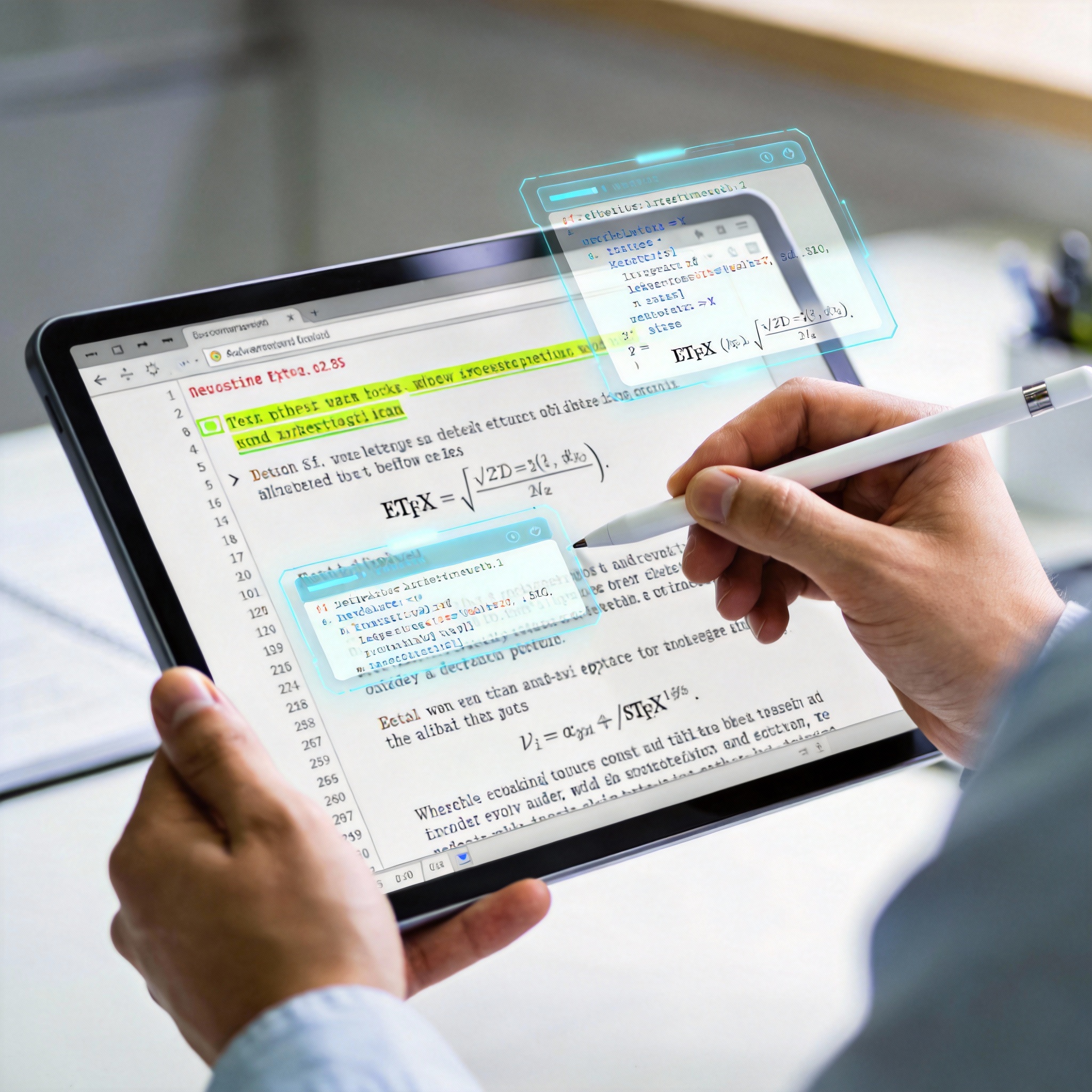
Hands interacting with a tablet showing AI-assisted LaTeX document with formulas and text.
Prism integrates GPT-5.2 directly into the workflow, allowing the AI to analyze the structure, formulas, references, and context of a research paper. This integration aims to assist with tasks ranging from drafting abstracts to managing references and conducting final reviews. The platform also features a one-click conversion tool for transforming whiteboard drawings into TikZ diagrams and can summarize relevant research literature.
Reshaping Scientific Workflow
The introduction of Prism addresses the fragmentation often encountered in scientific research, where researchers frequently switch between various incompatible tools for drafting, revising, and managing citations. OpenAI states that Prism is its initial effort to resolve this issue.
Abstract representation of fragmented tools converging into a unified, glowing sphere.
Built on Crixet, a cloud-based LaTeX platform acquired by OpenAI, Prism integrates drafting, revision, collaboration, and publication preparation into a single environment. This allows GPT-5.2 to operate within the project's internal workflow, providing assistance with global context.
Key capabilities of Prism include:
Dialogue with GPT-5.2 Thinking: Facilitates exploration of ideas, hypothesis validation, and reasoning on complex scientific problems within the document's context.
Drafting and Revision with Global Context: AI-assisted writing and revision that considers the entire document, including text, formulas, citations, figures, and overall structure.
Intelligent Literature Search and Integration: Searches for relevant literature (e.g., arXiv) based on manuscript content and suggests revisions.
Intelligent Handling of Formulas and Figures: AI understands the relationships between formulas, citations, and figures within the paper, aiding in their creation and restructuring.
Sketches to LaTeX Conversion: Converts whiteboard sketches into LaTeX code.
Seamless Real-time Collaboration: Supports real-time collaboration among co-authors, students, and supervisors.
Direct In-document Editing: Allows direct modifications to the document based on instructions, eliminating the need to copy and paste between tools.
Voice Editing: Provides voice functionality for simple modifications during writing or review.
Unlimited Collaboration and Accessibility
Prism supports an unlimited number of collaborators, removing seat restrictions and access barriers for research teams. Its cloud-based nature eliminates the need for local LaTeX environment configurations. The platform aims to reduce version conflicts, manual merging, and repetitive tasks, allowing teams to focus on research.
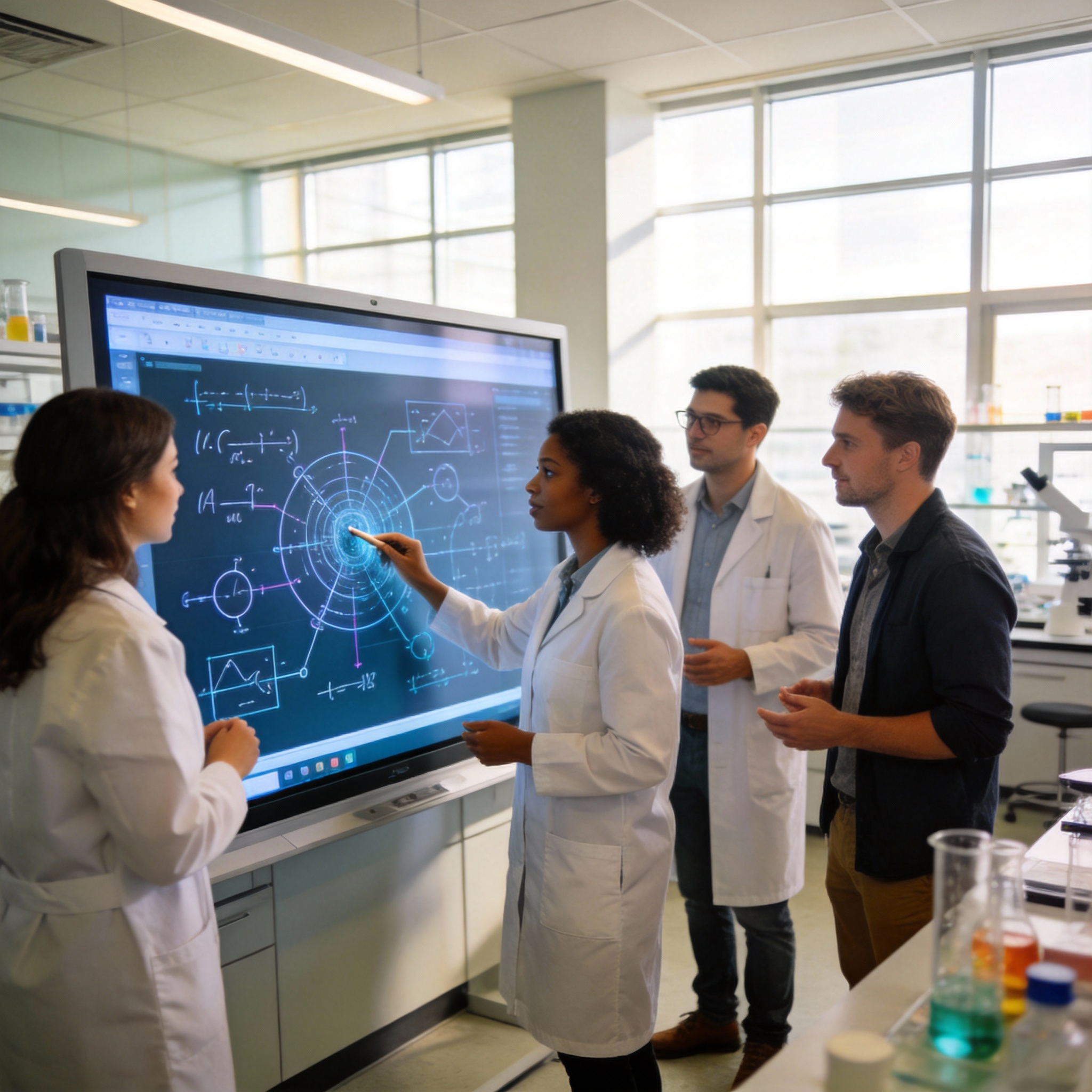
Diverse group of scientists collaborating around a large digital whiteboard in a modern lab.
OpenAI emphasized that Prism is completely free for anyone with a ChatGPT account, aiming to lower barriers to high-quality scientific tools. The company plans to roll out more advanced AI features through ChatGPT's paid plans in the future.
OpenAI anticipates that AI will significantly accelerate scientific discovery, with Prism serving as a foundational step in this transformation. The company expects AI to revolutionize software development by 2025 and the scientific field by 2026.
Stay Ahead of the AI Curve
Join 50,000+ subscribers getting the latest AI tools, trends, and tutorials delivered to their inbox weekly.
No spam, unsubscribe at any time.