
OpenAI Researcher Claims Codex Wrote 100% of Code, Built Server in Three Days

OpenAI researcher "Roon" has stated that the company's AI coding model, Codex, wrote 100% of the code for his projects. This claim follows an earlier assertion by Boris Cherny, creator of Claude Code, that his projects were entirely coded by Claude Code.

Tangled wires straightening into organized lines, symbolizing relief from manual coding.
Roon expressed relief at no longer having to program manually, noting that coding had always been a "painful, yet necessary path." He added that he was surprised by how quickly he adapted to not programming and did not miss it.
Codex Accelerates Development and Introduces New Features
An internal revelation from OpenAI suggests that Codex enabled the rapid construction of a server in three days and the launch of an application in three weeks. Additionally, numerous internal tools built and audited by Codex are reportedly awaiting deployment. This acceleration in product release is attributed to the AI's capabilities.
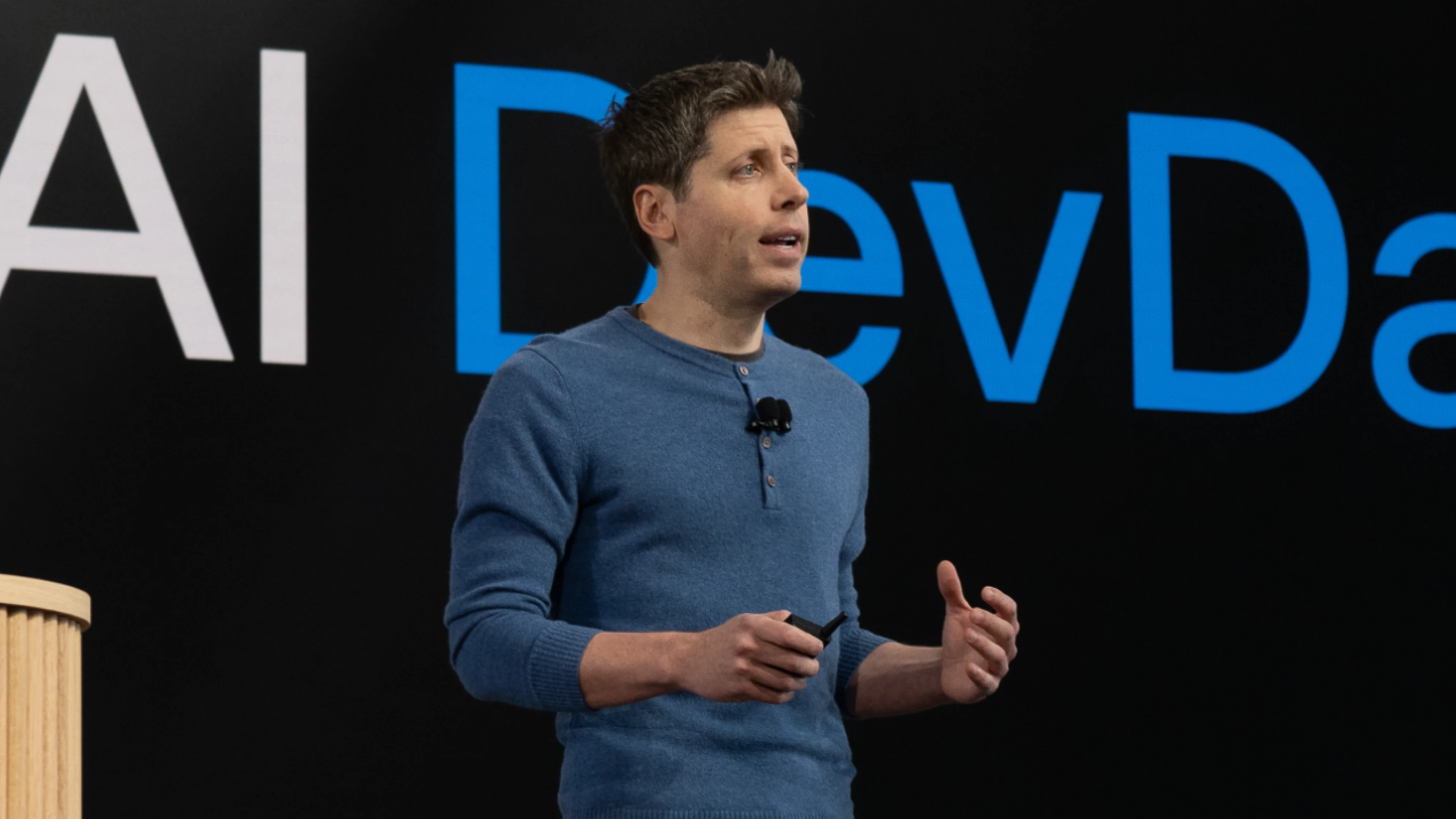
Sam Altman, CEO of OpenAI, in a professional setting.
Last weekend, OpenAI CEO Sam Altman announced that new products related to the Codex coding model would be released within the next month. Developers have begun to shift their sentiment, with some senior developers stating that GPT-5.2-Codex fulfills 90% of their requests on the first attempt. They noted that while Claude is effective, it occasionally inserts "bad code," whereas OpenAI's solution prioritizes an "out-of-the-box experience."
OpenAI recently updated its Codex Command Line Interface (CLI) to version 0.91.0, introducing a "Plan Mode." This mode breaks down programming tasks into two stages: understanding intent (clarifying goals, defining scope, identifying constraints, and establishing acceptance criteria) and generating technical specifications (creating a detailed implementation plan).
Plan Mode employs "evidence-first exploration," where Codex conducts targeted searches within the codebase to check configurations, schema structures, and program entry points before asking questions. It can also utilize various tools, sub-agents, and backend terminals to develop high-level implementation plans. When user input is required, Codex asks targeted, critical questions, often providing multiple-choice options with a recommended selection. A new request_user_input tool pauses execution to gather this feedback. If ambiguity is detected, Codex stops to confirm instructions rather than proceeding blindly.

Abstract flowchart illustrating Codex's 'Plan Mode' with intent and specification stages.
The development process now involves a user requesting a plan, the AI researching the codebase and planning, asking targeted questions, refining the plan, and then prompting for execution.
Challenges in AI-Driven Code Review
Despite the efficiency gains, concerns have emerged regarding code review in an AI-driven development environment. With AI generating numerous pull requests daily, human developers face an "extreme asymmetry between production and review." This can lead to reviewers being overwhelmed, potentially reducing code review to a formality and allowing "code blocks that seem to run but lack systematic thinking" to proliferate.

Human eye overwhelmed by a rapid cascade of digital code on multiple screens, symbolizing review asymmetry.
A paradox has also been observed: while developers' use of AI tools is increasing, their trust in these tools is decreasing. This is attributed to AI-generated code moving from being "obviously bad" to "subtly bad," referencing non-existent libraries or introducing obscure bugs. This leads to more pitfalls and a decline in trust as usage increases.
Experts warn of the "trivialization" of software engineering, where easily generated commits might overshadow the value of architectural changes requiring significant thought but no direct code output. The central question remains whether AI-generated code truly meets system requirements and if it can be effectively maintained.

Balance scale with 'Architectural Changes' outweighing numerous small 'commits', symbolizing trivialization of software engineering.
Implications for Developers and Non-Developers
For developers, AI coding tools are already integrated into the workflow, necessitating an understanding of how to use them without losing core value. The role of developers may shift from "moving code around" to more strategic thinking.
For non-developers, the boundary between technical and non-technical work is blurring. Tools like Claude Cowork are enabling new types of tasks, where the ability to clearly describe requirements may become a new form of programming language.
While OpenAI researchers and Claude Code creators claim 100% AI-generated code in their lab environments, this may not reflect production realities. The shift from "writing code" to "directing code writing" is accelerating and appears irreversible.
Stay Ahead of the AI Curve
Join 50,000+ subscribers getting the latest AI tools, trends, and tutorials delivered to their inbox weekly.
No spam, unsubscribe at any time.