
NVIDIA Isaac for Healthcare Unveils SO-ARM Workflow for Surgical Robot Development

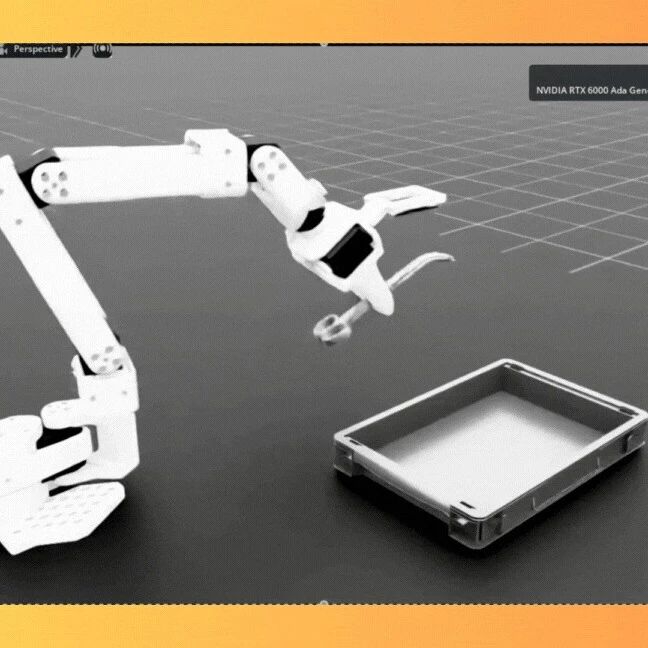
NVIDIA has released a new workflow within its Isaac for Healthcare framework, designed to accelerate the development and deployment of automated medical robots. The SO-ARM starter workflow, introduced in Isaac v0.4, provides an end-to-end toolchain for developers to build and validate surgical assistant robots, encompassing data collection, training, evaluation, and deployment on both simulated and real hardware.
The framework aims to address challenges in medical robotics, where simulation has historically been slow or difficult to transfer to real-world applications. Isaac for Healthcare integrates simulation technology to bridge data gaps and optimize robot skills before real-world deployment.
SO-ARM Starter Workflow Details
The SO-ARM starter workflow facilitates the creation of surgical assistant robots through a process that combines real and simulated data. This includes using the LeRobot platform and SO-ARM hardware for data collection, fine-tuning the GR00t N1.5 model, evaluating it in IsaacLab, and then deploying it to hardware.
The technical implementation involves a three-stage process:
Data Collection: Teleoperation demonstrations are gathered in both simulated and real environments using the SO101 system and the LeRobot platform.
Model Training: The GR00T N1.5 policy is fine-tuned on a mixed dataset, utilizing dual-camera visual input.
Policy Deployment: The trained model operates in real-time on physical hardware, communicating via the RTI DDS protocol.
Over 93% of the policy training data originates from simulated environments, highlighting the role of simulation in addressing the robot data gap.
Combined Simulation and Reality Training
The training methodology combines approximately 70 simulated demonstrations with 10–20 real-world demonstrations. This approach aims to leverage the cost-effectiveness and safety of simulation while incorporating the reliability of real data to ensure trained policies generalize effectively across diverse scenarios.
Hardware requirements for the workflow include a GPU with RT Cores (Ampere or newer) and at least 30GB of VRAM for GR00T N1.5 inference. The SO-ARM101 Follower, a 6-DOF high-precision robotic arm equipped with wrist and room cameras, is used alongside the SO-ARM101 Leader, a 6-DOF teleoperation controller for expert demonstrations. All simulation, training, and deployment tasks can be executed on a single DGX Spark system.
Data Collection and Model Training
Data collection in a real environment for SO-ARM101 hardware or any LeRobot-supported version is performed using specific Python commands to configure robot and teleoperation parameters, and define dataset details. For simulated environments, data can be collected with keyboard teleoperation or using the SO-ARM101 leader arm.
After data collection, both simulated and real data are converted and combined for training. The GR00T N1.5 model is fine-tuned on this mixed dataset, enabling it to process natural language instructions such as "prepare a scalpel for the surgeon" and control the robot accordingly. The latest version of LeRobot (0.4.0) supports native training of GR00t N1.5.
Simulation-Collection-Training-Evaluation Process
IsaacLab, since v0.3, supports a comprehensive "collect → train → evaluate → deploy" loop. This includes generating synthetic data, teleoperating robots, recording multi-camera views and robot states, and building diverse datasets. The platform integrates with reinforcement learning frameworks like PPO, allowing for simultaneous execution of thousands of simulated environments. It also offers built-in trajectory analysis, success rate metrics, and supports statistical validation. Models can be converted to TensorRT for optimized production deployment, supporting dynamic input shapes and multi-camera inference, with performance benchmarking tools to ensure real-time operation.
The SO-ARM starter workflow is available on GitHub, along with official documentation, the GR00T model page, hardware guides, and the LeRobot project.
Stay Ahead of the AI Curve
Join 50,000+ subscribers getting the latest AI tools, trends, and tutorials delivered to their inbox weekly.
No spam, unsubscribe at any time.