
NVIDIA Introduces DLSS 4.5 and AI PC Enhancements at CES 2026

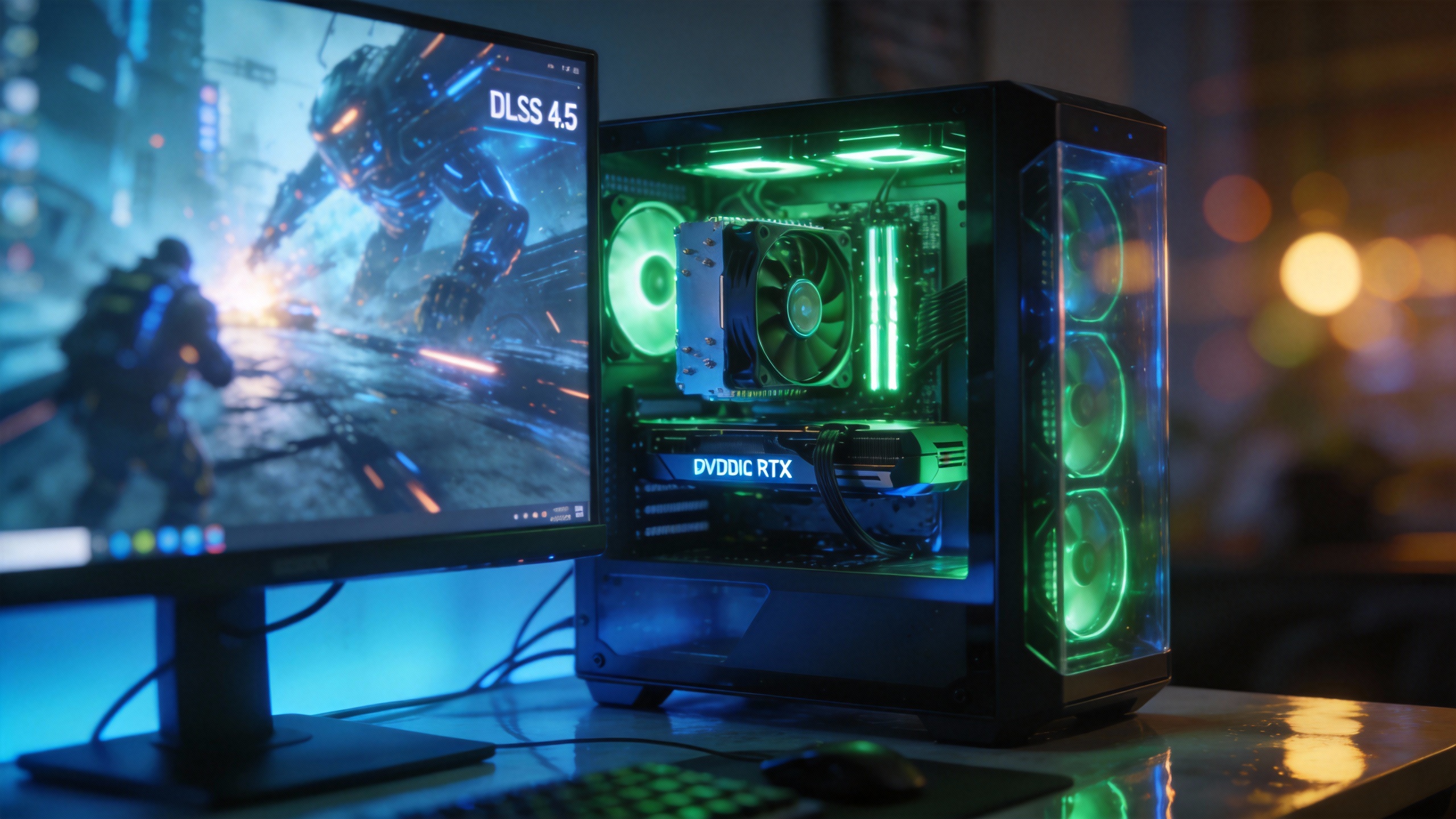
NVIDIA unveiled a series of software updates at CES 2026, including DLSS 4.5, RTX Remix, and advancements for AI PCs. These updates aim to improve gaming experiences and expand the utility of AI PCs.
Graphics and Gaming Innovations
DLSS 4.5, introduced at CES 2026, enhances image sharpness and visual stability in games compared to DLSS 4. It reduces video ghosting and produces cleaner edges, leading to more consistent image details, particularly in scenes with rapid motion or intricate geometry. Testing by users indicated improved clarity, even for small text elements.
A significant upgrade to frame generation in DLSS 4.5 includes a 6x multi-frame generation mode. This allows for the AI generation of up to five consecutive frames after one traditional frame rendering. This feature enables 240Hz 4K quality on RTX 50 series GPUs. Over 250 games and applications currently support DLSS 4 technology, with upcoming titles like "007 First Light" and "PRAGMATA" expected to integrate it.
DLSS 4.5 Super Resolution, which utilizes a second-generation transformer model, is accessible through the official NVIDIA app. The company recommends that users with 30-series graphics cards update their software for improved image quality. Developers can integrate new models using the updated DLSS SDK. The 6x multi-frame generation and dynamic frame generation features are exclusive to RTX 50 series GPUs and are scheduled for release later this spring.

Split-screen showing classic game graphics on left and path-traced, modernized version on right, illustrating RTX Remix.
NVIDIA also introduced RTX Remix, a modding platform designed to update the visuals of classic PC games. This platform allows developers to re-render graphics with path tracing, enabling older games to feature modern visual details. RTX Remix provides over 900 configurable settings for modders to trigger dynamic graphic effects based on in-game events. It allows for visual customization in over 165 classic games without requiring access to the original engine code, reducing the effort for creating remakes. The platform supports dynamic visuals that respond to game states, such as environmental changes, lighting effects, and real-time atmospheric adjustments.
Additionally, NVIDIA introduced ACE, a tool designed to transform non-player characters (NPCs) into interactive companions. ACE uses large AI models to simulate human-like perception, planning, and action, enabling NPCs to engage in free-form conversations with players. In a "Total War: Pharaoh" demonstration, a new dynamic AI advisor, powered by ACE, provided real-time, context-aware guidance based on the game's state and database information. This advisor can adapt its settings based on player actions while maintaining character consistency with the game's historical context. ACE can also enable NPCs to function as AI teammates, capable of issuing commands and conveying tactical plans. With long-term memory capabilities, these AI teammates can recall past interactions and incorporate them into their responses.
Abstract glowing AI NPC interacting with a blurred human player, symbolizing advanced AI in gaming.
Advancements for AI PCs
The year 2025 is anticipated to be a significant year for AI PCs, with on-device language models showing nearly a twofold improvement in accuracy compared to 2024, narrowing the performance gap with cloud-based large language models. AI PC development tools such as Ollama, ComfyUI, llama.cpp, and Unsloth are maturing, with their popularity doubling year-over-year and a tenfold increase in on-device model downloads compared to 2024.
NVIDIA's software upgrades at CES 2026 aim to enhance the performance of generative AI deployment on PCs and reduce VRAM consumption. Optimizations for PyTorch-CUDA and native support for NVFP4/FP8 precision in ComfyUI are expected to increase video and image generative AI performance by up to three times and decrease VRAM usage by 60%. RTX integration of video super-resolution into ComfyUI is designed to accelerate 4K video generation.
To address GPU VRAM limitations, NVIDIA collaborated with ComfyUI to improve its memory offloading capabilities. When enabled, ComfyUI can utilize system memory when VRAM is depleted, supporting more complex multi-node graphs on consumer-grade GPUs and enabling extended video generation with 8GB of VRAM.
For on-device language models, NVIDIA's new software package is projected to increase the inference performance of Ollama and llama.cpp by 35% and 30%, respectively. These improvements are particularly beneficial for Mixture-of-Experts (MoE) models. Related updates have been released, and llama.cpp has undergone usability optimizations to accelerate LLM loading. These acceleration effects will be available in the next version of LM Studio.
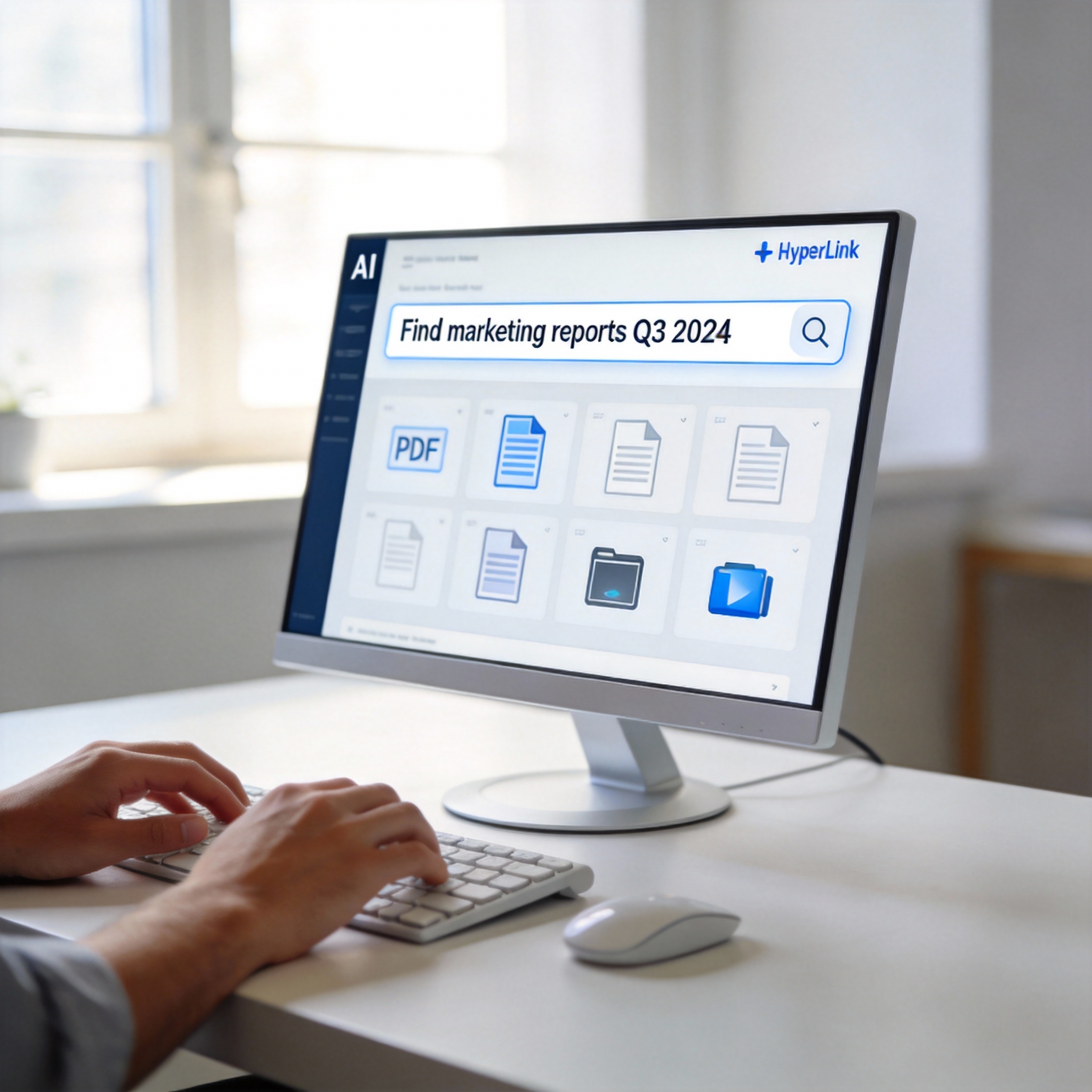
User interacting with an AI PC displaying a search interface, symbolizing Nexa.ai's HyperLink local search agent.
Nexa.ai's local search agent, HyperLink, aims to transform AI PCs into searchable knowledge bases. This tool allows users to ask questions in natural language and locate specific lines within documents. HyperLink scans and indexes documents, slides, PDFs, and images, enabling searches based on content rather than filenames. All data processing and storage occur locally on the user's computer to ensure privacy. At CES, Nexa.ai released a new version of Hyperlink with added support for video content, allowing users to search for objects, actions, and and speech within videos.
HyperLink also supports RTX acceleration. On an RTX 5090 graphics card, indexing 1GB of text and image files takes 3 seconds with a 3-second response time. In contrast, on a CPU, this process takes one hour per GB with a 90-second response time. Another feature for AI PC users is NVIDIA Broadcast, which enhances PC microphone and camera quality using AI for real-time adjustments, suitable for live streaming and video conferencing. Version 2.1, compatible with RTX 3060 and higher-end consumer GPUs, offers improved handling of lighting conditions, broader color temperature control, and updated HDRi base maps for professional live streaming aesthetics.
NVIDIA's announcements at CES 2026 focused on advancing PC capabilities through DLSS 4.5, RTX Remix, and enhancements for AI PCs, encompassing improvements in graphics, interaction, and local AI processing.
Stay Ahead of the AI Curve
Join 50,000+ subscribers getting the latest AI tools, trends, and tutorials delivered to their inbox weekly.
No spam, unsubscribe at any time.