
NVIDIA Introduces 3D Generalist Model for Building Actionable Virtual Worlds


NVIDIA has unveiled its "3D Generalist" model, a new AI system designed to construct detailed and interactive 3D environments from text descriptions. This development marks a shift from AI models that primarily generate images or videos to those capable of building virtual worlds that adhere to physical laws, a capability NVIDIA refers to as "Physical AI."
The company's CEO, Jensen Huang, has consistently advocated for AI that understands and interacts with the physical world, contrasting it with models that generate visually appealing but physically unrealistic content. This new model, described in NVIDIA's first research paper of the year, aims to bridge this gap by enabling AI to not only describe but also build and modify 3D environments with physical properties.
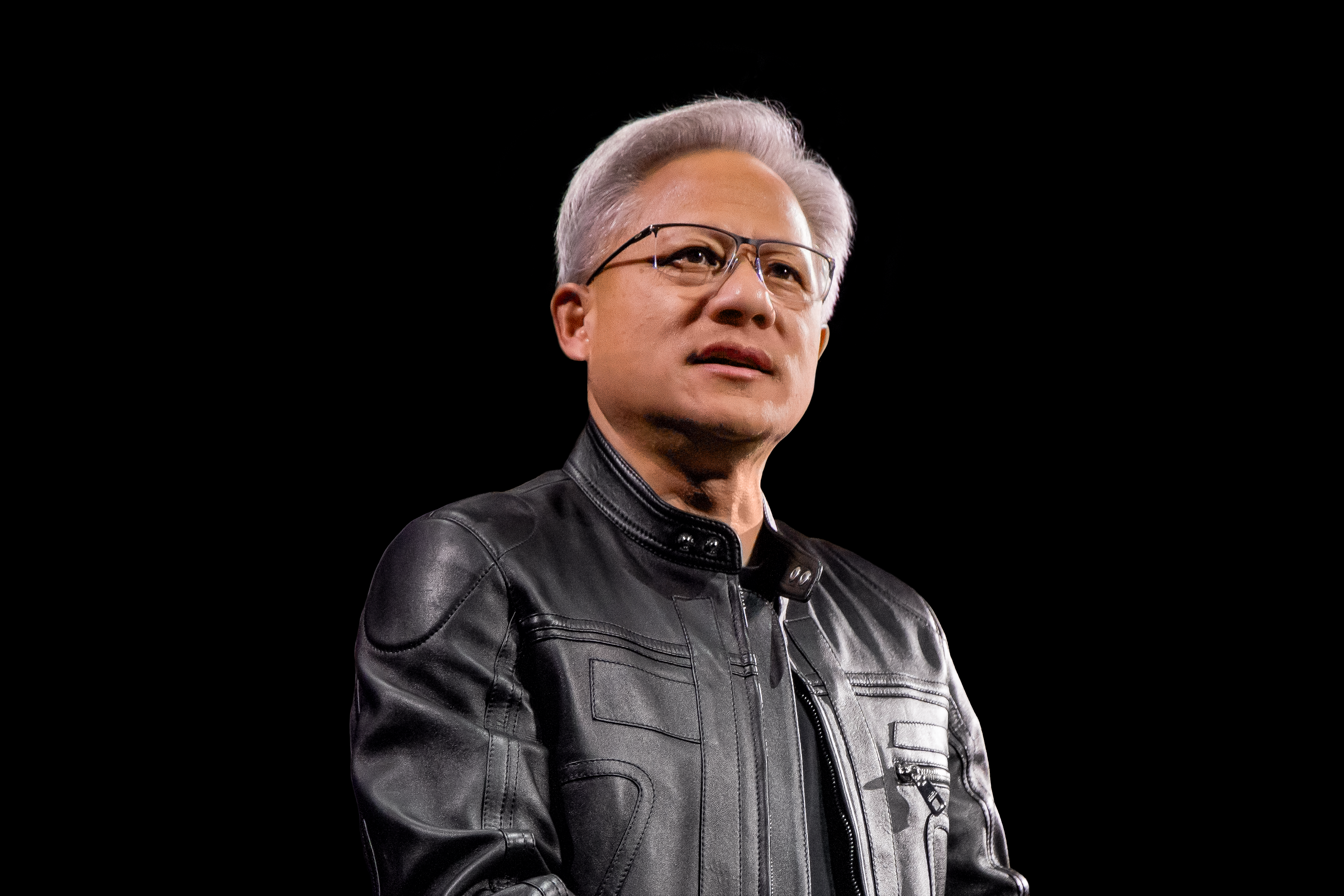
Portrait of Jensen Huang, CEO of NVIDIA, emphasizing his vision for AI that interacts with the physical world.
Crafting Cyber Homes with Vision-Language-Action Models
The paper, titled "3D Generalist: Vision-Language-Action Models for Crafting 3D Worlds," details a collaboration between NVIDIA and Stanford University. It was presented at the 13th International Conference on 3D Vision, held in Vancouver, British Columbia, in March 2026.
Central to the model's functionality is its "Action" component, distinguishing it from previous AI systems focused on image or video generation. Unlike models that merely imitate visual signals, NVIDIA's Vision-Language-Action (VLA) model functions as an "all-rounder." Users can input a sentence, and the 3D-GENERALIST can output a complete 3D layout of a house, including materials, fixtures like doors and windows, 3D assets, and lighting configurations. This process is framed as a sequential decision-making task, allowing for continuous refinement and optimization of the 3D environments.

Digital blueprint evolving into a realistic 3D house interior, illustrating the Vision-Language-Action model's ability to generate complete environments.
The framework begins with panoramic environment generation. A panoramic diffusion model generates a 360-degree image as a guide, which is then used to construct the 3D environment through inverse graphics techniques. This process involves several steps:
Room Layout Estimation: The system infers the basic room structure, including walls, floors, and ceilings, from panoramic images using the HorizonNet model.
Fixture Segmentation: Grounded SAM technology is employed to segment windows and doors within the environment.
Vision-Language Model Annotation: A vision-language model, such as GPT-4o, analyzes segmented areas to determine fixture types (e.g., single door, sliding door) and material properties.
Procedural Generation: Rooms, doors, and windows are progressively constructed based on their inferred 3D positions and characteristics.
The 3D-Generalist model utilizes diffusion models for panoramic image generation and an inverse graphics pipeline for structural creation. Its VLA model generates code for constructing and modifying various aspects of the 3D environment, including materials, lighting, assets, and layout. This VLA is fine-tuned through a self-improving training loop to enhance alignment with user prompts and exhibits self-correction capabilities. The research team also trained a visual foundation model using synthetic data rendered from 3D environments generated by 3D-Generalist, demonstrating performance comparable to that achievable with significantly larger real-world datasets.

Interconnected neural network pathways merging with a 3D architectural schematic, symbolizing the integration of AI and 3D environment generation.
Implications for Embodied AI and Robotics
NVIDIA views this development as a critical step in its "Embodied AI" roadmap, with significant implications for robotics. The company's strategy focuses on training general-purpose robots, such as Tesla Optimus or NVIDIA Project GR00T, to interact with complex physical environments.
Training robots in the real world is often slow, costly, and carries risks of damage. The 3D Generalist model addresses this by enabling the creation of millions of "virtual parallel universes" with varied physical parameters. For instance, a robot can be trained in scenarios with slippery floors and dim lighting, or carpeted floors with strong illumination, or environments cluttered with obstacles.
Within NVIDIA's Omniverse ecosystem, tools like Omniverse Replicator facilitate large-scale synthetic data generation and domain randomization, while Isaac Lab provides embodied agents for robot simulation in these generated environments. This approach allows a robot's AI to undergo extensive training in a virtual setting, experiencing the equivalent of hundreds of years of human learning in a single day, thereby accelerating the "Sim-to-Real" (simulation to reality) transition.
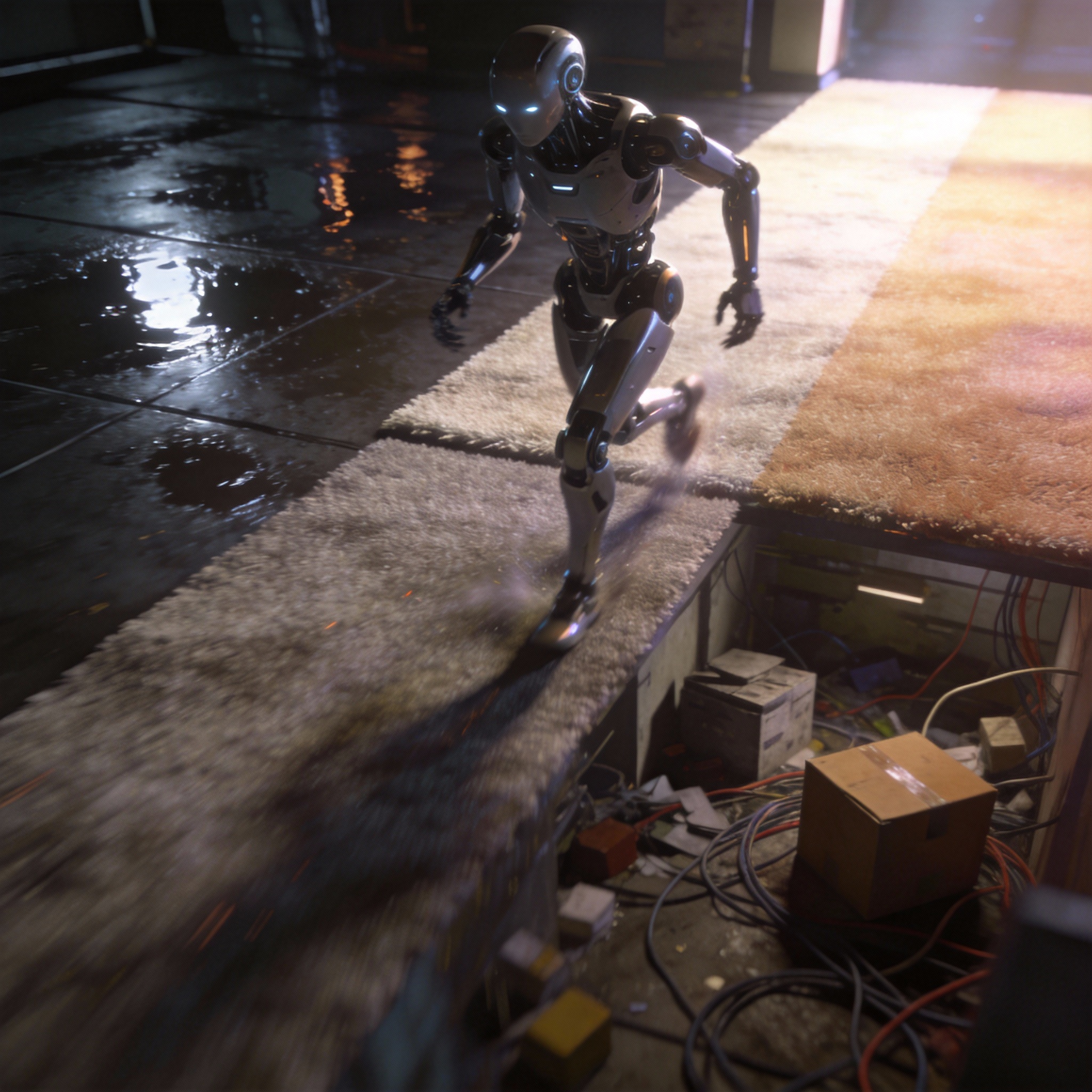
Humanoid robot training in a diverse virtual environment with varying floor conditions and lighting, illustrating accelerated 'Sim-to-Real' learning.
This advancement suggests a future where AI not only comprehends human language and vision but also masters the principles of constructing and interacting with the physical world. The distinction between virtual and real environments may diminish as AI creates virtual worlds with realistic gravity, lighting, and causality, and robots in the real world benefit from intelligence honed in vast virtual simulations.
Stay Ahead of the AI Curve
Join 50,000+ subscribers getting the latest AI tools, trends, and tutorials delivered to their inbox weekly.
No spam, unsubscribe at any time.