
Musk's Early AI Launch Strategy: Self-Generated Power to Gain $10 Billion Revenue Edge


Elon Musk's decision to rapidly deploy a supercomputing cluster with 100,000 GPUs in four months during mid-2024, bypassing traditional grid connection timelines, was driven by a clear financial calculation. According to information reviewed by toolmesh.ai, this approach, which involved generating electricity onsite, allowed xAI to launch six months earlier, potentially earning an additional $10 billion.
Normally, connecting to the grid for a 400MW data center could take three to five years, with power not available until 2028. Musk's solution, as detailed in a SemiAnalysis report, involved renting truck-mounted gas turbines, connecting them to natural gas pipelines, and initiating power supply within weeks. xAI's Memphis campus now reportedly features over 500MW of self-built power generation capacity. While self-generated power is more expensive and requires managing operational issues, Musk's analysis indicated that the revenue generated by an earlier launch significantly outweighed the increased electricity costs. This strategy has spurred a "bring your own generator" (BYOG) trend within the AI industry, with OpenAI and Oracle ordering a 2.3GW self-built power plant in Texas, and Meta's Ohio project assembling various generator types to expedite operations.
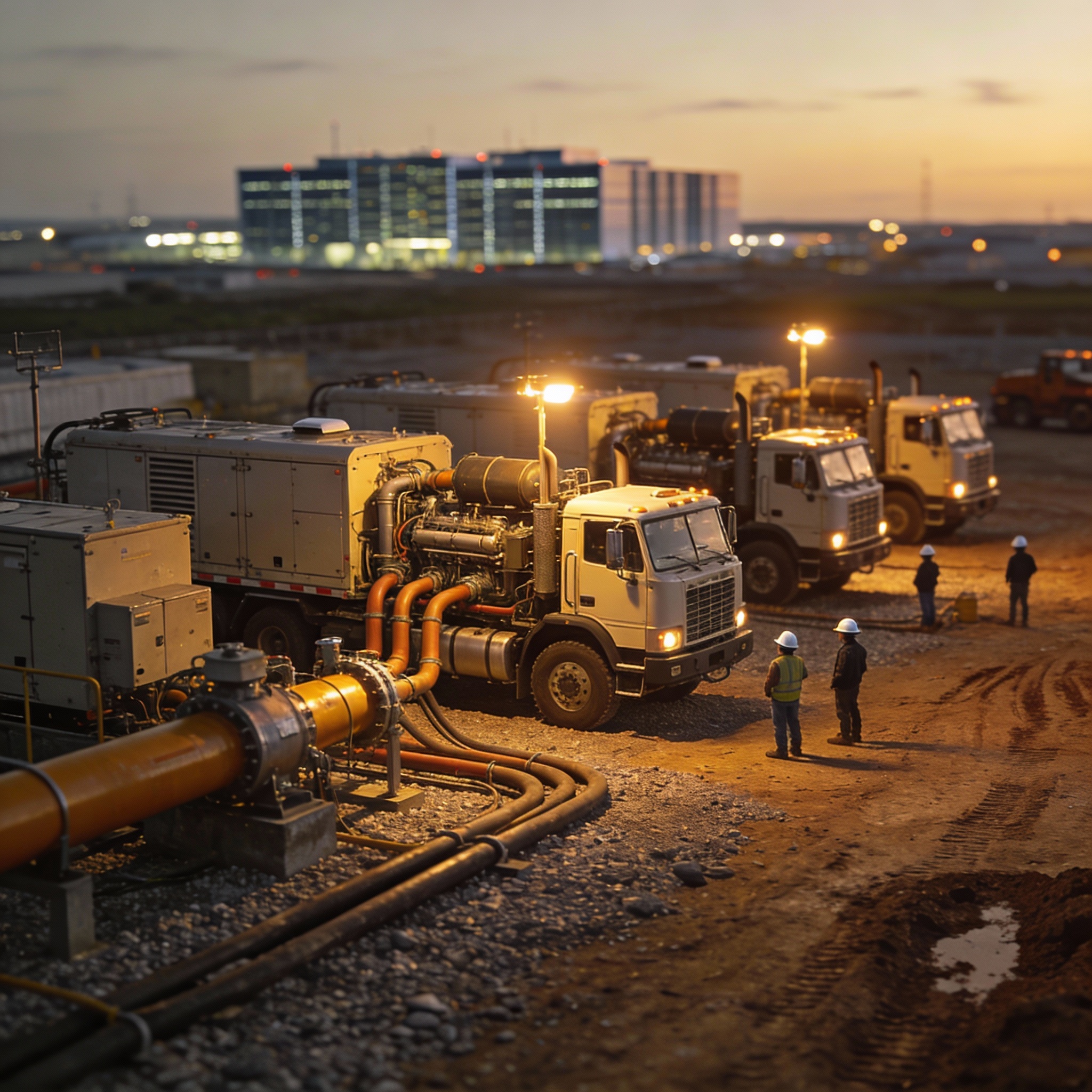
Truck-mounted gas turbines generating power at a temporary site next to a data center, illuminated at dusk.
Grid Limitations Drive AI Power Solutions
The surge in AI development has exposed the limitations of existing power grids. While the American power grid is robust and currently supports most AI clusters, including those for Microsoft, Google, and Amazon, these projects typically secured power permits before the "AI gold rush" following ChatGPT's popularity.
Data from ERCOT, the Texas grid operator, shows a monthly influx of data center power applications totaling dozens of gigawatts. However, only slightly over 1GW was approved in the past year. Grid operators face challenges in approving new connections due to the need for precise supply-demand balance, where even small discrepancies can cause widespread blackouts. Each large user connection requires complex engineering evaluations to prevent system failures. Additionally, a "vicious cycle" of speculative applications has emerged, with developers submitting multiple requests across different operators, sometimes without even owning the land. This has led to backlogs, such as one in Ohio with 35GW of applications, 68% of which lack land ownership, extending the average wait time for power connection to five years. AI companies, however, cannot afford such delays.

An illuminated digital map showing a strained electrical grid with numerous data center icons, highlighting power limitations.
The Logic of "Bridging Power"
The core principle of BYOG is to avoid grid delays by generating power independently. A more sophisticated approach, "bridging power," involves using self-generated power to bring a data center online while simultaneously queuing for grid connection. Once grid power is available, these self-generation units can transition to backup roles.
This strategy offers two key advantages. First, the time value is substantial; a 200MW AI data center launching six months earlier can generate billions in additional revenue. In the competitive AI landscape, early market entry is crucial for capturing market share. Second, it eliminates the need for separate diesel generators for backup, as the gas-fired units can serve both primary and backup functions. While self-built power plants incur higher costs and require managing permits, natural gas supply, and operations, they represent a pragmatic choice for well-funded, time-sensitive large companies.
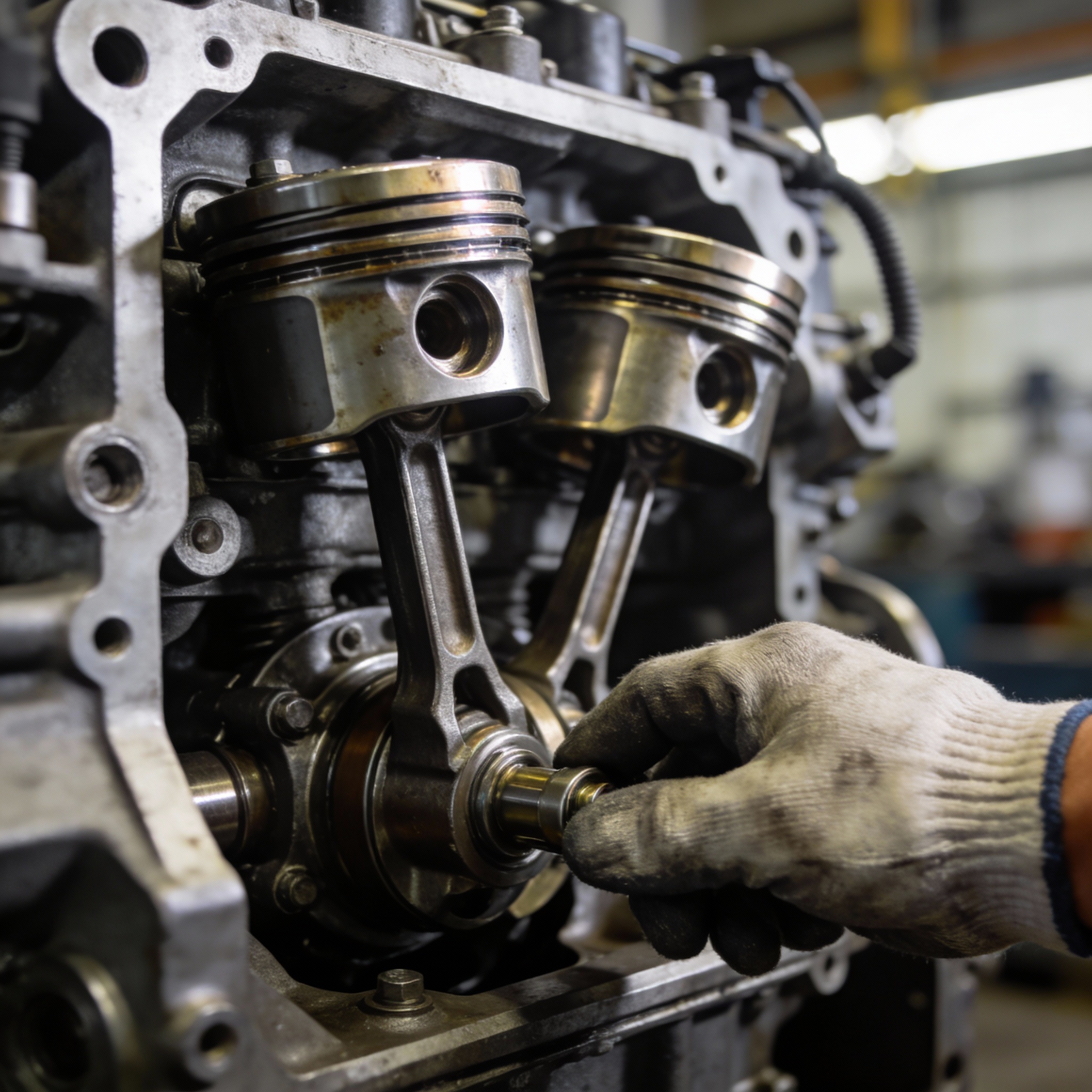
Detailed close-up of a reciprocating internal combustion engine, highlighting its mechanical complexity and robust design.
Diverse Power Generation Equipment Options
Self-built power plants utilize various equipment types. Aero-derivative gas turbines, essentially modified jet engines, are compact and can be rapidly deployed. For example, GE's LM2500 is derived from Boeing 747 and F-18 engines. These 30MW units can be trucked in and operational within weeks, reaching full power in 5 to 10 minutes. However, they are expensive, costing $1,700 to $2,000 per kilowatt, with delivery times of 18 to 36 months. Boom Supersonic, a supersonic aircraft company, has also entered this market with its Superpower gas turbine, securing a 1.2GW order from Crusoe.
Industrial gas turbines, designed specifically for ground power, offer lower costs but slower startup times. Reciprocating internal combustion engines, scaled-up car engines, have lower individual power output but are simpler to maintain and more tolerant of fuel impurities. VoltaGrid uses these units for "energy as a service," deploying truck-mounted generators. xAI's early Colossus 1 cluster utilized 34 such units from VoltaGrid. Fuel cells, primarily from Bloom Energy, generate electricity electrochemically without combustion, offering environmental benefits and rapid deployment. However, they are the most expensive, at $3,000 to $4,000 per kilowatt, and require periodic component replacement. Heavy-duty gas turbines, used in traditional power plants, offer high efficiency but have long delivery and installation times, making them a long-term solution rather than an immediate one.
Operational Challenges of Self-Built Power
Operating a self-built power plant presents several challenges. Redundancy is critical to match the grid's 99.93% availability. A 200MW data center might require 26 11MW reciprocating generators, with 23 active and three as backup. A VoltaGrid project in Texas, for instance, overspecified its power generation capacity by 64% for a 1.4GW data center. Meta's Socrates South project in Ohio used a mix of five different generator types, totaling 306MW for a 200MW load, indicating a "grab whatever you can get" approach.
Load fluctuation is another issue. AI training power consumption can vary by tens of megawatts within milliseconds. Insufficient system inertia can cause frequency jumps and protective tripping. Solutions include synchronous condensers, flywheel energy storage, and battery energy storage systems. xAI addresses this with Tesla Megapack batteries to smooth loads and provide power during generator startup. Permitting, while bypassing grid approvals, still requires environmental department scrutiny, particularly for air pollutant emissions from gas-fired generation. Even in Texas, this process can take over a year. Oracle and Stargate's GW-scale project faced delays due to permit issues. xAI's "Musk-like" response was to site its project on the Tennessee-Mississippi border, applying to both states simultaneously and building where approval was granted first.
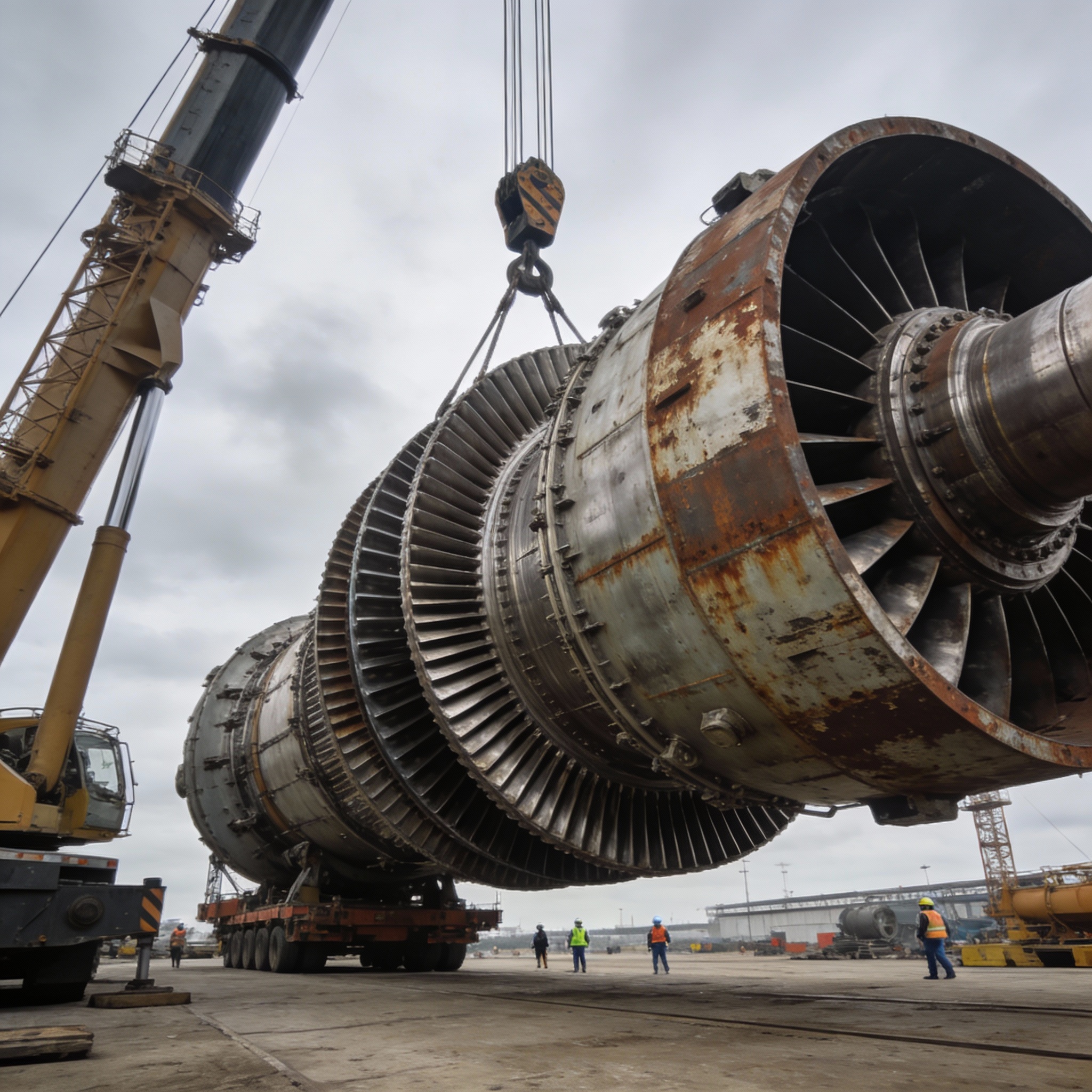
A massive gas turbine component being lifted by a crane in an industrial yard, illustrating supply chain challenges.
Supply Chain Bottlenecks and New Entrants
The supply chain for gas turbines faces historical bottlenecks. Delivery times are at record highs, with orders for major manufacturers like GE Vernova, Siemens Energy, and Mitsubishi Heavy Industries booked until 2028 or 2029. This reluctance to expand production stems from two previous industry downturns: the dot-com bubble burst around 2001, which led to a collapse in demand after a period of frantic ordering, and a slump from 2017 to 2022 due to the clean energy transition and economic slowdown. These experiences have instilled caution, leading manufacturers to question if the current AI-driven demand is another bubble. While GE plans to increase capacity to 24GW per year, this is merely a return to 2007-2016 levels, not a significant expansion. Siemens has explicitly stated no increase in factory floor space.
A deeper bottleneck lies in core component manufacturing. Turbine blades, requiring high-end materials and complex casting, are produced by only a few global suppliers who also serve civil aviation and military aircraft. These suppliers, having experienced order collapses during COVID, are hesitant to expand rapidly. Additionally, the logistics of transporting heavy-duty gas turbine components, weighing hundreds of tons, present another bottleneck. Smaller aero-derivative gas turbines and reciprocating engines face fewer supply constraints due to easier transport and less reliance on rare earth materials.
In response to tight supplies, new players are emerging. ProEnergy refurbishes retired Boeing 747 jet engines into generator sets. Boom Supersonic, originally a supersonic jet manufacturer, adapted its engine design for power generation, launching the Superpower gas turbine and securing a 1.2GW order. Marine engine manufacturer Wärtsilä has also entered the market, recognizing the similarity between engines for cruise ships and data centers, signing 800MW of contracts for US data centers.
Implications for the AI Industry
Electricity has become the primary bottleneck for AI development, surpassing chips and data. The "speed is the moat" philosophy is reshaping infrastructure, with AI companies willing to accept higher costs and operational complexities for earlier market entry. This "time value first" mindset contrasts with the "cost efficiency first" approach of traditional data centers. AI companies are increasingly acting as "quasi-power companies," seeking to control their energy supply rather than solely relying on the grid. This vertical integration mirrors the internet companies' past efforts to build their own fiber optic networks. In the AI race, speed is paramount.
Stay Ahead of the AI Curve
Join 50,000+ subscribers getting the latest AI tools, trends, and tutorials delivered to their inbox weekly.
No spam, unsubscribe at any time.