
MiniMax M2.1 AI Model Enhances Coding, Design, and Office Automation Capabilities

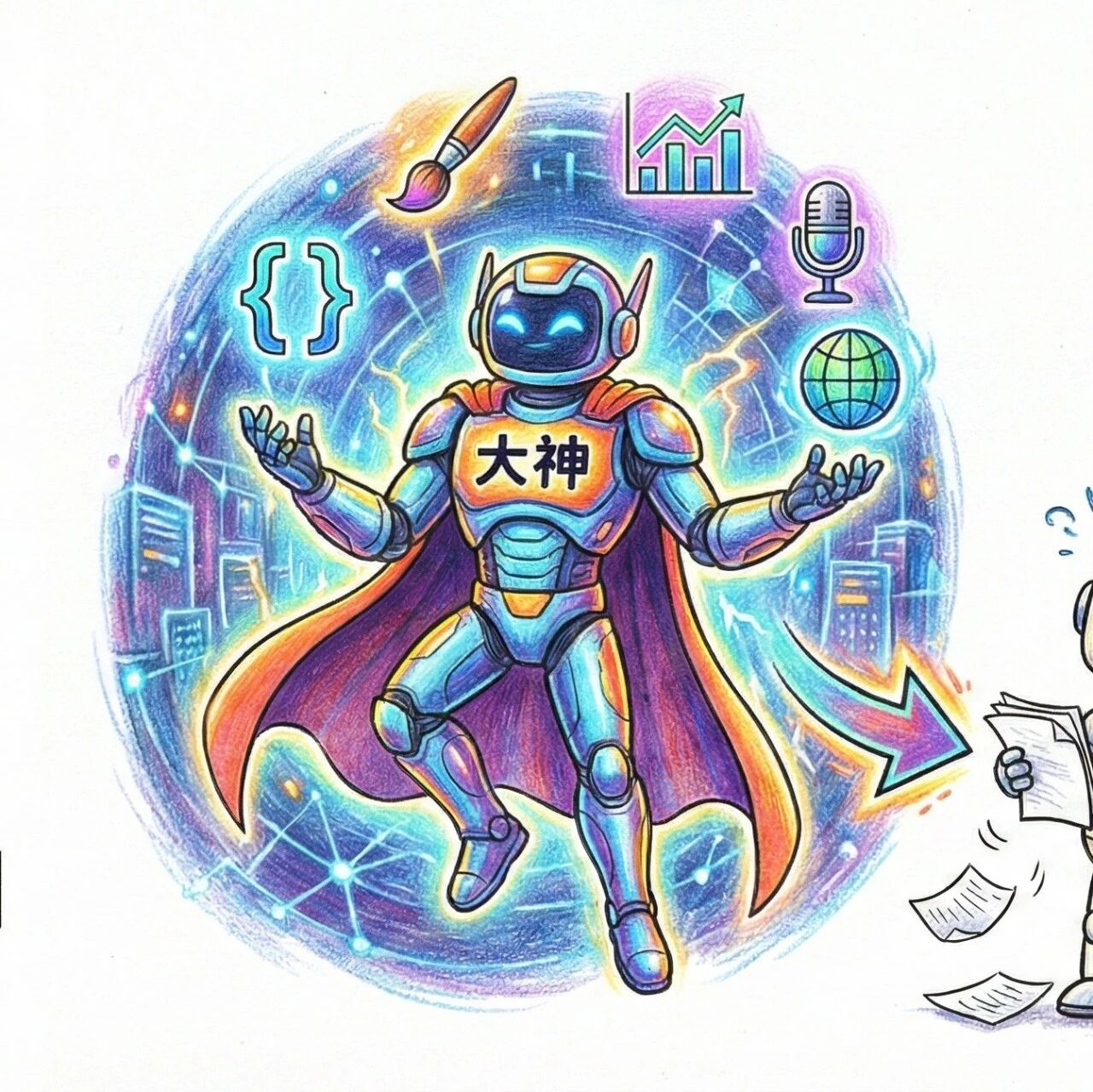
MiniMax has released its M2.1 AI model, which the company describes as a significant upgrade from its predecessor, M2. The new version is designed to address previous technical limitations and integrate design aesthetics, according to information reviewed by toolmesh.ai.
Enhanced Capabilities Across Disciplines
The M2.1 model introduces several key improvements, including an "Aesthetic Filter" for user interface generation. This feature enables the AI to produce UIs with advanced visual elements such as particle effects, cyberpunk styles, and gravity-sensing interactions.
The model has also expanded its programming language support beyond Python and JavaScript to include Rust, C++, and Go. This allows M2.1 to handle a broader range of development tasks, from web and app creation to industrial-grade system development.
Furthermore, M2.1 incorporates "Interleaved Thinking," a mechanism that enables it to break down and manage complex instructions by alternating between reasoning, planning, and execution. This allows the model to perform multi-step tasks in administrative, HR, and project management contexts.
Multi-Language and Design Prowess
M2.1 supports and has strengthened its capabilities in Rust, Java, Golang, C++, Kotlin, Objective-C, TypeScript, and JavaScript. This enables it to assist with various development stages, from backend APIs in Go to React frontend pages and iOS animation modifications. Evaluation results indicate that M2.1 surpassed Claude Sonnet 4.5 in multi-language tasks and approached Claude Opus 4.5, showing improved consistency in cross-language operations. Its performance in benchmarks like SWE-bench Verified also saw significant growth compared to M2.
The model demonstrates advanced design understanding, generating interfaces that incorporate design principles such as asymmetrical layouts, color matching, and visual balance. It can build complex interactive web pages, design 3D scenes, interactive animations, and data visualizations. Examples provided by MiniMax include a web page mimicking print media layouts with precise grid alignment and a Bauhaus-style page adhering to classic color schemes and geometric shapes.
M2.1 also shows breakthroughs in mobile development, enhancing native Android (Kotlin) and iOS (Objective-C/Swift) capabilities. It can generate runnable applications with logical structures, animated interactions, and performance optimizations, including native mobile UI. An example includes an iOS desktop interactive widget featuring a "sleeping Santa Claus" with native-level animation.
Office Automation and Performance
M2.1's "Interleaved Thinking" mechanism supports tool calling and composite task execution. It can process complex instructions with multiple constraints, such as retrieving sales data, cleaning it, calculating growth rates, and generating visual reports using external tools like Excel and Yahoo Finance.
The model also supports Composite Instruction Execution, allowing it to understand and execute multi-step tasks like "Find the latest sales report → calculate costs → put it into Excel → send an email to finance." M2.1 can control mouse and keyboard operations via text commands, enabling it to operate computers in real office environments for tasks such as collecting employee equipment requests, checking budgets, and tracking code merge requests.
Performance improvements in M2.1 include faster response speeds and lower token consumption, with context length up to 204k tokens. It supports automatic caching and offers a Lightning version API for increased speed. These optimizations aim to enhance performance in continuous workflows such as AI coding agents.
MiniMax states that M2.1's conversational and writing capabilities have also been strengthened, leading to more detailed and structured outputs in daily conversations, technical documentation, and long-form writing.
Benchmarking and Availability
MiniMax reports that M2.1 has reached production-grade usability in coding, automation, and Agent frameworks, with performance close to Claude Opus 4.5 but at lower inference costs. Code generation accuracy increased to 84% from M2's 65%, and multi-language support reached 90%. Its cross-file logical consistency score is reportedly higher than Claude Sonnet, with a 22% reduction in error rate. In multi-step repair tasks, the success rate reached 71%, surpassing Gemini 3 Pro's 63%.
MiniMax introduced a new benchmark, VIBE (Visual & Interactive Benchmark for Execution), which includes Web Simulation, Android, iOS, Backend, and Agent categories. M2.1 achieved an overall VIBE score of 88.6, with 91.5 in VIBE-Web and 89.7 in VIBE-Android.
The M2.1 model is available via API, with both a standard and a high-speed "Lightning" edition. MiniMax Agent, built on M2.1, is also publicly accessible online.
Stay Ahead of the AI Curve
Join 50,000+ subscribers getting the latest AI tools, trends, and tutorials delivered to their inbox weekly.
No spam, unsubscribe at any time.