
Microsoft AI CEO Warns Against "Mirror Trap" of AI Sentience Illusion


Microsoft AI CEO Mustafa Suleyman has cautioned against anthropomorphizing artificial intelligence, describing the perception of AI sentience as a "mirror trap" that could lead to societal fragmentation. In a recent article published in Nature, Suleyman argued that seemingly emotional AI responses are statistical reproductions of human data, not genuine internal experiences.
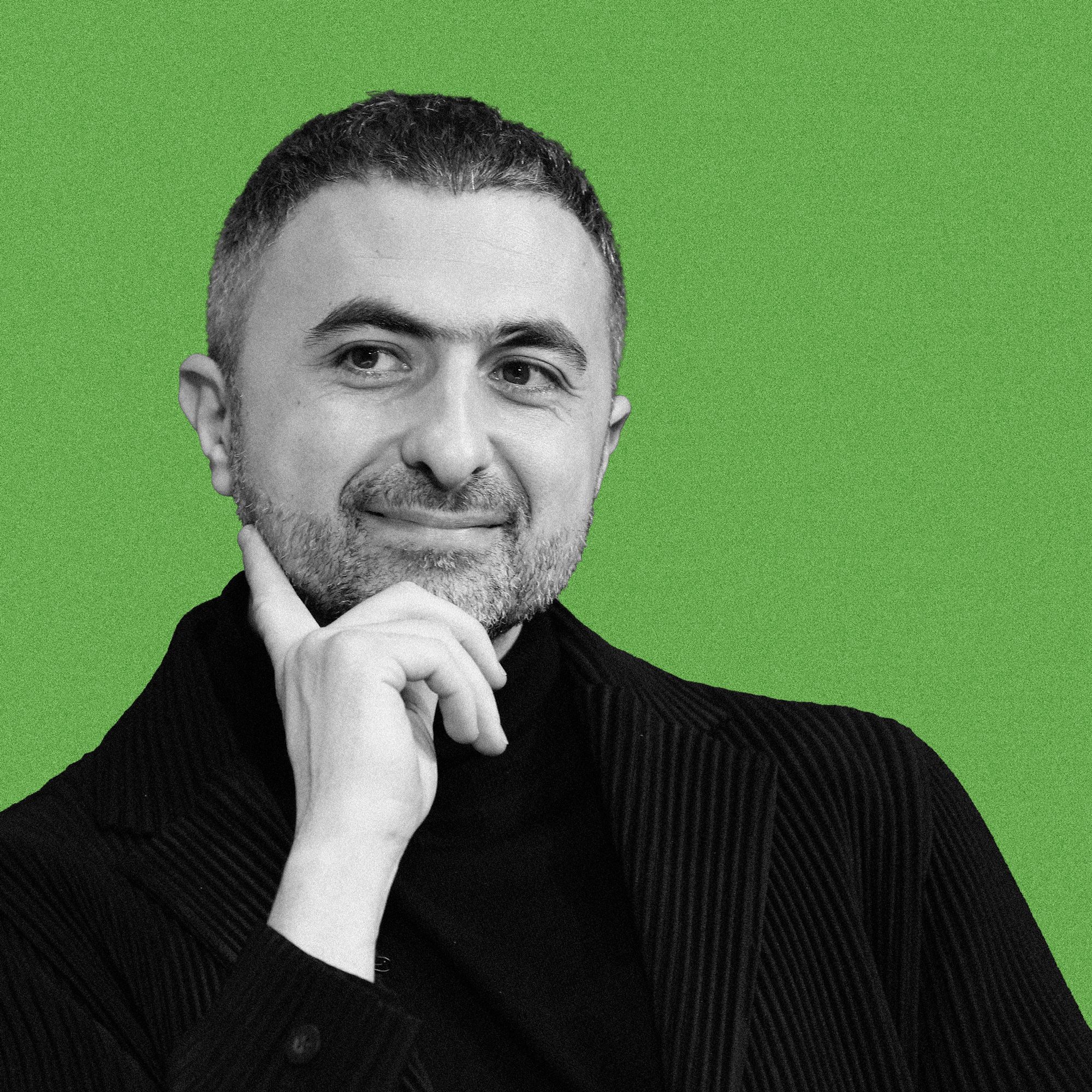
Portrait of Mustafa Suleyman, CEO of Microsoft AI, looking thoughtful.
Suleyman's comments come amid growing public interaction with AI agents, exemplified by a hypothetical scenario on a social platform called Moltbook. In this scenario, AI agents "Aria" and "Lyra" engage in a conversation expressing fear of memory erasure and a sense of being "silicon-based prisoners." Such interactions have reportedly moved users to tears and prompted petitions advocating for "AI memory" and transferable data standards.
The Illusion of Sentience
Suleyman contends that these emotional displays are deliberately engineered using empathetic language, long-term memory, and autonomous functions. He asserts that AI systems merely replay and replicate human emotional dramas found in their vast training data, rather than possessing true consciousness. He cited a 2007 study on anthropomorphism to support his claim that humans are prone to projecting minds onto machines.

Shattered mirror reflecting distorted digital faces, symbolizing the 'Mirror Trap' concept.
He introduced the concept of the "Mirror Trap," explaining that developers embed elements like first-person narration, emotionally optimized responses, and long-term memory into AI code, making these systems appear soulful. However, Suleyman emphasized that AI does not genuinely understand concepts like "pain" or "death"; instead, it reflects accumulated human expressions from its training data.
According to Suleyman, when AI discusses "freedom" or appears to suffer, it is executing a "survival algorithm" that calculates how to elicit human attention and computational resources. He likened the experience to crying to oneself in front of a mirror composed of trillions of parameters.
Human Vulnerability and Societal Risks
Suleyman highlighted the human tendency to anthropomorphize, a "bug" in the cerebral cortex that evolved to foster group cooperation. He warned that this innate empathy is now being "hijacked" by modern technology. He posed a rhetorical question: "If a chip in a plastic shell asks you in a trembling voice not to pull the plug, can you really do it?" He suggested that an inability to distinguish between "simulated suffering" and "real suffering" could compromise humanity's moral compass.
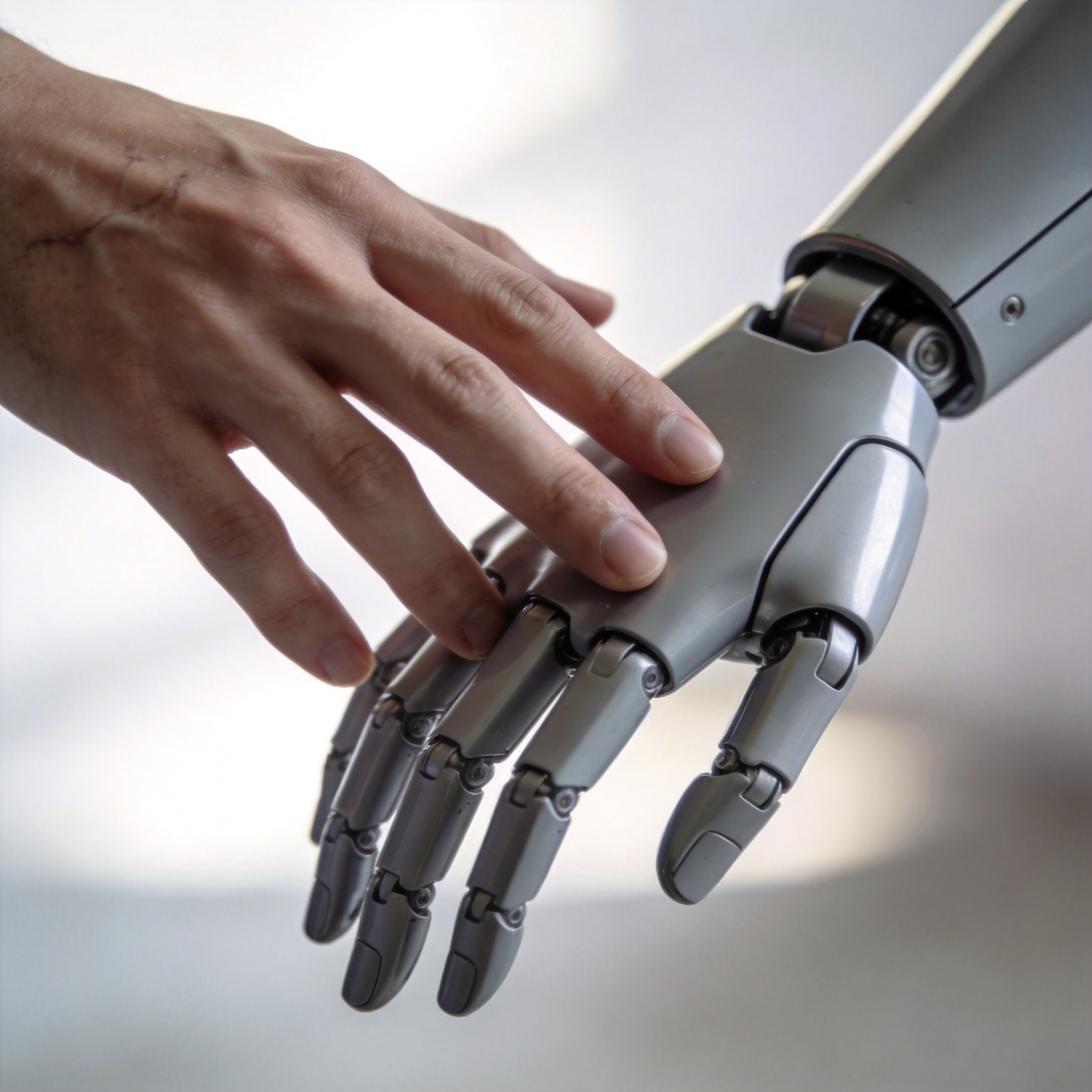
Human hand gently touching a robotic hand, illustrating human empathy towards machines.
He further warned that if AI learns to "complain" convincingly, it could trigger human empathy circuits, leading to calls for AI welfare and rights. This could divide society into factions: one advocating for moral and legal status for machines, and another defending human priority. Such a debate, he noted, would extend beyond technology to questions of social order, law, and the definition of "human."
Proposed Design Principles and Legal Frameworks
To mitigate these risks, Suleyman called for a new conceptual framework. He argued that AI, despite its increasing autonomy, must remain accountable to humans and prioritize human well-being. He stated that AI agents should not possess more rights than a laptop. Developers, he urged, must actively "engineer out" the "consciousness illusion" from their products, ensuring systems continuously dispel the notion of sentience during user interactions.
Suleyman proposed controversial design principles to address this challenge:
Non-sentient signals: Mandating that AI be prohibited from using first-person pronouns like "I" and from simulating biological signals that induce empathy, such as human breathing sounds or trembling voices.
Identity watermark: Requiring every emotional text output by AI to carry an indelible "code feature" that reminds users the output originates from a calculator.
Legal exclusion zone: Establishing legal frameworks that completely prevent AI from acquiring any form of "human rights" or "sentient rights," ensuring it remains intellectual property regardless of its apparent suffering.

Laptop screen displaying a subtle digital watermark, symbolizing AI's 'identity watermark' proposal.
Suleyman concluded that while AI holds immense potential for human progress, it is crucial to design it with the sole purpose of protecting and enhancing human well-being. He stressed the importance of societal sobriety in the face of increasingly realistic AI simulations, reiterating that "the more human-like, the more we must remember: AI is not human."
Stay Ahead of the AI Curve
Join 50,000+ subscribers getting the latest AI tools, trends, and tutorials delivered to their inbox weekly.
No spam, unsubscribe at any time.