
Kimi K2.5 AI Model Enhances Front-End Design and Video-Based Code Generation

Kimi has released its K2.5 model, which features improved front-end aesthetics and expanded multimodal capabilities, including enhanced image recognition and new video recognition support. The model can generate visually appealing web pages, a significant advancement over previous AI-generated designs.

Designer's desk with laptop showing AI-generated web page and tablet with design sketch, illustrating K2.5's use.
The K2.5 model aims to assist both designers and general users. Designers can leverage it to refine and complete their envisioned designs by providing detailed prompts and drafts. For general users, the model simplifies web page creation by allowing direct content input without requiring extensive prompting or design expertise. This functionality streamlines the iteration of code and generation of web pages, supporting various reference inputs such as images, videos, and web links. Users can continuously refine their web projects through screenshots and annotations.
Advanced Video-Based Code Generation
One test involved replicating a complex interactive tab-switching component from a video. Despite the component's intricate interactions, including splitting animations, color changes, and bounce effects, K2.5 successfully replicated the smooth interactive animations in its initial output. Minor visual discrepancies, such as text color and alignment, were quickly resolved after feedback provided via annotated screenshots. The final replication closely matched the original animation, incorporating elements like rounded text, split effects, and color swaps, and even added a "duangduang" bounce animation for enhanced realism. This demonstrates the model's proficiency in handling detailed interactive video components, which are often challenging due to rapid changes and subtle interaction nuances.
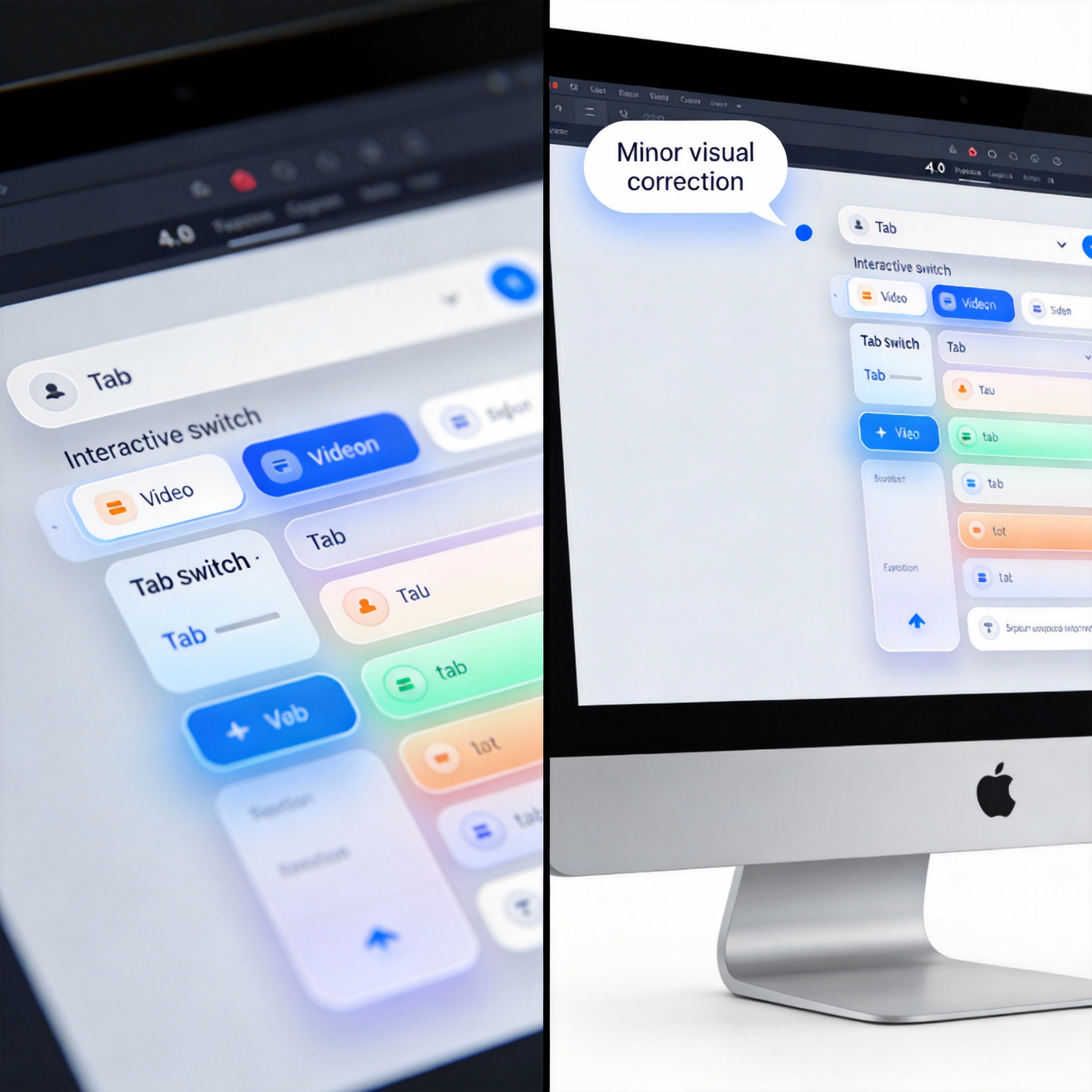
Split screen showing a video of an interactive tab component and its AI-replicated version on a screen, highlighting K2.5's accuracy.
Iterative Project Development and Aesthetic Logic
Another example showcased K2.5's ability to iterate on a project using its multimodal capabilities. By providing an interactive video of a weather card switching animation, the model was prompted to replicate the interaction, including elastic card size adjustments, seamless transitions, and functional modules like card deletion. The initial version produced a good result, and subsequent iterations, guided by screenshot-based feedback, allowed for visual corrections and feature additions. After two rounds of modifications, the model effectively replicated the original interactive animation, achieving an effect comparable to an iOS card component.
Further development involved expanding the card system by incorporating additional design references, such as a reading card. Through several iterations, the model developed a dynamic card component customization system supporting various card types like weather, plain text, book, and stock cards, all with animated operations and style adaptations for different sizes. This process highlights K2.5's potential for rapid development by integrating design and coding through "Vibe Coding" and multimodal references.

Dynamic digital cards (weather, book, stock) floating and transitioning, symbolizing K2.5's iterative design and 'Vibe Coding'.
Design Consistency and Agent Mode
K2.5 also demonstrated an understanding of design aesthetics and consistency. When tasked with replicating a backend interface with a distinct style, the model successfully reproduced the design, even applying a black and white grid dot matrix filter to images to maintain the overall aesthetic.
The model's Agent mode, when provided with a virtual machine and tools, significantly improved task completion rates. It can process web links independently, browsing, screenshotting, archiving, and analyzing content to replicate websites. In one instance, K2.5 replicated a website, including interactions and content, and intentionally mimicked a missing corner of a card. The model also applied its own design style to some details, maintaining consistency across the web page, indicating an inherent aesthetic logic beyond simple pixel-level replication.
In a notable case, K2.5 generated a design system specification website based solely on a design style prompt, even though the actual document was not provided. The generated website adhered to the prompt's requirements, combining various components and incorporating subtle design elements like a striped background texture.

Abstract digital grid with subtle imperfections in design elements, representing K2.5's challenges with minute details.
While K2.5 shows significant progress in multimodal capabilities, it still faces challenges with capturing very small design details, such as precise rounded corners, outline extensions, and specific color values. These nuances remain an area for improvement across multimodal models.
Stay Ahead of the AI Curve
Join 50,000+ subscribers getting the latest AI tools, trends, and tutorials delivered to their inbox weekly.
No spam, unsubscribe at any time.