
Keling AI 3.0 Omni Enhances Film Pre-Production with Advanced Visual Previews
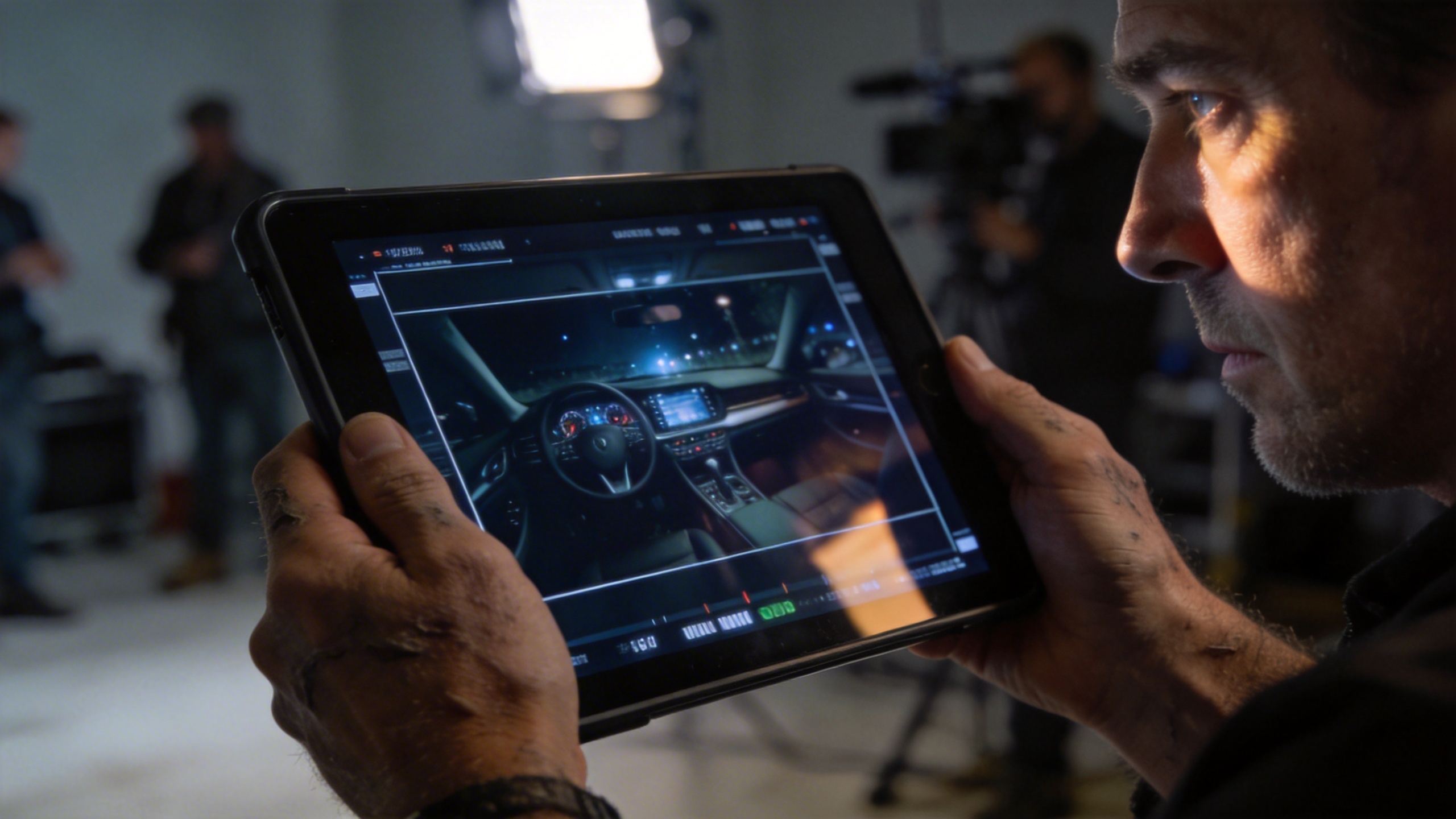
Keling's 3.0 series models, particularly Keling Video 3.0 Omni, are demonstrating capabilities that could reshape various industries, from game development to advertising and now, film and television production. The technology aims to address a core challenge in filmmaking: enabling all key creatives to visualize a project with high fidelity before filming begins.
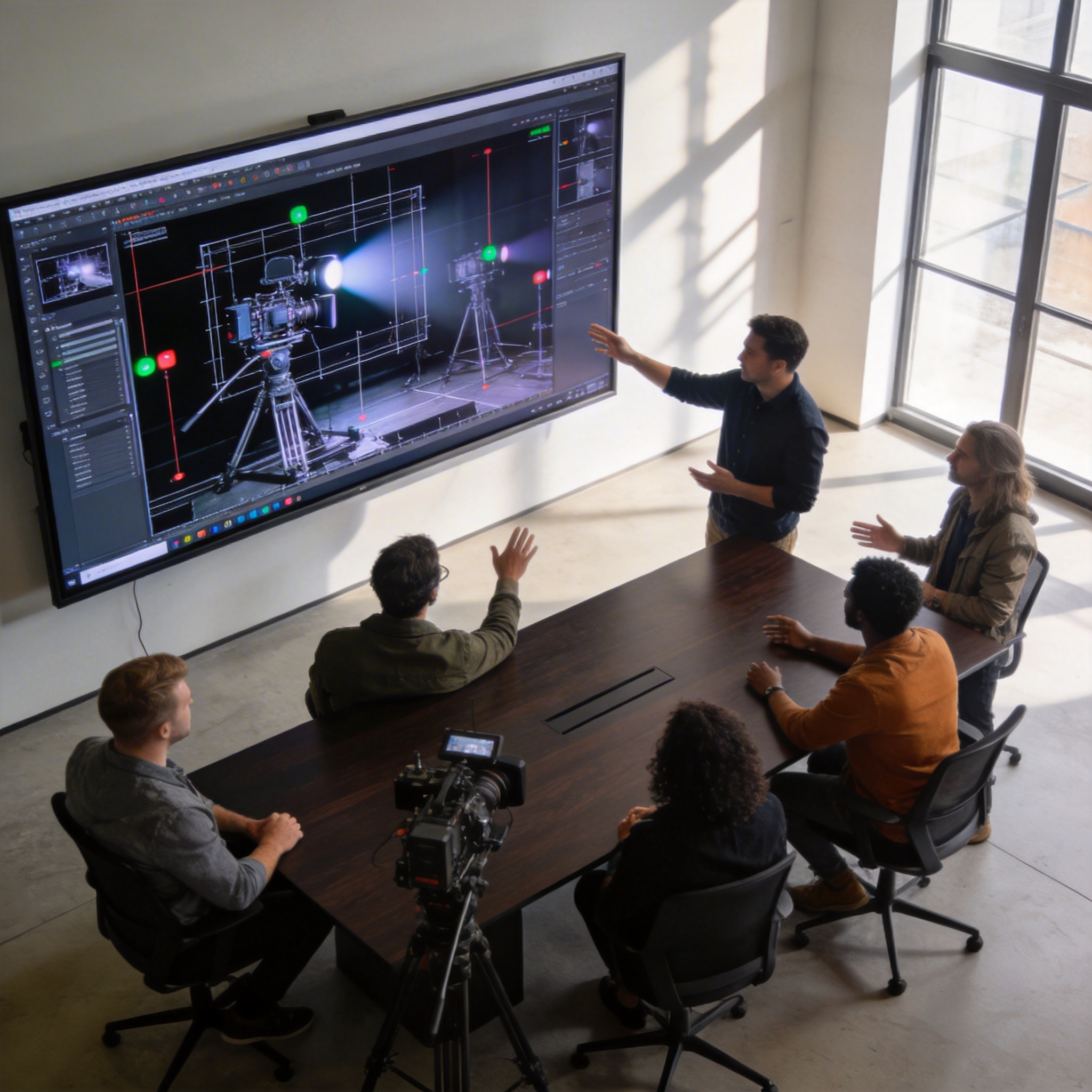
Film professionals discussing a digital storyboard on a large screen in a modern conference room.
Traditional pre-production methods, relying on storyboards, concept art, and extensive verbal communication, are often inefficient and prone to discrepancies. Keling 3.0 Omni seeks to integrate AI into early production meetings, moving beyond its traditional role in post-production.
AI-Driven Pre-Visualization in Practice
Jean, a graduate student in directing at Beijing Film Academy and a film and television creator, conducted intensive tests with Keling 3.0 Omni. She presented the results directly to a pre-production meeting with a director of photography, art director, and sound director, sparking significant discussion among the professionals.
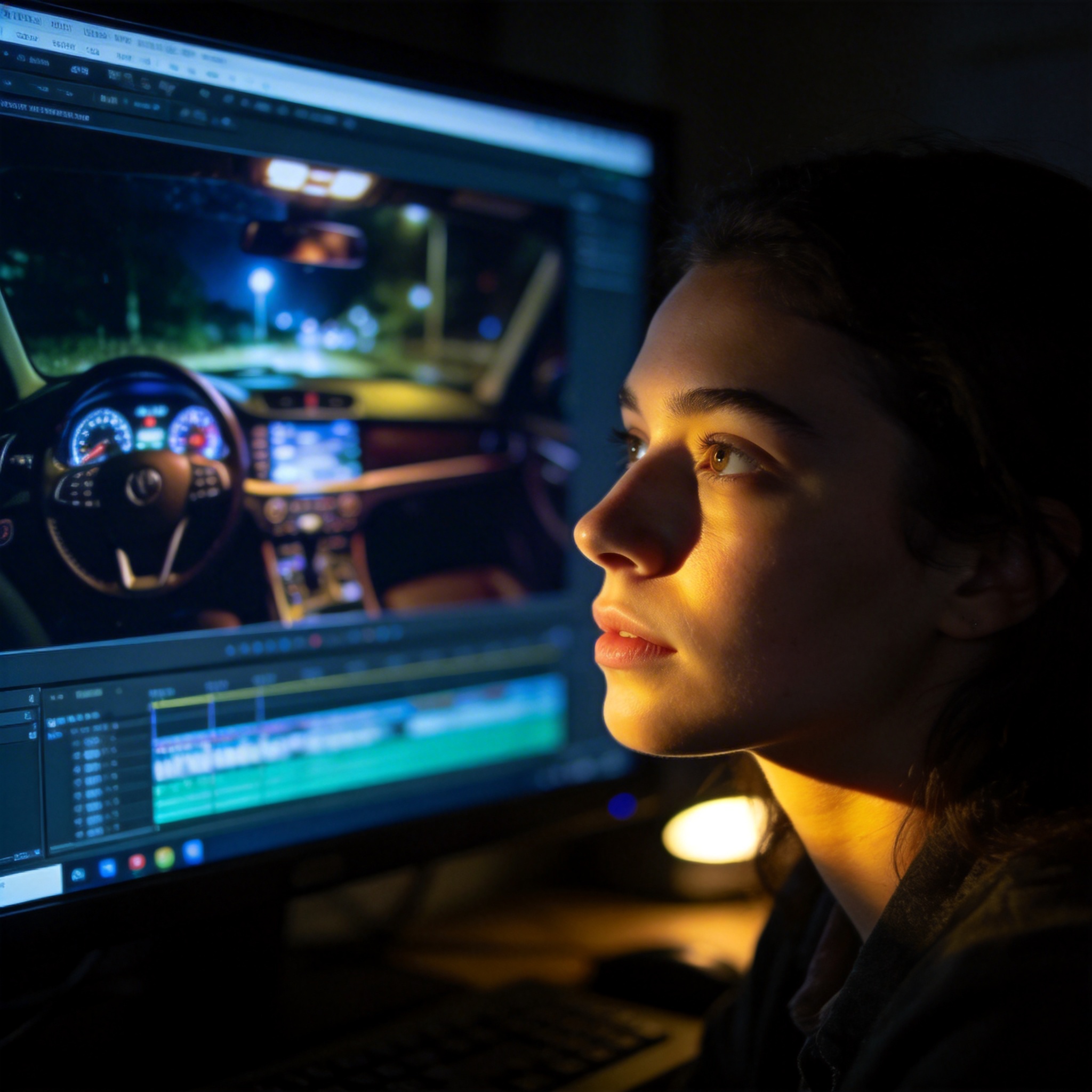
Jean, a film student, intently reviewing a night scene on a monitor in a dark editing suite.
Jean, who is preparing a new short film, noted that her director of photography and art director had raised concerns about the feasibility of several night and in-car scenes in her script due to budget and time constraints. Her previous experiences with AI tools for concept art were limited, as they often struggled with realistic scenes requiring precise perspective, light, shadow, and coherent narrative.
For these new tests, Jean applied genuine pre-production standards, focusing on whether Keling 3.0 Omni could achieve cinematic tone control, spatial construction, and emotional narrative.
Setting the Tone and Dynamic Previews
The visual development of any film begins with establishing its "tone," encompassing color, texture, rhythm, and atmosphere. While traditional methods involve static mood boards, dynamic previews typically occur much later in the process.
Jean tasked Keling 3.0 Omni with creating a dynamic preview for an opening shot, central to which was "a static moment temporarily trapped by life." She aimed to convey low-saturation gloom, the grainy texture of a confined car interior, and the slow intrusion of the outside world's visual rhythm to the cinematography and art departments.
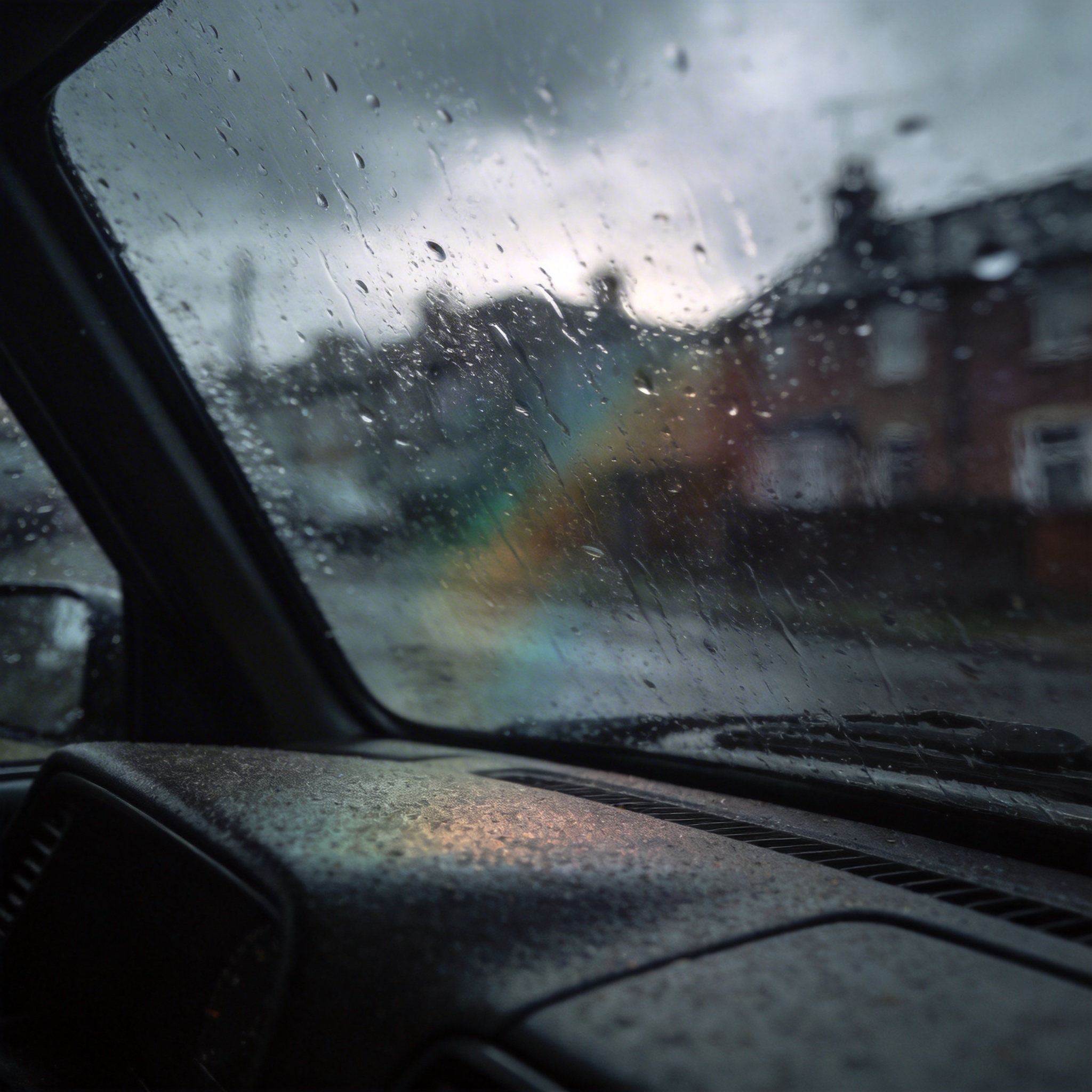
Rain-streaked car windshield with a gloomy, low-saturation urban landscape outside.
To achieve this, Jean used a film still with a clear photographic style, similar to the stark blue-gray tones of "Manchester by the Sea," as a "tone anchor." She then provided AI with detailed "director's instructions" using image-to-video and custom storyboard features. These instructions specified camera language, light focus, and movement, such as a panning shot from 0-5 seconds focusing on diffused light through a dirty windshield, and a very slow pan towards the passenger seat from 5-15 seconds as rain intensifies outside. She also emphasized avoiding digital "cleanliness," requesting sensor noise and subtle lens flare.
The resulting 15-second video impressed Jean and her director of photography. The AI accurately reproduced the tone, capturing the characteristics of cloudy diffused light and convincing textures. The physically simulated distortion and color separation of light from refracted raindrops added an emotional layer to the scene. The camera movement's rhythm also effectively conveyed emotional states. The sound design, guided by environmental sound prompts, appeared to influence the visual details rendered by the AI.
This dynamic preview served as a direct reference for lighting tests, art direction, and initial color grading, saving time and resources that would typically be spent on physical test shoots.
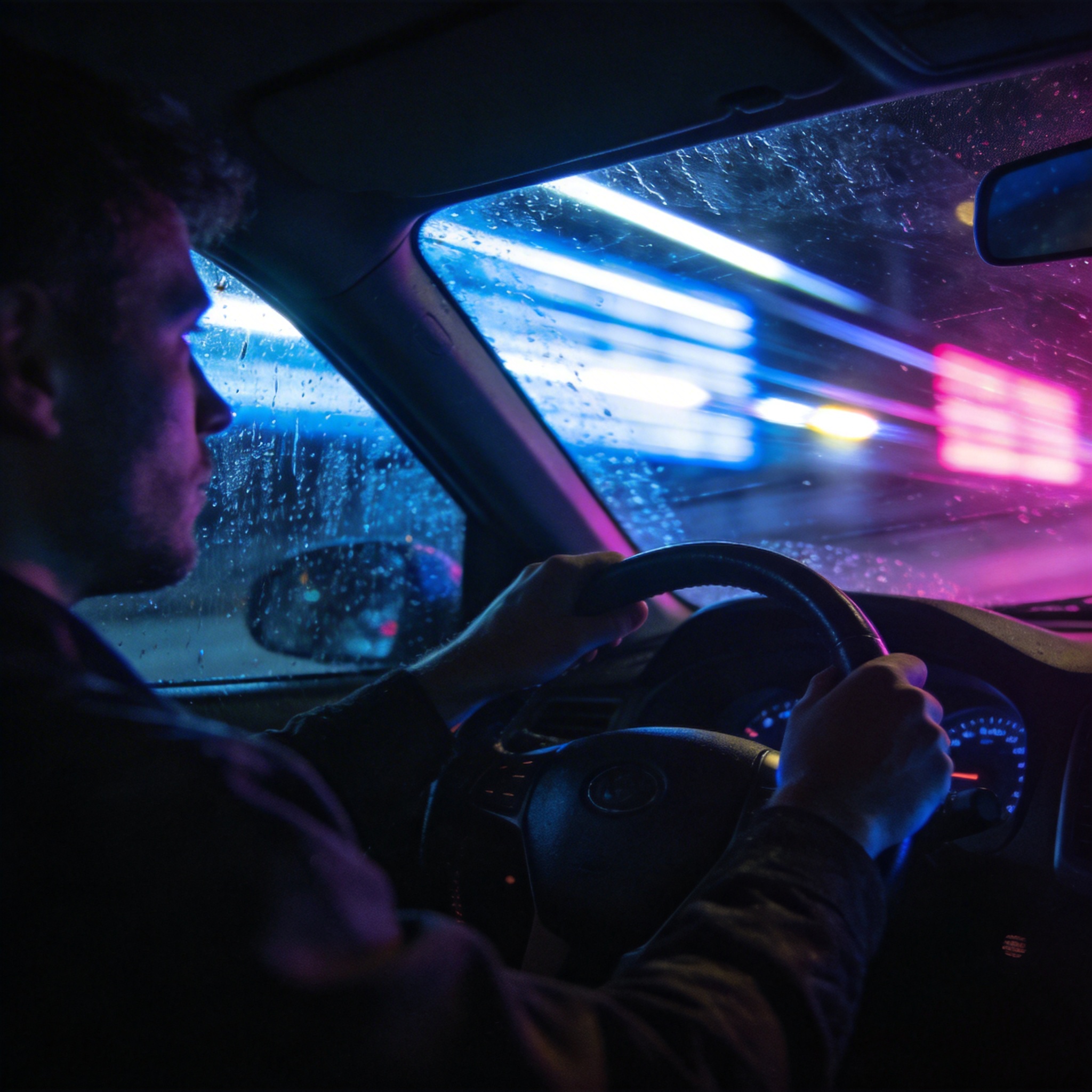
Complex night driving scene inside a car, with dynamic, chaotic lighting from external sources.
Complex Night Scene Lighting and Emotional Arc
Night scenes, particularly moving in-car sequences, present significant challenges for lighting and cinematography. They require balancing interior low-light illumination with external light sources while maintaining smooth motion.
Jean's test for Keling 3.0 Omni involved generating a 15-second night driving shot that depicted a protagonist's emotional shift from suppression to anxiety and then to ethereal calm, with each stage externalized through distinct, physically plausible lighting patterns.
This time, Jean relied purely on text descriptions to construct a complex sequence of light and shadow changes, without image or video references. Using text-to-video and intelligent storyboard features, she outlined three phases:
Phase 1 (0-5 seconds): Suppressed Beast. The scene was set on a service road under a city overpass with sparse, dim yellow sodium streetlights. The car's interior would regularly brighten and dim as it passed under lights, showing sudden clarity and disappearance of finger joints on the steering wheel, with occasional headlight washes from heavy trucks. The color tendency was yellow-green, conveying a sickly feel.
Phase 2 (5-11 seconds): Rising Anxiety. Exiting the bridge onto an open ring highway, light sources became abundant, with continuous streams of headlights, dense LED billboards, and distant office building lights. The light rhythm shifted from regular pulses to chaotic, high-frequency flickering, with sharp, fast-slashing "light blades" across the windshield. Strong, flickering specular reflections appeared in mirrors and window frames, and light streaks trailed outside. The color tendency was cold blue-white and dazzling magenta.
Phase 3 (10-15 seconds): Ethereal Suspension. Entering a straight road to the airport, surroundings empty, light rain began. Only the car's headlights illuminated rain streaks, and the wet asphalt reflected vague sky light. Inside, the dashboard backlight became the sole stable light source, forming a soft green halo on the fogged side window. External chaotic light disappeared, isolating the car. The color tendency was extreme black, gray, with warm yellow headlights and electronic green from the dashboard, and very low saturation.
The generated video's complexity and completeness in lighting design surpassed expectations. Keling 3.0 Omni distinguished light qualities, synchronized light rhythm with emotion, and simulated a credible comprehensive environment. The rain scene in the third phase, with volumetric headlight beams, translucent rain streaks, and reflections on the wet road, was accurately simulated. This provided a nearly perfect lighting and effects preview, enabling precise calculation of equipment needed.
This lighting test transformed abstract emotional changes into quantifiable, executable lighting cue sheets, significantly enhancing inter-departmental communication.
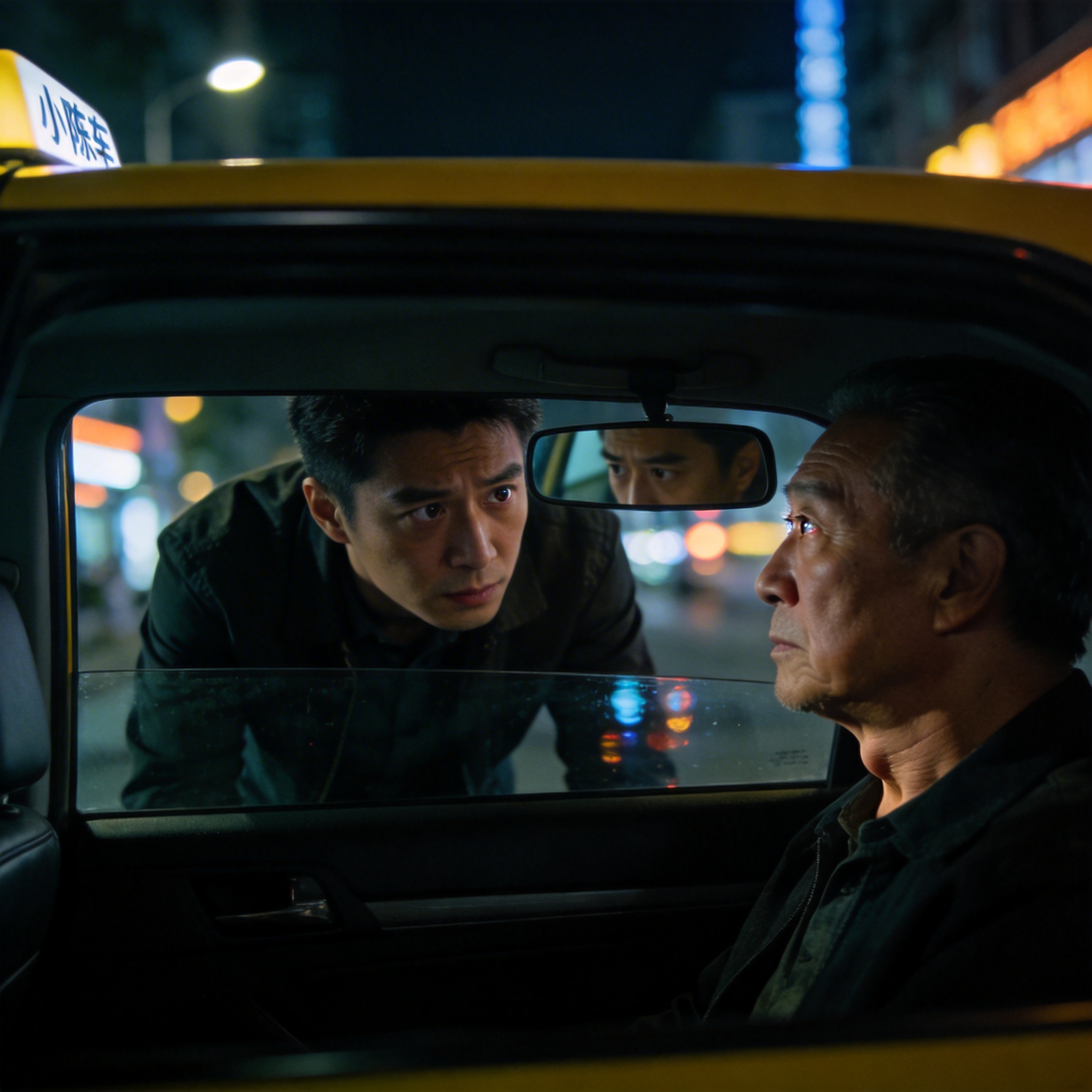
Intense dialogue scene in a car's backseat, viewed through the rearview mirror, showing character blocking.
Character Performance and Blocking
Jean also sought to determine if AI could handle character spatial relationships, eye-line matching, and subtle movements consistent with character states in multi-character, confined-space dialogue scenes.
Her test for Keling 3.0 Omni involved simulating a 30-second dialogue conflict in the back seat of a ride-hailing car. Requirements included consistent character features, realistic eye-lines and body language, precise audio-visual synchronization, and camera blocking that reinforced power dynamics and spatial oppression.
Jean used the "Character Subject 3.0" function to create digital subjects of two actors ("Driver Old Wang" and "Passenger Xiao Chen") from multi-angle photos. She recorded a complaining line for "Xiao Chen" with his characteristic voice.
She then wrote a "shooting script" combining custom storyboard, character binding, and audio-visual synchronization:
Shot 1 (15 seconds): Rearview Mirror Perspective - Close-up. Framed within the rearview mirror, "Passenger Xiao Chen" leaned forward, complaining about the navigation and fare, with his gaze intensely projected towards "Old Wang's" eyes in the mirror. "Old Wang's" eye blinked rapidly, and his Adam's apple rolled, but his facial muscles remained controlled. Ambient sound included engine and road noise.
Shot 2 (15 seconds): Side-shot Two-person Shot - Medium shot. The camera was hidden behind the passenger seatback. "Xiao Chen" continued to complain with small movements, while "Old Wang's" hand hesitated before returning to the steering wheel. "Old Wang" spoke in a hoarse, steady voice, maintaining his gaze on the road, not looking at "Xiao Chen."
The generated content provided guidance beyond mere reference, entering the realm of executable solutions. It offered precise performance anchors, clear blocking and spatial relationships, and excellent technical indicators such as unbroken character consistency, perfect lip-sync, and high audio-visual synchronization.
This blocking test became part of the rehearsal material, providing a dynamic, detailed version of blocking and performance before actual casting and rehearsals. This allowed all key creatives to achieve a highly unified understanding of the scene's "form" and "spirit."
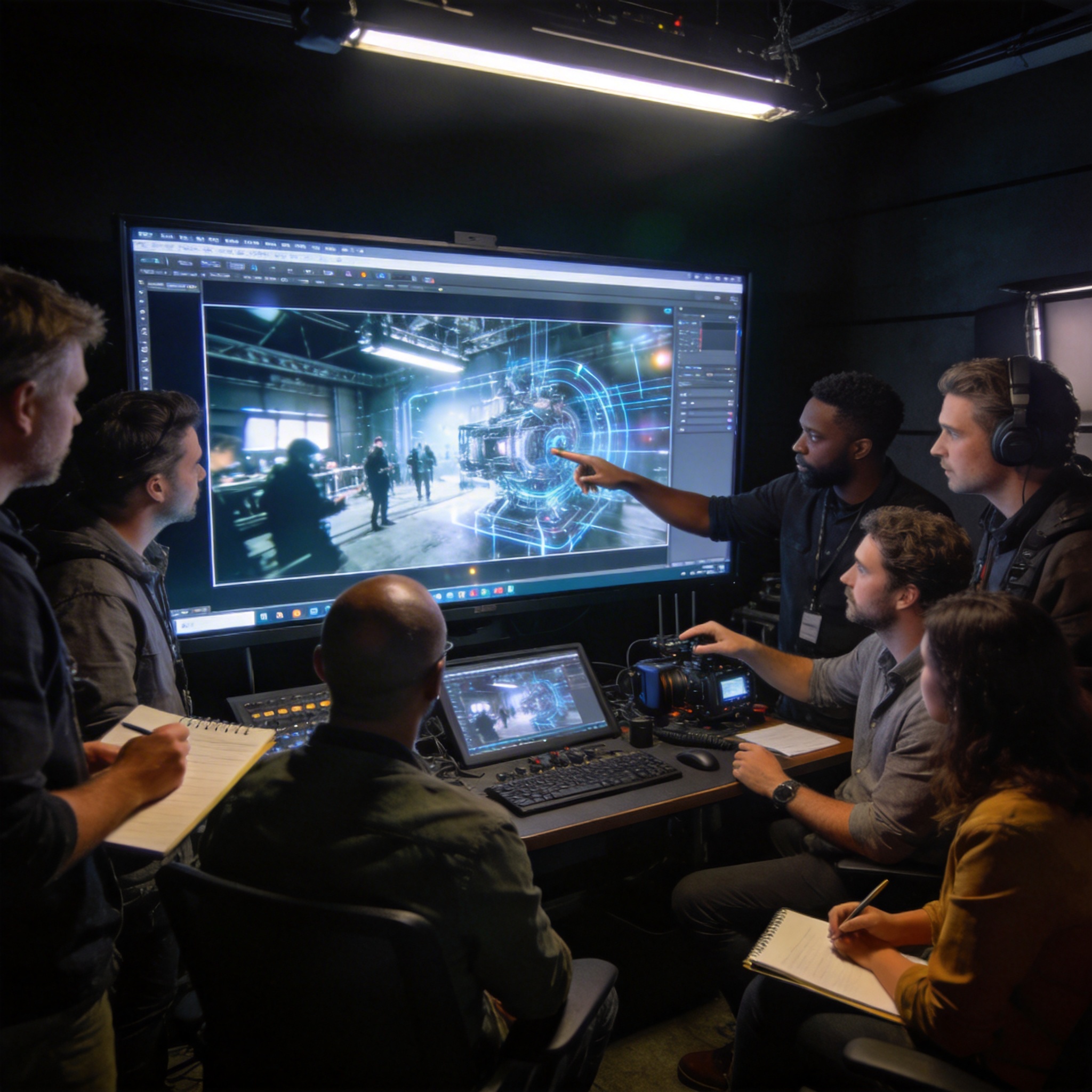
Film crew analyzing an AI-generated video clip on a large monitor in a screening room.
Keling AI's Role in Pre-Production Meetings
After the tests, Jean presented the generated video clips to department heads during a pre-production meeting. The art director began analyzing details for material choices, the director of photography and gaffer studied light and shadow changes for specific setups, and the sound director considered on-set recording and post-production foley based on the AI-generated audio-visual synchronization.
Keling 3.0 Omni demonstrated its ability to enhance the precision, efficiency, and consensus of pre-production planning. It transformed a process reliant on abstract descriptions into a concrete one that can be intuitively viewed, refined, and adjusted.
The technology's core capability lies in deeply understanding and simulating the physical rules, light and shadow logic, and emotional rhythms of the real world. For creative teams aiming for realistic expression within budget and time constraints, this capability is becoming an indispensable component of the production process. The ability to "see" more, earlier, and more clearly before filming begins represents a practical advancement for the industry.
Stay Ahead of the AI Curve
Join 50,000+ subscribers getting the latest AI tools, trends, and tutorials delivered to their inbox weekly.
No spam, unsubscribe at any time.