
ICLR 2026 Acceptance Rate Falls to Three-Year Low Amid Review System Vulnerabilities
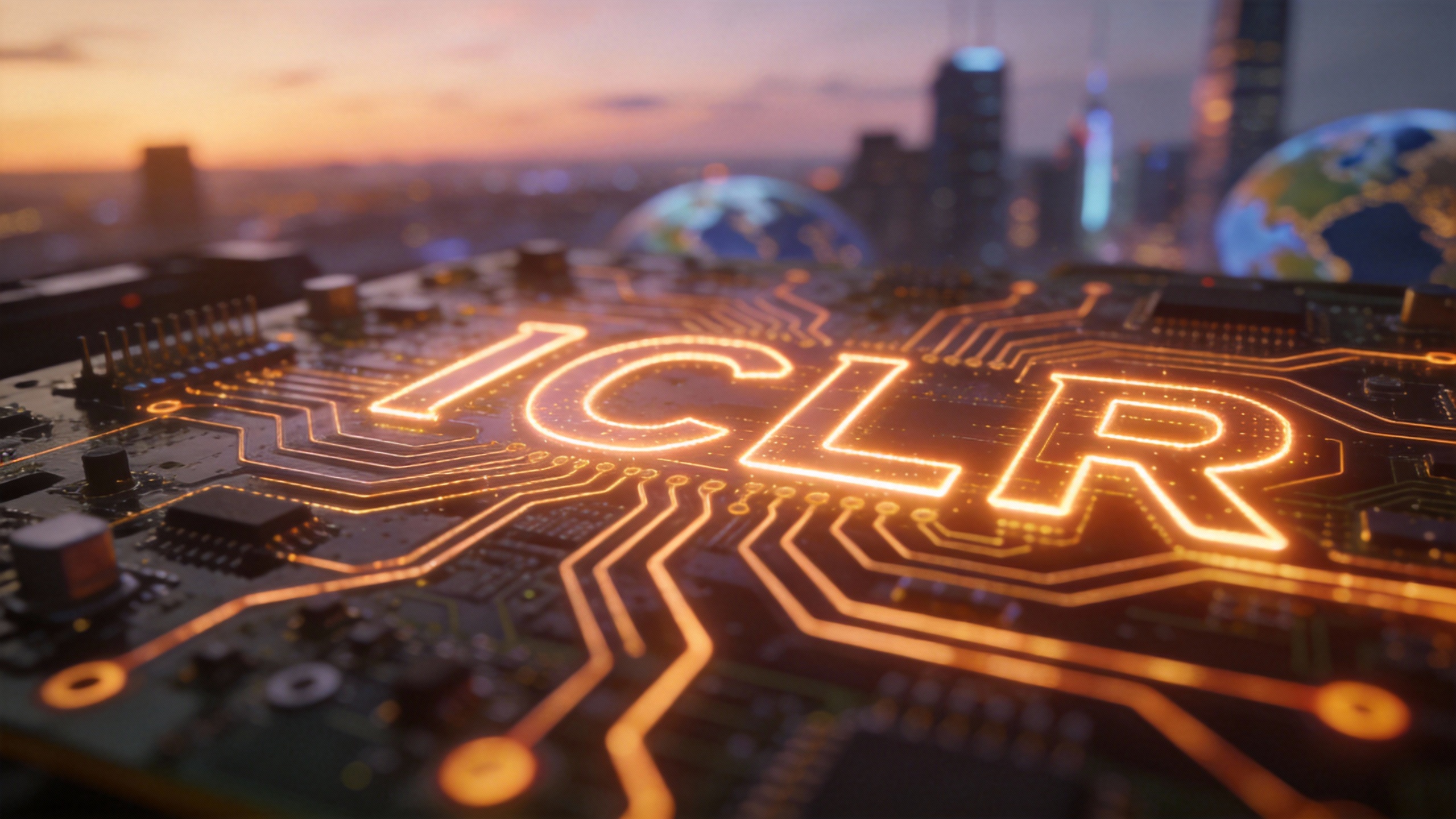
The International Conference on Learning Representations (ICLR) announced its 2026 acceptance results, revealing a record 19,000 paper submissions and an acceptance rate of 28.18%. This marks the lowest acceptance rate in three years, with an average score of 5.39. The conference, scheduled for April 23-27, 2026, in Rio de Janeiro, Brazil, saw its review process marred by controversy, including exposed vulnerabilities in its system.

Digital 'accepted' stamp on a stack of academic papers, symbolizing research success.
Despite the challenges, numerous researchers celebrated their accepted papers. Professor Zhang Ming's group at Peking University had five papers accepted. Professor Song Han of MIT, an alumnus of Tsinghua University, saw his joint team secure at least nine acceptances. Zhengzhong Tu, an Assistant Professor in the Computer Science Department at Texas A&M University, also reported five accepted papers.
Research Highlights and Noteworthy Acceptances
Several institutions and individual researchers shared their successful submissions. Tian Zeyue from the Hong Kong University of Science and Technology (HKUST) had four papers accepted. Li Yang and his team from Shanghai Jiao Tong University had three papers accepted, focusing on areas such as class self-supervised learning, masked diffusion frameworks for combinatorial optimization, and unified representation learning.
Junjun Jia and his team from Nanyang Technological University contributed to three accepted papers, with one as co-first author and two as corresponding author. Their work addressed LLM safety alignment, multimodal jailbreak safety evaluation, and classical Chinese jailbreak attacks. Li Kai, a Ph.D. student at Tsinghua University, achieved two first-authored papers, both with open-sourced code and datasets. His research included efficient audio-video speech separation and a benchmark for trustworthiness evaluation of audio LLMs.
Liang Xize from the University of Science and Technology of China (USTC) had two papers accepted, exploring multi-domain reinforcement learning for large models and collaborative inference for large and small models. Wang Jianing from East China Normal University also had two papers accepted, focusing on long-range reasoning analysis and RL optimization for large models, and agentic workflow evaluation for AI for Science.
Song Wenxuan from HKUST (Guangzhou) had two VLA papers accepted, both as co-first author and project lead, exploring visual representation learning and diffusionVLA. Xie Enze from NVIDIA had both SANA Video and the Fast dLLM series accepted. Ren Tao from Peking University had two papers accepted, focusing on post-training reinforcement learning algorithms for LLM and Diffusion. Chen Jintai from HKUST (Guangzhou) had his "Electrocardio Panorama" Nef-Net v2 accepted, emphasizing its practical application potential. Tong Jingqi and collaborators from Fudan University found that training with game tasks can improve the general reasoning ability of AI.

Hand reaching towards a holographic projection of global data, symbolizing international AI collaboration.
International Recognition and Emerging Issues
Internationally, Professor Yu Su's lab at Ohio State University, a recipient of the Sloan Research Fellowship, had 11 papers accepted covering topics such as agent memory, safety, evaluation, mechanistic interpretability, and AI for science. LingYang, a postdoctoral researcher at Princeton, co-authored four accepted papers on large models and diffusion speech models. Yafu Li, a postdoctoral researcher at the Chinese University of Hong Kong, had six papers accepted, all open-sourced. Qiushi Sun, a Ph.D. student, participated in three accepted papers, and netizen Egor Cherepanov had four papers accepted as a first author.

Computer screen showing an AI-generated review comment with a detection overlay, highlighting review system vulnerabilities.
Despite these achievements, concerns about the quality of the review process at top AI conferences like ICLR have intensified. A significant issue highlighted is the potential misuse of AI in generating review comments. Professor Graham Neubig of Carnegie Mellon University, using Pangram Labs' AI text detection tool EditLens, found that 21% of 75,800 public ICLR review comments were highly suspected of being "entirely AI-generated."
ICLR 2025 policies addressed the use of LLMs in the review process by stating that "reviewers are ultimately responsible for the content of their reviews" and must adhere to academic ethics. However, some submitters reported that 100% of their review comments appeared to be AI-generated. The quality of reviews and the perceived bias in anonymous reviews remain significant challenges for the academic community. Liu Yong, an associate professor at Renmin University of China, whose theoretical work on large models has faced rejection, called for more professional reviewers to support theoretical research.
Stay Ahead of the AI Curve
Join 50,000+ subscribers getting the latest AI tools, trends, and tutorials delivered to their inbox weekly.
No spam, unsubscribe at any time.